Methods of Purification and Analysis
 Call Kai
 Learn
Learn Practice Test
 Spaced Repetition
 Match
Match Flashcards
 Knowt Play
1/35

There's no tags or description
Looks like no tags are added yet.
Name | Mastery | Learn | Test | Matching | Spaced | Call with Kai | Chat |
|---|
No analytics yet
Send a link to your students to track their progress
36 Terms
Definition of Element
An element is a pure substances that cannot be broken down in two or more simpler substances by chemical methods
Definition of pure substances
A pure substance is made up of one single element or compound and is not mixed with any substance
Examples: Pure water, pure gold
Definition of compound
A compound is a pure substance formed by two or more elements chemically combined in a fixed ratio.
Definition of mixture
A mixture is made up of two or more substances mixed together physically in no fixed ratio
Example: Air (consists of nitrogen, argon, carbon dioxide, oxygen)

Describe the step of dissolving
Add dissolved water to the (mixture) to dissolve (solute) completely by stirring to form (solution)
FILTRATION
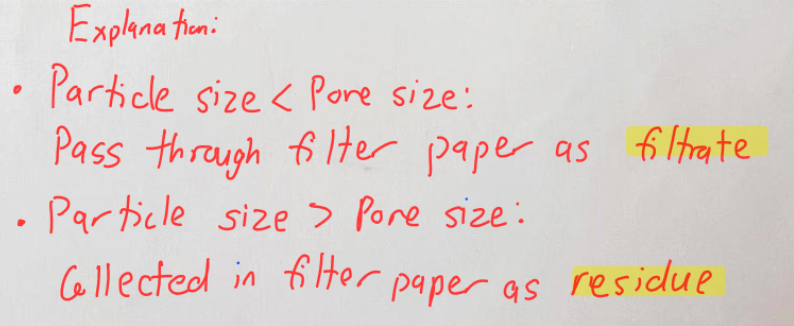
Filtration is used to separate insoluble solid particles from a liquid
StepsFilter the (mixture) by pouring it through a filter paper to separate the (insoluble solid) from the solution, where insoluble solid is collected as residue and solution is collected as filtrate
Wash residue left behind in the filter paper with a little cold distilled water to remove impurities
Dry residue between sheets of filter paper, to obtain dry sample of insoluble salt
EVAPORATION TO DRYNESS
Evaporation to dryness is used to obtain a soluble solid from a solution by heating the solution until all water has boiled off

Main procedure
Heat and evaporate (filtrate) to dryness to obtain dry sample of solute as residue
IMPORTANT
Evaporation to dryness is NOT for substances that
Decompose on heating
Lose water to become powder (e.g. crystals)
CRYSTALLISATION
Crystallisation is used for obtaining a pure solid from its solution
In crystallisation, water is removed by heating the solution until a hot saturated solution is formed
A saturated solution is one where no more solute will dissolve in the solvent
The dissolved solid will form pure crystals upon cooling
Procedure
1. Dissolve the impure copper (II) sulfate in water

2. Filter to remove any insoluble impurities. Collect the filtrate. This is the copper (II) sulfate solution
3. Heat the copper (II) solution until it is saturated
4. When the solution is saturated, leave it to COOL and CRYSTALLISE

5. Filter to collect the crystals as residue. Wash the crystals with a little cold distilled water to remove impurities. Dry the crystals between a few sheets of filter paper.

How to test for saturation?
Dip a clean glass rod into the solution and remove
Small crystals will form on the rod as solution cools

*SUBLIMATION
Sublimation is used to separate a solid that sublimes from one that does not
Some substances that sublime are NH4Cl and I2 on heating.

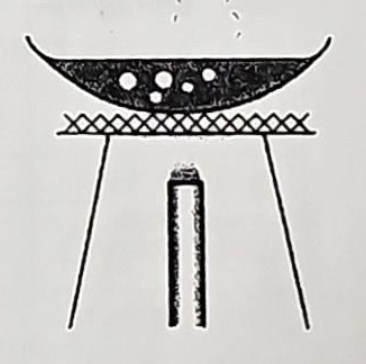
Place the mixture in an evaporating dish & an inverted glass funnel over the mixture
Heat mixture to sublime (the solid that easily sublimes) from mixture
Obtain pure dry sample of (solid that easily sublimes) on the filter funnel when it is condensed
*****SIMPLE DISTILLATION (Remember how to draw diagram)
Simple distillation is used to separate a PURE SOLVENT (liquid) from a solution (MIXTURE)***
Pure water can be obtained from a salt via distillation
In the distillation flask, water in the salt solution boils. The water vapour rises and enters the condenser.
In the condenser, water vapour cools and condenses into pure water (distillate)
Pure water is collected as the distillate in the conical flask (receiver)
The salt solution in the distillation flask becomes more concentrated as distillation continues. The salt remains in the distillation flask

How does the temperature change as a salt solution undergoes distillation?

E
Boiling chips
Boiling chips, such as marble chips or porcelain chips, are added into the distillation flask.
REASON: To ensure smooth boiling
Thermometer
The bulb of the thermometer should be placed beside the side arm of the distillation flask and not dipped into the solution.
REASON: To ensure that the thermometer measures accurately and monitors the boiling point of the substance that is being distilled as its vapour enters the condenser.

Condenser
Cold water enters the water jacket from the bottom of the condenser and leaves from the top continuously.

REASON: To ensure that the water jacket is completely filled with water to cool and condense the hot vapour efficiently before it leaves the condenser, into distillate.
Receiver
If the distillate is volatile, the receiver can be put into a large container filled with ice.
REASON: This helps to keep the temperature of the distillate low so that it remains in the liquid state.
Fractional distillation - General Overview
Fractional distillation is used to separate a mixture of miscible liquids with different boiling points
During fractional distillation,
The liquid with the lowest boiling point will distil over first
Vapours of liquids with higher boiling points condense along the fractionating column and fall back into the round-bottomed flask
For example: Separating a solution of ethanol (b.p. 78°C) and water (b.p. 100°C)
Fractional Distillation - Step 1
Ethanol and water vapour rise up the column as solution is heated

Fractional Distillation - Step 2
Water vapour, which has a higher b.p., condenses in the fractionating column and falls back into the flask

Fractional distillation - Step 3
Ethanol, which has a lower b.p., reaches upper part of column and distills over

Fractional distillation - Step 4
Temperature on thermometer shows constant temperature of 78°C
This is ethanol’s boiling point
Fractional distillation - Step 5
In the condenser, hot ethanol vapour condenses
As running water cools it
Liquid ethanol flows down inner tube
Enters receiver
Fractional distillation - Step 6
Ethanol collected as distillate
In the receiver
Fractional Distillation - Step 7
When all the ethanol has distilled over
Temperature rises rapidly to 100°C → boiling point of water
Water distills over and collected separately
Fractional Distillation Graph
A. The temperature rises as the ethanol-water mixture is heated.
B. The temperature of the mixture reaches the boiling point of ethanol. The temperature remains at the boiling point of ethanol as ethanol boils (distils) off. Any water, which evaporates, is cooled and condensed by the condenser.
C. All the ethanol has distilled off. The temperature of the liquid rises to reach the boiling point of the water.
D. The temperature of the liquid reaches the boiling point of water. The temperature remains at the boiling point of water as water distils off.

Separating Funnel - Principle
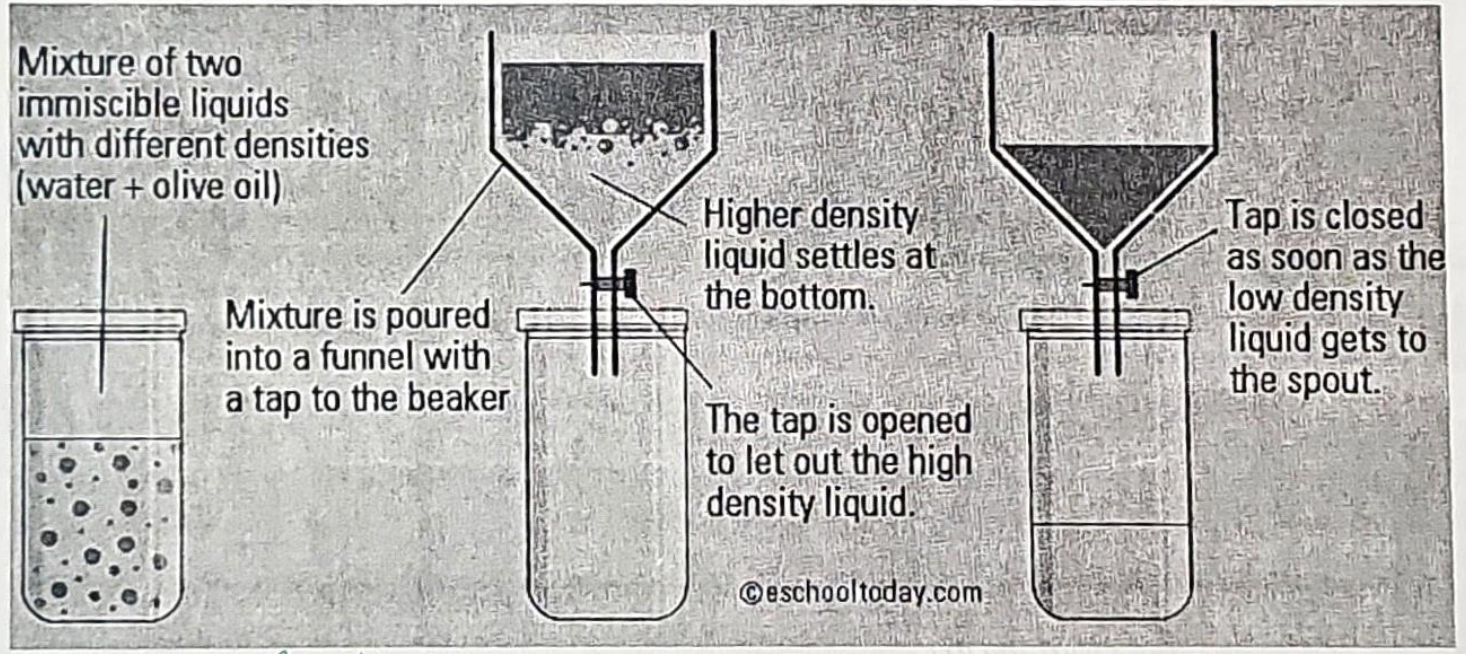
Separating funnel is used to separate immiscible liquids of different densities
Open tap to let out liquid with high density
Close tap when low density liquid gets to spout
Chromatography - What is it
Method of separating two or more compounds that dissolve in the same solvent
Advantage
Small sample size
Steps for chromatography (Remember diagram!)
Draw a line using pencil.
Put a spot of the ink on the pencil line and allow it to dry.
Dip the chromatography paper into a glass tank containing the solvent (e.g. ethanol/water). Ensure that the pencil line is above the solvent.
Cover the glass tank with a lid and leave the set-up to stand for a while.
Remove the chromatography paper with results (also known as chromatogram*) when the solvent approaches the end of the paper.

Explain why the starting line is drawn using pencil
Pencil is made of graphite which is insoluble in water, avoiding interferences to the chromatogram, resulting in inaccurate readings
Explain why
The applied spot on the pencil line is as small as possible. |
To prevent tailing and smudging when inks or dyes are separated
Explain why
The starting line must be above the solvent. |
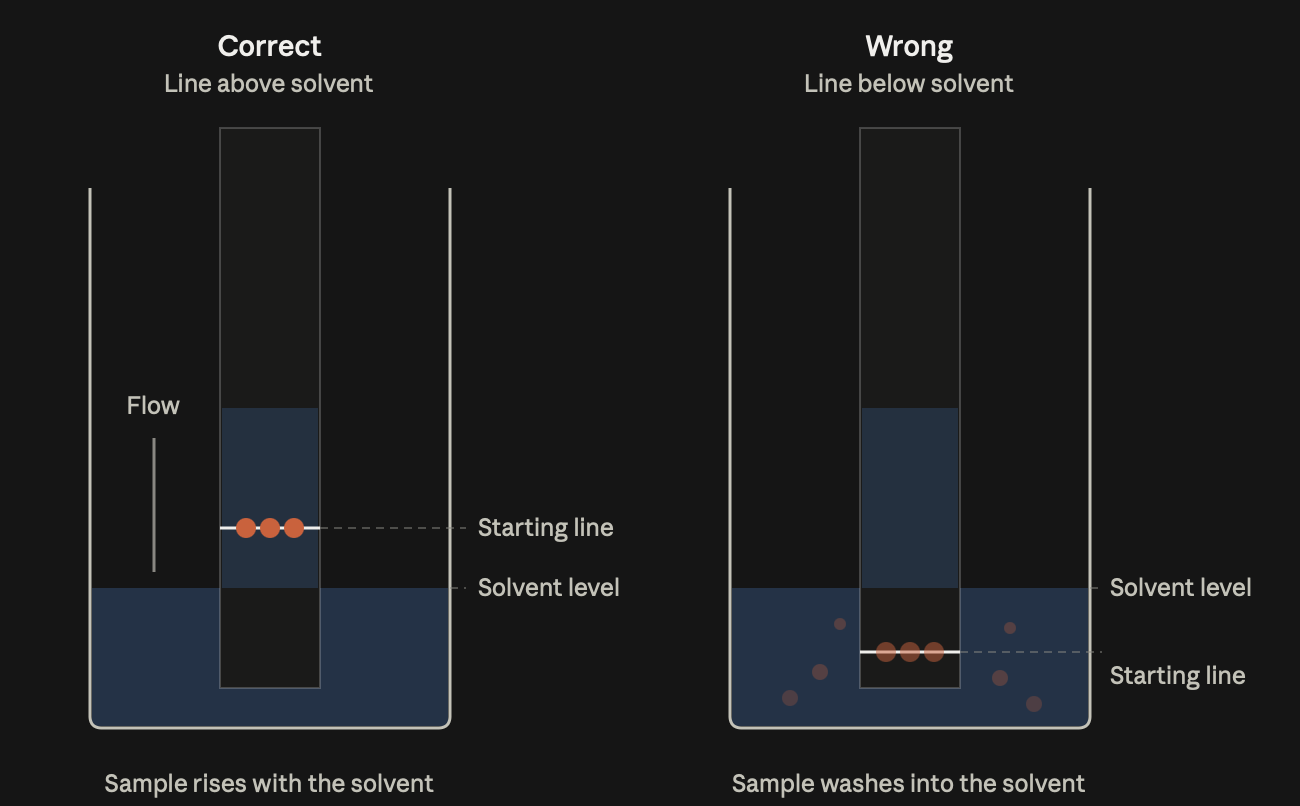
• To prevent the applied spot from dissolving into the solvent when the paper is dipped into the solvent. |
Explain why
The glass tank is covered with a lid (for volatile solvent). |
• To prevent the solvent from evaporating too fast. |
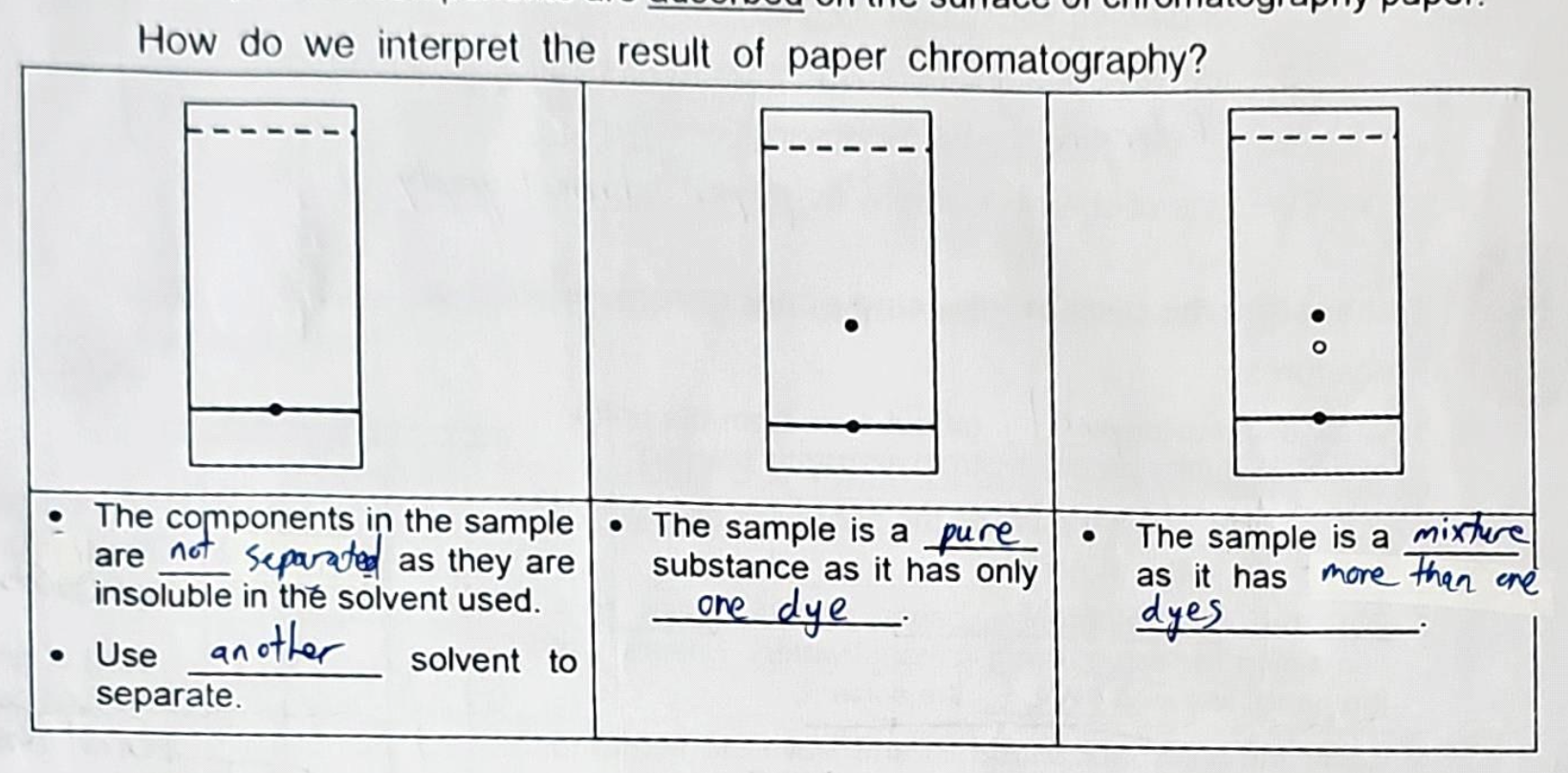
Principle of chromatography
Different components in a sample have different relative solubility in the solvent
The more soluble a compound, the further it will move up the paper
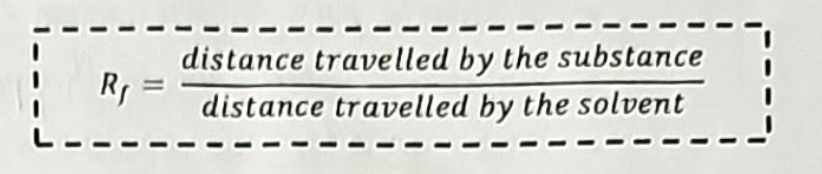
RF
Retention Factor
RF value of a substance does not change as long as it is carried under the same conditions (i.e. same solvent and same temperature)
Always less than 1
Locating agent is used to react with the colourless substances to produce a coloured spot

Pure Solid Properties
A solid is pure if it has a fixed and constant melting point.
Impurities lower the melting point of a solid**.
The greater the amount of impurities, the lower the melting point.
Impurities cause melting to take over a range of temperatures.
Pure Liquid Properties
*Pure Liquids Have Fixed Boiling Points
A liquid is pure if it has a fixed and constant boiling point.
Impurities increase boiling point of a liquid**.
The greater the amount of impurities, the higher the boiling point.
Impurities cause boiling to take over a range of temperature.