18. Endocrine System: Thyroid Gland
 Call Kai
 Learn
 Practice Test
 Spaced Repetition
 Match
 Flashcards
 Knowt Play
1/44

There's no tags or description
Looks like no tags are added yet.
45 Terms
thyroid gland
anterior to thyroid cartilage of larynx + upper trachea
medial to carotid arteries + internal jugular veins
butterfly-shaped → 2 lobes connected by isthmus

thyroid gland blood supply and drainage
lots of vasculature to deliver hormones throughout body
arterial supply
superior thyroid arteries
external carotid artery branch
inferior thyroid arteries
thyrocervical trunk branch → from subclavian artery
venous drainage
superior + middle thyroid veins
drains into internal jugular veins
inferior thyroid veins
drains into brachiocephalic veins

thyroid gland histology
thyroid gland cells form spherical thyroid follicles → filled w/ colloid
thyroid follicle contains:
follicular cells
synthesize thyroid hormones
colloid
viscous fluid comprised of stored inactive thyroid hormones
additional cells b/w thyroid follicles
parafollicular (C) cells
secrete calcitonin → regular blood calcium homeostasis
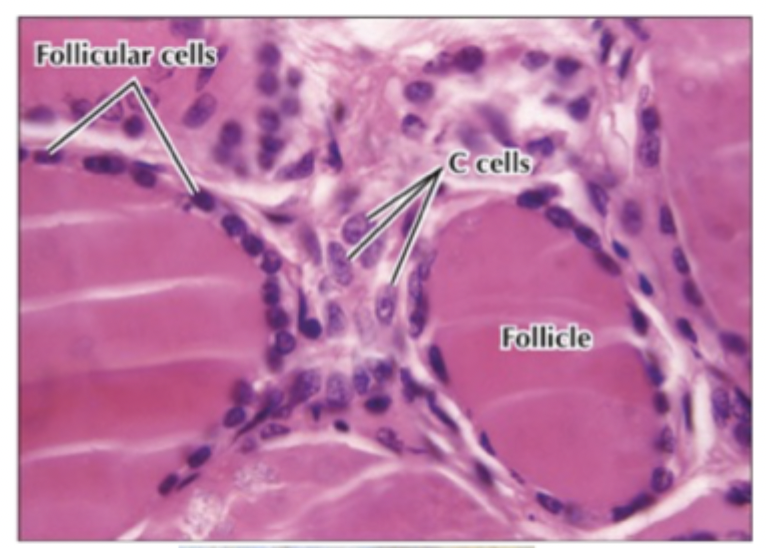
thyroid hormones
derived from amino acid tyrosine + iodine atoms
2 main hormones
thyroxine (T4)
triiodothyronine (T3)
thyroxine (T4)
thyroid hormone
4 attached iodine atoms
makes up 90% of thyroid hormones produced
eventually converted to T3 after release into general circulation
triiodothyronine (T3)
thyroid hormone
3 attached iodine atoms
converted from T4
more biologically active
thyroid hormone action
within target cell
deiodinases coverts T4 → to T3 in cytoplasm
removes iodine atom
when bound to T3, intracellular thyroid hormone receptors = transcription factors in nucleus
receptor binding → gene expression altered → protein synthesis modified

thyroid hormone functions
⬆ basal metabolic rate + body temp = ⬆ ATP production
⬆ oxidation of glucose + fatty acids
⬆ synthesis of metabolic enzymes
⬆ metabolism + energy production = body heat
⬆ HR + contractility
acts on cardiac cells → ⬆ synthesis of beta-adrenergic receptors + contractile proteins
⬆ sensitivity to adrenal catecholamines = sympathetic innerveration
meet increased metabolic demands
contributes to fetal development + growth in children
particularly nervous + skeletal systems
thyroid hormone synthesis and release
requires iodide (I-) → ingested daily - only hormone that has iodide
synthesis
follicular cell action
iodide trapping
follicular cells take up circulating iodide via Na/I symporter → release into colloid
thryglobulin synthesis
follicular cells produce thyroglobulin
glycoprotein w/ tyrosine residues = precursor to hormone
thyroglobulin packaged into vesicles → exocytosed into colloid
within colloid
iodination of tyrosine residues
monoiodotyrosine (MIT/T1)
diiodotyrosine (DIT/T2)
conjugation of adjacent MITs + DITs → form T3 + T4
still attached to thyroglobulin
release
follicular cells uptake colloid via endocytosis
proteolysis of thyroglobulin → release of T3 + T4 via lysosomes
thyroid hormones = soluble → require carrier protein for blood transport

thyroid hormone transport
thyroid hormones = lipid soluble
due to benzene rings + iodine
in blood → thyroid hormone bound to thyroxine-binding globulin (TBG)
T4 = high affinity
T3 = lower affinity
radioactive iodine uptake test (RAIU)
used in diagnostics - evaluates thyroid function → closely associated w/ iodine uptake by thyroid gland
thyroid gland is only gland that uses iodide
ingestion of radioactive iodide → radionuclides
isotopes of iodine (I-123)
99mTc-pertechnetate
iodide taken up by thyroid gland
images of thyroid gland taken → see gland activity via iodide uptake
looking for uniform distribution of iodide
TRH and TSH negative feedback
hypothalamus releases thyrotropin releasing hormone (TRH) when
⬇ thyroid hormone levels
⬇ metabolic rate
TRH → ⬆ thyroid stimulating hormone (TSH) from anterior pituitary
acts on follicular cells of thyroid gland
⬆ thyroid hormone production + secretion
⬆ thyroid hormone levels → ⬇ TRH + TSH release = negative feedback

TSH effect on follicular cells
TSH binds to PM receptors of follicular cells
⬆ activity of Na+/I- transporter (NIS)
⬆ thyroglobulin synthesis
⬆ release of stored thyroid hormone
endocytosis of colloid
⬆ # + size of follicular cells
thyroid gland disorders
functional disorders
overactive thyroid gland = hyperthyroidism
hypermetabolic state
eg. Grave’s disease
underachieve thyroid gland = hypothyroidism
hypometabolic state
eg. Hashimoto’s disease/thyroiditis
structural disorders
nodules, goiter
tumours
NOTE: thyroid enlargement can occur in both hyper + hypothyroidism
clinically, almost always enlarged

iodine deficiency
circulating T3 + T4 levels ⬇
form of hypothyroidism
disruption of negative feedback loop = ⬆ TSH levels
⬆ TSH levels → ⬆ thyroid gland = grow in compensation = goiter

thyroid gland pathological changes
thyroid nodules
thyroid adenoma = benign tumour
thyroid carcinoma = malignant tumour
functional nodules → hot/warm
nonfunctional nodules → cold
NOTE: cannot determine malignancy status of tumour based solely on evaluation of nodules as hot or cold

calcitonin
produced by C cells in thyroid gland
released in response to ⬆ blood calcium levels
⬇ blood calcium levels
⬇ osteoclast-mediated bone resorption
⬇ calcium reabsorption by kidneys
⬆ calcium excretion in urine
parathyroid hormone (PTH)
produced by 4 parathyroid glands
posterior surface of thyroid gland
released in response to ⬇ blood calcium levels
⬆ blood calcium levels
⬆ osteoclast-mediated bone resorption
⬇ osteoblast-mediated bone deposition
⬆ calcium reabsorption by kidneys
⬇ calcium excretion in urine
⬆ intestinal absorption of calcium
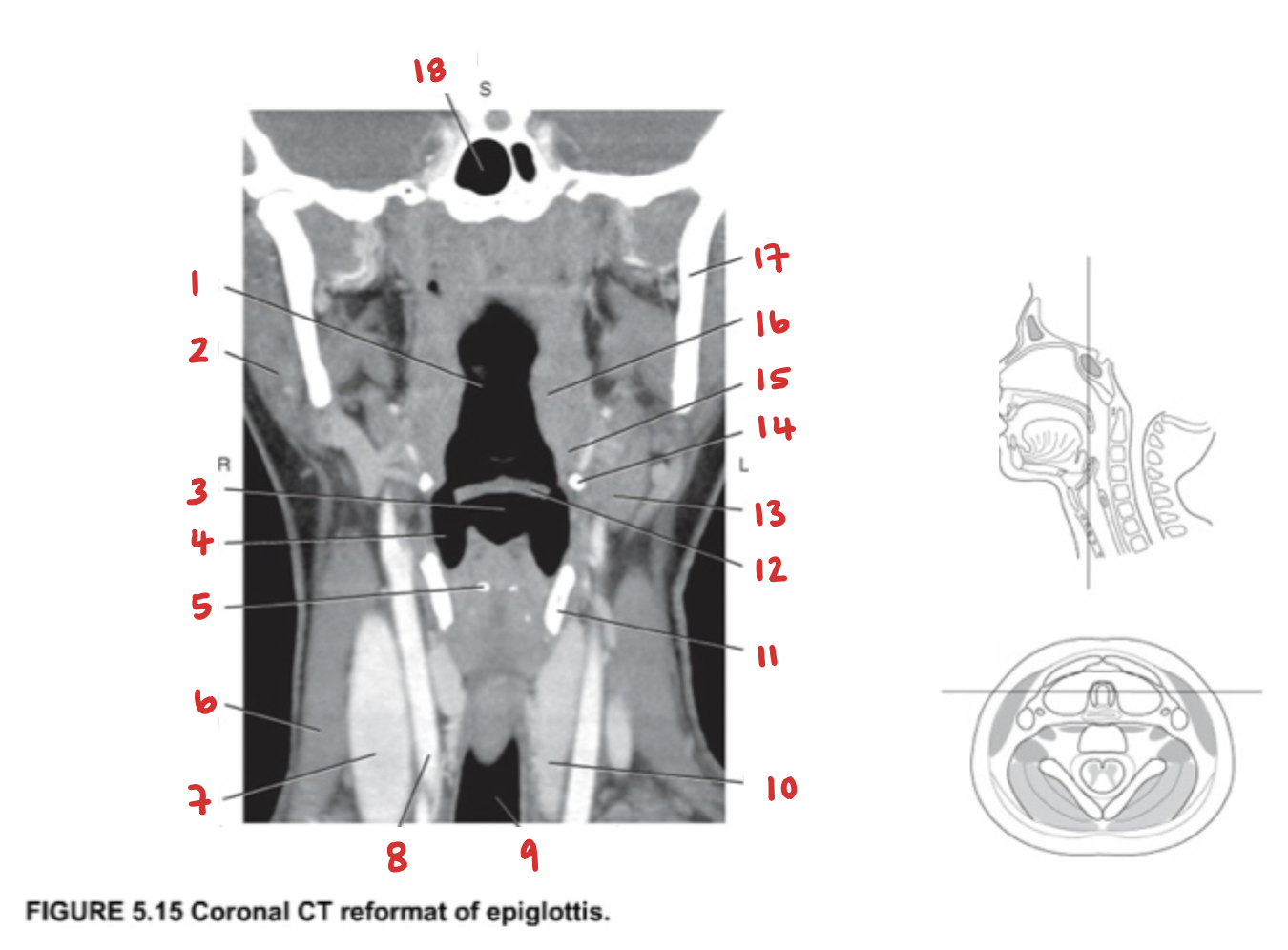
oropharynx
(1)

parotid gland
(2)
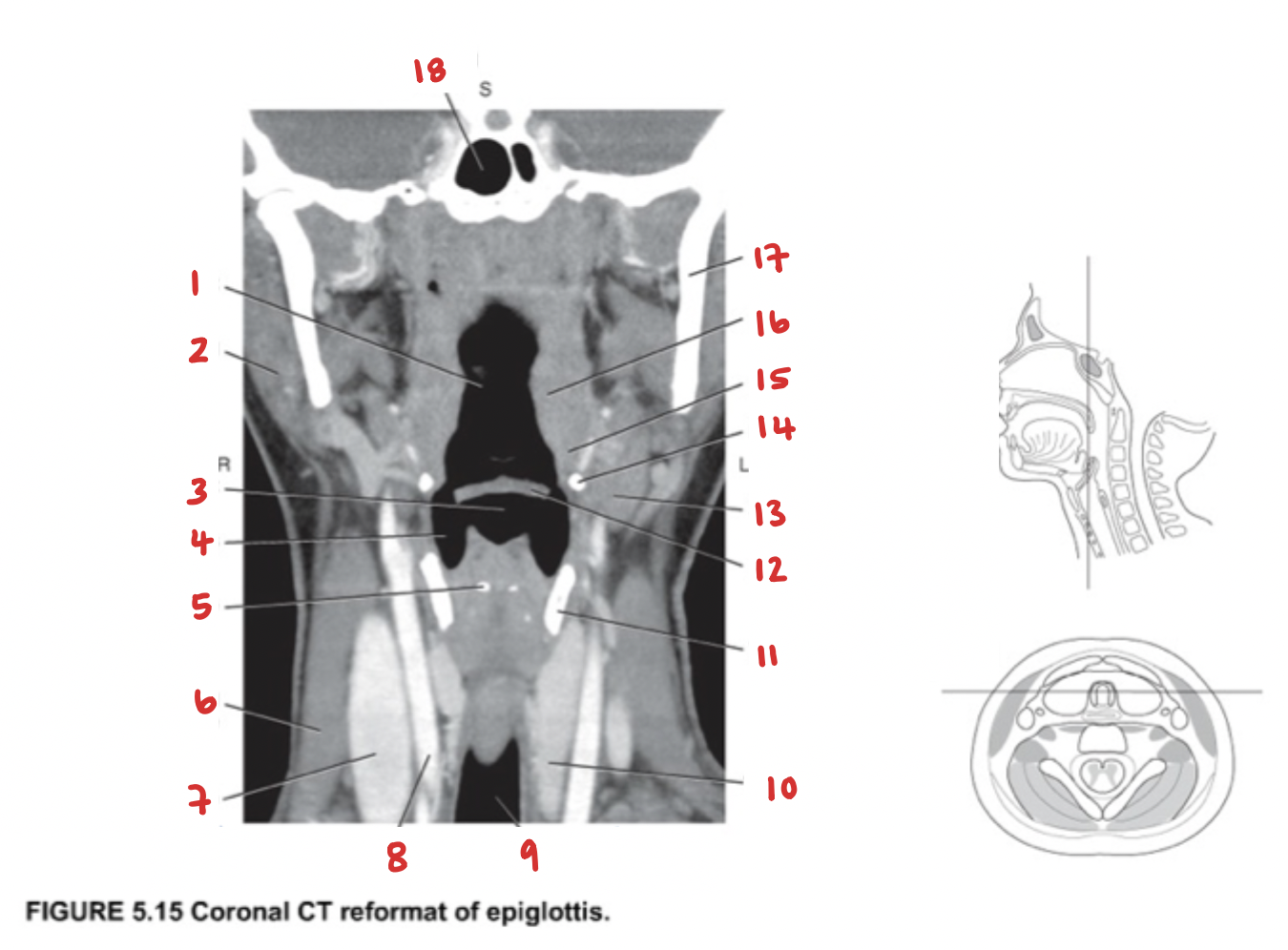
laryngopharynx
(3)
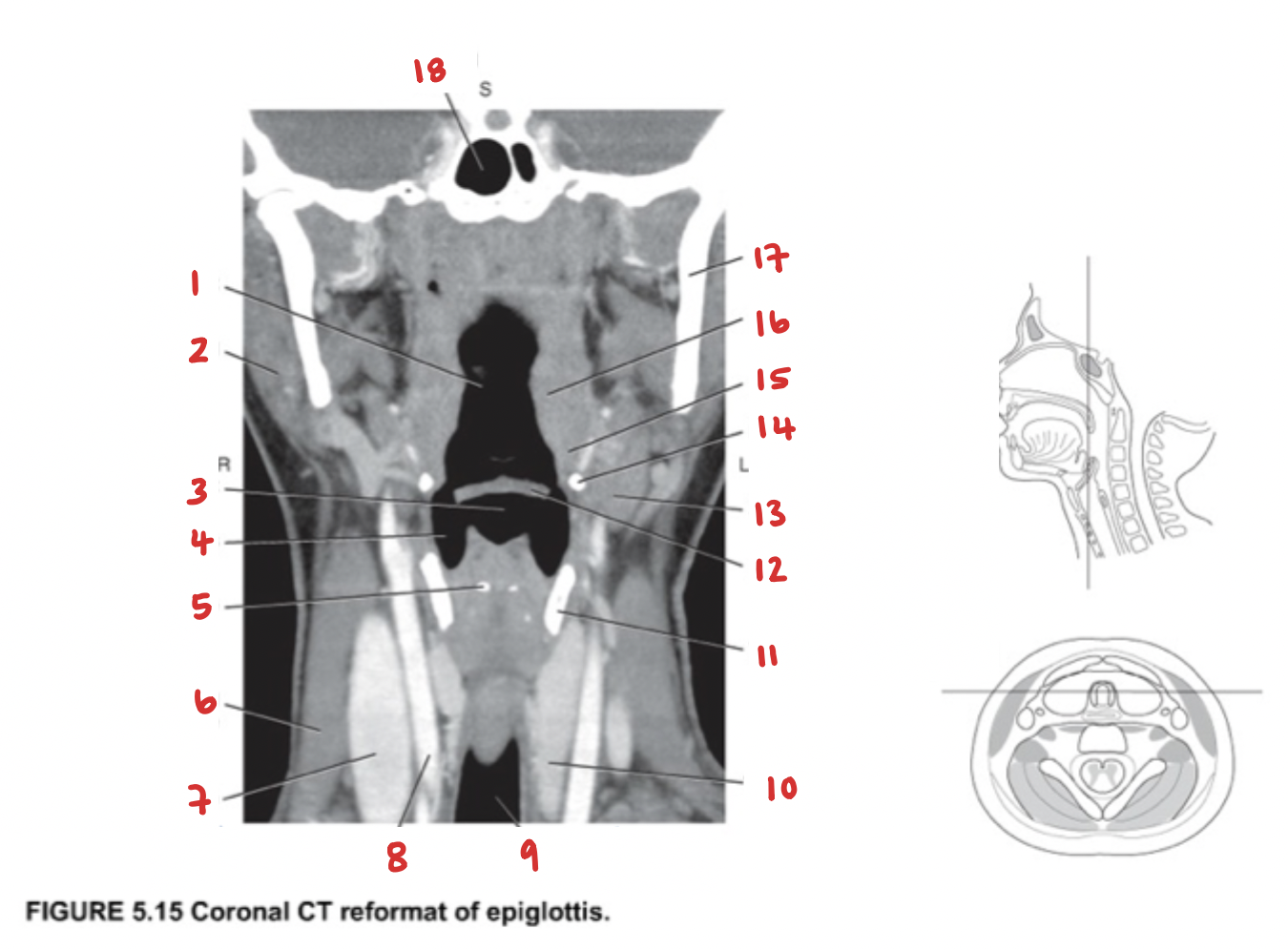
piriform sinus
(4)

arytenoid cartilage
(5)

sternocleidomastoid
(6)

internal jugular vein
(7)

common carotid artery
(8)

trachea
(9)
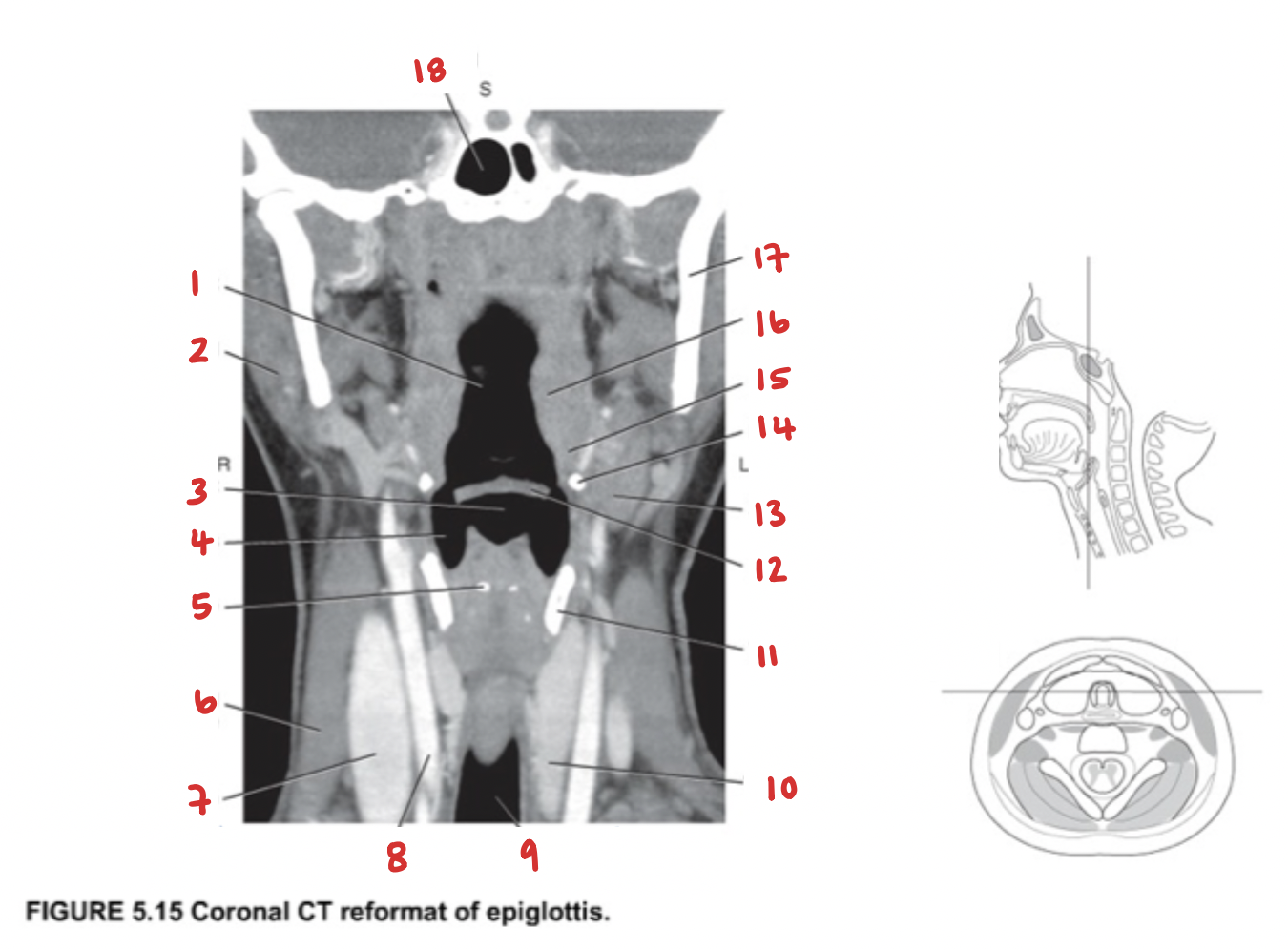
thyroid gland
(10)
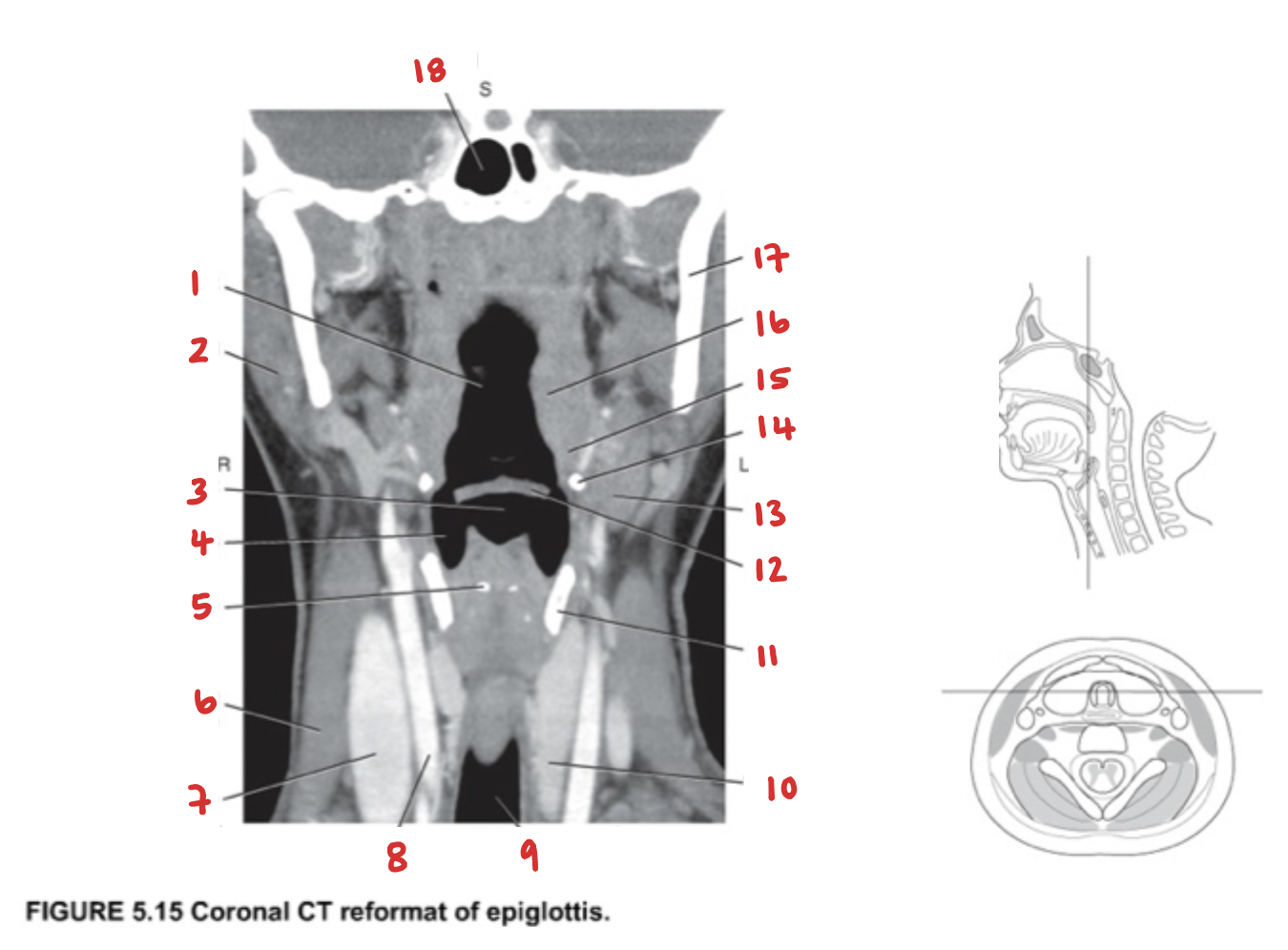
thyroid cartilage
(11)

epiglottis
(12)
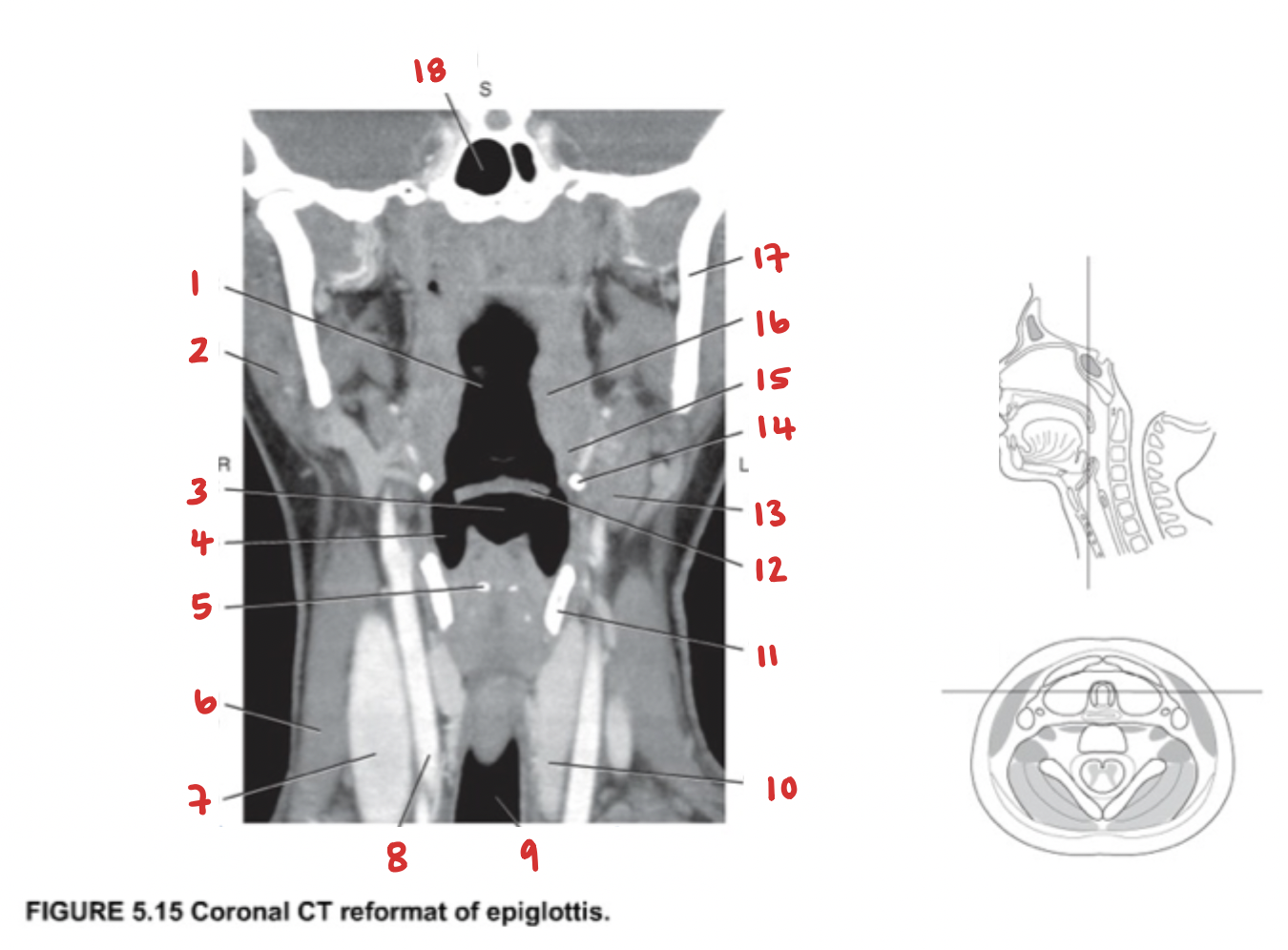
submandibular gland
(13)
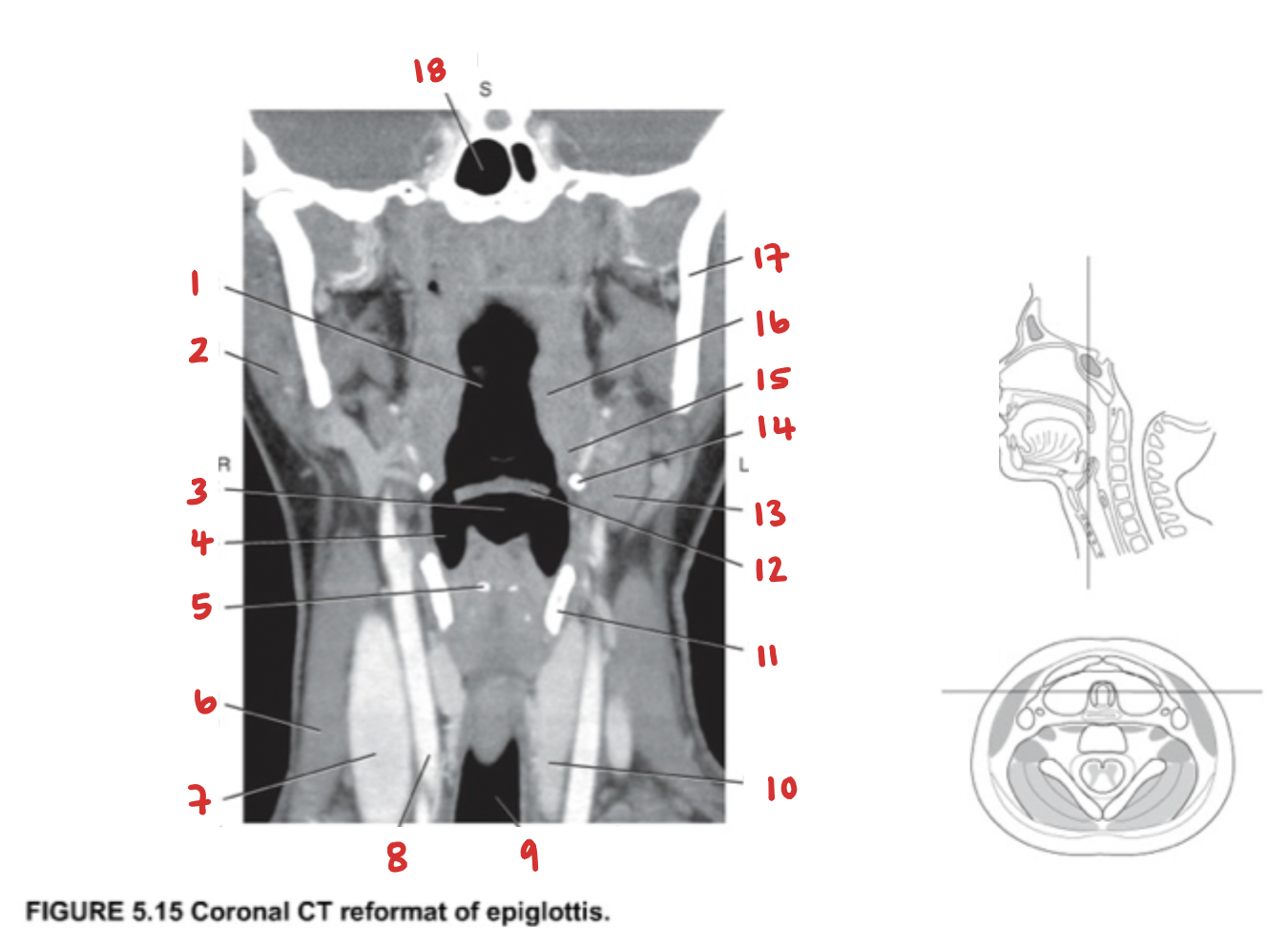
hyoid bone
(14)

digastric muscle
(15)

palatine tonsil
(16)

mandible ramus
(17)

sphenoid sinus
(18)
sternocleidomastoid
(1)

thyroid gland
(2)

larynx
(3)

cricoid cartilage
(4)

esophagus
(5)

levator scapulae
(6)

trapezius
(7)

common carotid artery
(8)

internal jugular vein
(9)
