Periodic Table Study set VMA
 Call Kai
 Learn
 Practice Test
 Spaced Repetition
 Match
 Flashcards
 Knowt Play
1/42

There's no tags or description
Looks like no tags are added yet.
43 Terms
Number of valence electrons in Group 13
3
Number of valence electrons in Group 14
4
Number of valence electrons in Group 15
5
Number of valence electrons in Group 16
6
Number of valence electrons in Group 17
7
Number of valence electrons in Alkaline-Earth metals
2
Number of valence electrons in Noble Gases
8
Halogens are also known as
Group 17(new periodic table)
Number of valence electrons in Group 1
1
What piece of information on the PT determines the identity of any atom? What does this bit of information tel you about the atoms of that element?
Atomic Number--tells you the number of protons in the nucleus of the atom of any element
group
Vertical column on the periodic table
period
Horizontal row on the periodic table
What is the name of the element found in Group 17, Pd 3?
Chlorine
The modern periodic table is organized according to ?
increasing Atomic Number
Mendeleev's PT was organized by?
increasing Atomic Mass
The elements in this family have 5 valence electrons and include N, P, and As.
Nitrogen Family
This family is made up of elements with 7 valence electrons such as F, Cl, and I
Halogens
The elements in this family only have one valence electron, such as Li, Na, and K
Alkali Metals
A group of gases that usually don't form compounds with any other elements
Noble Gases
This element was named for the Latin term Cuprum
Copper
The electrons in the outermost energy level of an atom available to bond chemically
valence electrons
Members of this all have the same number of valence electrons.
Group
Atoms that are created in a lab and not found in nature.
Synthetic/Man-made
A shortened way to represent the element's name.
Chemical Symbol
An element that has similar properties to Xenon
Helium
What can you predict by looking at an element's location in the periodic table
its properties
The elements in the same group or column have ____ properties.
similar
Which two groups contain the most reactive elements?
Groups 1/17
Which group of metals is the most reactive?
Group 1
Group 1
Alkali metals.
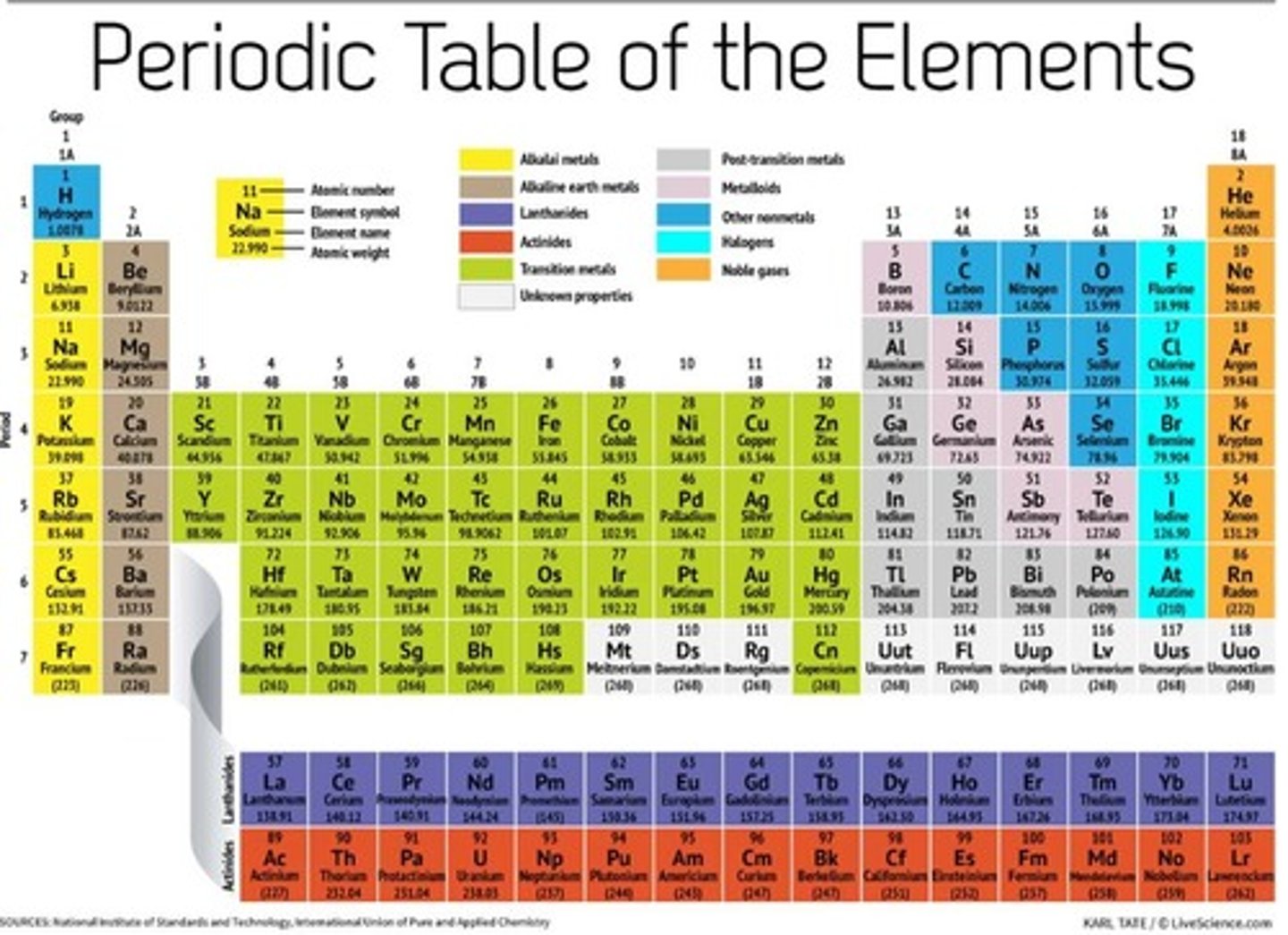
Group 18
Noble Gases
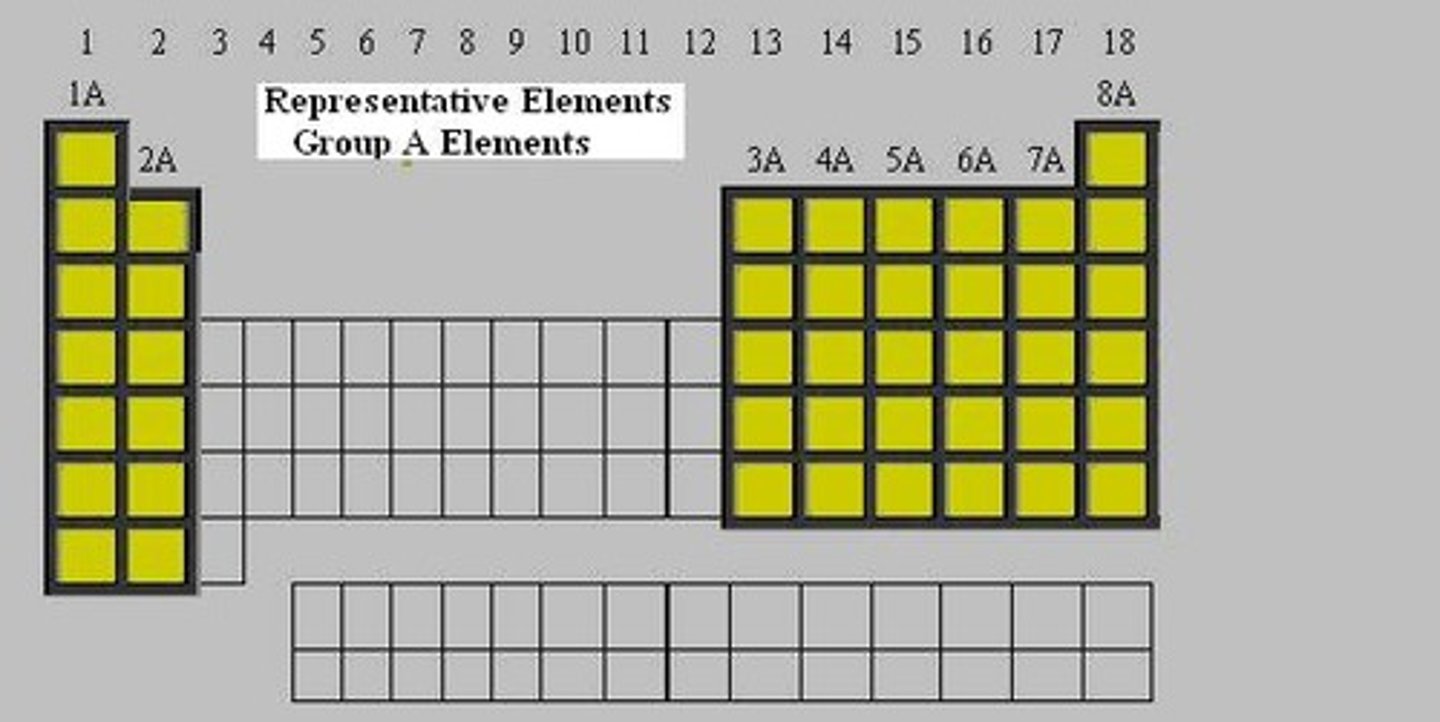
Group 2
Alkaline Earth Metals
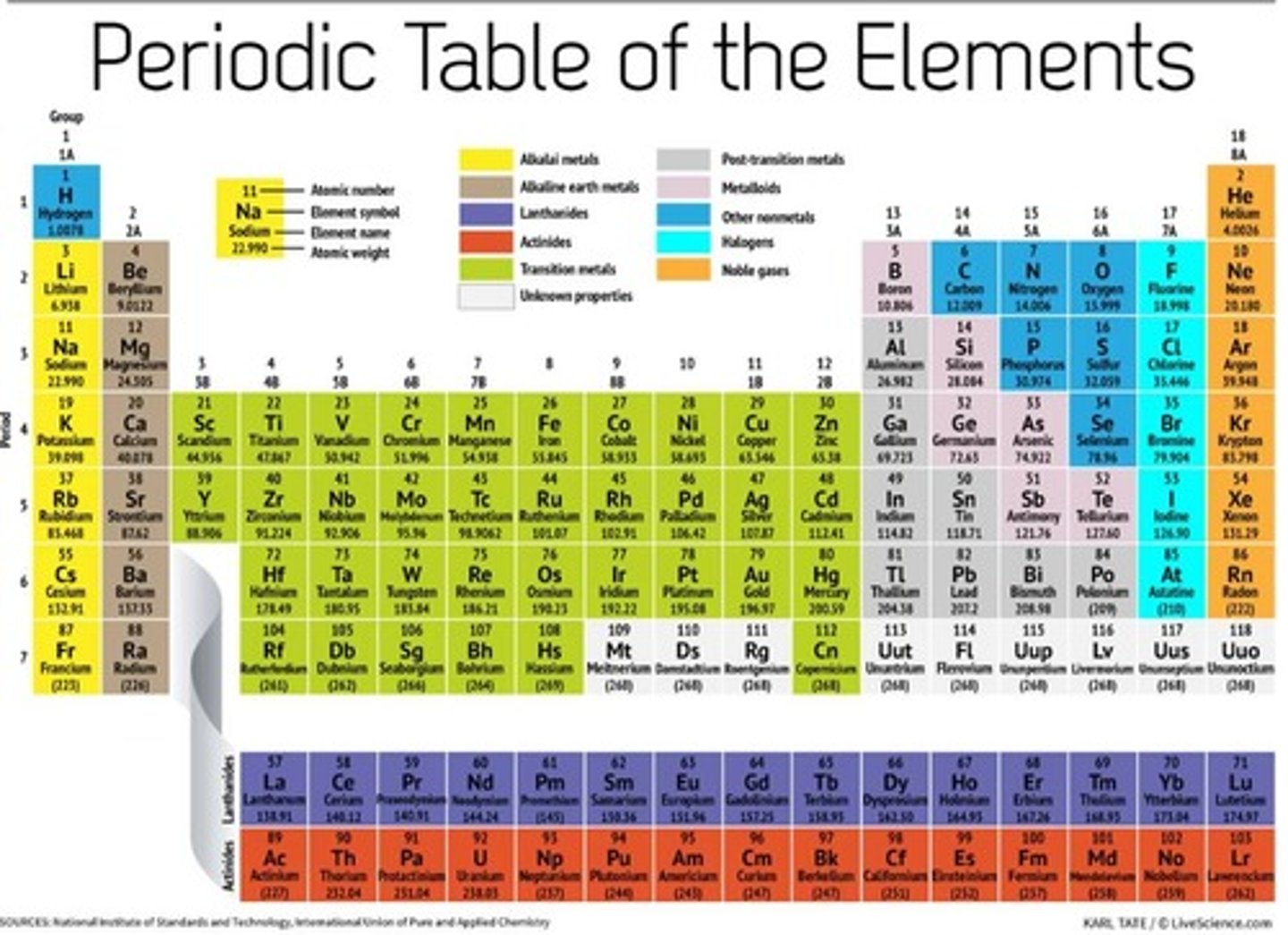
Groups 3-12
Transition metals
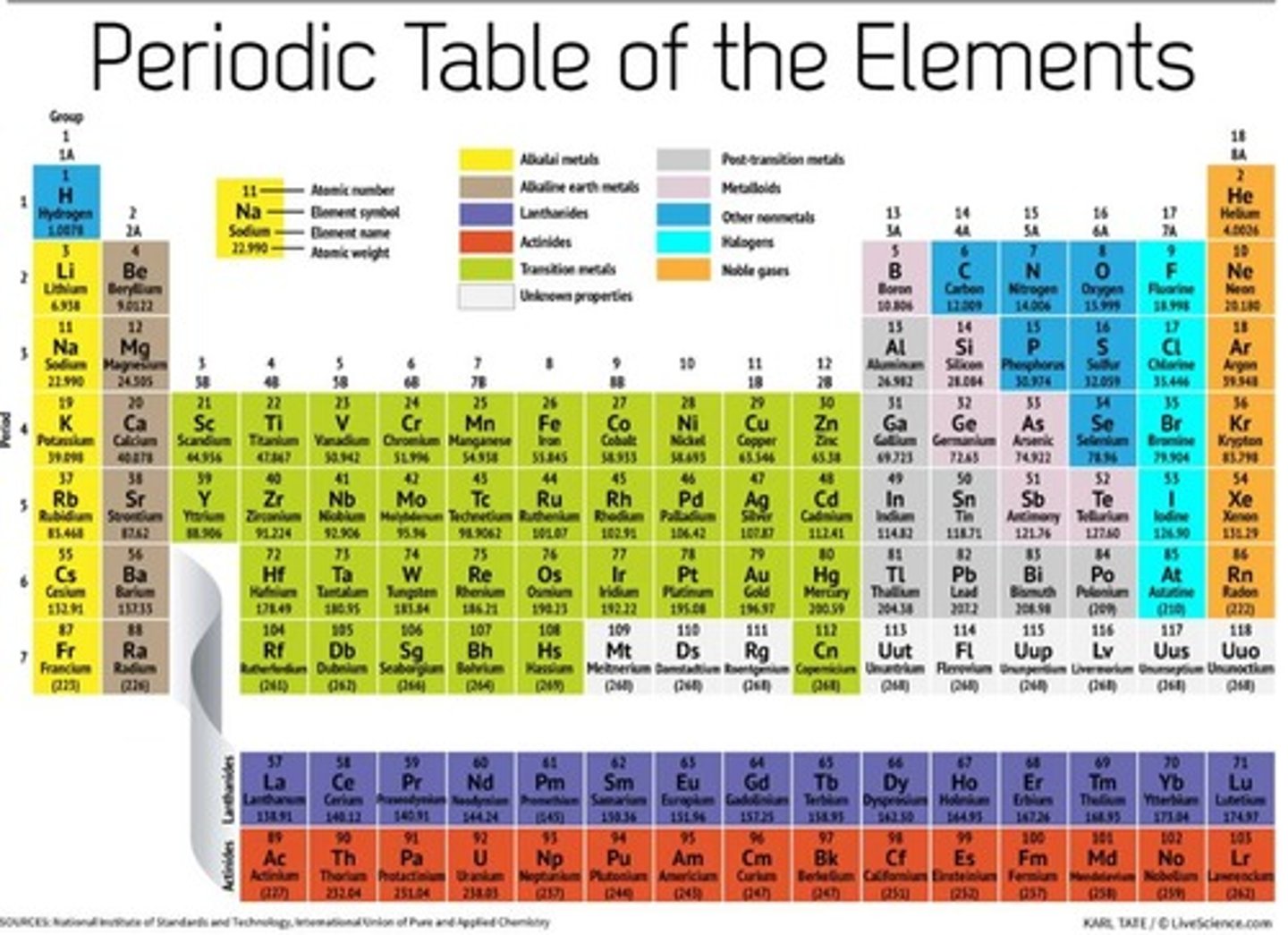
nonmetals
brittle , dull, poor conductors of heat and electricity, and have much lower melting and boiling points
Atomic Number
The number of protons in the nucleus of an atom of an element
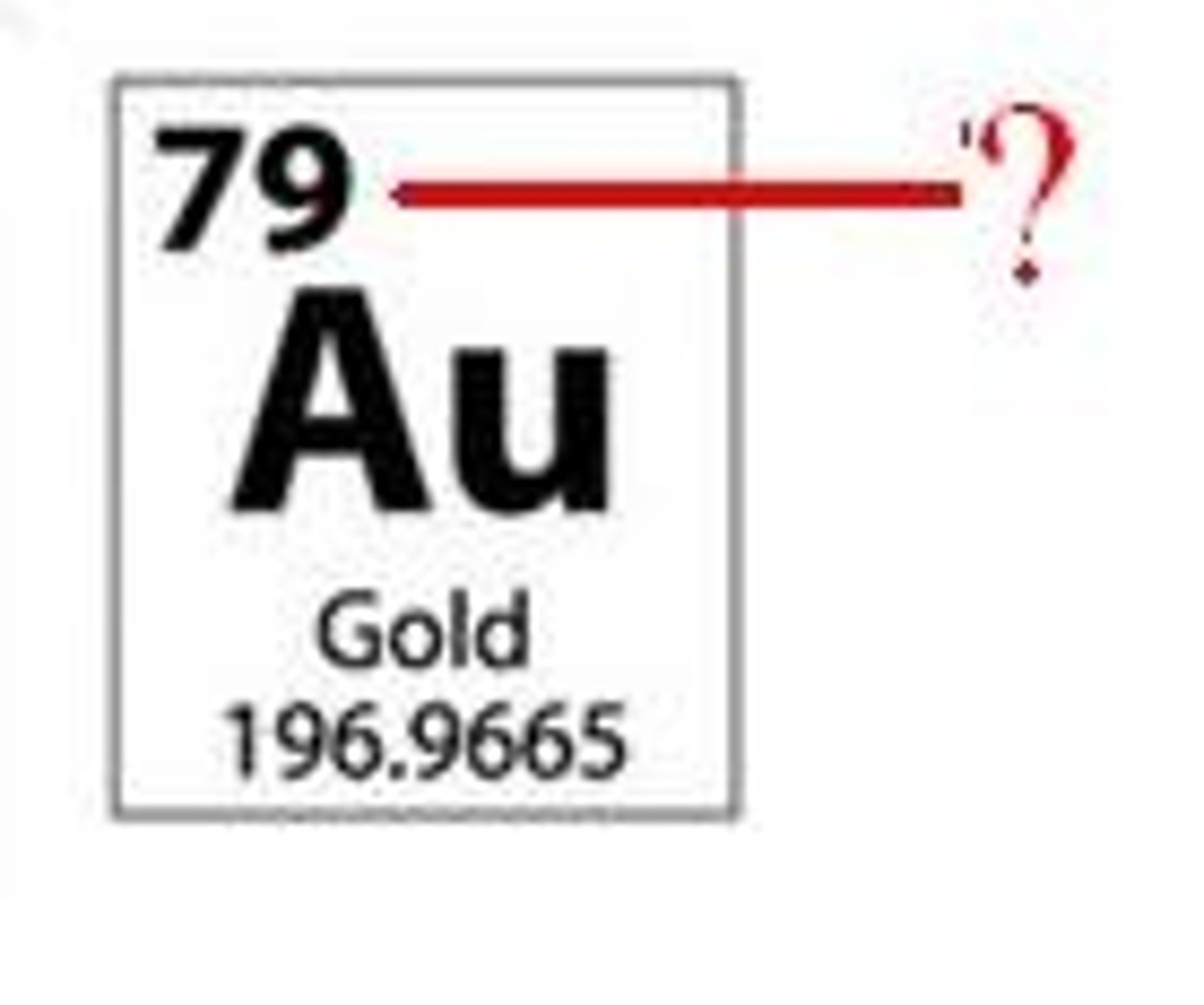
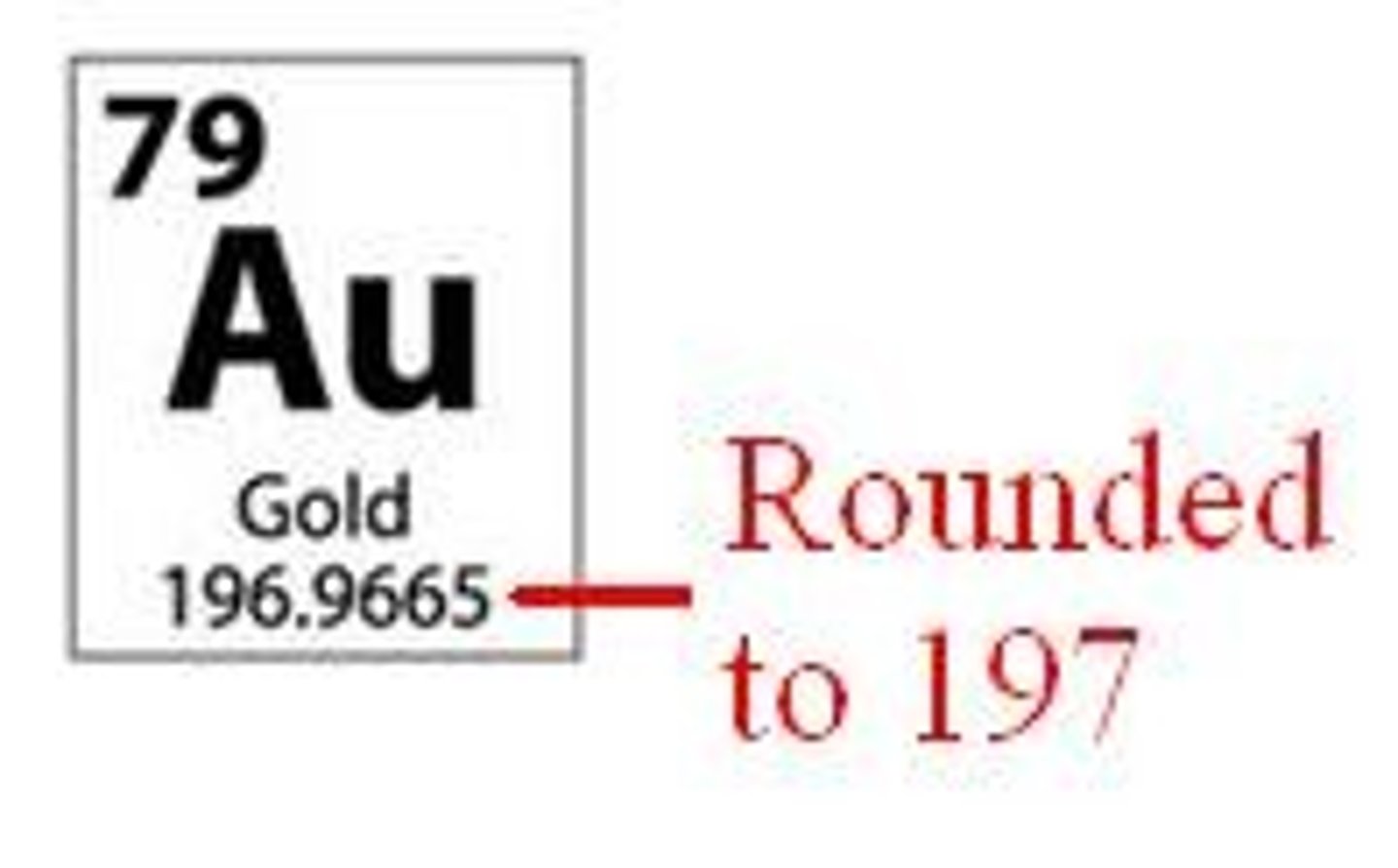
Mass Number
The total number of protons and neutrons in an atom's nucleus
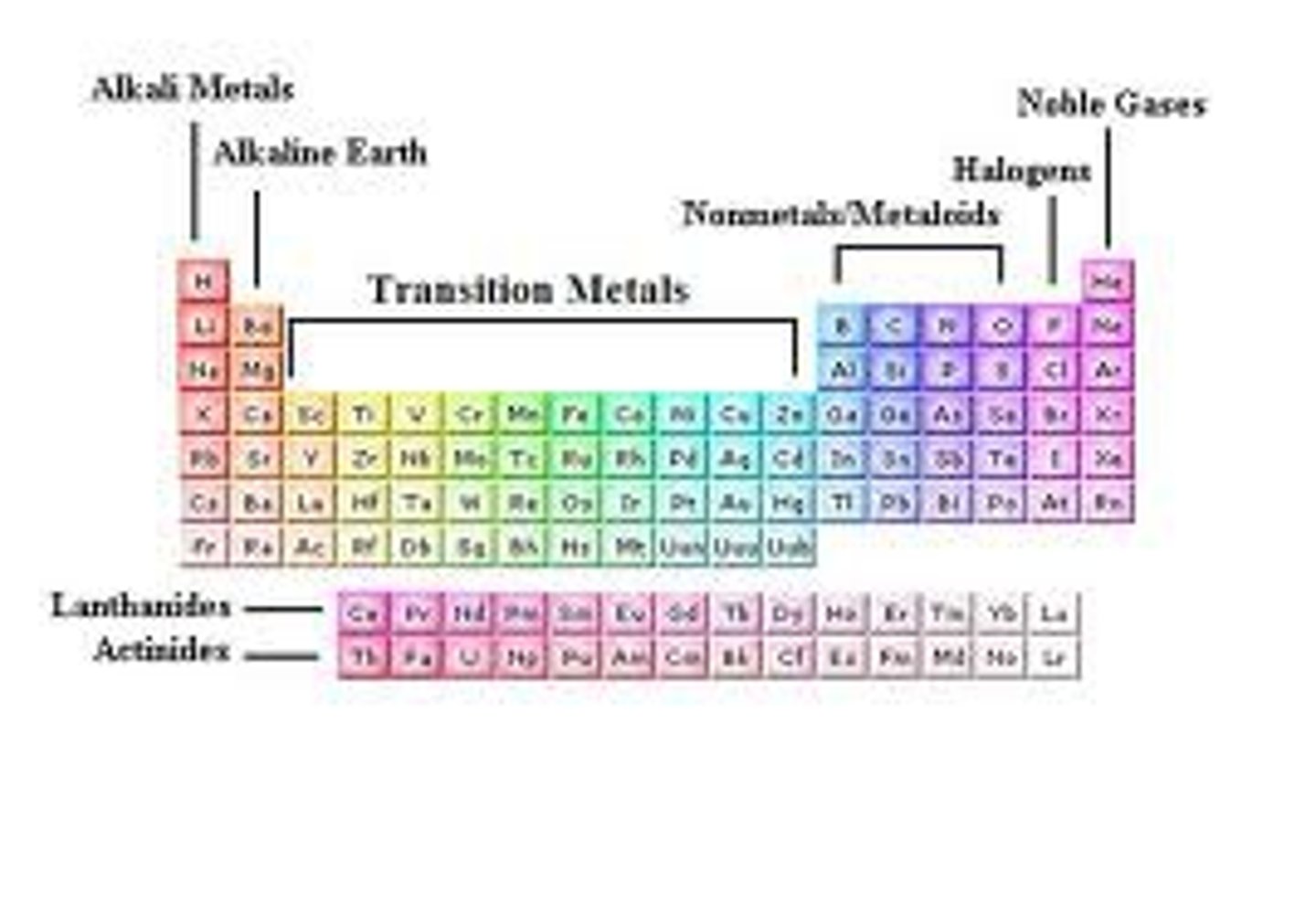
Periodic table
A chart of all chemical elements currently known, organized by their properties.
Element
pure substance that consists entirely of one type of atom
atom
the smallest unit of an element that maintains the properties of that element
metal
Elements that are good conductors of heat and electric current.
nonmetal
elements that are generally gases or brittle dull-looking solids, they are poor conductors of heat and electricity
Periodic
happening at regular intervals
Periodic Law states that
properties of elements change periodically with the elements' atomic numbers