Physiology of Vision
 Call Kai
 Learn
 Practice Test
 Spaced Repetition
 Match
 Flashcards
 Knowt Play
1/33

There's no tags or description
Looks like no tags are added yet.
34 Terms
What is the Function of the Cornea and Lens?
Cornea and lens produce a focused image on the retina
Focus is varied by changing the shape (and power) of the lens
What is the Function of the Iris?

What is the Function of the Retina?

Overview of the Structure of the Eye

View of the Retina Through an Ophthalmoscope

How is a Corneal Image Produced?

What are the Common Focusing Problems (Refractive Errors)?

How can Focusing Problems be Corrected?

What is the Structure of the Retina?
Vertebrate retina evolved back to front: ganglion cells and blood vessels are in the light path to the photoreceptors (except in the fovea
Structure of the Retina- Receptors

Structure of the Retina- Processing Layers

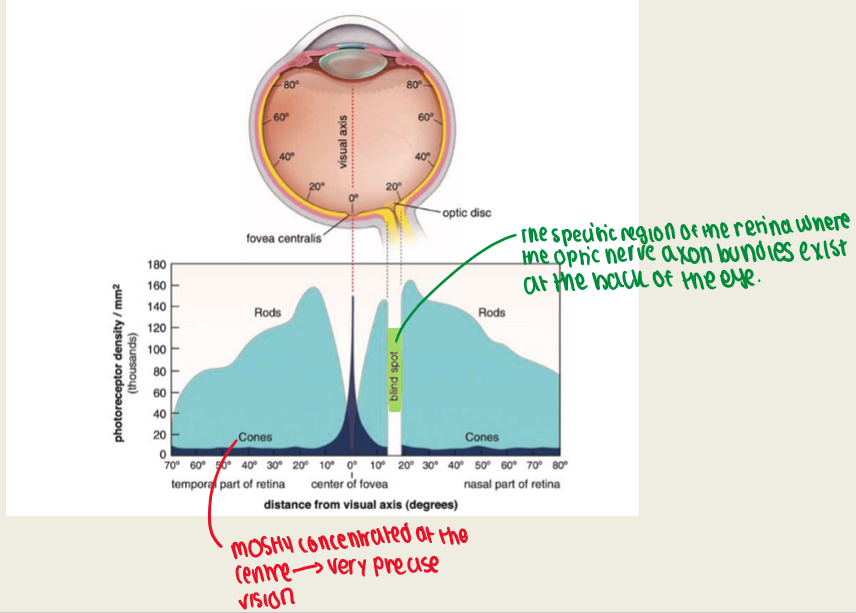
Distribution of Rod and Cones in the Retina
What is a Chromophore?
Photosensitive pigment is a membrane- bound subunit called an opsin and a second small light- absorbing component called a chromophore.
The chromophore of rods is a Vitamin A-derived carotenoid called retinal
What is the Mechanism of Rhodopsin?

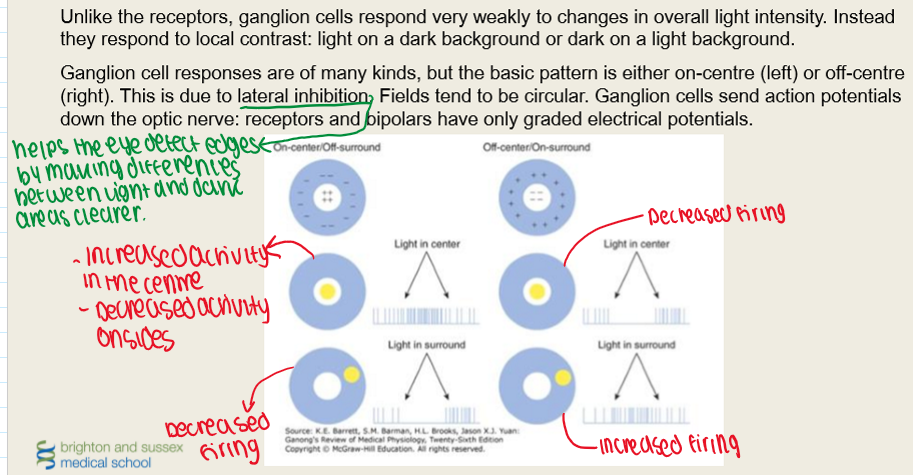
The Ganglion Cell Response- The Output of the Retina
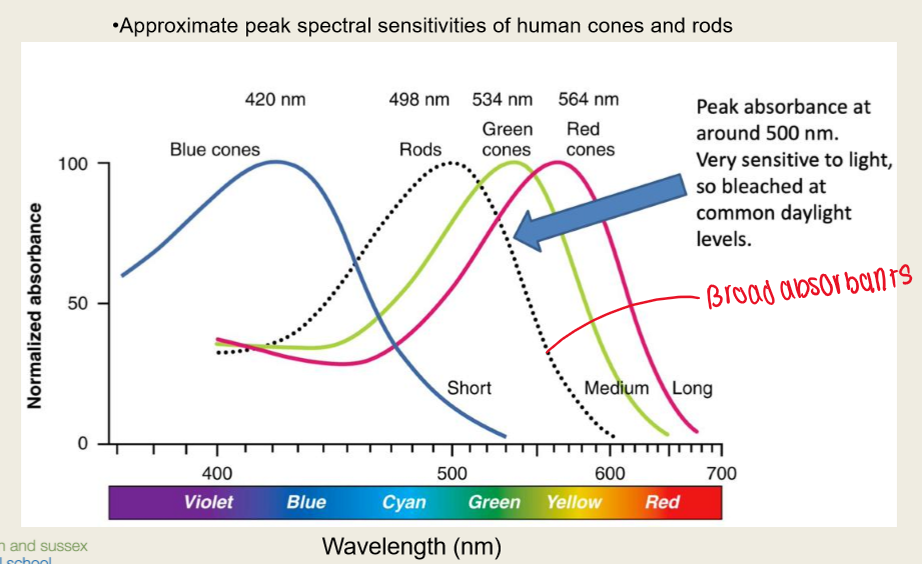
Colour Vision- Trichromacy
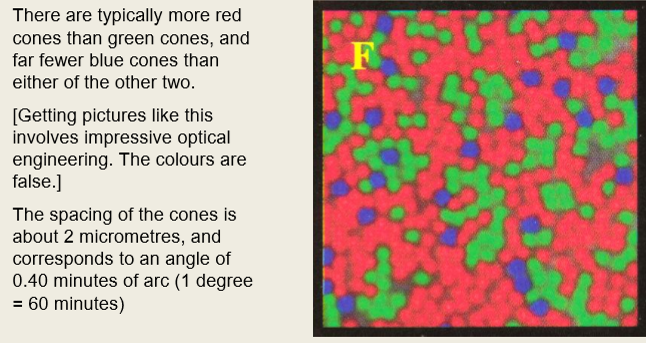
Living Cone Mosaic Near the Edge of the Fovea
What is Colour Blindness?
Colour blindness results from a loss or modification of one or more of the three cone visual pigments (cone opsins).
Colour Blindness- Red and Green
The genes for the red and green pigments are on the X chromosome and damage to one of these genes results in red/green colour blindness.
Males have only one X chromosome, but females have two (i.e. an intact spare) which is why red/green colour blindness is much more common in males (7%, versus 0.5% in females).
Colour Blindness- Blue
The blue pigment gene is on chromosome 7, which is paired in both sexes.
Blue colour blindness is consequently much rarer than red/green.
Colour Blindness- Central Achromatopsia
There is another, much rarer kind of colour blindness, which has nothing to do with the pigments, but is caused by damage to the cortical colour processing areas (V4).
This is known as central achromatopsia.
What are the Central Visual Pathways?

Responses of Cells in the Primary Visual Cortex (V1)

The Visual Cortex- Columnar Organisation

What are the Causes of Partial Loss of Vision?

What are Scotomas?

What is the Dorsal Stream in the Cortex?

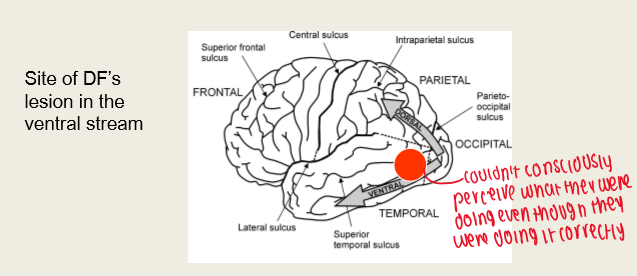
What are the Ventral Streams in the Cortex?

What is Visual Agnosia?

What is Prosopagnosia?

What is Blindsight?

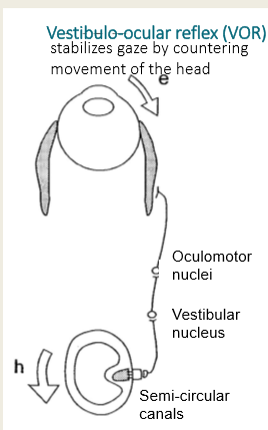
What is the Vestibulo-ocular Reflex (VOR)?
What is the Optokinetic Reflex (OKR)?

What is the Pupillary Reflex?
