EKG practice - arrhythmias
 Call Kai
 Learn
 Practice Test
 Spaced Repetition
 Match
 Flashcards
 Knowt Play
1/44

There's no tags or description
Looks like no tags are added yet.
45 Terms
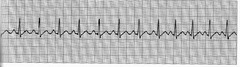
sinus tachycardia

sinus tachycardia
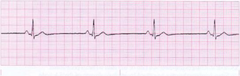
sinus bradycardia

sinus bradycardia
premature ventricular contraction

premature ventricular contraction

atrial flutter

atrial flutter

atrial fibrillation

atrial fibrillation

supraventricular tachycardia

supraventricular tachycardia

ventricular fibrillation

ventricular fibrillation

ventricular tachycardia

ventricular tachycardia

asystole

An impulse is coming from the SA node, conducting through the AV node to the ventricles with both the atria and ventricles contracting at a rate of 55. What is this rhythm?
Sinus Bradycardia
Which of the following rhythms is appropriate to defibrillate?
Atrial fibrillation with rapid ventricular response (RVR)
Pulseless ventricular tachycardia
Asystole
Paroxysmal Supraventricular Tachycardia
Pulseless ventricular tachycardia
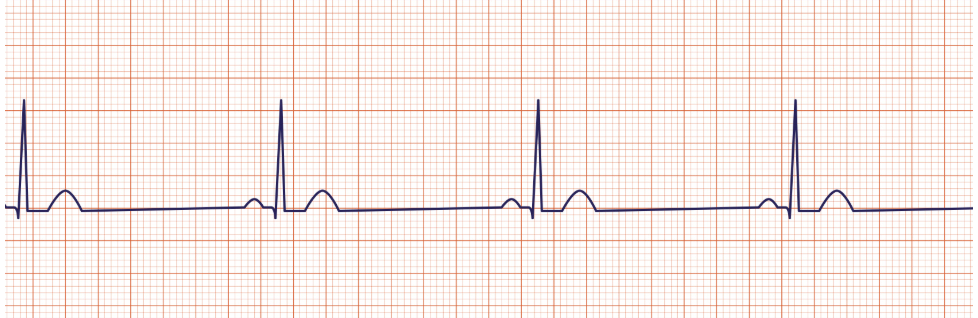
Identify this rhythm?
Sinus bradycardia
A patient has had a rhythm change. The nurse should assess for which of the following? Select All That Apply
Complaints of palpitations
Complaints of shortness of breath
Diaphoresis
Hyperglycemia
Fever
Complaints of palpitations
Complaints of shortness of breath
Diaphoresis
Sinus Tacycardia

Sinus Rhythm with PAC
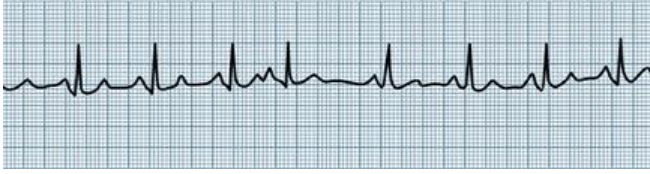
Failure to capture

Atrial Paced

Ventricular Paced

Atrial and Ventricular Paced

Your patient has just gone from Sinus Rhythm with frequent PVCs into Ventricular Tachycardia. Which of the following is true regarding this situation.
-This happens commonly and carries little risk for your patient.
-The nurse's initial response should be cardioversion.
-The patient's rhythm may deteriorate into ventricular fibrillation.
-There is a predictable hemodynamic response to this rhythm for most patients.
-The patient's rhythm may deteriorate into ventricular fibrillation.
A nurse is analyzing a patient's ECG and identifies the following characteristics: irregularly irregular rhythm, no distinct P waves, and a narrow QRS complex. What does the nurse recognize this rhythm as?
Atrial fibrillation
Sinus arrhythmia
Atrial flutter
Ventricular tachycardia
Atrial fibrillation
Which of the following electrolyte imbalances is a cause of ventricular dysrhythmias?
Hypophosphatemia
Hypernatremia
Hypercalcemia
Hypomagnesemia
Hypomagnesemia

What rhythm is this?
Sinus bradycardia
A 65-year-old patient presents with complaints of dizziness and shortness of breath. The EKG shows an irregular rhythm, absent P waves, and a narrow QRS complex with a rate of 110 beats per minute.
What is the most likely cardiac rhythm, and what is the initial nursing intervention?
Atrial fibrillation; assess the patient for signs of hemodynamic instability

What rhythm is this?
Sinus rhythm with PVC

What rhythm is this?
Ventricular fibrillation

What rhythm is this?
Monomorphic Ventricular tachycardia

What rhythm is this?
Normal Sinus Rhythm

The nurse observes the following rhythm in a client. What is the appropriate identification for this rhythm?
Normal sinus rhythm with a PAC
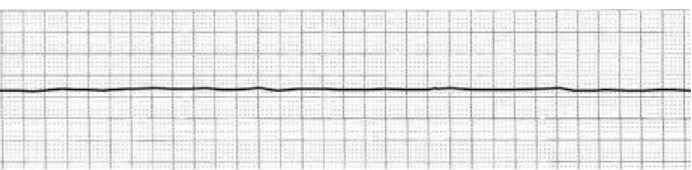
What rhythm is this?
Asystole
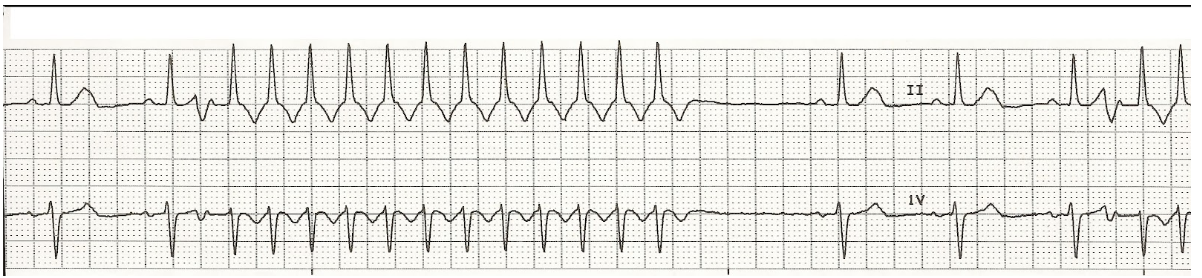
What rhythm is this?
Sinus Rhythm with a run of Ventricular Tachycardia

What rhythm is this?
Polymorphic Ventricular Tachycardia
A monitor tech calls the RN stating that his patient in room #42 has changed from sinus rhythm with frequent PVCs into ventricular tachycardia. Which of the following responses by the RN is appropriate?
"Thanks. I will go check on that patient right now."

The nurse observes the following rhythm in a client. What is the appropriate identification for this rhythm?
Sinus tachycardia with premature ventricular contractions (PVCs)
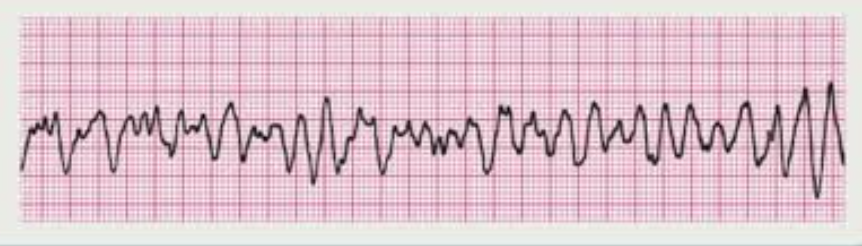
The nurse observes the following rhythm in a client. What is the appropriate identification for this rhythm?
Ventricular fibrillation

You review your client's EKG strip and notice the rhythm below. What is your appropriate recommendation after calling the provider?
Diltiazem
nondihydropyridine calcium channel blocker, It relaxes blood vessels, lowers blood pressure, and decreases heart workload

The nurse observes the following rhythm in a client. What is the appropriate identification for this rhythm?
Atrial flutter