Palliative care
 Call Kai
 Learn
 Practice Test
 Spaced Repetition
 Match
 Flashcards
 Knowt Play
1/14

There's no tags or description
Looks like no tags are added yet.
15 Terms
What is palliative care?
approach that improves the quality of life of patients, and their families, facing problems associated with life-threatening illness
prevents and relieves suffering through the early identification, correct assessment, and treatment of pain and other disease-related conditions
Define quality of life
Individual's satisfaction with its physical health, social environment and ability to interact with that environment
Split into three domains: physical, social, emotional
How can you assess QoL in a consult room?
Questionnaire which covers various domains
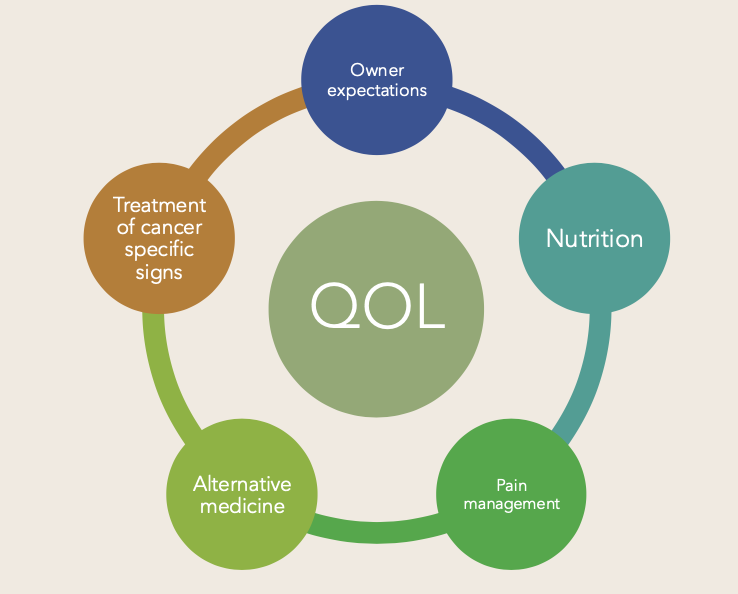
What are the components of palliative care?
Owner expectations
Treatment of cancer specific signs
Nutrition
Pain management
Alternative medicine
How can you utilise nutrition in palliative care?
Establish current state (BCS/weight/muscle condition)
Recommend well balanced diet (avoid raw food diet)
Maintain balanced nutrition, adequate food intake, and hydration
Can use feeding techniques:
Slow change to more appetent, change consistency, small freq meals, heating meals
Assisted feeding techniques: oesophagostomy tube, percutaneous endoscopic gastrostomy (PEG) tubes
What are some comorbities to consider when developing a nutrition plan?
Chronic kidney disease (low protein)
Diabetes mellitus (slow-release carbohydrates)
Hyperthyroidism (high-protein, limited-carbohydrate)
Osteoarthritis (long-chain omega-3 polyunsaturated fatty acids & anti-oxidants)
What medications can you use alongside nutrition for palliation?
Vomiting/nausea: maropitant, ondansetron
Appetite stimulant: mirtazapine, capromorelin
How can pain be recognised?
Physical responses
Reactive on palpation
Self-trauma (licking, scratching)
Vocalisation
Measurable parameters
Altered appetite
Tachypnoea/tachycardia
Unkempt coat
Activity, gait and posture
Reduced activity
Posture, ambulation, gait
Attitude and expression
Attitude change (aggression, dullness, shyness)
Facial expression (low head carriage, squinting)
Sleep disturbance
What are the two 'types' of pain and how can this alter how you manage it?
Acute pain
Chronic pain
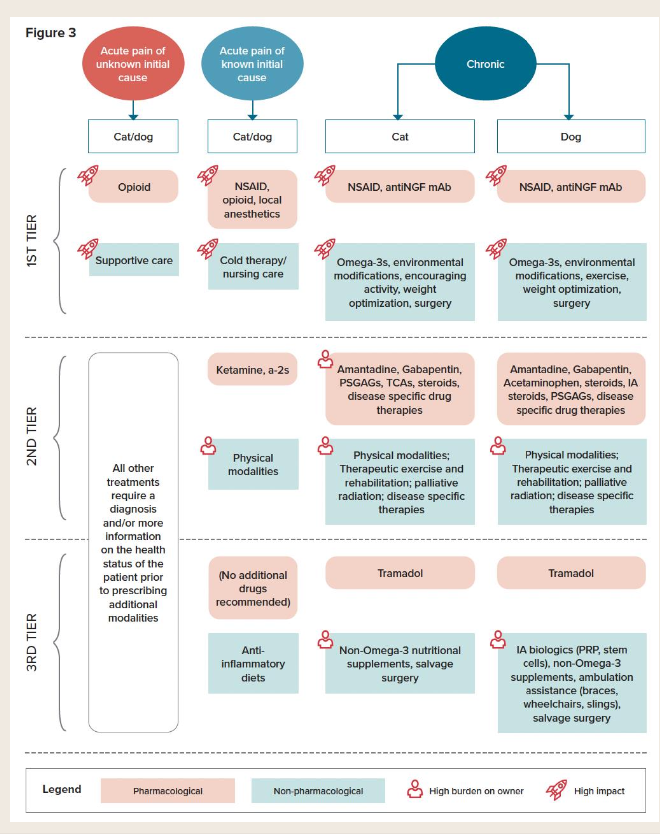
Decision tree for prioritising pain management therapies (for reference)
Tier system (tier 1 shows most evidence of reduction of pain)

What mechanisms cause pain in osteosarcoma?
Tumour associated inflammation (due neoplastic osteoblasts)
Bone destruction (due osteoclasts)
What are the possible analgesia options for osteosarcoma?
Multimodal (where amputation not an option)
Hypofractionated radiation therapy
Cell death of both neoplastic osteoblasts and resorbing osteoclasts
1-4 times in palliative setting, minimal side effects
Biphosphonate infusions (e.g.- pamidronate or zoledronate)
Induced osteoclast apoptosis and inhibits bone resorption
provide effective analgesia and increased bone mineral density
Relevant for other sarcomas as well (fibrosarcoma, chondrosarcoma, non-specific oro-facial sarcoma)
What are some alternative medicine options available for palliative care?
Acupuncture (neuromodulation, pain control)
Herbs/ mushrooms
Cannabinoids (poss analgesia, anti-emetic/appetite stimulant effect, anti-tumour effects)
poss neuro signs + liver toxicity
What are the options for treatment of cancer specific pain?
Amputation
Surgical excision of ulcerated/ painful mass
Stenting: minimally invasive but technically challening
Urethra
Trachea
Cystotomy tubes
Urethral obstruction (TCC)
Not a long-term solution
Risk of abdo mets
What factors contribute to the decision to euthanise?
Extent and nature of the disease and injuries
Lack of treatment options
Prognosis
Expected quality of life after treatment
Availability and likelihood of success of treatment
Age
Comorbidities/health status
Ability of the owner to pay for private treatment
What are some peri-mortem effects of euth?
urinary/faecal incontinence
agonal breathing