622 10/28 GLA pt 2 Bacteria and Viruses
 Call Kai
 Learn
 Practice Test
 Spaced Repetition
 Match
 Flashcards
 Knowt Play
1/52

There's no tags or description
Looks like no tags are added yet.
53 Terms
Simple Bacterial Replication
replicates circular chromosome, grow cell wall and components, split one bacteria into two cells
may not actually physically come apart, and may stick together as chains
Gram + vs Gram - Bacterial Replication
gram +: wall is built between the bacteria
gram -: constriction between two cells that then blebs off
Bacterial Growth Chart

3 Phases of Bacterial Growth
lag phase
log phase
stationary phase
Lag Phase
first phase of bacterial growth, metabolically active but not much replication, acclimation
building everything they need to replicate
Log Phase
second phase of bacterial growth, exponential growth with steep growth, doubling time varies widely among microbes
ex: e coli is 20 mins, m tuberculosis is 800 min
Stationary Phase
third phase of bacterial growth, less replication, less metabolism, nutrients depleted
rate of cell division = cell death
death rate eventually outpaces growth rate
Bacteriostatic Drugs
stop bacteria replication, push bacteria into stationary phase
Bacteriosidic Drugs
burst/lyse and kill cells, push bacteria into death/decline phase
Bacterial Spores
made by a few gram + (bacillus and clostridium), form endospores
Endospores
made to resist environmental stress, dormant until exposed to water, difficult to kill which makes them difficult to get rid of for healthcare
can withstand heat, radiation, pH, pressure, and chemicals
What makes endospores so resistant?
they are dormant until exposed to water
Sporulation
axial filament formation
septum formation and forespore development
spore develops within bacteria, making it very resistant
Endospores for Identification
central
subterminal
terminal/swollen

Spore Stain

Anaerobic Bacterial Infections (no O2)
deep tissue, abscess formation, foul-smelling pus, gangrene, severe tissue damage
Oxygen Tolerance
bacteria can tolerate certain concentrations of O2, pathogenic bacteria have preference of anatomical site based on O2 preference
tool to grow, differentiate, and identify bacteria
Oxygen Tolerance Diagram

Obligate Aerobe
require oxygen, so it will only grow at the top of the test tube
ex: bortadella pertussis
Obligate Anaerobe
oxygen is toxic, so it will only grow at the bottom of a test tube
ex: clostrinium botulinum
Facultative
has an oxygen preference, but can grow in other
ex: e. coli
Oxygen in Different Areas of the Body

Intracellular Bacterial Growth
growth in host cell, can be obliagte or facultative
Obligate Intracellular
they cannot replicate without host cell machinery or energy
Obligate Intracellular Bacteria
chlamydia
rickettsia
coxiella
certain myobacteria
Facultative Intracellular
they prefer intracellular living (especially to replicate) but can survive outside of host cells
General Requirements for Bacterial Growth
oxygen (either presence or absence)
carbon source
nitrogen
energy source
water
Carbon
bacteria utilize different carbon sources and produce different products
we exploit this characteristic to differentiate and identify specific bacteria, and to make foods
Energy Source
derived from breakdown of organic substrates, known as catabolism, not just glycolysis
substrates: carbs, lipids, proteins
what is the energy then used for?
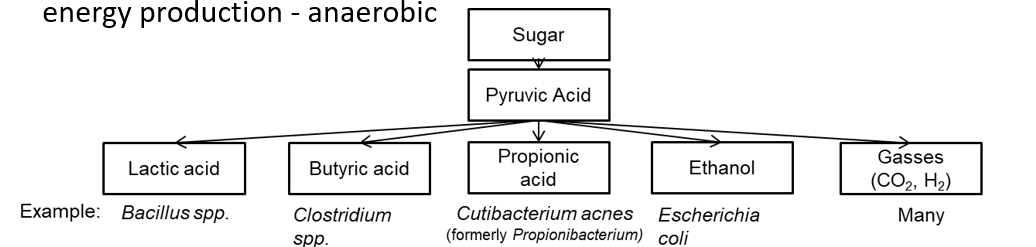
Fermentation
process where organic molecule acts as an electron donor and one or more of its organic products act as a final electron acceptor, resulting in anaerobic energy production
Fermentation as Differentiation
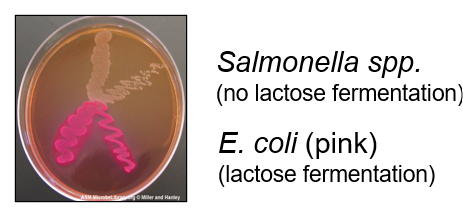
MacConkey Agar is used to test for the ability to ferment lactose
ex: salmonella does not and is clear, e coli does and is pink
Bacterial ETC
localized to cytoplasmic/inner membrane, more complex and shorter so less energy is produced
utilized to differentiate bacteria
2 Ways ETC is Used to Differentiate Bacteria
oxidase test
nitrate reduction test
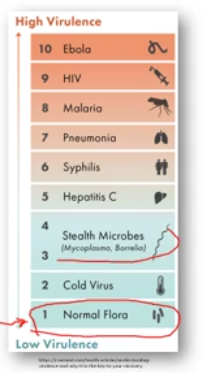
Virulence
how harmful a given microbe is, based on their growth/energy use/products/metabolism
low virulence = less harmful
high virulence = more harmful
Common Bacterial Virulence Factors
adhesion and invasion (proteins and polysaccharides)
secretion
toxins
iron acquisition (from host, can lead to anemia)
siderophores
antibiotic resistance enzymes
More Virulence Factors =
more pathogenic
Adherence to Cells as Virulence Factor
adhesins and biofilms
Adhesins
mediate adherence to cells and contribute to virulence
pili, glycocalyx
spike proteins
Biofilms
protective matrix, contributes to virulence
resistant to antibiotics and antibodies, slows healing
2 Things that Contribute to Bacterial Invasion
collagenase and hyaluronidase
coagulase
Collagenase and Hyaluronidase
contributes to bacterial invasion, degrade collagen and hyaluronic acid and break down extracellular matrix
allows spread through subcutaneous tissue
Coagulase
contributes to bacterial invasion in blood, accelerates formation of fibrin clot from fibrinogen, clot may protect microbe from immune system infiltration
may coat microbe with fibrin as protection as well
Exotoxins
gram + or gram -, extremely toxic, usually do not produce a fever in the host
Endotoxin
only gram -, part of lipid a in LPS, moderately toxic, usually produces fever in the host
What do bacteria use iron for and why is iron acquisition contributing to virulence?
they use it for metabolism, replication, and production of virulence factors
it can take iron away from the host and make them anemic
Immune Evasion Examples
encapsulation and biofilms
adaptation to live within cells, including immune cells
proteases that cleave the antibodies
mutations
molecular mimicry (camoflauge)
resistance to enzyme destruction
Bacterial Targets of Antibiotics
antibiotics target specific characteristics of bacteria
Mechanisms of Antibiotic Resistance
enzymatic inactivation of antibiotic
modification of the bacterial target via mutation
active export of drug out of bacteria using pumps
mutation in porin to reduce bacterial permeability
biofilm formation
Enzymatic Inactivation of Antibiotic
mechanism of antibiotic resistance, microbes that have b-lactamase can inactivate penecillin, cephalosporins, and carbapenems (the b-lactams)
Modification of the Bacterial Target via Mutation
mechanism of antibiotic resistance, one certain mutation in peptidoglycan can render vancomycin ineffective
Active Export of Drug out of Bacteria Using Pumps
mechanism of antibiotic resistance, multidrup-resistance pumps (MDR pumps) and efflux pumps can pump out tetracyclines
Mutation in Porin to Reduce Bacterial Permeability
mechanism of antibiotic resistance, porin structural change can stop penicillin from entering bacteria
Biofilm Formation
mechanism of antibiotic resistance, inhibits access of antibiotics