the role of membranes and structure and role of molecules across membranes
 Call Kai
 Learn
Learn Practice Test
 Spaced Repetition
 Match
Match Flashcards
 Knowt Play
1/23

There's no tags or description
Looks like no tags are added yet.
Name | Mastery | Learn | Test | Matching | Spaced | Call with Kai | Chat |
|---|
No analytics yet
Send a link to your students to track their progress
24 Terms
cell surface membrane
the partially permeable barrier between a cell and its environment
controls what enters and leaves the cell
site of chemical reactions
site of cell communications (cell signalling)
partially permeable
only some substances can pass through
compartmentalisation
membranes keep the insides of the organelles sperate from the cytoplasm
cell signalling
communicating between cells and cell recognition
a molecule released by one cell attaches to another and causes a response
seven features of the fluid mosaic model
glycoprotein
glycolipid
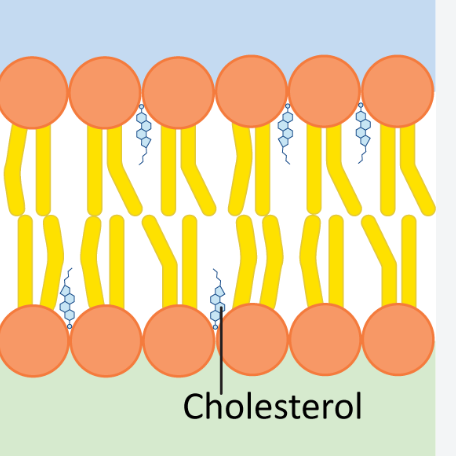
cholesterol
carrier protein
intrinsic protein
channel protein
phospholipid bilayer

label the phospholipid bilayer
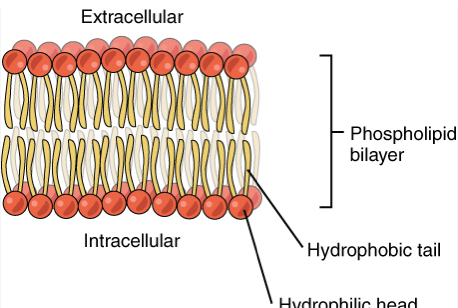
phospholipid bilayer
7nm thick
provides a barrier to large polar molecules
fat soluble substances or very small molecules can pass straight through the membrane (steroids, H2O CO2, fats cholesterol and fat soluble vitamins
cholesterol
stabilises the membrane
regulates fluidity by binding to phospholipids
reduces the permeability to charged particles
glycolipids and glycoproteins
glyco- = carbohydrate attached
glycolipids = carbohydrate and lipid
glycoproteins = carbohydrate and protein
stabilise the membrane by forming H bonds with surrounding water molecules
Receptors - for messenger molecules in cell signalling, drugs, hormones and antibodies
Antigens - for self recognition and the immune response

intrinsic proteins
span the width of the membrane
transport water soluble charged particles
channel proteins
carrier proteins
channel proteins
intrinsic proteins
passage way for water and charged substances to diffuse down a concentration gradient
carrier proteins
intrinsic proteins
change shape to move substances from one side of the membrane to the other
this can be down a concentration gradient or against (facilitated diffusion)
extrinsic proteins
AKA peripheral proteins
Present in one side of the bilayer
Normally have hydrophilic R-groups on their surface
diffusion
the net movement of atoms or molecules from an area of high concentration to an area of low concentration
passive- no energy required
simple diffusion
particles pass directly through the phospholipid bilayer
membrane must be permeable to the particles
e.g. non-polar, small
facilitated diffusion
large or polar molecules pass through the cell surface membrane with the aid of a protein
proteins are specific to the molecule that they carry
passive - no energy required
increasing the rate of diffusion
greater difference in concentration (higher concentration gradient)
increase temperature (more kinetic energy)
thinner membrane (shorter diffusion pathway)
Agar jelly membrane testing - method
cut agar into 3cm length cubes, 2cm and 1cm
place each into boiling tube
add 10cm³ hydrochloric acid per tube, leave 10 mins
agar contains indicator phenolphthalein - turns pink in presence of an alkali and some sodium hydroxide - changes colour of the indicator in agar
remove blocks and measure distance diffused - distance colour has changed
equation of sphere
surface area
volume
sa= 4 π r ²
vol= ⁴⁄₃ π r ³
active transport
movement of molecules against a concentration gradient (low to high)
uses a carrier protein and ATP energy (stores energy in bonds → triphosphate)
each carrier protein is specific
types of active transport
endocytosis -
pinching off from the membrane
→ enters pockets in the membrane
creates vesicles into the cytoplasm
exocytosis-
fuse membrane bound vesicle with the membrane
to release outside of cell
impact of solvents on membranes
solvents like alcohol → break down membranes + prevent normal functioning
alcohol= non-polar molecule → disrupts cell membranes and prevents normal functioning
water= no disruption → its a polar solvent + phospholipids wont dissolve in it
impact of temperature on membranes
phospholipids in cell membrane = constantly moving
increase in temperature = increase in kinetic energy = membrane is more fluid → breaks down completely
HAVENT DONE SERIAL DILUTIONS