MECH 328
 Note
Note Call Kai
 Learn
Learn Practice Test
 Spaced Repetition
 Match
Match Flashcards
 Knowt Play
1/168

There's no tags or description
Looks like no tags are added yet.
Name | Mastery | Learn | Test | Matching | Spaced | Call with Kai | Chat |
|---|
No analytics yet
Send a link to your students to track their progress
169 Terms
Put Tuckman's stages of team development in order based on the degree of team development, from least to most.
Forming, Storming, Norming, Performing
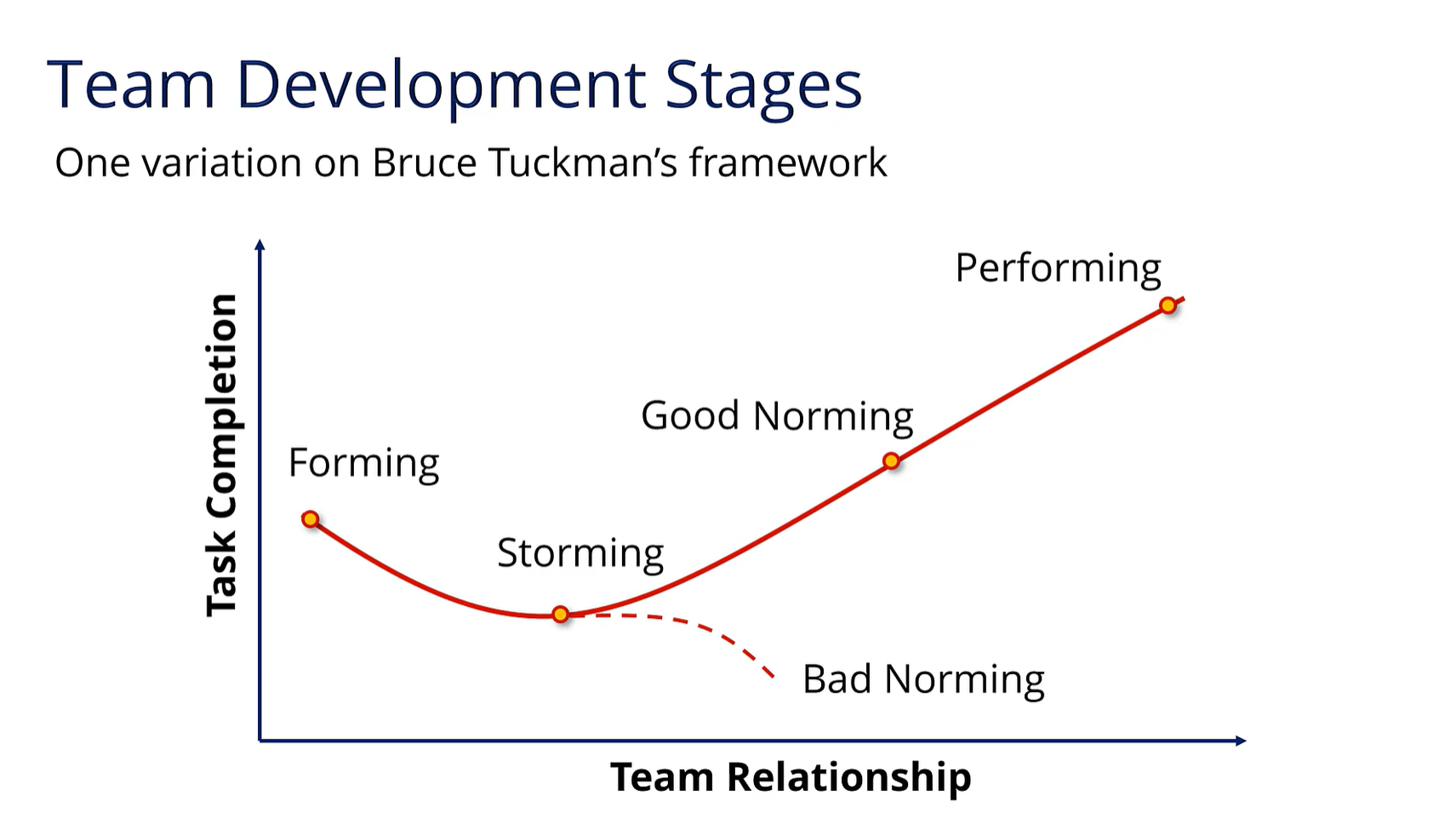
How are "good norming" and "bad norming" similar?
Both involve patterns of team behaviour becoming established and accepted or tolerated by the team
What are the five conflict management strategies (name them) and what are the x and y axes of the graph they’re on?
Avoiding, Accommodating, Compromising, Competing and Collaborating
x: Cooperativeness (achieving others’ needs). y: Assertiveness (achieving your needs)

When do we use avoidance (conflict management)?
It’s helpful if stepping away will help de-escalate tensions and think things through
When do we use accommodation (conflict management)?
Good when the issue is not important to you but you will earn goodwill
When do we use competing (conflict management)?
Consider if the issue is critical to you and action must be taken immediately
When do we use compromising (conflict management)?
Use if time is short and you want to balance team relationships and resolving the issue
When do we use collaboration (conflict management)?
When you have the time to work towards finding the ideal solution for everyone
What are the five traits of effective teams from the Google study?
Dependability: members get work done
Structure and Clarity: team has clear goals
Meaning: work is personally fulfilling
Impact: the work being done matters
Psychological safety: members feel safe taking risks and being vulnerable
What does equity mean?
All team members have an equal opportunity to give their input and contribute to the team’s success
What does diversity mean?
A strength when teams value the uniqueness of team members’ lived experiences, perspectives, and ways of thinking
What does inclusion mean?
Ensuring all members feel comfortable, valued, and included
What effective team trait is EDI directly related to?
Psychological Safety
What is microagression?
It is a brief statement and action that might seem small but communicates (intentionally or unintentionally) hostile, derogatory or negative slights to a specific group. It reduces inclusion.
What is allyship?
Taking action to support those who might otherwise feel excluded
What is the difference between proactive and reactive allyship?
Proactive allyship is where you engage in actions on an ongoing basis to help make marginalized individuals feel included, while reactive allyship is where you support someone after seeing an incident of bias
What does stakeholder salience mean?
How prominent or important a stakeholder is
What is the difference between a stakeholder and a rights holder?
A rights holder had additional human or legal rights
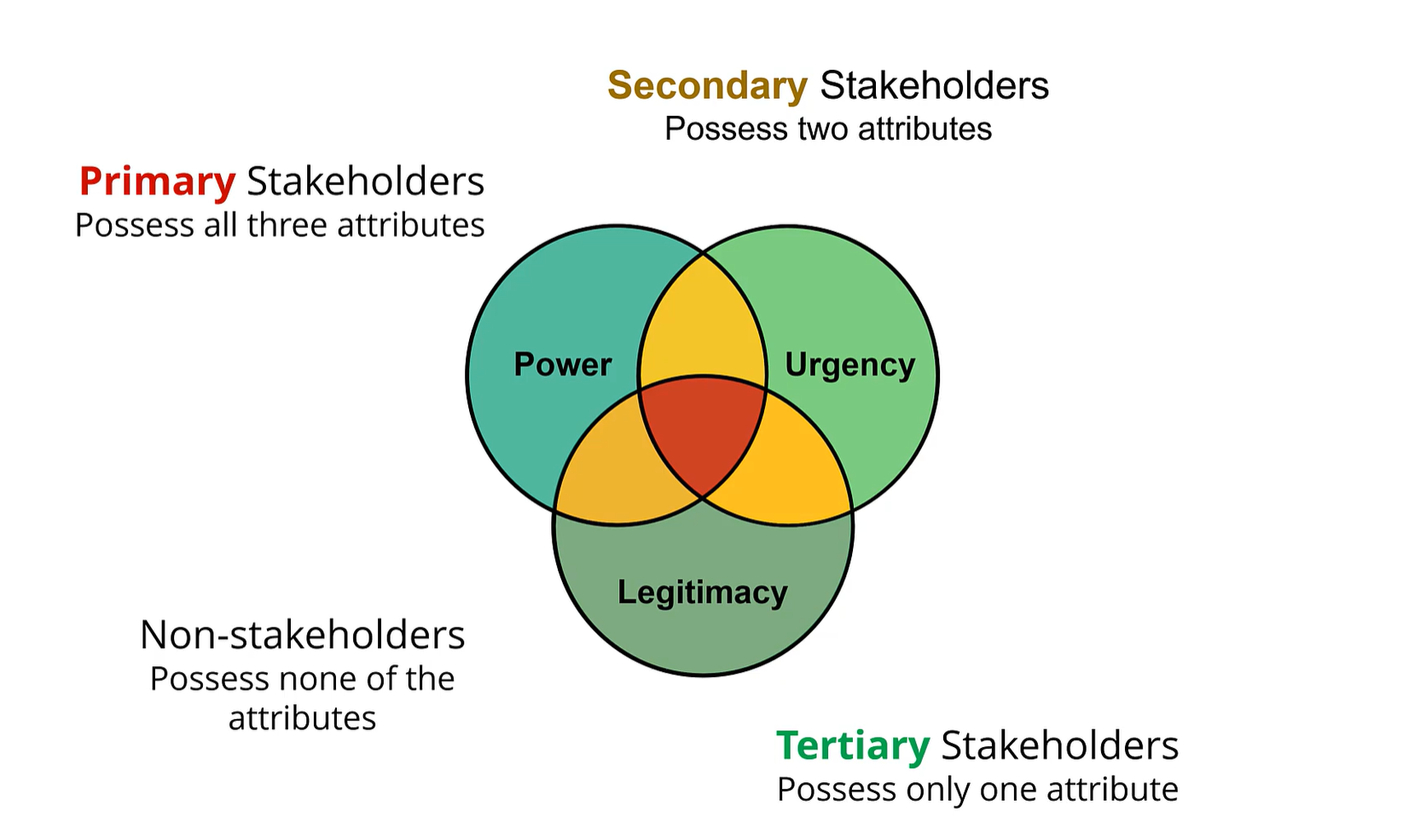
A stakeholder with the ability to influence a project
Power
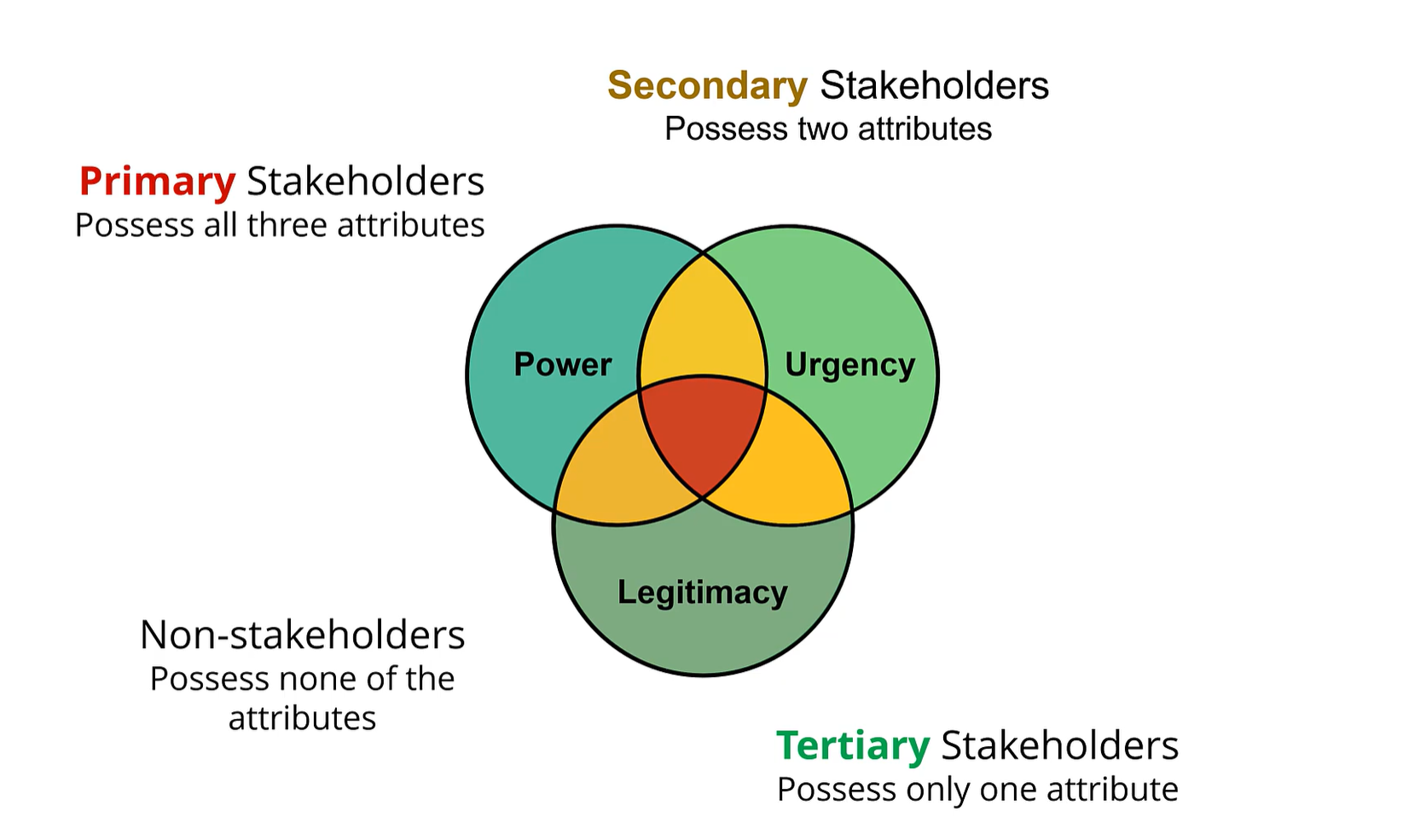
A stakeholder with power and urgency but not legitimacy
Secondary stakeholder

A stakeholder who cares deeply about a project even though they are not personally impacted and they have no influence on the project
Urgency

A stakeholder with the ability to stop a project
Power
Which stakeholder group (primary, secondary, tertiary) should engage in presentations, website, open houses?
Primary, secondary and tertiary
Which stakeholder group (primary, secondary, tertiary) should engage in meetings, decision-making boards, and workshops?
Primary
Which stakeholder group (primary, secondary, tertiary) should engage in public meetings, consultation sessions, and in-depth focus groups?
Primary and secondary
Which stakeholder group (primary, secondary, tertiary) should engage in ongoing collaboration?
Primary

What’s the definition of a stakeholder?
Any person or group who CAN influence a project or IS influenced by a project
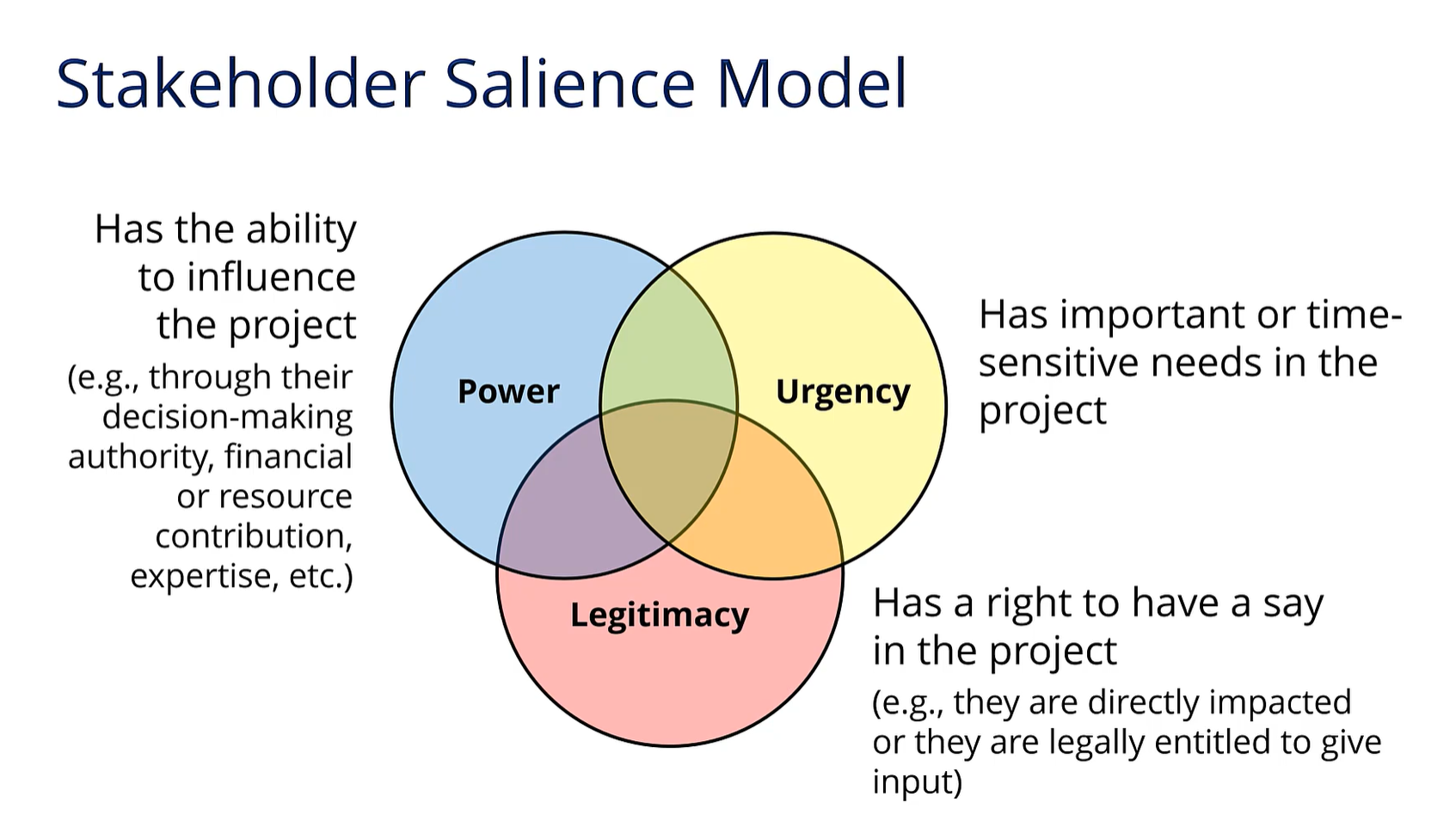
What are the three aspects (and their definitions) of the stakeholder salience model?
Power = is able to influence
Urgency has time-sensitive needs
Legitimacy = has a right to have a say
PERT (including what the formula is)
Project Evaluation and Review Technique
Improves estimates of time duration
Expected Time = 1/6(optimistic + 4*likely + pessimistic)
Used in planning stage to determine task durations
CPM
Critical Path Method
Used to determine critical path and slack
Needs knowledge of task durations and dependencies
You want to use it to help you shorten the timeline as much as possible (reduces project cost)
Used in planning stage to determine dependencies and the critical path
Gantt
Used to chronically arrange and visually represent tasks and milestones, assign resources and track project progress and manage adjustments to the plan when needed
Used in the plan and manage stage to determine the schedule
What is a project?
A temporary undertaking planned to achieve a particular outcome
What is a project scope?
The breadth of deliverables to be produced and the resources and activities involved in achieving those deliverables
What determines actual project scope?
The extent to which needs are able to be addressed,, typically as restricted by the availability of resources and other constraints
More time, more money, more people are needed if the scope is not able to be met
What is scope creep?
Growth in scope for which additional (unplanned and therefore unaccounted for) resources and or activities are needed
What is the iron triangle concept?

What is the project scope statement and what does it include?
Scope statement = a clear description of what is and isn’t part of a project
Overall description of the project often including a justification of the project
A summary of the project deliverables and their key features
The acceptance criteria to successfully complete the project
A list of constraints to the projects (e.g. time limits, cost, etc.)
A description of any major assumptions made in determining scope
An explicit list of what will be excluded from the project (outside of scope)
What is a Work Breakdown Schedule (WBD)?
Divides the project into manageable pieces (by individual project products (/deliverables) or projects phases/products)
Used to lay out all the products BEFORE figuring out what work is needed to figure out the tasks, estimating task duration and finding the critical path and making a Gantt chart
Focus on all deliverables (products) not tasks
Hierarchical structure, divided into levels

What are examples of deliverables found in a WBS?
Physical deliverables (prototype)
Other deliverables (EOI, presentations)
Internal products (team operating principles document, Gantt charts)
Other products (budget for the pilot)
What is a work package?
The smallest divisible unit of a project (can be found in WBS)
Guidelines for making a WBS (4)
Include only products (i.e. deliverables) not tasks
Products: “Target design specifications”, “EOI”
Tasks: “Conduct stakeholder interviews”, “research”
Include all products of a project
WBS represents 100% of the work effort on the project
The same product does not appear in more than one place
Even if work for a certain deliverable can happen during multiple stages, it should only appear once on the WBS
Divide by product not task
The task of “prepare recommendations” can be part of many products (e.g. “EOI”, “presentation”, etc.)

The WBS represents _________ of the work effort on a project
100%
After a scope statement and WBS, what is missing during planning?
Need to figure out what tasks are required to deliver each work product in the WBS and the order the tasks are performed
Need to figure out what resources are needed when
What are the steps to perform scheduling? (3)
Begin by listing all the teasks for each deliverable in the WBS
Use PERT to help initially define each task duration
Once durations are determined, then focus on task dependencies (there might be more than one type of dependency)
Can you keep identifying requirements as you start tasks?
Yes
Task Dependencies during Scheduling (4 types)
Finish to Start = finish Task A to start Task B
Finish to Finish = finish Task A to finish Task B
Start to Start = start Task A to start Task B
Start to Finish = start Task A to finish Task B

What does CPM need as inputs to show the critical path (2 things)?
Task durations
Dependencies
How to initially allocation resources (part of scheduling)? (5 points)
Perform an initial assignment of resources for tasks starting with the critical path
Work to optimize resources
Check the critical path
Rework as required to balance resources with scope
Consider Effort-Driven Scheduling which can shrink task durations by applying more effort (resources) to get a task completed more quickly
What kind of diagram is best for assignment of resources (part of scheduling)?
Gantt because it better shows the timeline and workload (e.g. compared to the WBS)
What does work (aka effort) mean (part of scheduling)?
The person-hours estimated needed for a task
Effort-Driven Scheduling
Shrink task durations by adding more effort (resources) to a task
What does duration mean (part of scheduling)?
The time period in which the task starts and finishes
What does actual work mean (part of scheduling)?
The actual amount of work performed to complete a task
What to consider to track and show progress on a Gantt Chart (3)?
Establish a baseline (snapshot of initial Gantt chart) so what updates have a basis for comparison
Show a “work” column to indicate how many person hours are estimated for each task
Showing an “actual work” column for reporting how many person hours have been applied to a task
What is the critical path?
The minimum time to project completion. We cannot delay any task on the critical path without delaying the entire project.
What is slack?
The amount of time we can delay a task without delaying the project completion time

What is the critical path in this diagram?
EFG

What is the project duration if the team only has one person?
One person means two tasks can’t happen at the same time. 15 days.

What is the minimum possible project duration if there is always one person per task?
This is the same as the critical path. 7 days.

What is the slack for C? D? G?
The critical path project time is 7 days. So normally C is done in 6 days so it can wait 1 day. For D it can wait 3 days and if G continues as planned then it will be 5 + 2 = 7. For G, EF already takes 5 days so it has no days of slack.
For C: 1 day
For D 3 days
For G: 0 days

What is the maximum time between earliest project finish and start of C?
The earliest task C can start is after A and B are done (A = 2 and B = 1 so 3 days total. That means C starts at day 3 and the whole project finishes at day 7. So the max time between those is 4 days.
For Gantt charts, how do tasks appear?
They are shown as bars and written in action object form. E.g. “Identify stakeholders” is a task, and “identify” is the action while “stakeholders” is the object.
For Gantt charts, how do milestones appear?
Milestones are significant project accomplishments and shown as diamonds, written in object action form. (e.g. “Needs report complete”, object is “needs report” and “complete” is the action)
Put the project management phases in order. (4)
Define
Plan
Manage
Close

What is the critical path?
ABG

How much slack does task G have on this CPM chart?
1 unit

By how long could task E be delayed without affecting the project completion date?
2 units
What commonly appears directly on a Gantt chart? (4)
Task start dates
People assigned to a task
Task durations
Degree of task completion
What would the PERT method suggest the expected task duration should be if a team believes they should be able to finish the task in 5 days, but it could take 14 days if things do not go well, or it could take 2 days if everything goes perfectly?
6 days
What is a needs statement? (4)
Attribute of the product-to-be
Interpreted by the design team from stakeholder interviews and other information gathering
Primarily qualitative
Solution independent (describes WHAT should be achieved, not how)
What are the two main guidelines for writing a needs statement?
Write in positive form (don’t write what the product shouldn’t do)
Don’t use “must” and “should”
What are the main types of needs? (3)
Expressed = stated by stakeholders
Threshold = expected but not stated by stakeholders
Latent = unexpected and unstated (but it can make them happy if you meet the need)
What are the categories of needs? (6)
Functional = related to what the design is intended to do
Undesirable = unwanted by-products of trying to achieve other goals (e.g. costs)
Regulatory = codes and standards the device must conform to
Safety = specific hazards that needs to be addressed
Input/output constraints = e.g. how much power is needed, etc.
Durability = reliability expectations (e.g. maintenance intervals, etc.)
An appropriate requirement is…?
Necessary = in no cases can be violate a requirement and still have an acceptable solution
Unambiguous = only one interpretation for the requirement
Verifiable = it must be possible to determine whether or not its satisfied
Achievable = describes what must be achieved (not how) and not contradict other requirements
What do target design specifications do?
Requirements and evaluation criteria
Precise and quantitative

Do all evaluation criteria correspond to a requirement?
No.
How do we quantify evaluation criteria?
Using a graph

What is validation?
Confirm with stakeholders that needs are complete and correct, and that they have been properly translated into target design specifications
Can needs statements come from research on something other than the stakeholders?
Yes
Explain what the issue is with these needs statements (NOT all have an issue)
Device uses rechargeable batteries for power
Device must operate without diesel fuel
Device does not emit toxic fumes
Device operates in all weather conditions found in Metro Vancouver
The first statement violates because needs statements are not supposed to prescribe a certain solution
Second statement uses “must”
Third statement is negative “does not”
This one is fine
What needs category is “Time to recharge system is less than 60 minutes” found in and why?
Undesirable because it’s something we want to minimize, not really related to the function of the actual device
Select all valid and suitable requirements below assuming the following: the design is for a battery-powered, handheld device; the design is being completed in time for production and distribution by end of year; and a second requirement, "Device uses only commercially-available AA batteries for power," exists and has been adopted.
The device accommodates batteries of standard length between 49.2 and 50.5 mm
The device shall function with both Duracell and Energizer brand AA batteries
Batteries can be replaced in about 30 to 60 seconds
A photovoltaic cell ("solar panel") may be used to supplement battery power
The device has an indicator to show when there is sufficient battery charge to operate the device
The device operates continuously for at least 200 hours before batteries need to be replaced
A door to the battery compartment retains batteries under normal use
NO: Might conflict with other requirement “device uses only commercially-available AA batteries”
NO: Might conflict with other requirement “device uses only commercially-available AA batteries” and prescribes a specific solution
NO: “about” is vague
NO: “may” is vague
YES: Specific, doesn’t conflict
YES: Specific, doesn’t conflict
NO: “under normal use” is vague
What is risk?
Risk = Severity (of harm, consequences, or damage) x Likelihood (of the incident occurring)
What is the Risk Categorization Table?
Risk Type vs Risk Source table
Allows engineers to anticipate and address as many potential risks as possible
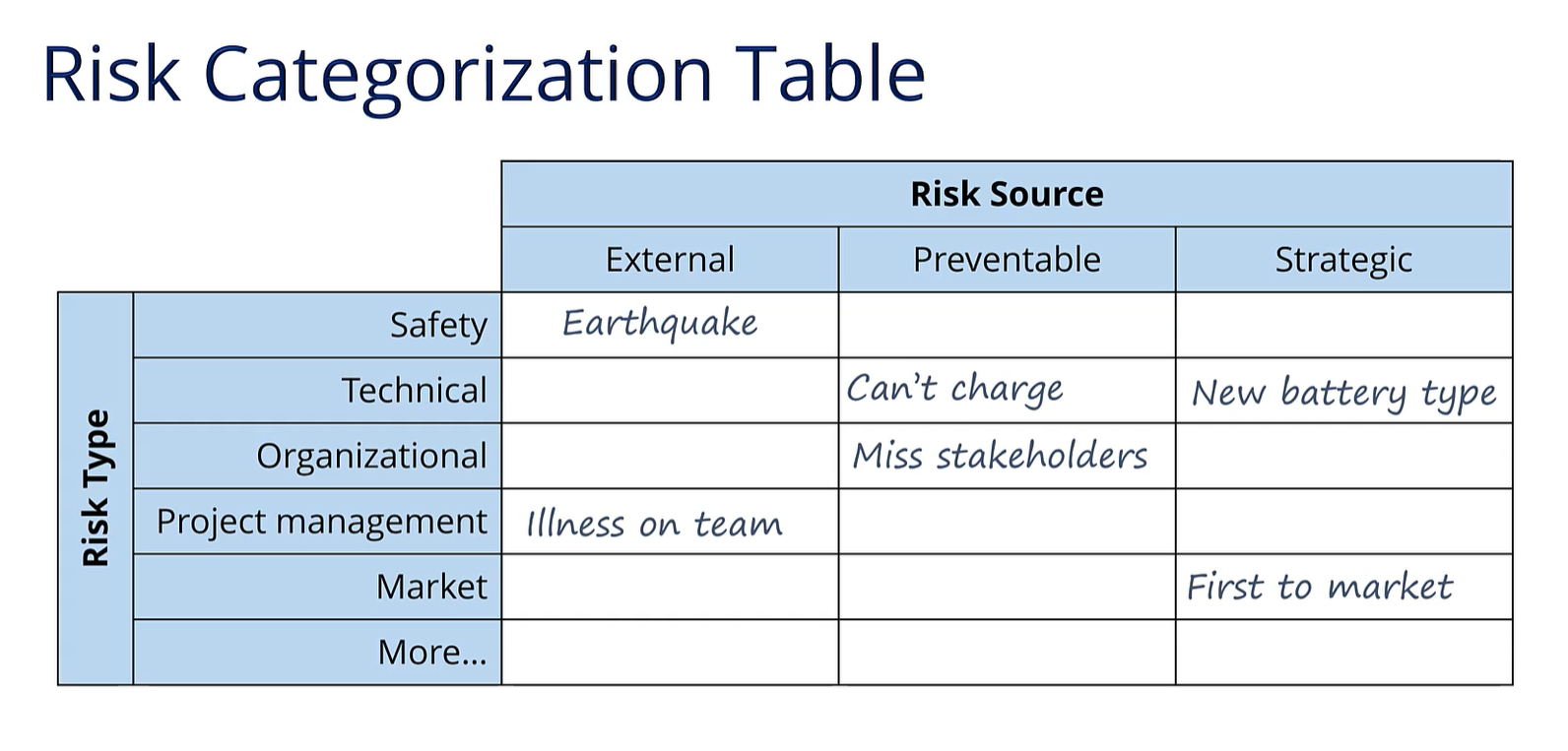
What are the risk types? (5)
Safety = relating to the health and welfare of people and the environment
Technical = relating to design and manufacture to ensure solution works as intended
Organizational = relating to decision making and operational aspects
Project management = relating to completing a project on time and on budget
Market = relating to correctly understanding stakeholder needs and alternatives available to them
What are the risk sources? (3)
External = risks outside an organization’s control but still need to be accounted for
Preventable = risks to be minimized and within and engineer/organization’s control
Strategic = risks knowingly accepted with the hopes of a greater return/reward
What is the Risk Matrix?
Likelihood vs Severity Table (cells are the products of the two and are sometimes color coded)
Used to prioritize risks and identify those that require action to address

What are the four risk management strategies?
Avoid = change what you are doing to remove the risk
Mitigate = minimize the likelihood or severity of the risk
Transfer = pass the risk onto someone else (e.g. insurance)
Accept = be wiling to live with the consequences of an incident (best for minor risks and strategic risks, those that do not involve safety)
What are the three phases in the concept selection process?
Screening, Ranking, Scoring

What is screening?
Remove concepts from consideration that can never be made to work
What is ranking?
Roughly sort concepts to identify the subset with the highest likelihood of success
Used to manage a large number of ideas, so we can skip this step if not many ideas pass screening
What is scoring?
Analyze concepts in detail to quantitatively determine the one that maximizes overall satisfaction/value
What controls value?

What are design parameters controlled by?
Engineers

What are attributes important to?
Stakeholders

What are some elements we need to consider in screening? (3)
Requirements = all requirements from the target design specifications
Feasibility = whether the idea can actually achieve its purpose (often considered using order of magnitude physics and estimates)
Technical Readiness (does the team have/can find the expertise to design the solution)
What are some tools used for ranking?
Pair-Wise comparison (1 for better, 0.5 for tie)
Pugh Chart (ideas are compared to a datum)

What are the strengths and weaknesses of ranking? (strengths 2, weaknesses 3)
Strengths
Quick
Can work with incomplete data
Weaknesses
Based on qualitative data
Subject to biases
Results are not robust
What are some tools scoring uses?
Weighted Decision Matrix (WDM) = table with how well the ideas score for each evaluation criterion
Value equation = a function based on all the scores from each evaluation criterion

What are the strengths and weaknesses of a WDM?
Strengths
Well understood
Commonly used
Documents scoring work
Weaknesses
Time consuming
May not accurately represent value