PATH 201 - LECTURE 5
 Call Kai
 Learn
Learn Practice Test
 Spaced Repetition
 Match
Match Flashcards
 Knowt Play
1/53

There's no tags or description
Looks like no tags are added yet.
Name | Mastery | Learn | Test | Matching | Spaced | Call with Kai | Chat |
|---|
No analytics yet
Send a link to your students to track their progress
54 Terms
what is haematopoiesis controlled by
cytokines and growth factors
what are leucocytes
white blood cells
what are the three main types of white blood cells
granulocytes
monocytes
lymphocytes
what lineage do granulocytes come from
myeloid
what lineage do monocytes belong to
myeloid
what lineage do lymphocytes belong to
lymphoid
which of the white blood cells are polymorphonuclear
all the granulocytes
neutrophils
basophils
eosinophils
which of the white blood cells are mononuclear
lymphocytes and monocytes
what does polymorphonuclear mean
poly means many
morpho means shapes
nuclear means nucleus
so the many different shapes of the nucleus
what colour is the granules of a neutrophil
pink
what do the granules of neutrophils contain and what does this allow them to do
lysosyme and superoxide which allows them to phagocytose and kill things
describe the nucleus of a mature neutrophil
segmented 2-5 lobes
describe what neutrophils do
theyre phagocytic
recruited by chemokines (IL-8)
have complement receptors
secrete antimicrobials and neutrophil extracellular traps
how long are neutrophils in the tissue
24-72 hours
what is it called when we have a lot of neutrophils
neutrophillia
what causes neutrophillia
bacterial infection
inflammation
drug induced (steroids)
malignancy (myeloid leukemia)
what is too few neutrophils called
neutropenia
when do we see neutropenia
viral infection
severe bacterial infection (all of them have been utilised)
immunosuppresion
drug toxicity
african and middle eastern individuals
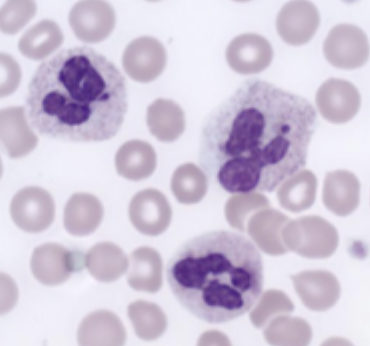
what am i looking at
neutrophils
with pale cytoplasm and pink almost neutral granules
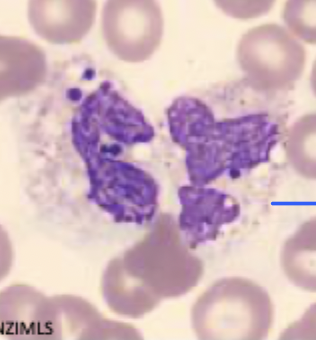
what am i looking at
neutrophils that have taken up some bacteria
describe the nucleus of eosinophils
segmented with 2-3 lobes
describe the granules of eosinophils
large, refractile, orange
contains major basic protein
eosinophil cationic protein
peroxidase
what is the function of eosinophils
Immune defence against parasites and pathogens
phagocytic
what is eosinophilia
infiltration of eosinophils
what is eosinophilia caused by
allergic reactions, asthma, parasitic infections, malignant disease of myeloid cells
describe the nucleus of basophils
bilobed
describe the granules of basophils
dark purple
histamine
leukotrienes
heparin
vasoactive mediators
describe what a basophil does
weakly phagocytic
inflammatory role
allergic role
binds IgE
what is the cause of basophilia
blood cancer (chronic myeloid leukemia)
anaphylaxis
insect/snake venom
describe the nucleus of monocytes
kidney shaped nucleus
what colour is the cytoplasm of monocytes
blue/grey
what do monocytes become in tissue
macrophages
how long do monocytes circulate for
20-40 hours
what is monocytosis
lots of monocytes
what causes monocytosis
any long chronic infection
tubercolosis
glandular fever
myelodysplastic syndrome
do all macrophages some from monocytes
no
there is also macrophages that that are fetal derived
what are functions of macrophages
phagocytosis
produce proinflammatory cytokines
present antigen to T cells
initiate healing
describe the nucleus of lymphocytes
non segmented
what do T cells do
CD4 secrete cytokines
CD8 induce apoptosis
what do B cells do
produce antibody
is there more B cells or more T cells
T cells
why is lymphocytosis normal in children
because everything children see is new
when do we see lymphocytosis in adults
with many acute viral infections and whooping cough
malignancy (chronic lyphocytic leukemia)
what is lymphopenia
when there is fewer than normal lymphocytes
when do we see lymphopenia
drug therapy against autoimmune disease
AIDS
severe stress
what do natural killer cells do
activated by low MHC-I or receptors on target ells
induce apoptosis on target cells
what do natural killer T cells do
see antigen presented on CD1
produce lots of cytokines
what is a leukopenia
deficiency of white blood cells
what are the two types of proliferative disorders (in terms of diseases fo white blood cells)
reactive
neoplastic
what are the 2 neoplastic proliferative disorders of white blood cells
myeloid neoplasms
lymphoid neoplasms
what is clonal proliferation
when cells have uncontrolled growth and fail to die
what happens when clonal proliferation gets out of hand
it begins to replace normal marrow and infiltrate into other tissues, replacing and destroying normal cells