7 - The Central Nervous System (CNS)
 Call Kai
 Learn
 Practice Test
 Spaced Repetition
 Match
 Flashcards
 Knowt Play
1/33

There's no tags or description
Looks like no tags are added yet.
34 Terms
Gray Matter
unmyelinated nerve cell bodies, dendrites, and axons
White Matter
mostly myelinated axons + contains very few neuronal cell bodies
its pale colour comes from the myelin sheaths that surrounds the axons
Tracts
bundles of axons that connect different regions of the CNS
Meninges
consists of 3 layers of connected tissue with fluid between them
Dura Mater
Arachnoid membrane
Pia Mater
Dura Mater
the outermost and thickest layer of the meninges
Associated with veins that drain blood from the brain through vessels or cavities called sinuses
Arachnoid Membrane
the middle layer of the meninges
loosely tied to the inner membrane, leaving subarachnoid spaces between the two layers
Pia Mater
the thinner/smaller inner membrane of the meninges
Adheres to the surface of the brain + spinal cord
Arteries that supply the brain are associated with this layer
Extracellular Fluid
final protective compartment of CNS; helps cushion the delicate neural tissue
Consists of cerebral spinal fluid (found in ventricles + in the space between the pia mater and arachnoid space) and interstitial fluid (lies inside the pia mater)
Both compartments communicate with each other across leaky junctions
Central portion of spinal cord contains mainly white or grey matter?
Grey unmyelinated neurons
Outer portion of spinal cord contains mainly white or grey matter?
White myelinated neurons
Dorsal Root (spinal cord)
carries incoming sensory info
Ventral Root (spinal cord)
carries info from CNS to muscles/glands; carry efferent signals
Spinal reflexes do not require sending information to the brain; T or F?
True
Metabolic Requirement of the brain
Constant supply of O2 + glucose to make ATP
Glucose main source of energy
Hypoglycemia (low blood sugar) leads to confusion, unconsciousness, and death
15% of blood pumped by heart goes to the brain
Components of the Hindbrain
Medulla (oblongata)
Pons
Cerebellum
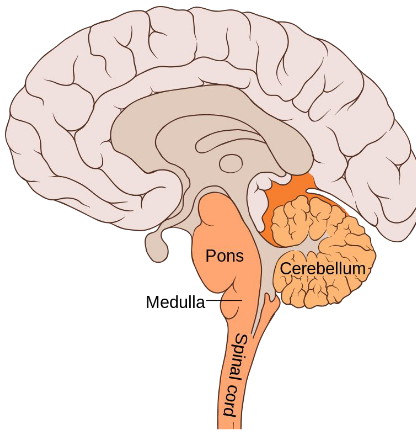
Medulla (Oblongata)
Controls heart rate & respiration
Thoroughfare (road) for sensory info
Contains:
Somatosensory tracts: brain sensory info to brain
Corticospinal tracts: convey info from cerebellum to spinal cord
Neurons cross over (signals coming from left part of brain controls right side of body, vise versa)
Area postrema lacks blood-brain-barrier (BBB) to induce vomiting
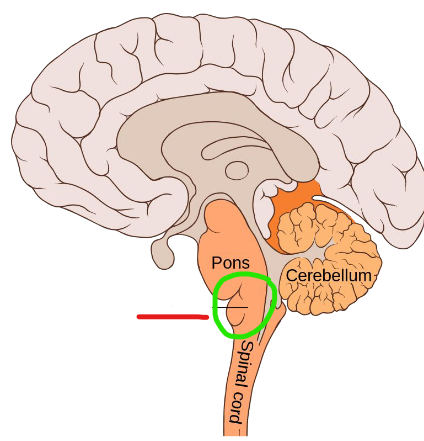
Pons
Regulates sleep and arousal (alertness)
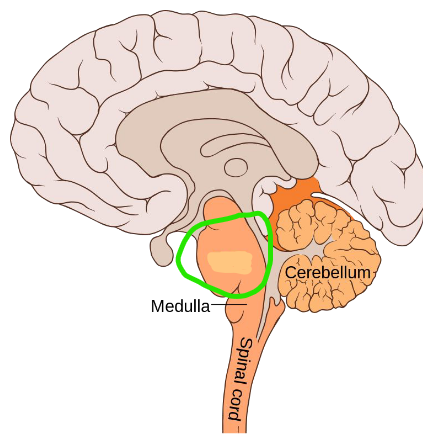
Cerebellum
Coordinates fine muscle movement & balance
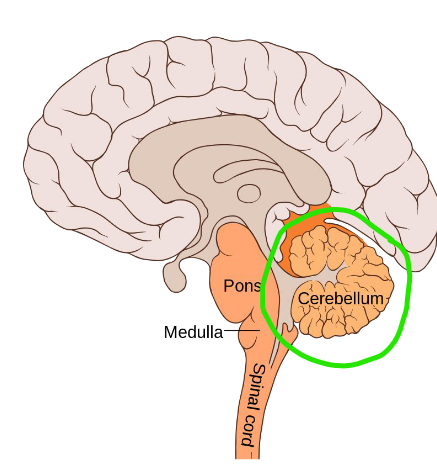
Midbrain
Important for visual and auditory processes
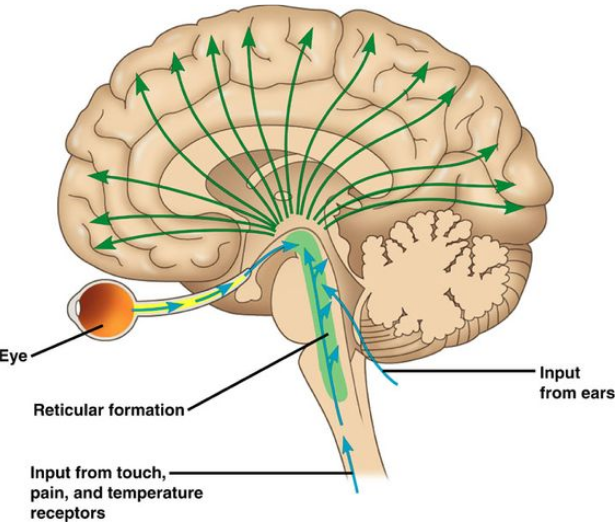
Contains reticular formation
Sleep + arousal (attention)
Connects lower + higher brain centres
Hypothalamus
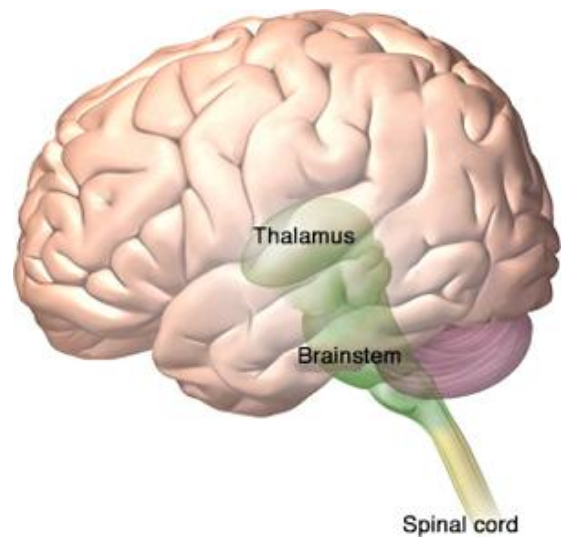
Thalamus
Pituitary Gland
Thalamus
Sensory switchboard; routes sensory info to its appropriate place
E.g. visual info goes to visual centres, auditory info to auditory centres, etc.
Hypothalamus
Main controlling centre for autonomic functions (biological drives)
E.g. sex, temperature, eating, drinking, aggression, emotion
Pituitary Gland
Master gland;
Sexual development + behaviour
Metabolism
Stress
Hypothalamic-hypophyseal portal system
Hormones released from the hypothalamus into capillaries, delivered to pituitary
NO BBB
Blood goes to the gland but doesn’t return back to the heart
Cerebral Grey Matter (Forebrain)
involved in conscious perception + voluntary motor control
3 major regions
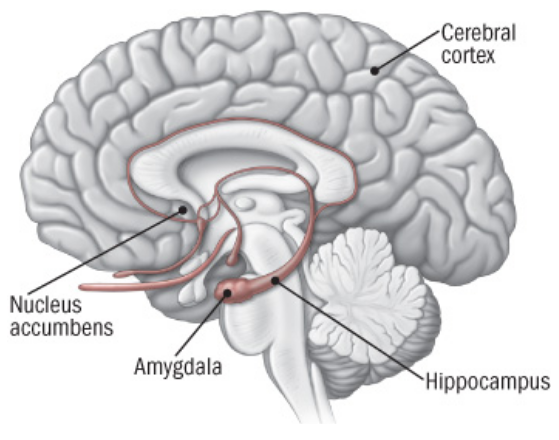
Cerebral cortex
Basal ganglia
Limbic system
Cerebral Cortex
Very thin (3mm thick)
Convoluted (folded + wrinkled) structure enables more tissue to fit
Provides flexibility in behaviour
Controls higher brain functions
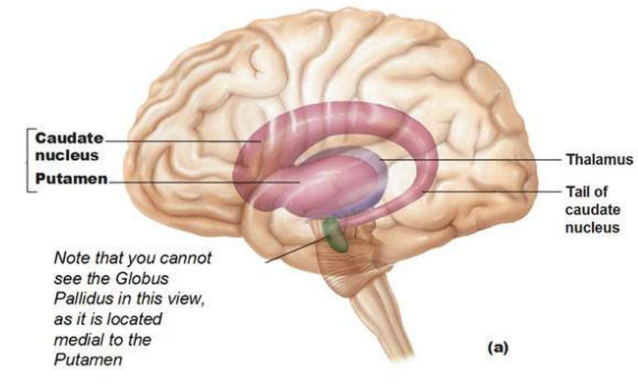
Basal Ganglia
Critical for motor control
Deliberate initiation of movement
Part of the forebrain
The Limbic System
Most primal part of the brain
Part of the forebrain
Includes:
Hippocampus: forms & retrieves memories
Amygdala: fear & aggression
Nucleus Accumbens: reward & motivation centre
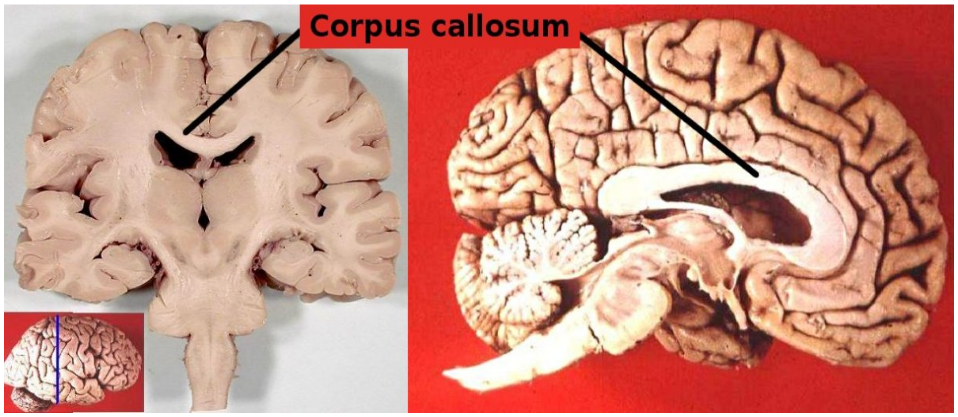
Corpus Callosum
Allows for communication between both sides of the brain
Made up of white matter - (myelinated to transfer info)
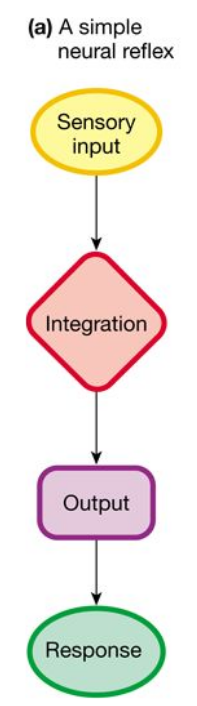
Simple Pathway in the CNS
Complex Pathway in the CNS
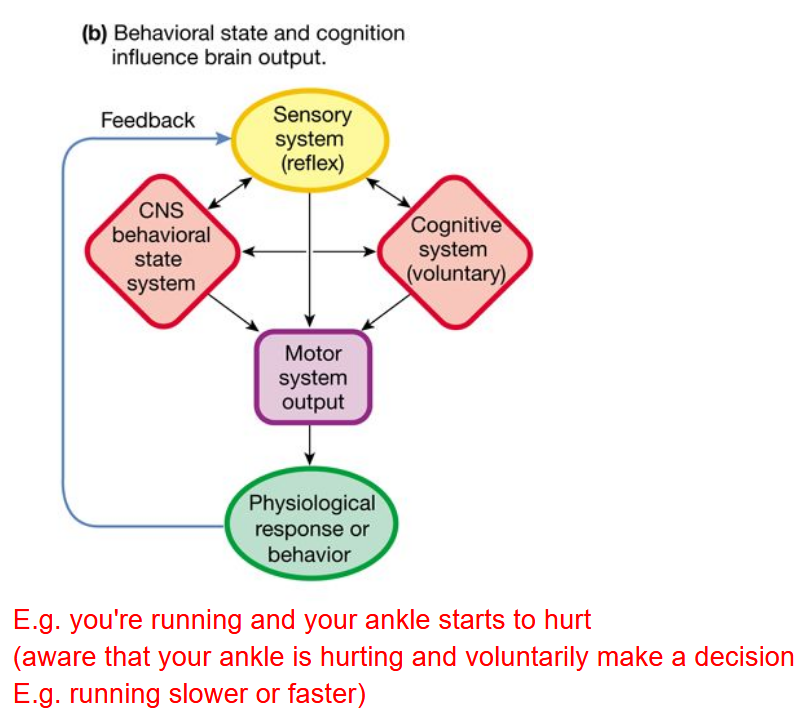
Systems that Influence Output
The sensory system - monitors the internal & external environments & external environments and initiates reflex responses
A cognitive system - resides in the cerebral cortex & is able to initiate voluntary responses
A behavioural state system - also resides in the brain & governs sleep-wake cycles and other intrinsic behaviors
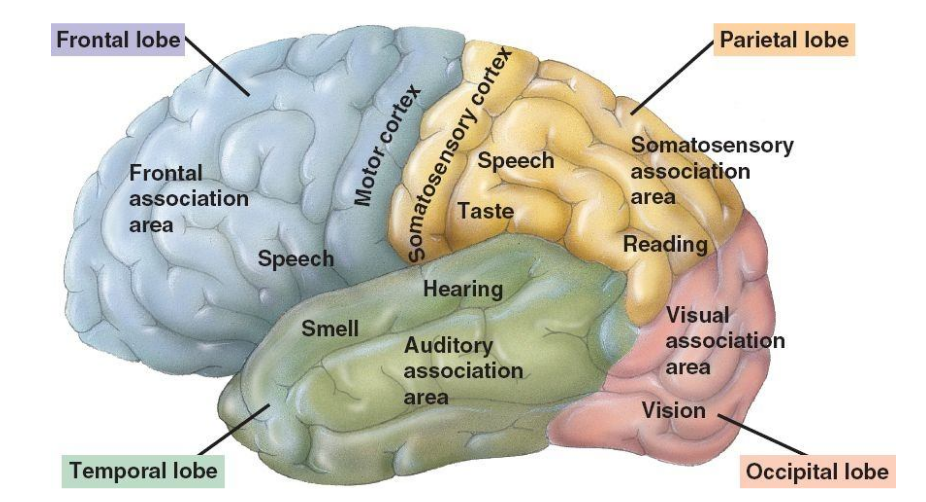
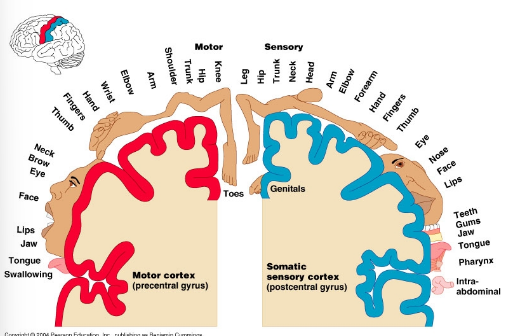
Motor Cortex
Controls movement on opposite side of the body
Controls movement of over 600 voluntary muscles
Located @ rear of frontal lobe
Somatosensory Cortex
Receives specific sense information from opposite side of body
At least one specific area for each sense
Located in parietal lobe
CNS & Motor System
Efferent division of the nervous system
Skeletal muscle movement (somatic motor division)
Neuroendocrine signals (hypothalamus & adrenal medulla)
Visceral responses (autonomic division - smooth & cardiac muscle; endocrine/exocrine glands)
Functional Areas of the Cerebral Cortex
Sensory areas: receive sensory input & translate it into perception
Motor areas: direct skeletal muscle movement
Association areas: integrate info from sensory & motor areas in order to direct voluntary behaviours