Endocrine - L5 - Mineralocorticoids + Eicosanoids
 Call Kai
 Learn
Learn Practice Test
 Spaced Repetition
 Match
Match Flashcards
 Knowt Play
1/79

There's no tags or description
Looks like no tags are added yet.
Name | Mastery | Learn | Test | Matching | Spaced | Call with Kai | Chat |
|---|
No analytics yet
Send a link to your students to track their progress
80 Terms
* what are 3 key enzymes involved in aldosterone synthesis?
1. CYP11A1 (cholesterol side-chain cleavage enzyme)
2. CYP21A2 (21B-hydroxylase)
3. CYP11B2 (aldosterone synthase)
* where are the enzymes CYP11A1 + CYP21A2 located in the cells?
1. CYP11A1 = inner mitochondrial membrane
2. CYP21A2 = smooth ER
* what are the functions of CYP11A1 + CYP21A2 in the pathway of aldosterone synthesis?
1. CYP11A1 = catalyzes conversion of cholesterol to pregnenolone
2. CYP21A2 = catalyzes conversion of progesterone to glucocorticoids + mineralcorticoids
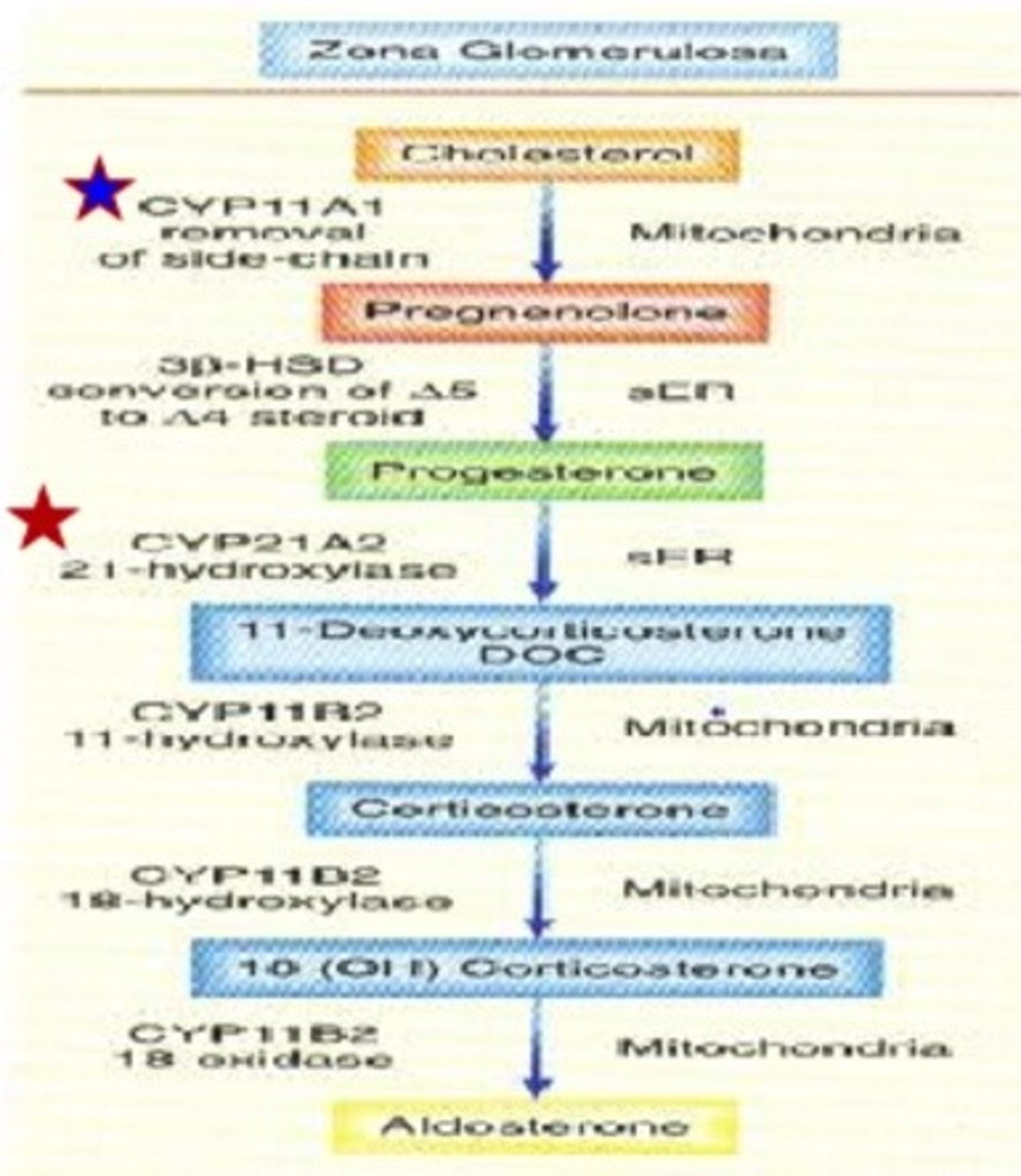
* what zones of the adrenal gland are CYP11A1 + CYP21A2 each located in?
1. CYP11A1 = all 3 zones
2. CYP21A2 = 2 zones --> zona glomerulosa + fasciculata
* what is the function of the third key enzyme, CYP11B2 (aldosterone synthase)?
catalyzes the last steps in aldosterone synthesis
- catalyzes 3 reactions (in image)
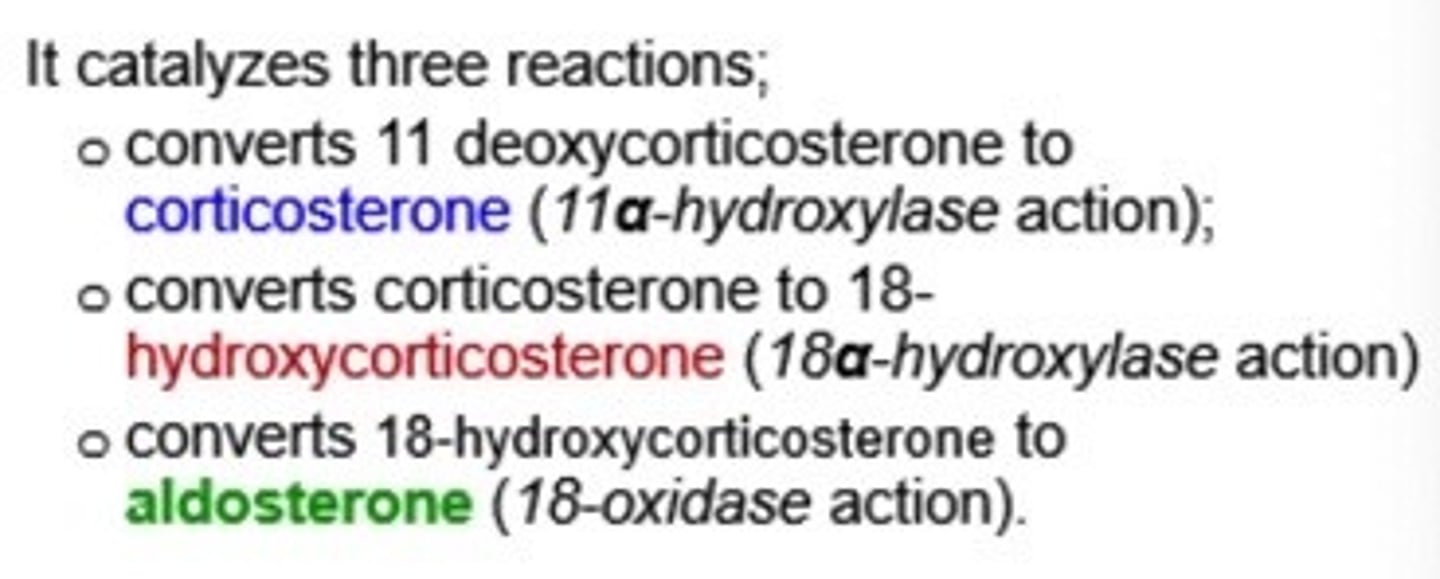
where is aldosterone synthase expressed?
in the mitochondria --> ONLY in zona glomerulosa of the adrenal cortex
what are the 3 main stimulators of aldosterone synthesis?
angiotensin II
high K
ACTH
of the 3 stimulators, which 2 are more potent/important in regulating aldosterone synthesis?
angiotensin II + high levels of K
what are the 2 main inhibitors of aldosterone
ANP (atrial natriuretic peptide)
BNP (brain natriuretic peptide)
how do ANP + BNP inhibit aldosterone synthesis?
inhibit expression of the gene for aldosterone synthase (CYP11B2) --> catalyzes last step
what signaling pathway/ process do each of the main stimulators for aldosterone initiate in order to start synthesis?
Angiotensin II = IP3 production
increased Potassium = membrane depolarization
ACTH = cAMP production
which of the 3 key enzymes do each of the main stimulators for aldosterone stimulate?
Angiotensin II = CYP11A1 + CYP11B2 (aldosterone synthase)
increased Potassium = CYP11A1 + CYP11B2 (aldosterone synthase)
ACTH = CYP11A1
the effect of ACTH is [stronger / moderate] compared to the effects of angiotensin II + K
moderate
1. acutely, ACTH [inhibits / stimulates] aldosterone production in zona glomerulosa in adrenal gland
2. in chronic exposure of ACTH, there is [inhibition / stimulation] of aldosterone production in the zona glomerulosa
stimulation (acute)
inhibition (chronic)
aldosterone induces expression of genes for what 5 types of channels/transporters?
1. ENaC (epithelial/ Na) in apical membrane
2. Na-K-ATPase in basolateral membrane
3. H-ATPases in apical membrane
4. Exchangers
5. Symporters (co-transporters)
compared to glucocorticoids, does aldosterone regulate expression of [more / less] genes?
less !
knowing what types of channels aldosterone increases expression of, how does it affect Na/K/H/ Ca2+ levels?
1. increases intracellular free Ca2+ rapidly
2. rapidly stimulates:
- plasma membrane conductance of H+ and K+
- Na/H exchange
what are 4 general functions of aldosterone on homeostasis/tissues?
1. regulates Na/K homeostasis
2. regulates changes in ECF volume = BP
3. acts on tubular cells of kidney
4. acts on colon + salivary glands
in the kidney, aldosterone enhances reabsorption of _______, and excretion of _________
Na, K
*therefore we see lower K levels in blood w/ higher aldosterone levels*
because aldosterone increases reabsorption of Na into the blood, this leads to increase in ____________
ECF volume
**BP is changed accordingly**
activation of Na/K ATPase in basolateral membrane of renal tubule cells causes:
Na reabsorption
K excretion
(repetitive, i know)
how does aldosterone stimulate Na+ absorption in the colon + salivary glands?
the same as kidneys basically: (of course)
- increased Na/H exchange
- increased Na/K ATPase
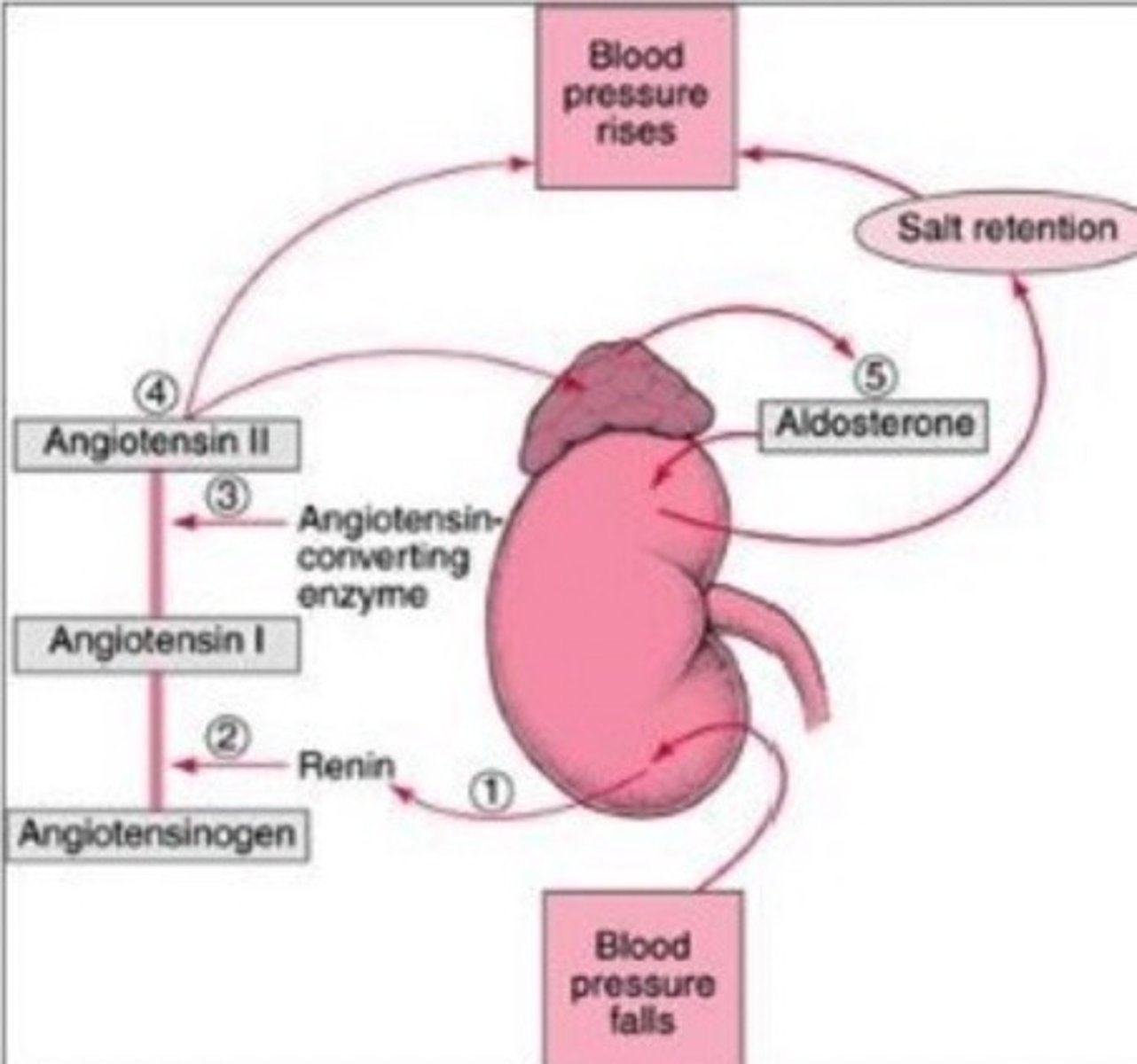
when BP is low, _________ is released from kidney to activate RAAS
Renin
review - briefly explain steps of RAAS system
1. low BP signals renin secretion
2. renin catalyzes conversion of angiotensinogen --> angiotensin I
3. ACE catalyzes conversion of angiotensin I --> angiotensin II
4. angiotensin II causes:
- increased BP
- creation of aldosterone to increase salt retention = increasing BP
what is name for chronically high levels of aldosterone?
primary hyperaldosteronism, or Conn's Disease
what can cause 'primary hyperaldosteronism'?
an adenoma or carcinoma of the adrenal gland --> causes autonomous secretion of aldosterone
**in dogs + cats**
chronically high aldosterone levels can cause:
1. ____________ due to increase Na/ water retention
2. __________ due to increased K excretion
1. hypertension
2. hypokalemia
what is common name for 'primary hypoaldosteronism'?
Addisons' Disease (this is a type of addisons disease, but there are different types of adrenal gland insufficiencies, like hypoadrenocorticism)
what happens to glucocorticoids + mineralcorticoids in Addison's disease?
little/no production
mineralocorticoid production will specifically be diminished if the cause of the deficiency is of __________
enzymes --> such as CYP11B1, CYP21A2, or CYP11B2 (aldosterone synthase)
chronically low aldosterone levels can cause what 2 things?
1. a Na-losing state (natriuresis)
2. hyperkalemia due to reduced K excretion from kidneys
Eicosanoids are metabolites of:
omega-6 + omega-3 essential fatty acids
what are the 4 types of Eicosanoids?
prostaglandins (PG)
prostacyclins (PGI)
thromboxanes (TX)
leukotrienes (LT)
the majority of relevant Eicosanoids arise from what 3 things?
1. arachidonic acid (AA)
2. eicosapentaenoic acid (EPA, or omega-3)
3. dihomo-gamma linolenic acid (DGLA, or omega-6)
what does 'Prostanoid' mean?
a collective term for:
1. Prostaglandins (PG)
2. Prostacyclins (PGI)
3. Thromboxanes (TX)
therefore Eicosanoids made up Prostanoids (3) + Leukotrienes (1)
*"prostaglandins" is often used for all prostanoids, but is not suitable**
Prostanoids are metabolites of the ____________ pathways
cyclooxygenase
Leukotrienes are metabolites of the ___________ pathway
lipoxygenase
____________ is the precursor for the majority of prostanoids
arachidonic acid
T/F: different prostanoids have structural similarities, but have distinct effects w/ sometimes opposing biological actions
true
what cells produce prostanoids?
almost all cells ! (except for erythrocytes)
* can prostanoids be stored in cells?
they are not stored in cells --> are synthesized + released RAPIDLY in response of specific stimuli
* what is the KEY to regulating activity of prostanoids in the body?
modulation of their synthesis --> also can be regulated at the level of their receptors
* do prostanoids act in an autocrine or paracrine manner?
trick question - BOTH
prostanoids act by binding to plasma membrane receptors, and are * rapidly metabolized at or near the site of ___________
their synthesis !
why do prostanoids have very short half-lives in systemic circulation?
due to rapid metabolism in the lung + liver
knowing that arachidonic acid is the main precursor for prostanoids, where does it come from?
arachidonic acid is released from phospholipids + other sources
phospholipids have 2 fatty acids --> the one in the 'second' position may be precursors for eicosanoids --> what enzymes catalyzes the release of this fatty acid?
phospholipase A2
* what inhibits the activity of phospholipase A2?
glucocorticoids --> produces lipocortin-1 to inhibit
in eicosanoid synthesis, the initial reaction is catalyzed by what enzyme?
prostaglandin synthase --> COX component converts arachidonic acid to PGG2 --> hydroxyperoxidase component converts PGG2 to PGH2
* the enzyme prostaglandin synthase has 2 components:
COX (cyclooxygenase) + hydroxyperoxidase
the intermediates of eicosanoid production are called _____________ + include?
endoperoxide intermediates --> PGG2 and PGH2
endoperoxides are converted by different enzymes into prostaglandins, prostacyclins, + thromboxanes, and have a very [long / short] half life
very short
knowing different enzymes are involved in last step of synthesis, it often depends on what enzyme is available to the cell. What eicosanoid do each of these cells produce?
1. some cells
2. mast cells
3. platelets
4. endothelial cells
1. some cells produce PGE2 + PGF2a
2. mast cells produce PGD2
3. platelets produce many TXA2
4. endothelial cells mostly PGI2-
**regulation of involved enzymes is cell-specific**
* the 2 well-known types of COX are COX-1 + COX-2, and they are encoded by [the same / separate] genes. What does this mean?
separate genes
--> this means that the amino acid sequences of the catalytic sites are different
= each has specific inhibitors
Which COX is constitutively expressed in cells? Which is usually not expressed under basal conditions except in a few tissues?
COX-1 = is expressed
COX-2 = not expressed
what tissues can COX-2 be constitutively expressed in basal conditions?
brain, kidney, CVS, uterus
* __________ activity is increased under physiological conditions, while _________ is increased mostly under pathological conditions
COX-1,
COX-2
--> makes sense since COX-1 is constitutively expressed in basal conditions
what drug inhibits COX activity?
NSAIDs
what NSAIDs are 'non-selective COX inhibitors'?
aspirin, ibuprofen, naproxen, indomethacin
what NSAIDs are 'selective COX-2 inhibitors'?
celecoxib, rofecoxib
* do glucocorticoids inhibit COX?
yes ! --> they also inhibit phospholipase A2 activity
**remember: glucocorticoids are 'steroidal anti-inflammatory hormones'**
looking at eicosanoid classes/ structure, the number of double bonds present is determined by 2 factors:
1. # of double bonds in its precursor
2. whether using COX or lipoxygenase pathway of synthesis (determines # of double bonds removed)
in the COX pathway, how many double bonds are removed + which eicosanoids are produced?
2 --> forms PGs, thromboxanes, prostacyclins
in the lipoxygenase pathway, how many double bonds are removed + which eicosanoids are produced?
0 (no effect) --> produces leukotrienes
* the response of a cell/tissue to an eicosanoid depends on 3 main factors:
1. type of eicosanoid produced
2. types + densities of plasma membrane receptors expressed
3. the signaling pathway activated by eicosanoid receptor complex* (ex. cAMP)
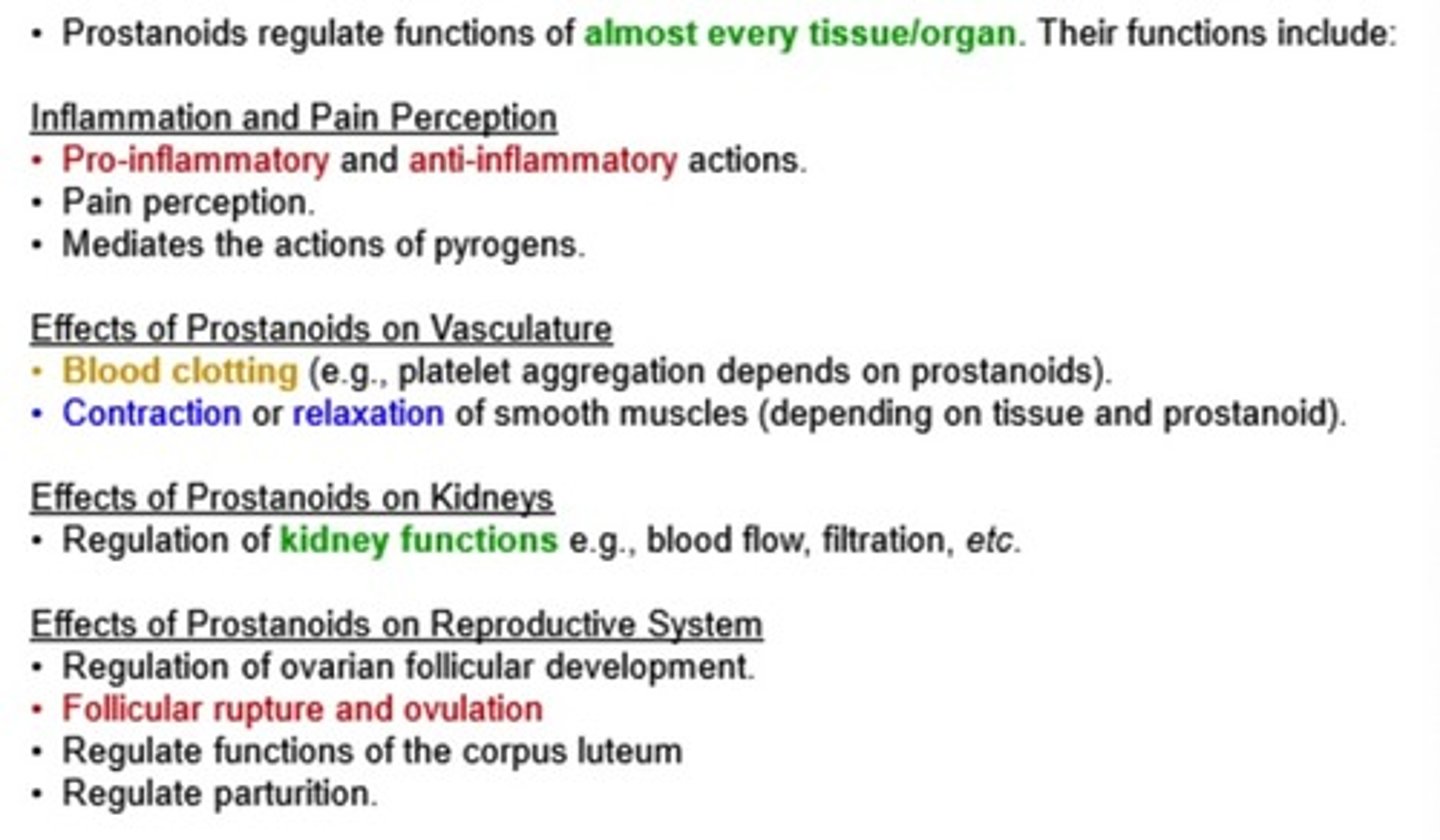
flip to see lecture image of important functions of Prostanoids:
of note: have both anti + pro-inflammatory functions, work in clotting, contraction or relaxation of smooth muscle, etc.
LEUKOTRIENES
leukotrienes derive from what 2 essential fatty acids? which is the main one?
1. arachidonic acid = main precursor (similar to prostanoids)
2. eicosapentaenoic acid
3. dihomo-gamma linolenic acid
are leukotrienes stored in cells?
no! they are not stored in cells --> are synthesized + released RAPIDLY in response of specific stimuli
(same as prostanoids)
how are the actions of leukotrienes regulated (generally)?
modulation of their synthesis --> also can be regulated at the level of their receptors
(same as prostanoids)
leukotrienes have specific plasma membrane receptors, and are rapidly metabolized at or near the site of synthesis, and have very [long / short] half lives
short
(these characteristics are also same as prostanoids)
do leukotrienes act in an autocrine or paracrine manner?
both ! (same as prostanoids)
looking at synthesis --> leukotrienes are produced when ___________ oxygenates essential fatty acids
lipoxygenase (LOX)
there are various LOX enzymes that convert arachidonic acid, but 5-LOX specifically oxidizes arachidonic acid into _____________
5-HPETE
5-HPETE is then converted to _________, the first leukotriene product
LTA4 (leukotriene A4)
this lipoxygenase pathway is active in what cells? what stimulates them?
leukocytes (mast cells, eosinophils, neutrophils, monocytes + basophils)
= various factors, such as allergens
what is the function of leukotrienes on the vascular system?
1. blood vessel constriction, especially in venules
2. increase vascular permeability
what is the function of leukotrienes on the respiratory system?
the main action is bronchoconstriction in asthma (specifically LTC4, LTD4, LTE4)
they also:
- increase permeability of capillaries + other small blood vessels
- enhance mucus production secretion in airway
what inflammatory diseases do leukotrienes play a role in?
act in inflammation in cystic fibrosis, IBS + psoriasis
how do leukotrienes act as 'chemotactic agents' for leukocytes? what types of reactions does this play a role in?
they attract eosinophils + neutrophils --> contributing to airway hypersensitivity in chronic asthma
- play significant roles in asthmatic, allergic + inflammatory responses
--> if in excess, can cause anaphylactic shock