AST - Search for Life in the Universe
 Call Kai
 Learn
Learn Practice Test
 Spaced Repetition
 Match
Match Flashcards
 Knowt Play
1/25

Earn XP
Description and Tags
I hate this class
Name | Mastery | Learn | Test | Matching | Spaced | Call with Kai | Chat |
|---|
No analytics yet
Send a link to your students to track their progress
26 Terms
Astrobiology
The scientific study of life int he universe, including how life began, how it evolved, where it might exist, and whether life exists beyond earth
Extraterrestrial
Originating outside of Earth. Extraterrestrial life means life that originated somewhere other than Earth.
Why Earth Matters
Earth is our only confirmed example of life, so scientists use Earth life as a starting point when thinking about life elsewhere.
Liquid Water
All known life requires liquid water. However finding liquid water by itself doesn't prove that life exists.
Places scientists consider
Potential environments include Mats, Europa, Enceladus, and Titan. Scientists look for environments that would provide conditions suitable for life.
Evidence vs Speculation
Scientists distinguish what is known, what is possible, and what has actually been supported by evidence.
Interdisciplinary Science
Astrobiology draws on astronomy, planetary science, biology, chemistry, geology, and physics
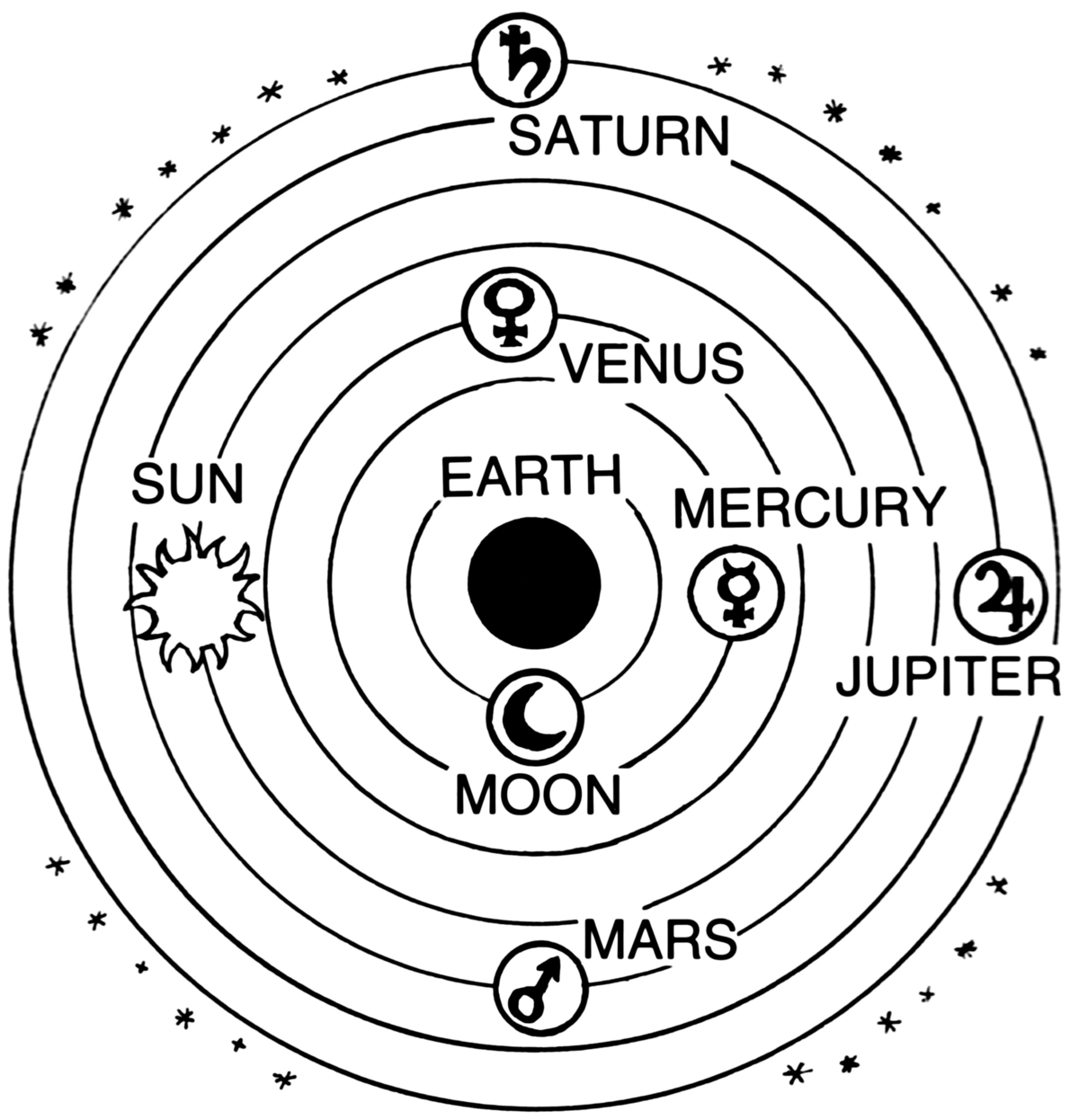
Geocentric Model
Earth-Centered Model
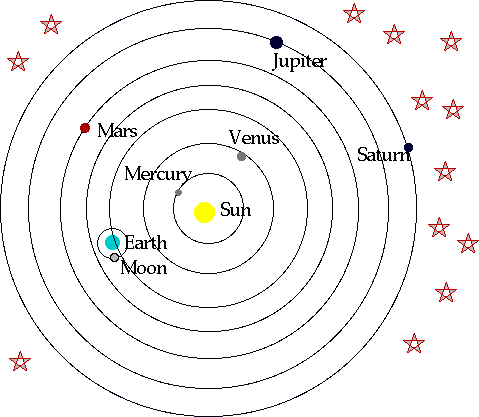
Heliocentric Model
Sun-centered model of the Solar System
Copernican Principle
The general idea that Earth does not occupy a special or central position in the universe
Hypothesis
A proposed explanation that can be tested
Scientific Theory
A well-supported explanation that has survived extensive testing. A scientific theory is not a simple guess.
How science works
Scientists make observations, ask questions, develop hypotheses, make predictions, test them, analyze evidence, and revise explanations when needed.
Self-Correcting science
When new evidence conflicts with an existing explanation, scientists can modify or replace that explanation
Universe
Everything that exists, including space, time, matter, and energy
Galaxy
A huge collection of stars, gas, dust, and other materials held together by gravity
Cosmic hierarchy
Earth → Solar System → Milky Way Galaxy → Universe
Light-Year
A unit of distance equal to the distance light travels in one year. It is not a unit of time. Looking at distant objects also means looking into the past.
Big Bang Theory
The leading scientific explanation that the universe began in an extremely hot, dense, state and has been expanding.
Redshift
A shift. of light toward longer, redder wavelengths. The redshifts of distant galaxies are important evidence for an expanding universe.
Atoms
Atoms contain protons (positive), neutrons (no charge), and electrons (negative). Atomic number equals the number of protons.
Important elements for life
Hydrogen, Carbon, Nitrogen, and oxygen are especially important. Carbon can form many complex molecules.
Planets in order
Mercury → Venus → Earth → Mars → Jupiter → Saturn → Uranus → Neptune
Terrestrial Planets
Mercury, Venus, Earth, and Mars. They are rocky and relatively small.
Jovian planets
Jupiter, Saturn, Uranus, and Neptune. They are much larger and rich in gases and other volatiles.
Nebular Theory
A model for the solar system formation: a cloud of gas and dust collapsed under gravity, flattened into a rotating disk, and formed the Sun at the center and planets from material in the disk.
