CLST 24 Test 1
 Call Kai
 Learn
Learn Practice Test
 Spaced Repetition
 Match
Match Flashcards
 Knowt Play
1/95

There's no tags or description
Looks like no tags are added yet.
Name | Mastery | Learn | Test | Matching | Spaced | Call with Kai | Chat |
|---|
No analytics yet
Send a link to your students to track their progress
96 Terms

What is this a picture of?
Harbor Temples at Pyrgi

What is this a picture of? What languages are on these?
Golden Tablets at Pyrgi; Etruscan & Phoenician

What is this? What time frame were these kinds of things introduced in?
Sarcophagus; Archaic Period

What is this a picture of? What social phenomenon is this evidence of?
House tomb; societal stratification

What is this?
Grave goods

What is the structure inside of this urn made of, and what is it depicting?
Made of terracotta; depicting a hut
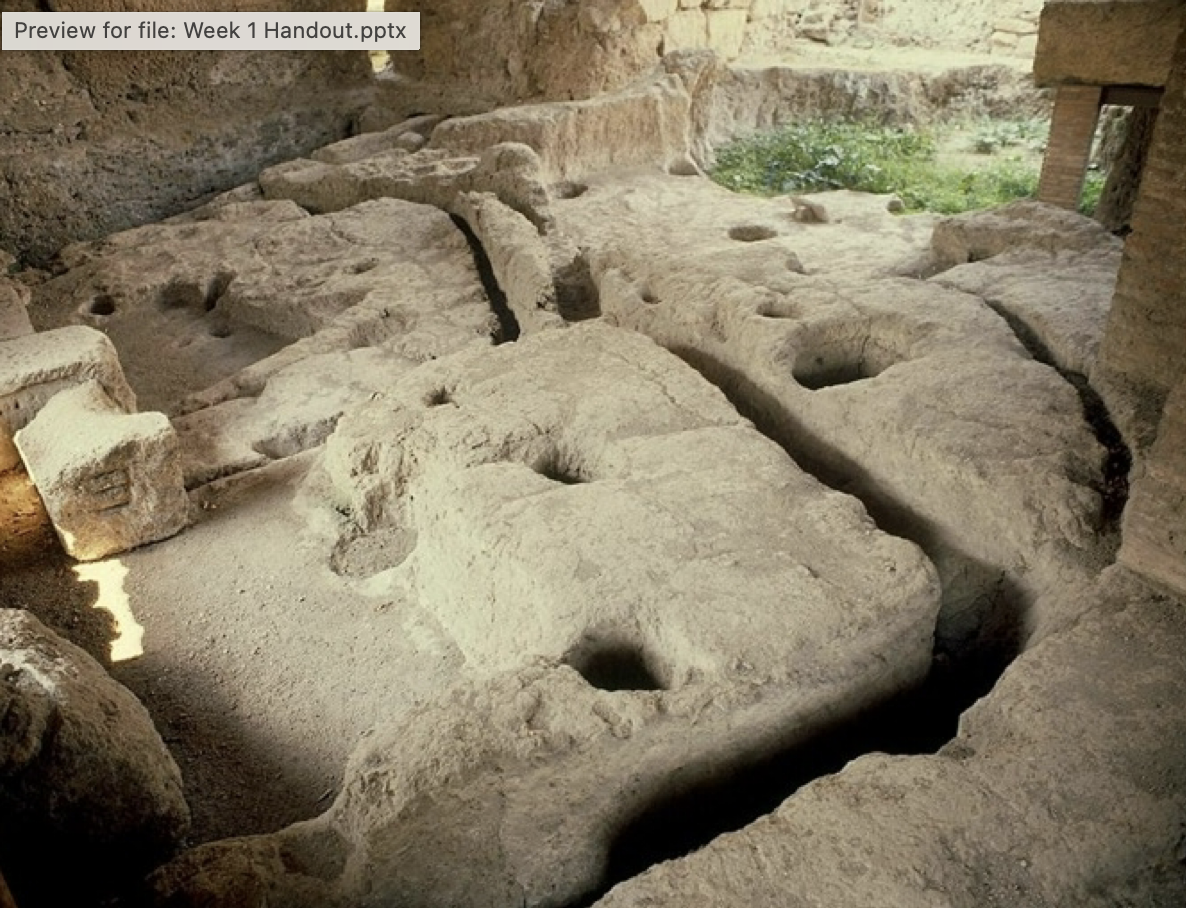
What are the holes in this picture?
Post holes and drainage canals

What is this depicting? What is this made of? Where was this found?
Mud brick architecture; terracotta; away from a settlement
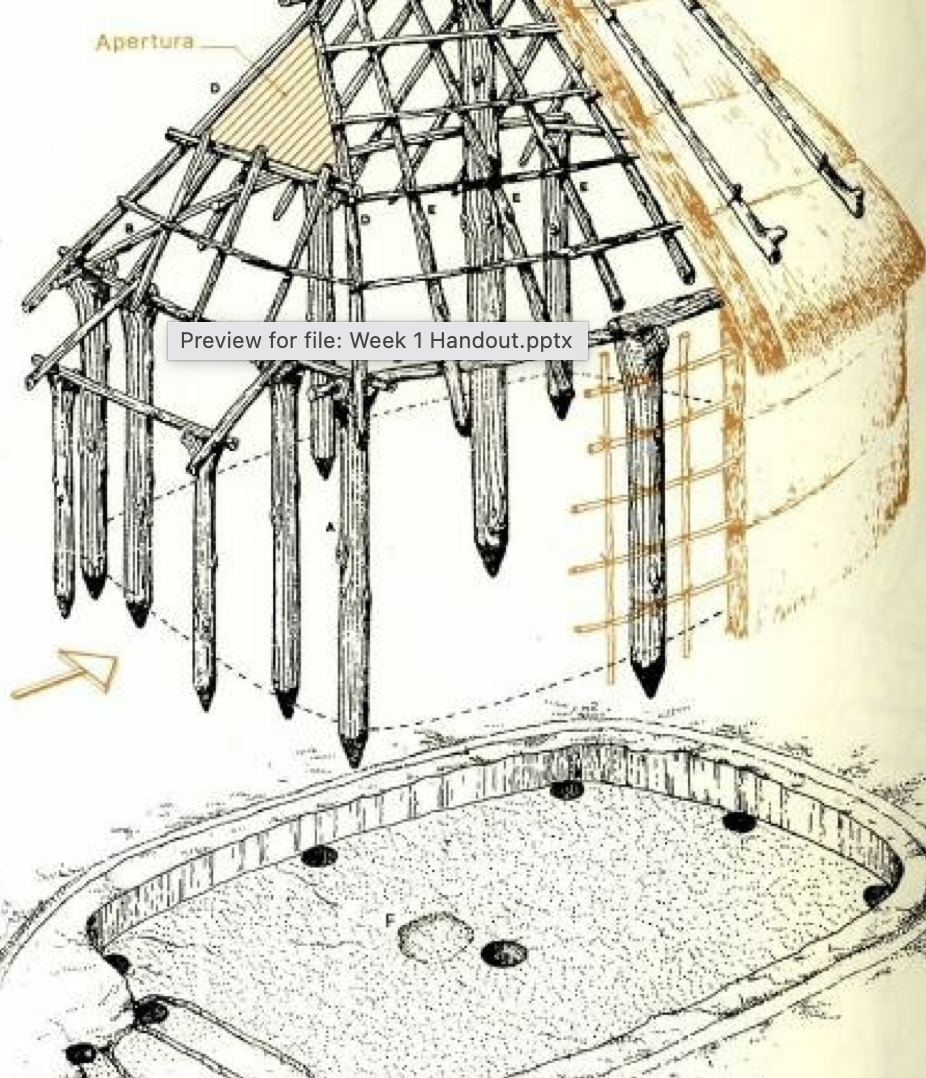
What is this a picture of?
Huts that they lived in

What is this a picture of?
Terracotta roof decoration

Who is this depicting? What is this made of?
Medusa; terracotta
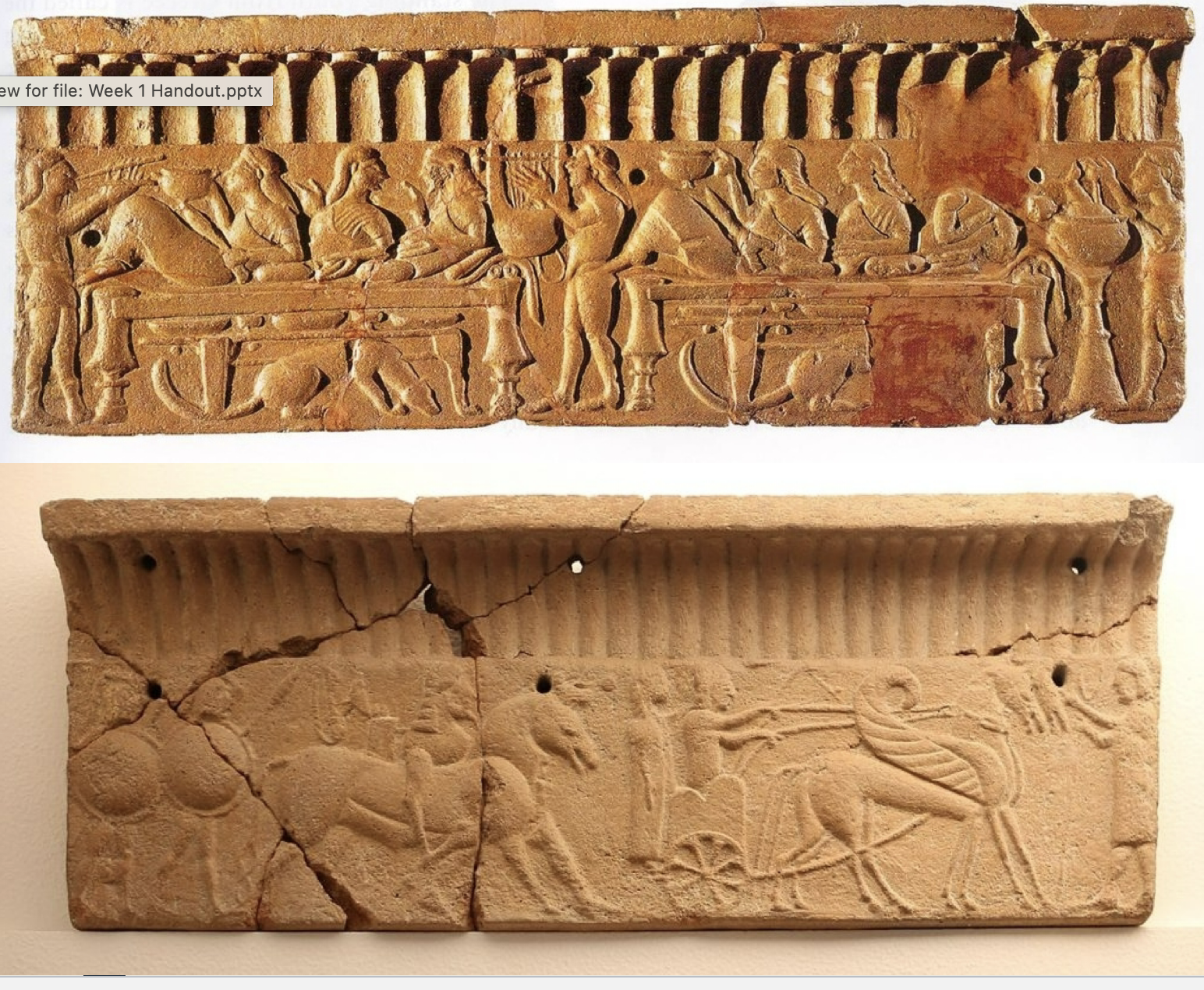
What are these? What are they made of?
Terra cotta roof tiles and/or pediments (?)

What are these objects made of?
Terra cotta

What two deities/figures are these representing? Where were they found
Hercules and Medusa; first temple at Rome

What is this a reconstruction of?
Terra cotta reconstruction of temple

What are these? What are the the circles?
Temple plans; timber columns

What is the material depicted in this picture?
Cappelaccio (volcanic stone/tuff)

What is the type of ceramic depicted? Among which group were these popular?
Bucchero; Etruscans

The style of this pot is more common in…
Latium

What style of pot is this? This style of pot is more common in…
Biconical; Etruria
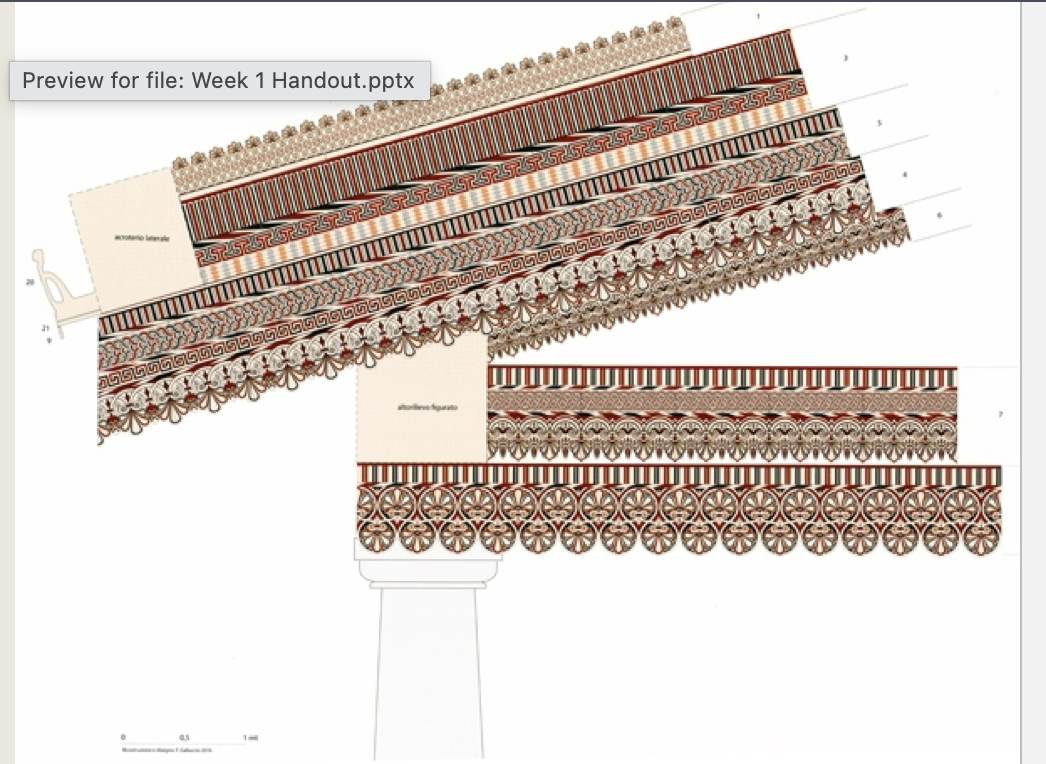
What is this a picture of?
Terracotta Roof Tiles
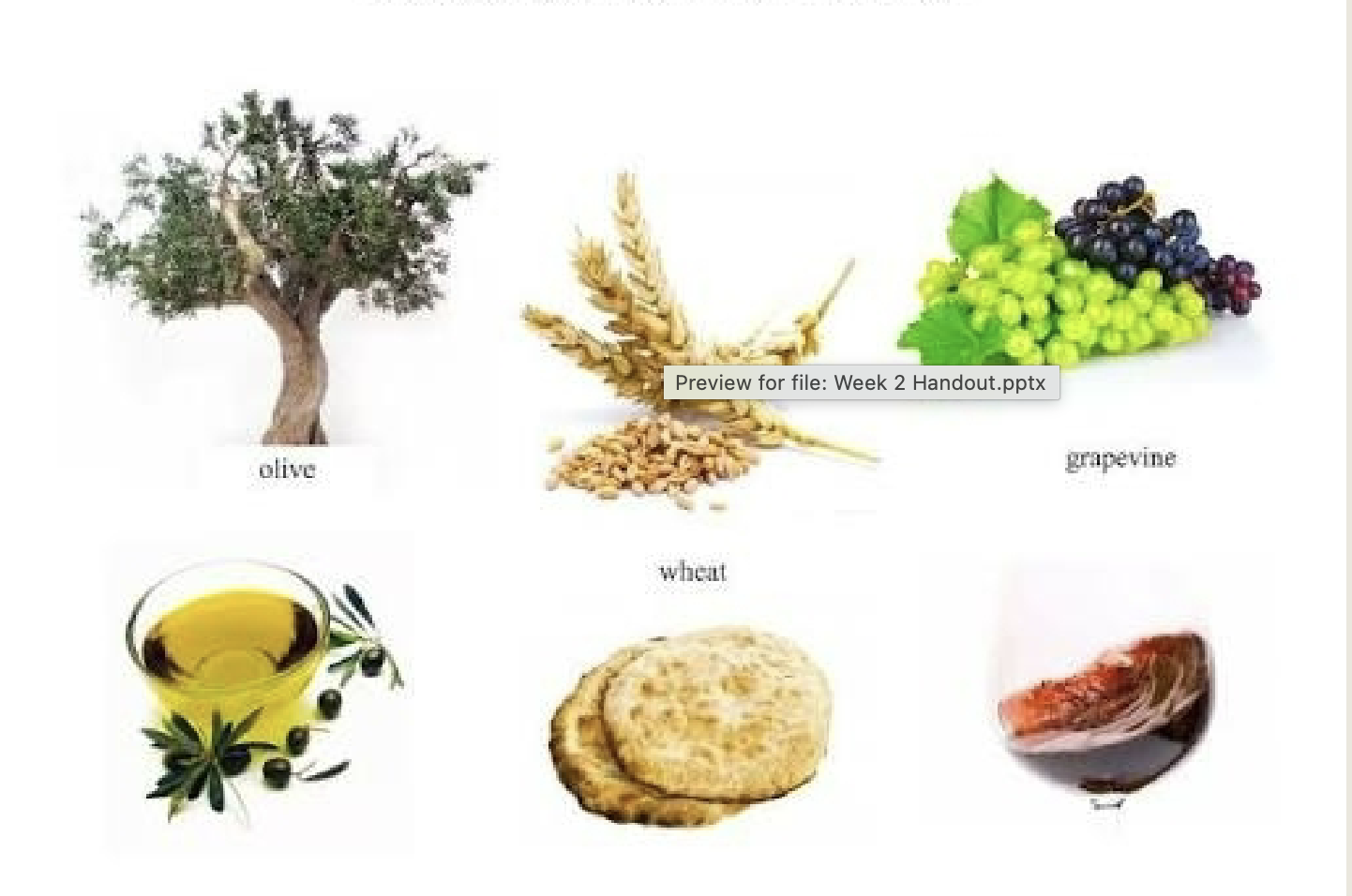
What are the things in this picture known as?
The Mediterranean triad

What are these pictures of? Where are these things located?
Nuraghae; Sardinia
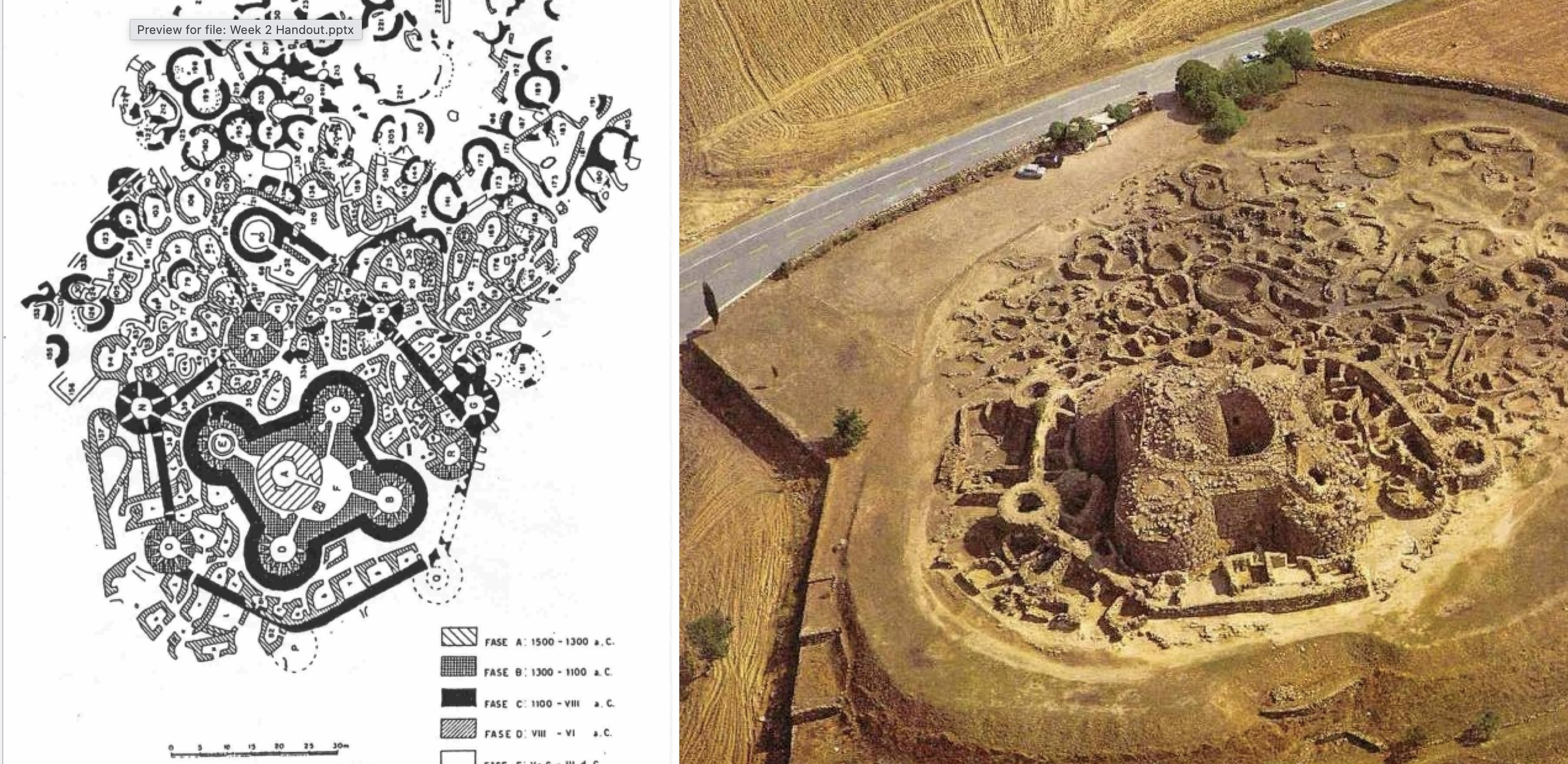
What are these pictures of? Where are these things located?
Nuraghae; Sardinia

Is this picture from the Bronze Age or the Iron Age? What does the open circle mean? What does the solid circle mean?
Bronze Age; abandoned in Iron Age; continues into Iron Age
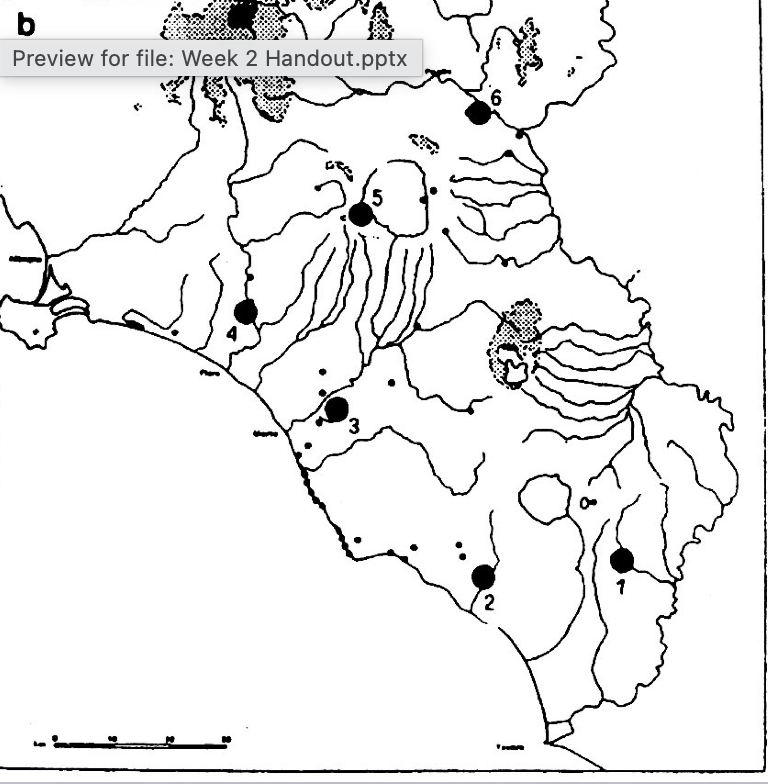
Is this picture from the Bronze Age or the Iron Age? Identify the numbered regions.
Iron Age
Veii
Caere
Tarquinia
Vulci
Bizenzio

What are the blue things in these pictures? What does this illustrate?
Bodies of water; availability of water in this area.

What is this a picture of? What does this illustrate?
Topography of central Tyrrhenian Italy; ecological diversity and complementation

What does this picture illustrate?
Various natural resources in central Tyrrhenian Italy

What does this picture illustrate
Various natural resources in central Tyrrhenian Italy

What is this object called? Where was it found? When was it found? What is it representing?
Chigi Vase; Veii; c.a. 630 BCE, hoplite warfare (one of first representations)

Why is this strait important?
Sailors like to stay near land, and this guided them straight toward central Tyrrhenian Italy

What is this a picture of? From what time period is this? What does it depict?
Fasto Antiates Maiores; late Republican period; days for commercial activity, festival, agriculture (fas vs nefas days)

What is this a reconstruction of? What does this depict?
Roman fast; days for commercial activity, festival, agriculture (fas vs nefas days)

What does this chart illustrate?
Festivals of the calendar reflected the main seasonal surplus of each season; agricultural production based on sound ecological assumptions

What is this a picture of?
Romulus and Remus being nursed by a she-wolf
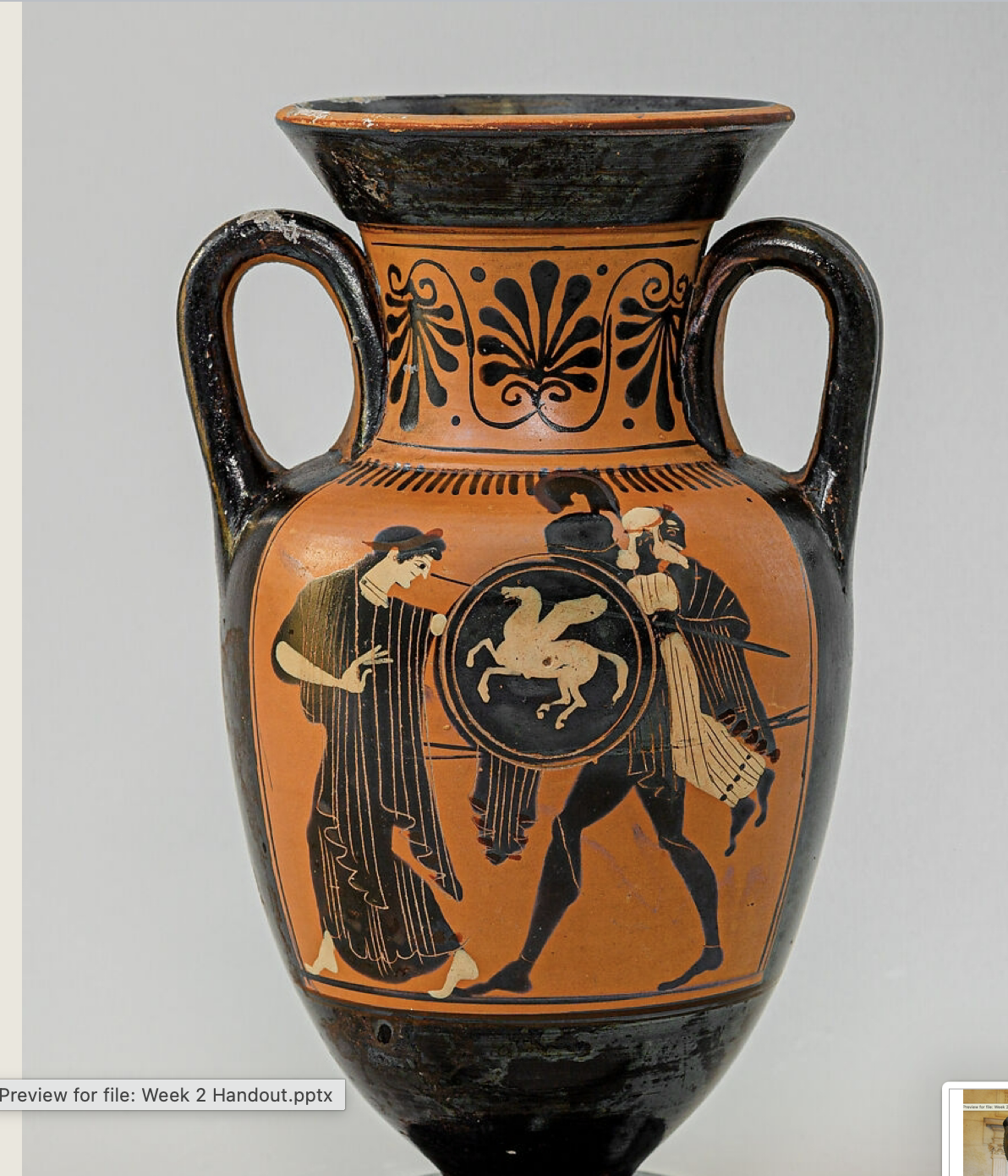
What does this picture depict? What kind of pottery is it?
Aeneas leaving Troy with his father on his back; Black Figure pottery

What is this? Where was it found? When was it made? What does it depict?
Chigi Vase; Veii; c.a. 630 BCE; hoplite warfare

What does this picture show?
Currents of air in the Mediterranean that guided where sailors went
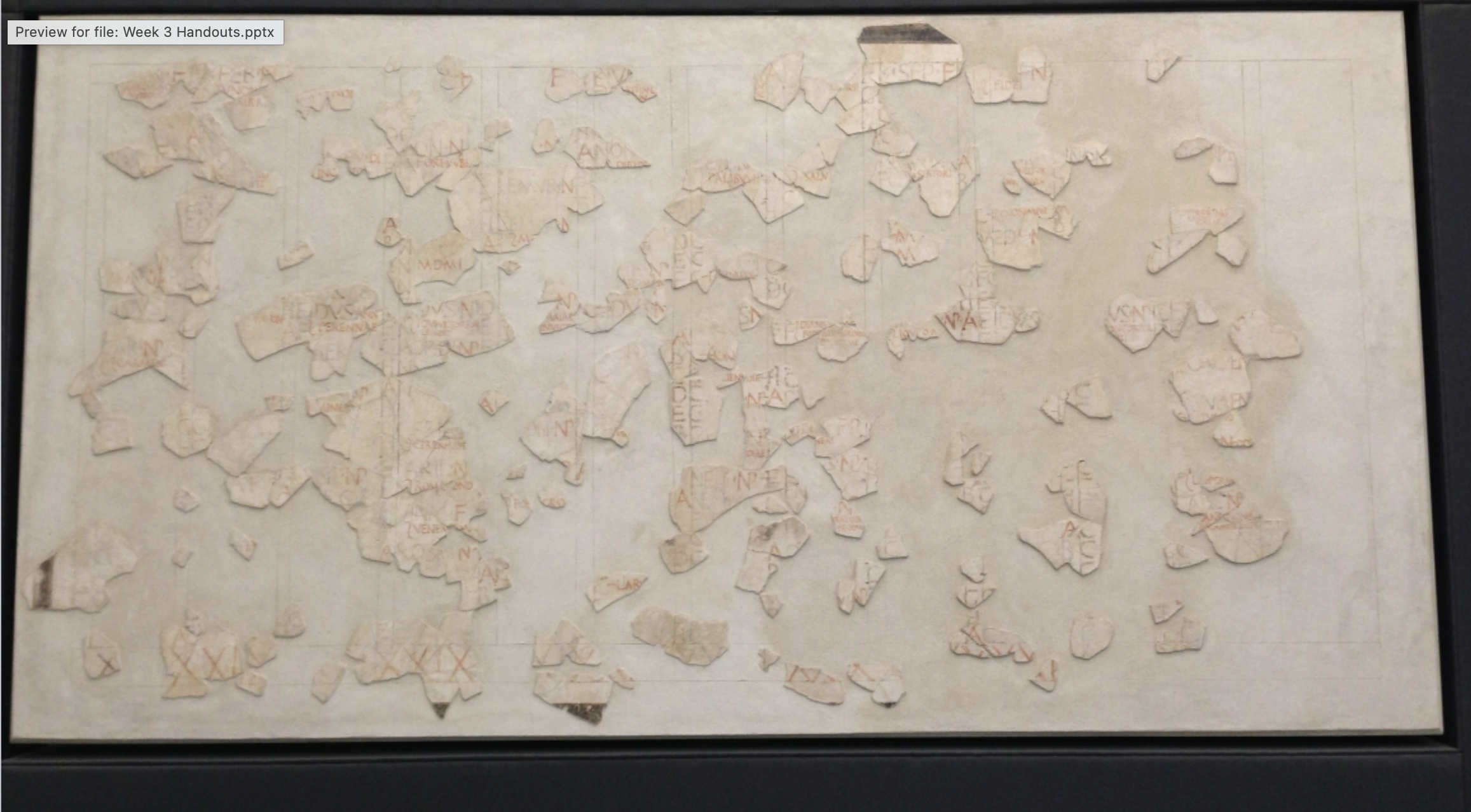
What is the time frame and location of this calendar?
84-55 BCE; Antium

What is the time period of these images?
late 6th century BCE

What is this object? Where was it found? What is the time period?
Anchor inscribed with Greek writing; Gravisca; end of 6th century

What craftsman does this mention? Where else was this craftsman mentioned?
Sostratos; mentioned in Herodotus 4.152 as from the island of Aegina

What are these? What two languages are they written in?
The Pyrgi tablets; Etruscan & Phoenician

What is this a translation of? What does this represent?
Pyrgi Tablets; cultural translation (especially at boundary spaces)

What does this map show (don’t look at the key…)? What does this represent?
Areas of Greek settlement; very diverse, lots of colonization

What does this picture depict? Where was this structure found? What was its significance?
Sant’Omobono Sanctuary; Forum Boarium; first temple built in Rome

What is this a reconstruction of? What is the time period?
Archaic Temple at Sant’Omobono Sanctuary; 560 BCE
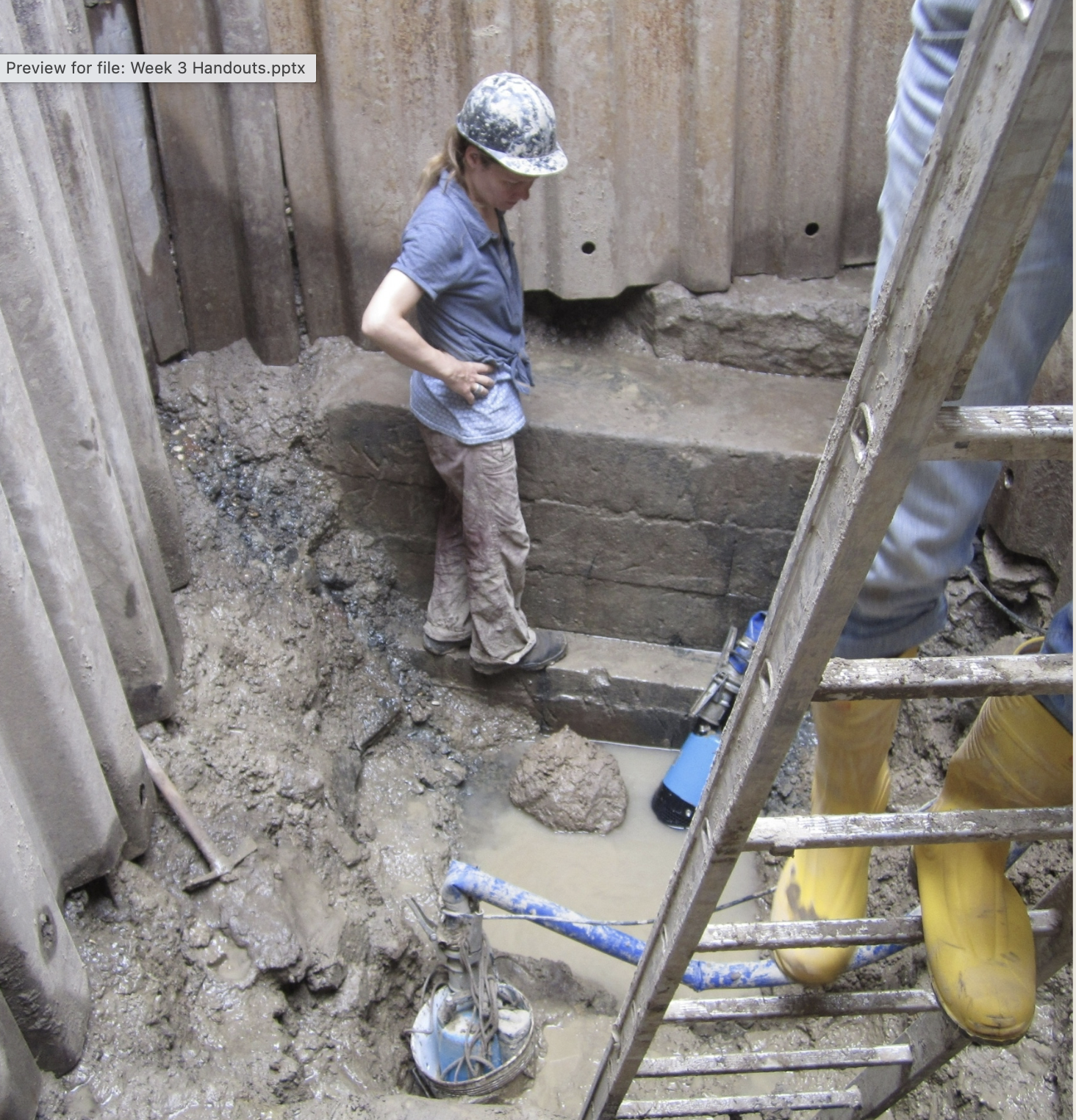
What excavation site is this?
Sant’Omobono Sanctuary

Where was this picture taken? What do the terracotta remains show?
Capitoline Museum; pieces of the cats on the original phase of the Sant’Omobono sanctuary

What is this a reconstruction of?
First phase of the Sant’Omobono sanctuary

What is this a picture/reconstruction of?
Pediment on first phase of Sant’Omobono sanctuary; darker pieces are the terracotta remains
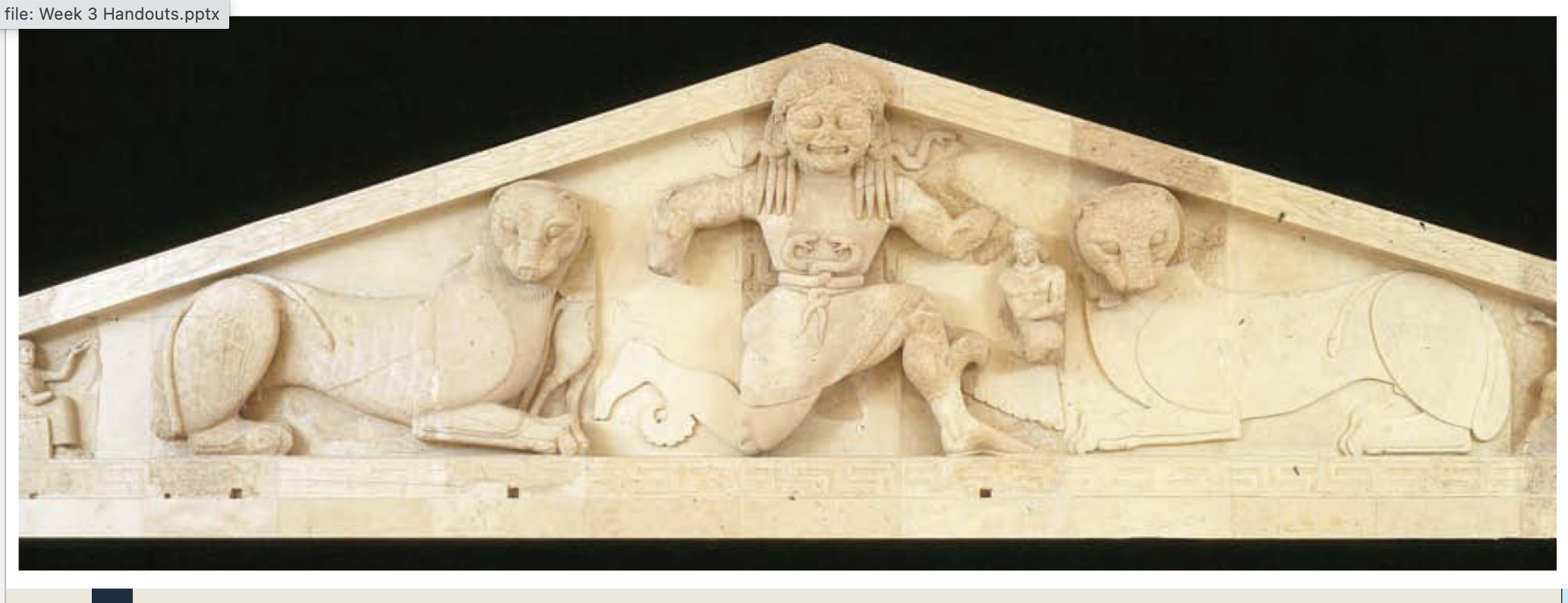
What is this a picture of? Where was it found? Time period? What does this represent in relation to Central Italy?
Pediment of the Gorgon from the Temple of Artemis; Corcyra, Corfu; 6th c. BCE; visual connection between Greece and Central Italy
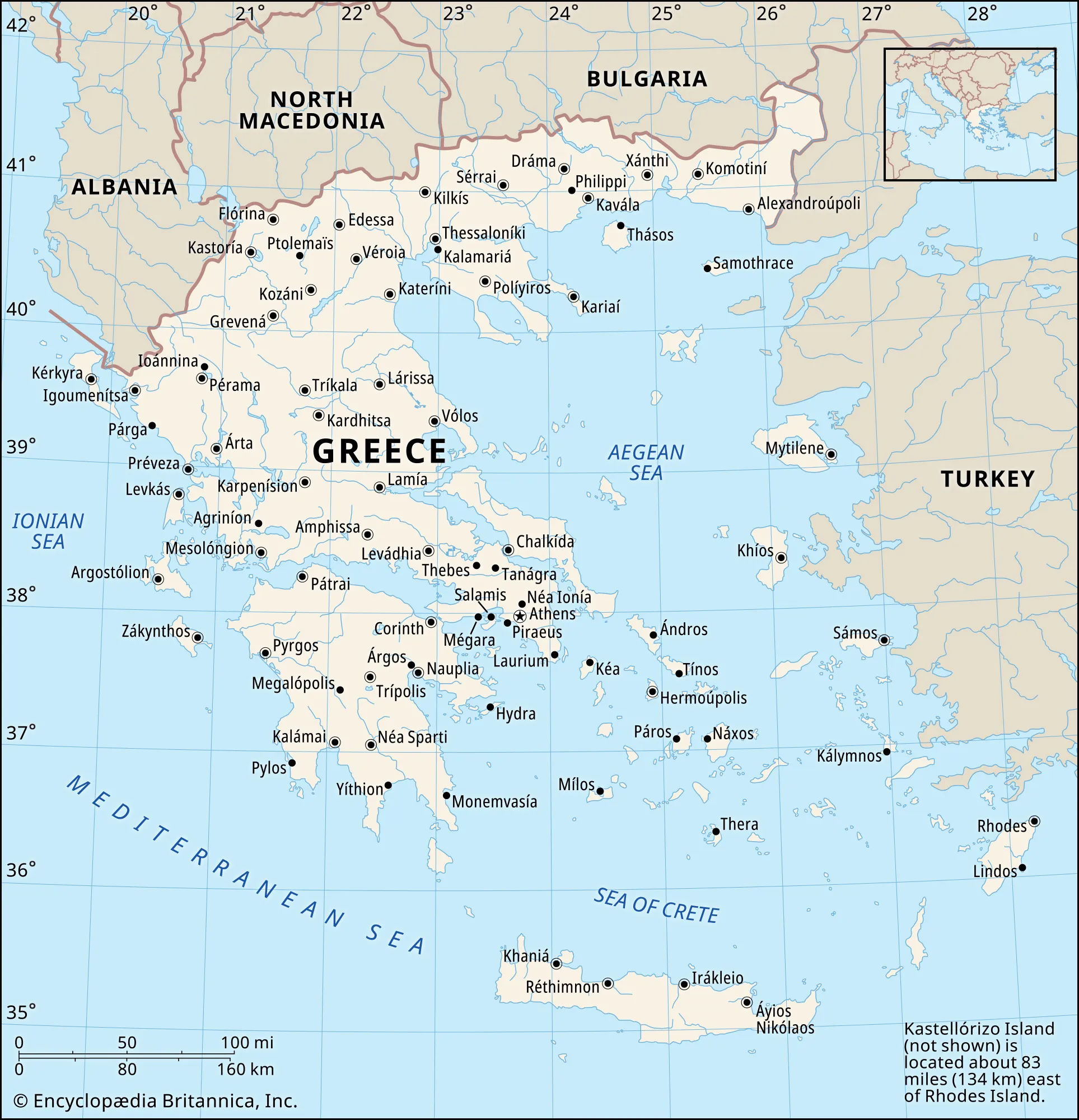
Where is Corfu?
←


What is this a picture of?
Later phase of the Sant’Omobono Sanctuary

Where was this statue found? What does it likely depict?
Sant’Omobono Sanctuary; Hercules and a goddess
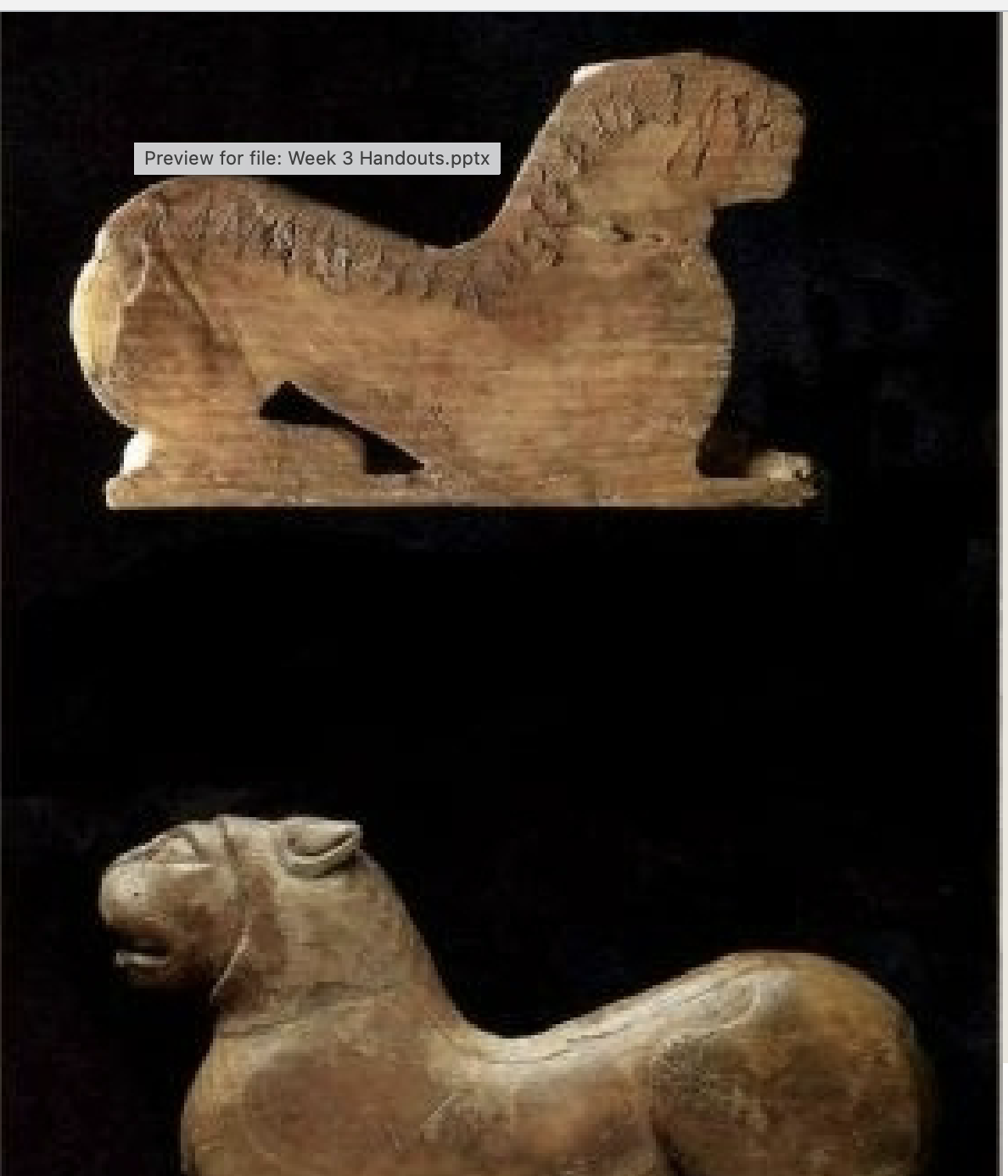
What is this? Where was it found?
Ivory Lion with Etruscan inscription; Sant’Omobono Sanctuary

What is this? Where was it found?
Ivory Lion with Etruscan inscription; Sant’Omobono Sanctuary

This picture depicts the location of what temple? What is the significance of this location? This is near what modern location?
Lucus Feroniae; a position favorable for contact between Etruscans, Latins, Sabines, and Faliscans, convergence of roads and presence of Tiber; Capena

What does this depict? What was it made of? What characteristics show that it was an Italic-style temple?
Lucus Feroniae sanctuary; volcanic tuff; High podium

Temple A (left) at Pyrgi has what kind of style? How can you tell? What is the time period?
Italic; peripteral sine postico (columns only on 3 sides); early 5th century

Temple B (right) at Pyrgi has what kind of style? How can you tell? What is the time period?
Greek; peripteral (columns all around); mid 6th century

Where was this found? Where specifically within this site was it found? What is it made of? What is the time period? What myth does it depict?
Pyrgi; Pediment of Temple A; Terracotta; 470-460 BCE; Seven against Thebes

What does this depict? Where was this temple? Time period? Is this an Italic or Greek-style temple (how do you know)?
Portanaccio Temple; Veii; late 6th century; Italic (high podium; peripteral sine postico)
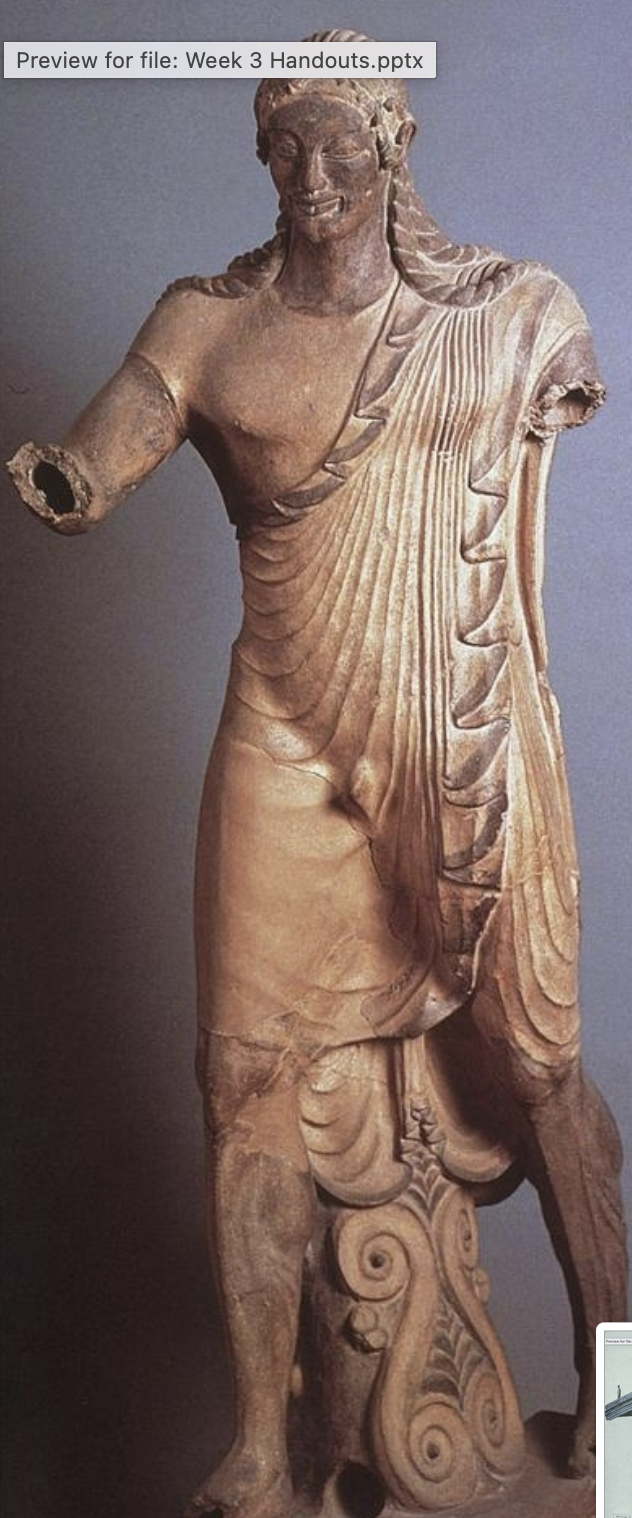
Where was this statue from? What is it made of? Does this seem to be Greek-style or not?
Portonaccio Temple; Terracotta; NO - very Etruscan looking

What is this a map of? Where was it (including region and relation to Rome)? What cult worshipped here?
Temple to Mater Matuta; Satricum in Latium, SE of Rome; Poliadic Cult

What does this picture represent? What is its significance?
Excavations at Satricum; Town was changing, might have influenced changes in temple

BLACK OUTLINE - what do these represent? What time frame? What kind of building?
Iron Age huts; late 9th century BCE; may have been a temple but also could have been for domestic or economic activity

BROWN OUTLINE - What does this represent? What time frame? What kind of building?
Structure that seems to be replacing pre-existing hut; late 7th century BCE; unclear whether a religious site

RED OUTLINE - What does this represent? What time frame? What does the green patch represent? What elements make it clear that it’s a certain type of building? What style is it?
Temple; 6th century BCE; Votive deposit from this phase; Steps, cella, podium make clear it is a temple; peripteral sine postico (columns all around, except on back side)

BLUE OUTLINE - What does this represent? What time frame? What style is it?
Final phase of the temple; Early 5th century BCE; Peripteral (columns all around)

What site is this? Put the colors in order (earliest to latest)
Satricum; Black, brown, red (+green), blue

What site does this depict? In what time period?
Satricum; late 7th century BCE (= brown outline)

What site does this depict? In what time period? What makes it different from previous iteration?
Satricum; later phase, around 500 BCE; more orthogonal

What is this a plan of? Time period? What cult was worshipped here?
Capitoline Temple = Temple of Jupiter Optiumus Maximus; late 6th century; Poliadic cult

What is this a plan of? Time period? What three gods/goddesses were worshipped here?
Capitoline Temple; late 6th century; Jupiter Optimus Maximus, Juno Minerva

What is this a plan of? Time period?
Capitoline Temple = Temple of Jupiter Optiumus Maximus; late 6th century;

What is this a rendering of?
Capitoline Temple

What does this show?
Foundation of Capitoline Temple, a notable feature of Italic-style temples

What does this show?
Foundation of Capitoline Temple, shown in Capitoline Museum

Which temples are peripteral (#s)?
10, 11, 12, 13

Which temples are peripteral sine postico (#s)?
7, 9

Which # is the Capitoline Temple? Which is Temple A at Pyrgi? Which is Satricum II? Which is Temple B at Pyrgi?
9, 17, 8, 10

What does the top image depict? Where is this? What is happening here? What time period was this happening?
Fissure in volcanic tufo; Tarquinia’s plateau; votive offerings placed in the fissure; late 10th century
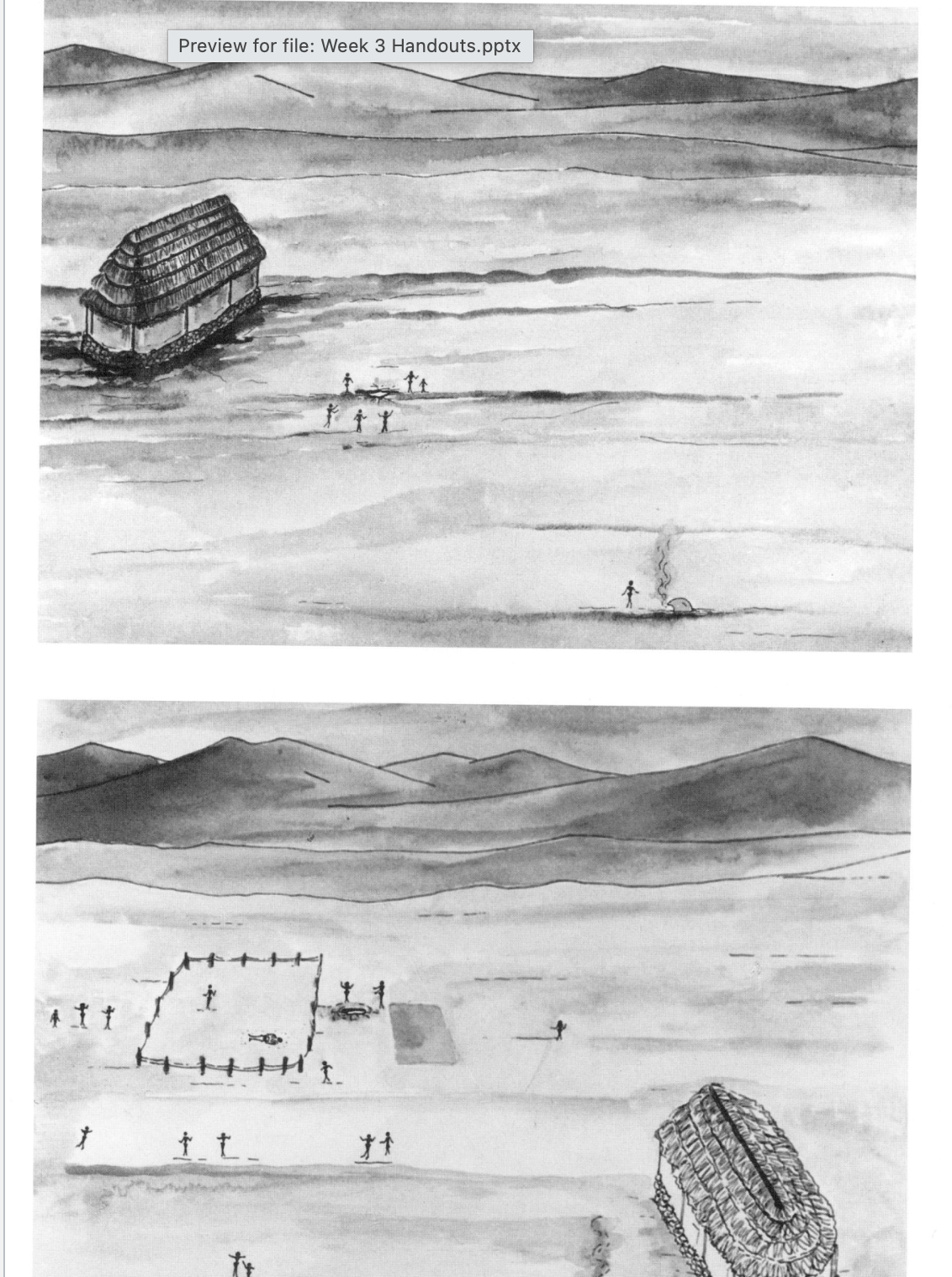
What does the bottom image depict? What was found here? What time period was this happening?
Fence enclosed burial next to fissure; buried teenager with abnormal skull, maybe epileptic; 9th century

What are these reconstructions of? Time period? What do these indicate?
Developments at Tarquinia; 6th century; some cult activity but not obviously a temple

What is this an image of? What would this be used for/by whom would it be used?
A liver with regions corresponding to different omens; divination by haruspex - this might have been a training tool
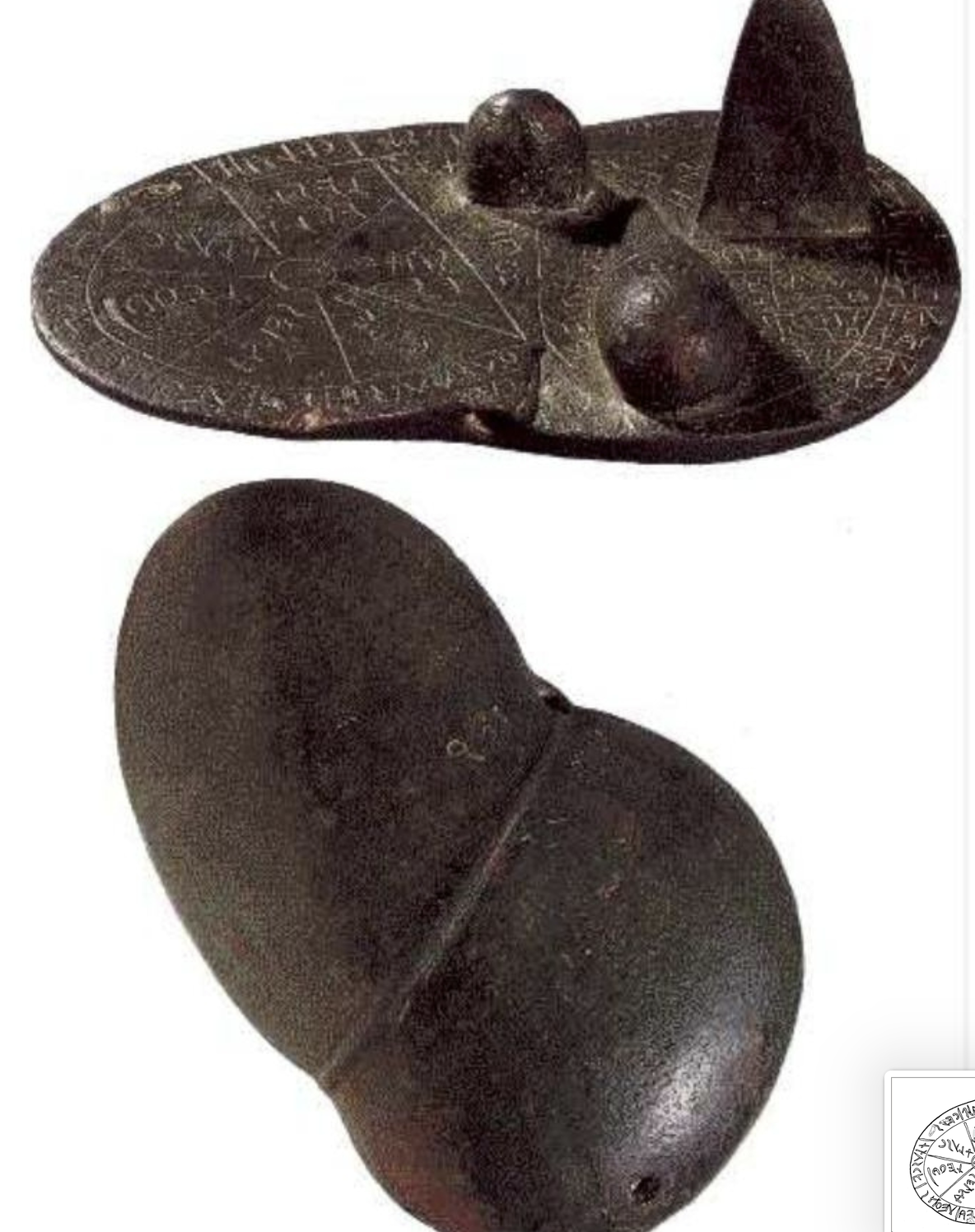
What is this? Time period?
Piacenza Liver - bronze depiction of a sheep’s liver; 100 BCE

What is this? Where was it found? Time period? Language? # of readable words?
Terracotta tile with a calendar starting in March; Capua; ca 500 BCE; Etruscan; 300
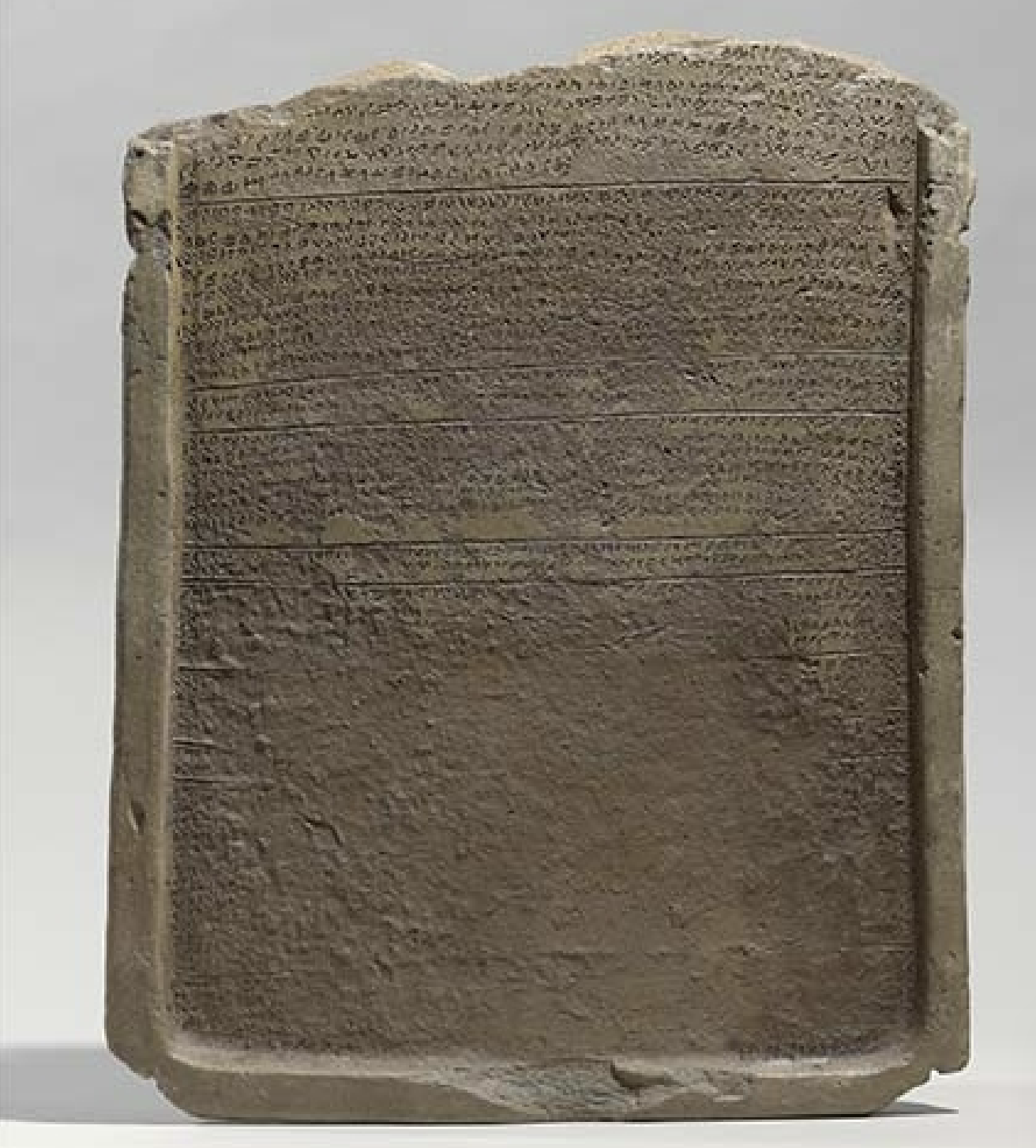
What is this? Where was it found? Time period? Language? What do the nail holes on it suggest?
Terracotta tile with a calendar; Capua; 500 BCE; Etruscan; it was hung up

What does this depict? Time period?
Major population groups of Italy in third century BCE

What is the significance of this place?
Capua = place where terracotta roof tile with Etruscan calendar was found, which was evidence for Greek influence

Left green arrow - What is this site? When was it settled? By whom was it settled?
Pithekoussai on island of Ischia in Bay of Naples; 8th c. BCE; Euboean Greeks

Right green arrow - What is this site? What is its significance in relation to the left green arrow?
Euboea; settled at Pithekoussai in 8th century BCE
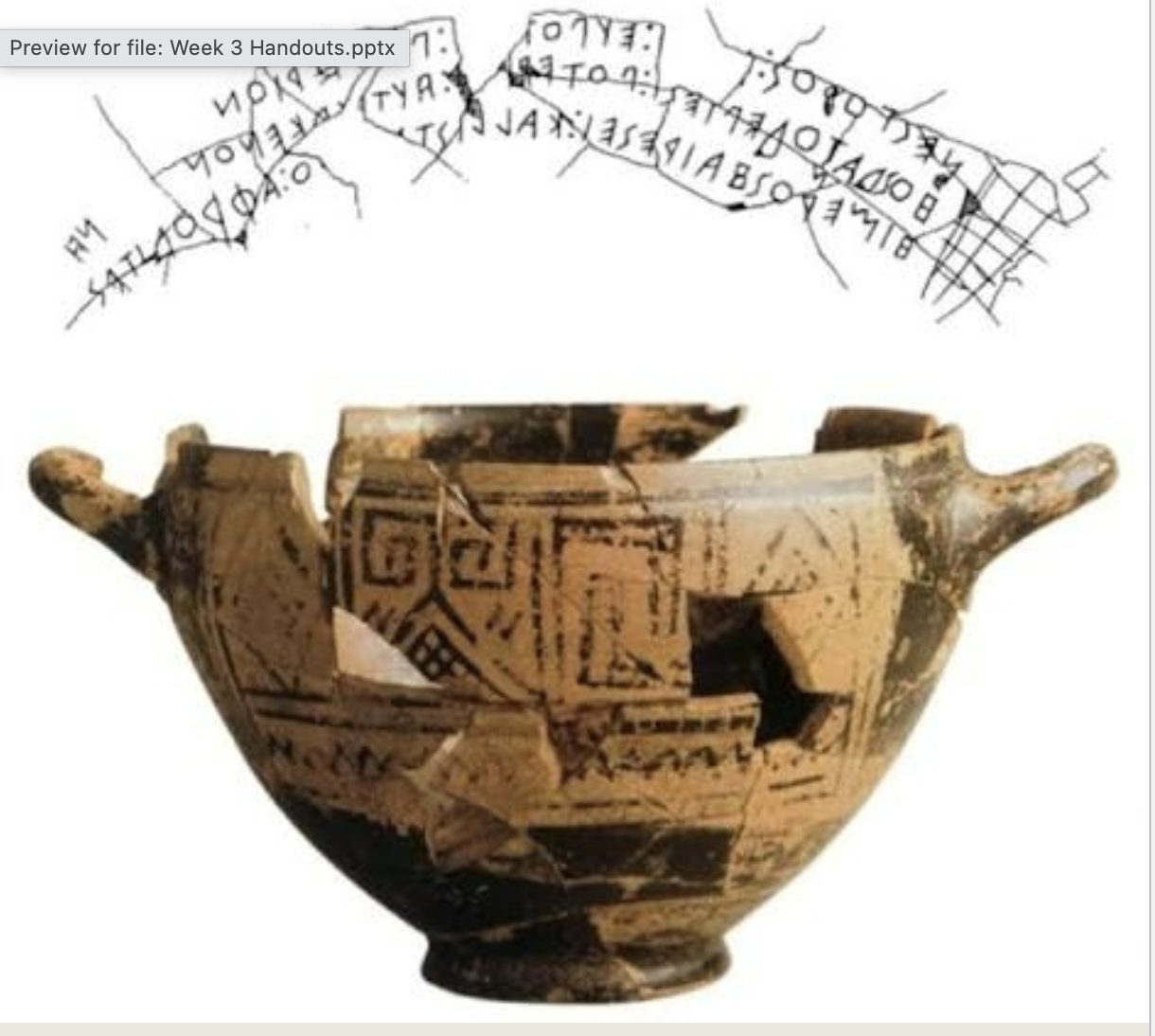
What is this? What style is it in? What time frame was it probably made in? Where was it found? What is its significance? This is an early reference to whom?
Nestor’s Cup; Geometric Period; 750-700 BCE; Pithekoussai; earliest known inscription using the Greek alphabet and evidence of technology and cultural transfer; Homer