Chp 1: Terms , Positioing, & Imaging Principles
 Call Kai
 Learn
Learn Practice Test
 Spaced Repetition
 Match
Match Flashcards
 Knowt Play
1/53

There's no tags or description
Looks like no tags are added yet.
Name | Mastery | Learn | Test | Matching | Spaced | Call with Kai | Chat |
|---|
No analytics yet
Send a link to your students to track their progress
54 Terms
50% of population; average body habitus
Sthenic

35% of population; leaner than average body habitus
Hyposthenic

5% of population; broad & stocky body habitus
Hypersthenic
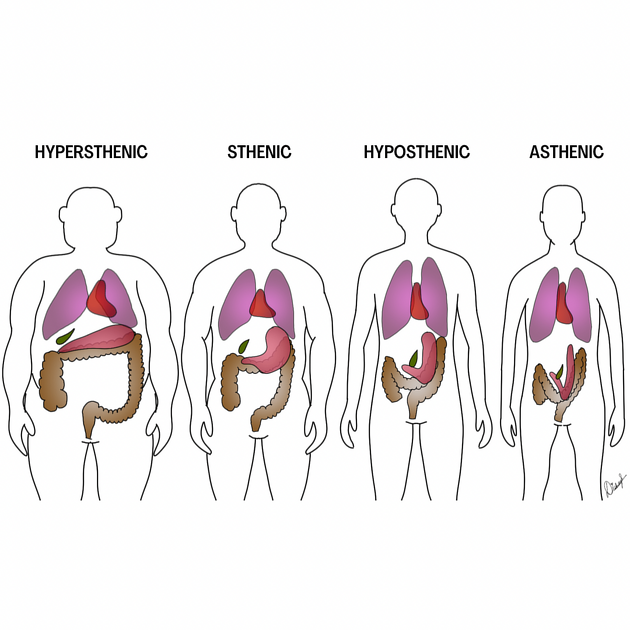
10% of population; thin & slender w/long & narrow body habitus
Asthenic
how should the IR be placed if the pt has a hyposthenic body habitus for a chest xray? Why?
portrait/lengthwise bc lungs are longer
how should the IR be placed if the pt has asthenic body habitus for a chest xray? Why?
portrait/lengthwise bc lungs are longer
how should the IR be placed if the pt has a hypersthenic body habitus for a chest xray? Why?
landscape/crosswise bc lungs are shorter & wider
how should the IR be placed if the pt has a sthenic body habitus for a chest xray? Why?
can be portrait/lengthwise or landscape/crosswise depending on age, height, & pathology
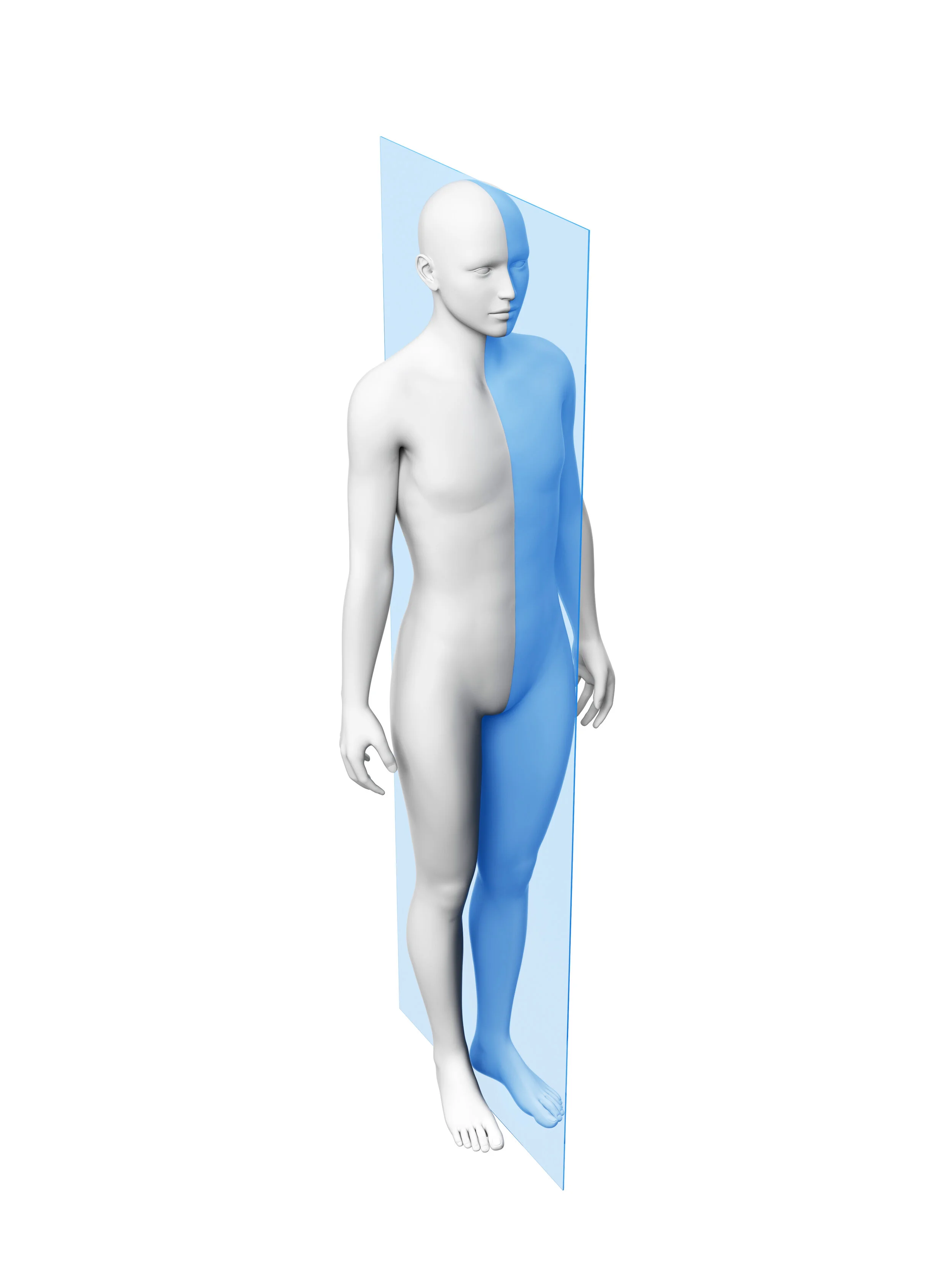
what plane is this?
sagittal plane
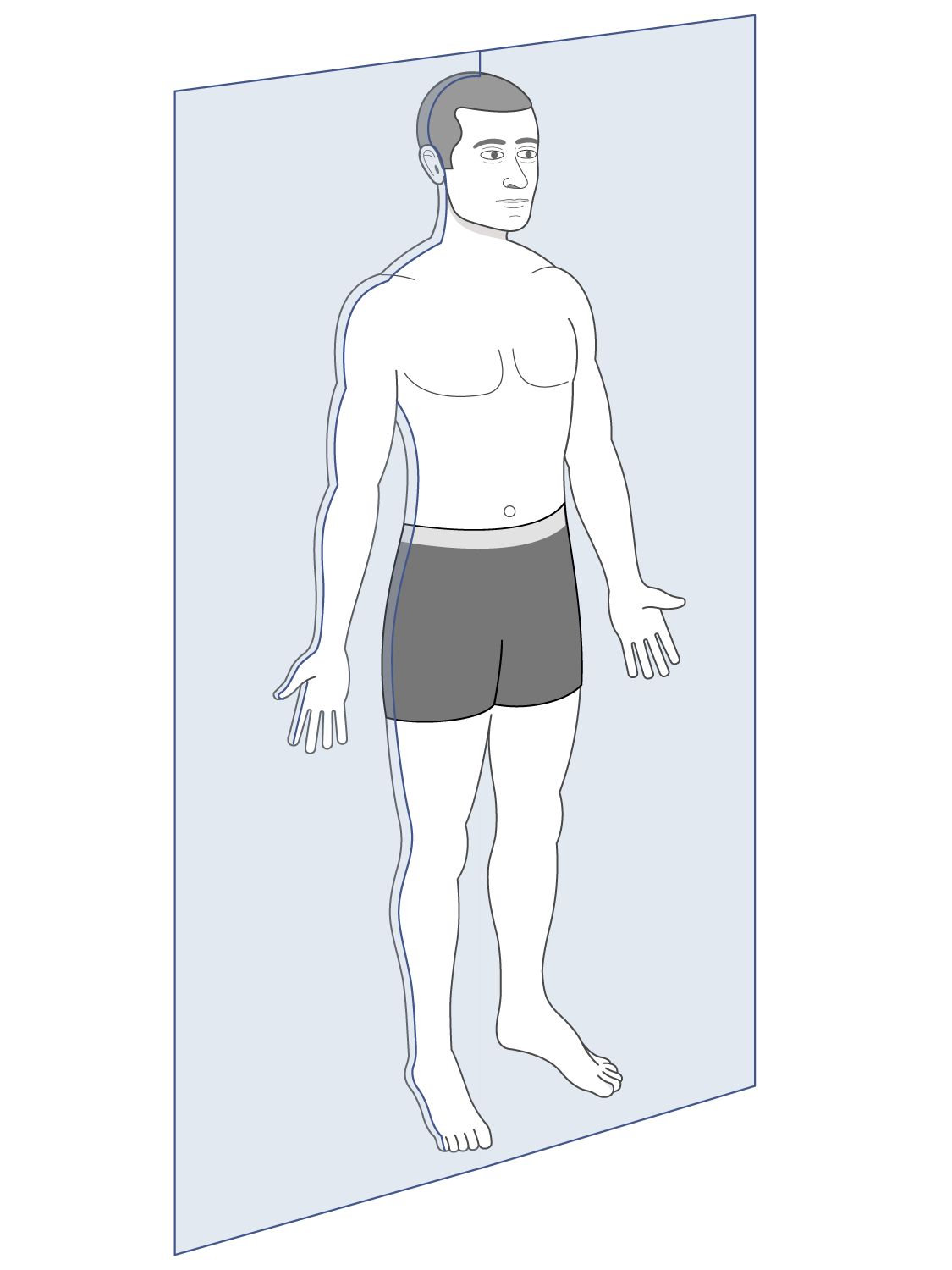
what plane is this?
coronal plane

what plane is this?
horizontal/transverse/axial plane
longitudinal or transverse plane at an angle or slant & not parallel to the other planes
oblique plane
divides body into EQUAL left & right
midsagittal plane
divides body into EQUAL anterior & posterior
midcoronal plane
what is PA?
posteroanterior projection; CR enters posteriorly & exits anteriorly
What is AP?
anteroposterior projection; CR enters anteriorly & exits posteriorly
what is the difference between projection & position?
projection describes the pathway of the CR while position describes the physical placement of the pt’s body relative to the IR
most oblique xrays are____ degrees
45
AP & PA oblique projections must include____
term indicating which way its rotated (e.g., medial or lateral rotation)
medial & lateral sides of mediolateral and lateromedial projections are determined w/pts in ____
anatomical position
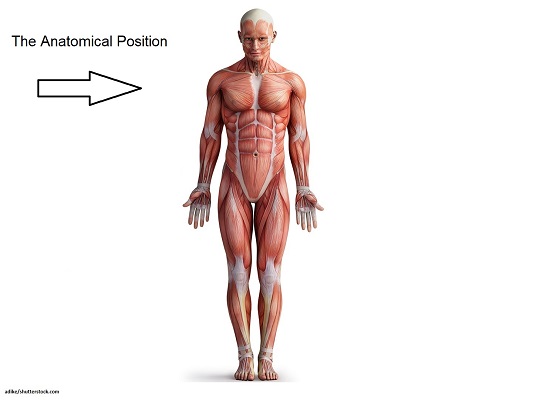
when marking AP & PA projections as well as oblique, pt’s right side will always be on the viewer’s ____
left
specific AP axial chest projection to see apices of lungs
AP lordotic projection
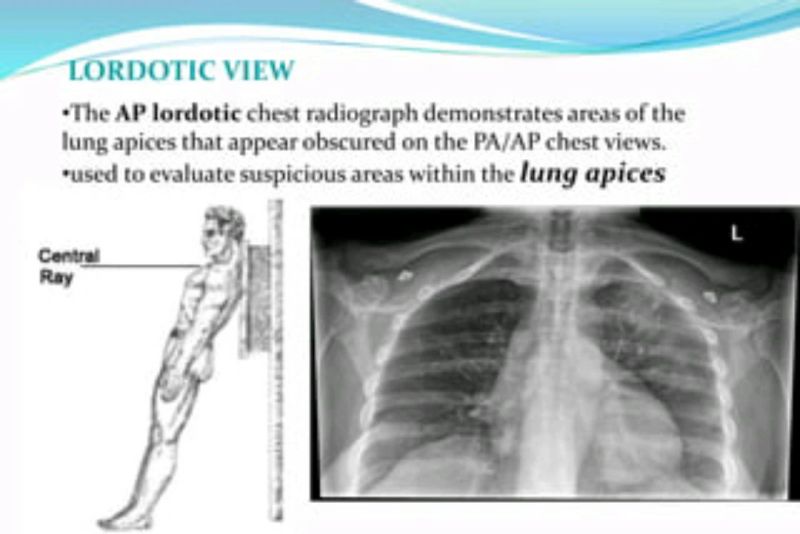
type of special projection where CR skims body part
tangential projection
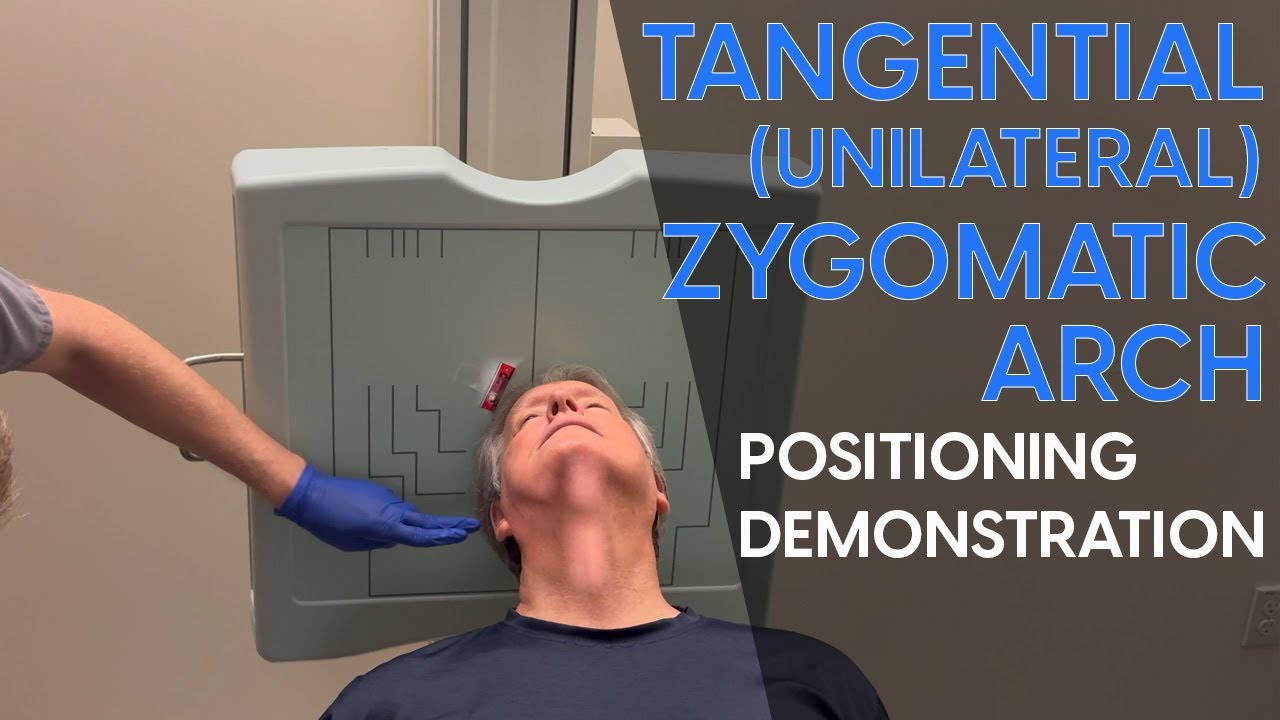
type of special projection where CR enters superiorly & exists inferiorly or vice versa
superoinferior/inferosuperior axial projection

oblique & decubitus positions will be named based on ____
part of body touching or closest to IR
ex: dorsal decubitus- pt is supine & horizontal beam is being used
ex: RAO- right anterior oblique. pt’s right side of chest (anterior) is closest/touching IR & they are in an oblique position
what is the difference between recumbent and decubitus position?
recumbent simply means pt is lying down. Decubitus is specifically when pt is lying down while a horizontal xray beam is being used
caudad CR angle
CR is angled towards feet and away from head
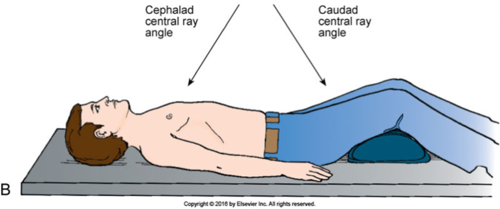
cephalad CR angle
CR is angled towards head
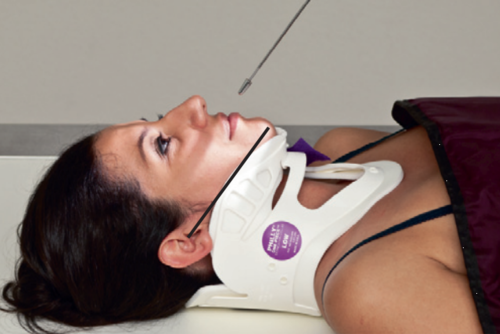
lateral projection thru thorax. Requires right or left lateral position term to indicate which shoulder is closest to IR
transthoracic lateral projection
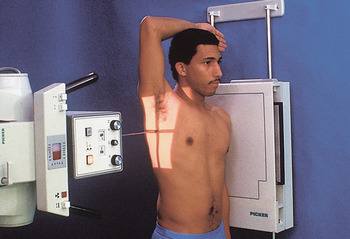
when would a transthoracic lateral shoulder projection typically be done?
when a pt has severe trauma where they cannot move their shoulder to conduct a regular shoulder projection
dorsoplantar/plantodorsal projection
CR enters from the dorsal (anterior) surface of the foot & exits thru the plantar (posterior) surface & vice versa
an axial plantodorsal projection (PD) is used to image
calcaneus
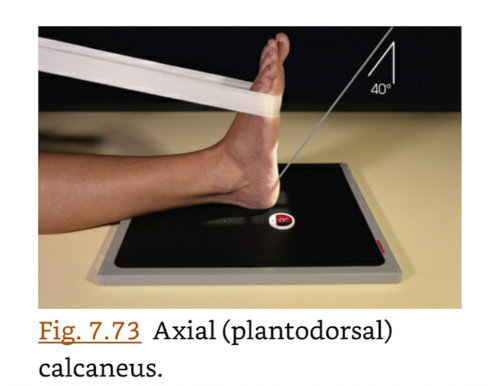
CR enters cranial parietal bone & exits at acanthion
parietoacanthial projection/PA Waters
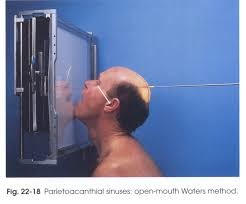
CR enters acanthion & exits at cranial parietal bone
acanthioparietal projection/ AP Reverse Waters
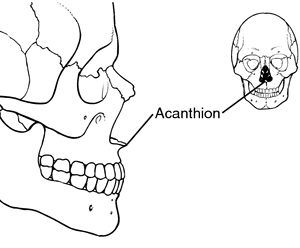
acanthion
junction of nose & upper lip
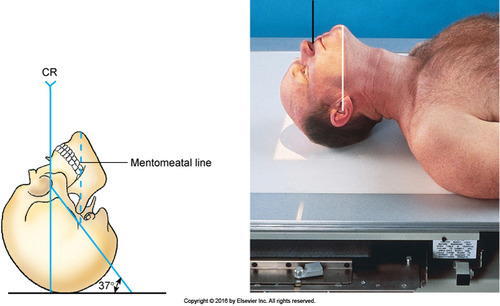
CR enters below chin (mentum) & exits at top of skull (vertex)
submentovertical (SMV) projection

CR enters at top of skull & exits below mandible (less common)
verticosubmental (VSM) projection
ipsilateral
on the same side of the body or part
contralateral
on opposite side
ulnar deviation
turn or bend the hand & wrist towards the ulnar side
radial deviation
turn or bend the hand & wrist towards the radial side
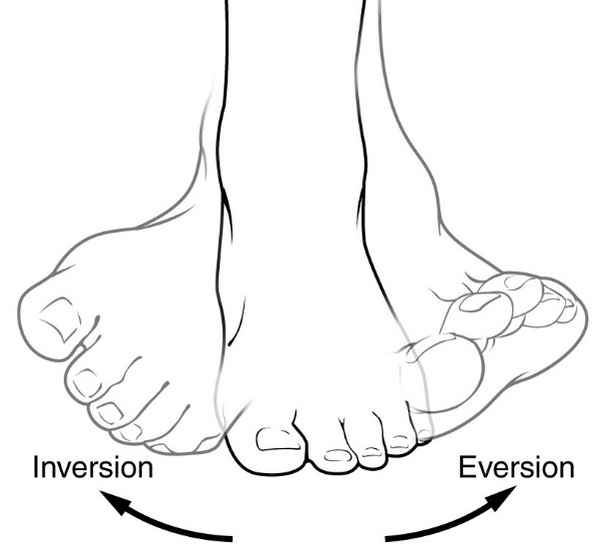
eversion
outward stress movement of foot at the ankle

inversion
inward stress movement of foot at ankle
valgus
abnormal position where a part of limb is forced outward from midline of body. sometimes used to describe eversion stress of ankle
varus
abnormal position where a part or limb is forced inward toward midline of body. sometimes used to describe inversion stress of ankle
____is not a correct positioning term in the U.S. This term should be “restricted to discussion of a radiograph or image” produced
view
for most radiographic procedures, a minimum of __projections should be taken as near as possible to 90 degrees from each other
2
all bones involving joints require a minimum of ___projections
3
what requires 2 projections as routine?
forearm
humerus
femur
hips
tibia fibula
chest
what requires 3 projections as routine?
fingers
toes
hand
wrist
elbow
ankle
foot
knee
a ___ study only requires 1 AP projection unless a hip injury is suspected
pelvis
for bones that require 3 projections, what type of projections are required?
AP or PA
lateral
oblique
which 2 landmarks should not be palpated?
ischial tuberosity
symphysis pubis

lateral positions are marked left or right by
side of the pt closest to IR