control of ruminant gins
 Call Kai
 Learn
 Practice Test
 Spaced Repetition
 Match
 Flashcards
 Knowt Play
1/9

There's no tags or description
Looks like no tags are added yet.
10 Terms
anthelmintics and anthelmintic resistance
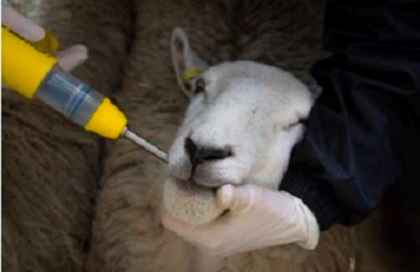
• Dewormers (anthelmintics) important in control of GINs
• Broad (& narrow) spectrum dewormers available
• In the past blanket deworming
• Now anthelmintic resistance a problem
sustainable control of parasites in sheep (SCOPs)
PRINCIPLES
• Make sure that treatment is fully effective
• Reduce reliance on anthelmintics
• Avoid bringing in resistant worms
• Minimise selection for worms that are resistant to anthelmintics
effective treatment
• Dose according to heaviest sheep
• Calibrate drench gun & use correct dosing technique
• Chose right product for parasites on farm
• Test for resistance (Faecal egg count reduction test)

reduce reliance on anthelmintics
• Use FECs to guide treatment decisions (adults?)
• Avoid blanket deworming
• Management options:
o Pasture risk assessment
o Grazing by mature ewes – reduces contamination on pastures
o Mixed grazing (sheep and cattle) & reduced stocking densities
o Rotational grazing
• Good nutrition & use bioactive forages (chicory, birdsfoot trefoil, sainfoin)
• Breed sheep for resistance to parasites
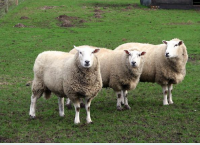
avoid bringing in resistant worms
• Assess risk at purchase
• Treat to remove resistance worms – two classes of dewormer sequentially
• Isolate from rest of flock
• Turn out separately onto pastures grazed previously by resident flock for 3-4
weeks
• Test dewormers have worked - faecal egg counts 14 days after treatment
minimise selection for resistant worms
• “Dose and move” likely to select for AR
• Build-up of resistant worms on pasture – little dilution by susceptible
worms
• Need to preserve susceptible worms (in refugia)
STRATEGIES
• Treat but leave some sheep untreated before moving OR
• Targeted Selective Treatment – select sheep doing less well for treatment
(BCS, FAMACHA, FEC etc), then move OR
• Allow flock to become lightly re-infected (~4-7 days) before moving
refugia

control of worms sustainably (cows)
• Identify risk – grazing history, field type, parasites present
• Treat appropriately
• Avoid resistance

control of worms sustainably (cows)
Strategic –calves, initiate early in GS, aim to limit pasture contamination,
Targeted – monitor cattle over GS, treat highly infected/lower growth rates
Therapeutic – treat individuals/groups suffering production losses/disease
Treat at housing – strategic/therapeutic
Quarantine treatment - check it has worked, put onto low-risk pasture
Newly seeded fields/pastures
Use of hay/silage aftermaths for second half of grazing season
Mixed/sequential grazing with sheep (beware liver fluke!)
summary
• Gut nematodes (GINs) important pathogens of cows & sheep
• Major clinical presentations – diarrhoea or anaemia
• Epidemiology depends on parasite biology & environmental factors
• Trematode & cestode parasites less important in terms of pathology
• Sustainable control of GINs requires reduced reliance on anthelmintics