CA 5B: Strong Acids and Bases
 Call Kai
 Learn
Learn Practice Test
 Spaced Repetition
 Match
Match Flashcards
 Knowt Play
1/16

There's no tags or description
Looks like no tags are added yet.
Name | Mastery | Learn | Test | Matching | Spaced | Call with Kai | Chat |
|---|
No analytics yet
Send a link to your students to track their progress
17 Terms

Hydroiodic Acid (HI) — strong acid; H bonded to I, which has 3 lone pairs

Hydrobromic Acid (HBr) — strong acid; H bonded to Br, which has 3 lone pairs

Hydrochloric Acid (HCl) — strong acid; H bonded to Cl, which has 3 lone pair

Sulfuric Acid (H2SO4) — strong acid; central S double-bonded to 2 O's, single-bonded to 2 OH groups

Nitric Acid (HNO3) — strong acid; central N with formal +1 charge, double bond to O, single bond to O with formal -1 charge (zwitterion — don't mistake the -1 O for a base!), and single bond to OH
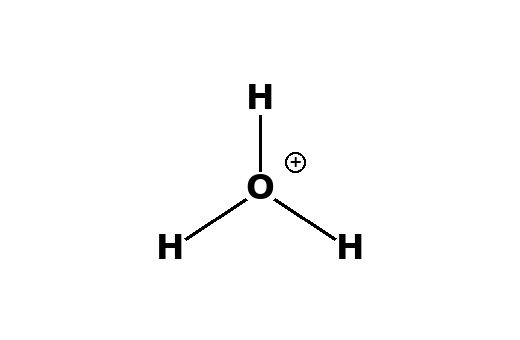
Hydronium Ion (H3O+) — strong acid; O bonded to 3 H's, formal +1 charge, one lone pair

Sulfonic Acid family (R-SO3H) — strong acid family; R group attached to S, which is double-bonded to 2 O's and single-bonded to OH
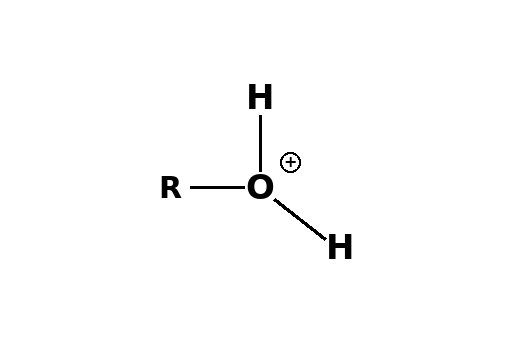
Oxonium Ion family (R-OH2+) — strong acid family; R group attached to O, which is also bonded to 2 H's, formal +1 charge

Hydride Ion (H:-) — strong base; H atom with 1 lone pair and -1 formal charge
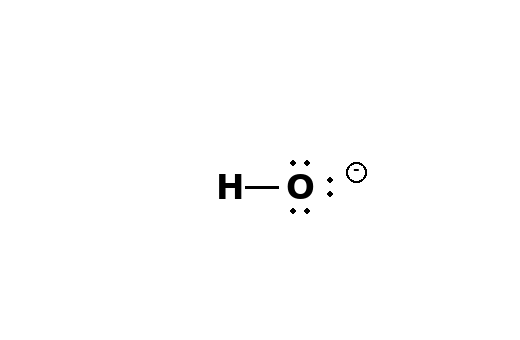
Hydroxide (HO:-) — strong base (oxygen base); H-O with 3 lone pairs on O and -1 formal charge

Methoxide (CH3O:-) — strong base (oxygen base); H3C-O with 3 lone pairs on O and -1 formal charge

Ethoxide (CH3CH2O:-) — strong base (oxygen base); CH3CH2-O with 3 lone pairs on O and -1 formal charge

tert-Butoxide ((CH3)3CO:-) — strong base (oxygen base); (CH3)3C-O with 3 lone pairs on O and -1 formal charge

R2N:- (amide-type anion) — strong base; N bonded to 2 R groups, 1 lone pair, -1 formal charge (R = H or alkyl)

R3C:- (carbanion) — strong base; C bonded to 3 R groups, 1 lone pair, -1 formal charge (R = H or alkyl)
How does resonance affect the strength of a base?
When a charge is delocalized/spread out due to resonance, the stabilization of the charge makes the ion a weak base
Strong base qualities
Lone pair
-1 formal charge
Localized on an H, C, N, or O