Chapter 1: A Simple Explanation - Osmosis, Diffusion, Histology, and Skin Anatomy
 Note
 Call Kai
 Learn
 Practice Test
 Spaced Repetition
 Match
 Flashcards
 Knowt Play
 Podcast
1/65

Earn XP
Description and Tags
A comprehensive 50-card vocabulary study guide covering osmosis, diffusion, histology types, skin layer labeling, and memory mnemonics.
66 Terms
Diffusion
The passive movement of particles from an area of higher concentration to an area of lower concentration.
Concentration Gradient
The gradual difference in the concentration of solutes in a solution between two regions.
Passive Transport
The movement of substances across a cell membrane without the expenditure of cellular energy.
Dynamic Equilibrium
The state reached when molecules are evenly distributed and move in all directions at equal rates.
Simple Diffusion
The unassisted passage of small, nonpolar molecules directly across the phospholipid bilayer.
Facilitated Diffusion
The passive movement of specific molecules across a cell membrane via protein channels or carriers.
Osmosis
The movement of water across a selectively permeable membrane from a region of lower solute concentration to higher solute concentration.
Selectively Permeable Membrane
A biological membrane that allows certain molecules or ions to pass through while blocking others.
Solute
The substance that dissolves in a solvent to form a homogeneous solution.
Solvent
The dissolving agent in a solution, which is commonly water in biological systems.
Hypertonic Solution
A solution with a higher concentration of solute relative to the inside of a cell, causing water to leave the cell.
Hypotonic Solution
A solution with a lower concentration of solute relative to the inside of a cell, causing water to enter and swell the cell.
Isotonic Solution
A solution with an equal solute concentration compared to the inside of a cell, resulting in no net water movement.
Osmotic Pressure
The minimum pressure needed to prevent the inward flow of water across a semipermeable membrane.
Histology
The scientific study of the microscopic structure of tissues and their cells.
Tissue
An aggregate of similar cells and extracellular matrix working together to perform a specialized function.
Epithelial Tissue
A primary tissue class that forms external coverings, lines internal cavities, and constitutes glands.
Connective Tissue
A primary tissue class that provides structural support, protection, and integration of organs and tissues.
Muscle Tissue
A primary tissue class consisting of contractile cells capable of generating mechanical force and motion.
Nervous Tissue
A primary tissue class composed of neurons and glial cells that transmits electrical impulses.
Simple Squamous Epithelium
A single layer of thin, flattened cells specialized for rapid diffusion and filtration.
Stratified Squamous Epithelium
Multiple cell layers with flattened surface cells designed to protect underlying tissues against abrasion.
Simple Cuboidal Epithelium
A single layer of cube-shaped cells adapted primarily for secretion and absorption.
Simple Columnar Epithelium
A single layer of tall, column-like cells specialized for nutrient absorption and secretion.
Pseudostratified Columnar Epithelium
A single layer of cells of varying heights giving a false appearance of multiple layers, often containing cilia.
Basement Membrane
A thin extracellular layer that anchors epithelial tissue to the underlying connective tissue.
Integumentary System
The body system comprising the skin, hair, nails, and cutaneous glands that shields the body.
Epidermis
The superficial, avascular protective outer layer of the skin composed of stratified squamous epithelium.
Dermis
The middle, vascular layer of skin beneath the epidermis composed of tough connective tissue.
Hypodermis
The subcutaneous layer underlying the dermis that anchors skin and consists primarily of adipose tissue.
Stratum Basale
The deepest epidermal layer where continuous mitosis produces new keratinocytes.
Stratum Spinosum
The spiny-appearing epidermal layer situated immediately above the stratum basale.
Stratum Granulosum
The epidermal layer where keratinocytes flatten, accumulate dark keratohyalin granules, and begin to die.
Stratum Lucidum
A translucent, thin band of dead keratinocytes found exclusively in thick skin like palms and soles.
Stratum Corneum
The outermost stratum of the epidermis consisting of multiple layers of dead, flattened, keratinized cells.
Papillary Layer
The superficial zone of the dermis composed of loose areolar tissue that forms dermal papillae.
Reticular Layer
The deeper, thicker dermal layer composed of dense irregular connective tissue providing structural strength.
Dermal Papillae
Nipple-like upward projections of the dermis into the epidermis that create unique friction ridges (fingerprints).
Keratinocyte
The predominant cell type in the epidermis that synthesizes the structural protein keratin.
Melanocyte
A cell found in the stratum basale that synthesizes melanin to protect against UV radiation.
Langerhans Cell
An epidermal dendritic macrophage that ingests antigens and helps coordinate the immune response.
Merkel Cell
A sensory receptor located in the basal layer of the epidermis that responds to light touch.
Sebaceous Gland
A cutaneous exocrine gland that secretes sebum, an oily substance that conditions skin and hair.
Sudoriferous Gland
A sweat gland that regulates body temperature and assists in waste excretion.
Hair Follicle
A dermis-embedded tubelike invagination of the epidermis from which hair develops and grows.
Arrector Pili Muscle
A tiny bundle of smooth muscle cells attached to hair follicles that contracts to produce goosebumps.
Adipose Tissue
A type of loose connective tissue in the hypodermis specialized for fat storage and thermal insulation.
Come, Let's Get Sun Burned Mnemonic
A memory tip to remember the 5 epidermal layers from surface to base: Corneum, Lucidum, Granulosum, Spinosum, Basale.
Basale at the Base Tip
A memory rule noting that Stratum Basale is always at the base (deepest floor) of the epidermis.
E-D-H Skin Order Tip
A memory tool to recall the main skin regions from top to bottom: Epidermis (surface), Dermis (middle), Hypodermis (underneath).

What tissue is this?
Embryonic connective tissue: Mesenchyme

What tissue is this?
Loose connective tissue, areolar

What tissue is this?
Loose connective tissue, adipose

What tissue is this?
Loose connective tissue, reticular

What tissue is this?
Dense regular tissue

What tissue is this?
Elastic connective tissue

What tissue is this?
dense irregular connective tissue

What tissue is this?
Cartilage:Hyaline

What tissue is this?
Cartilage:Elastic

What tissue is this?
Fibrocartilage

What tissue is this?
Osseous tissue
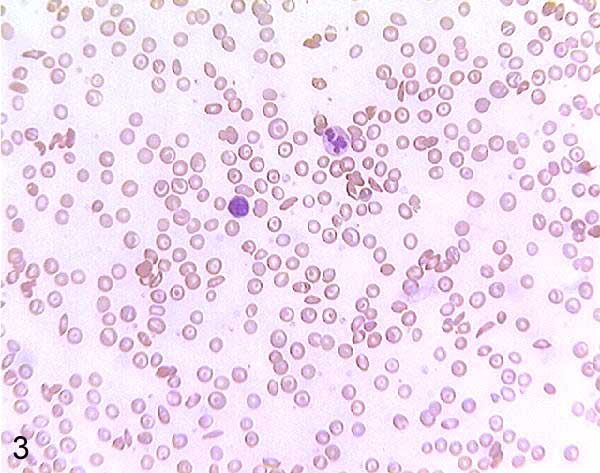
What tissue is this?
Blood

What is tissue
Nervous tissue

What muscle is this?
Skeletal muscle

What muscle is this?
Cardiac muscle

What muscle is this
Smooth Muscle