(1) Kievan Rus: Political History and Notable People
 Call Kai
 Learn
 Practice Test
 Spaced Repetition
 Match
 Flashcards
 Knowt Play
1/9

There's no tags or description
Looks like no tags are added yet.
10 Terms
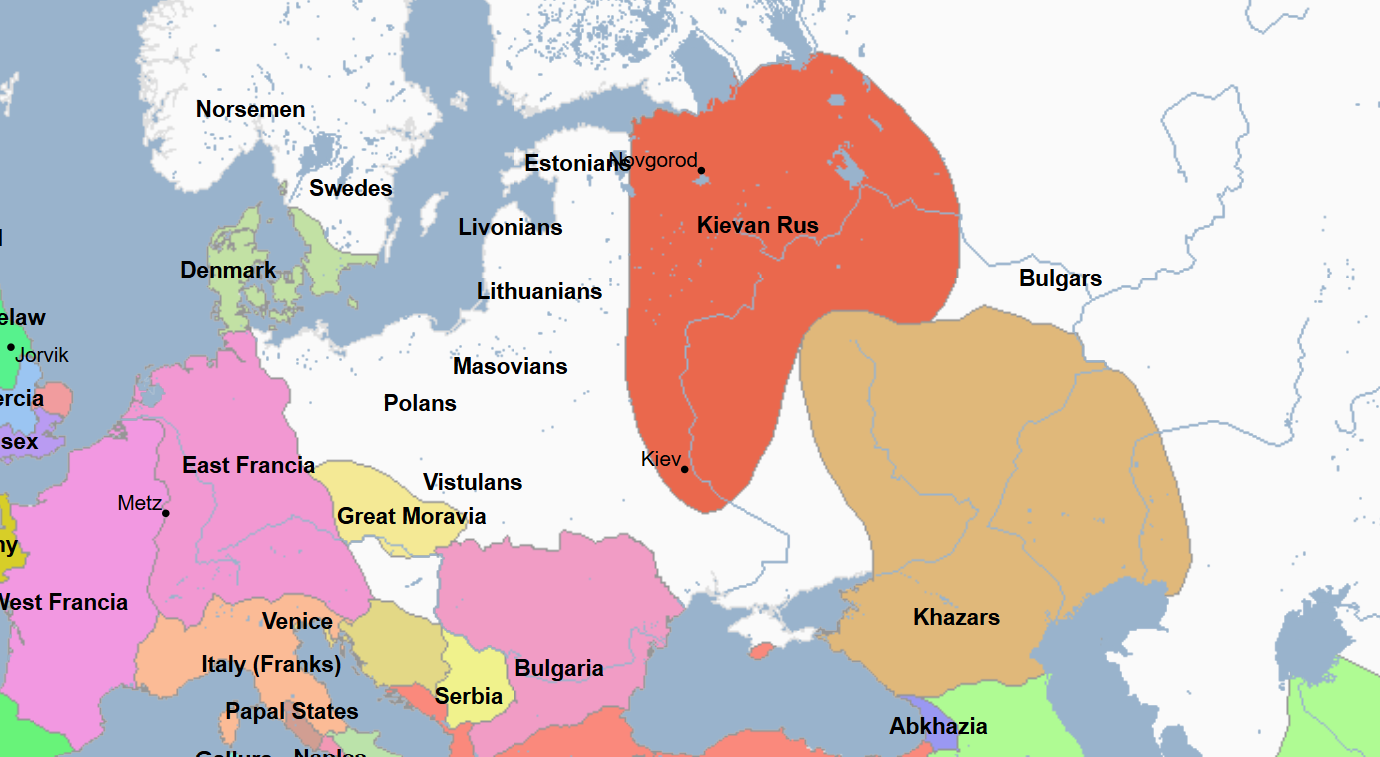
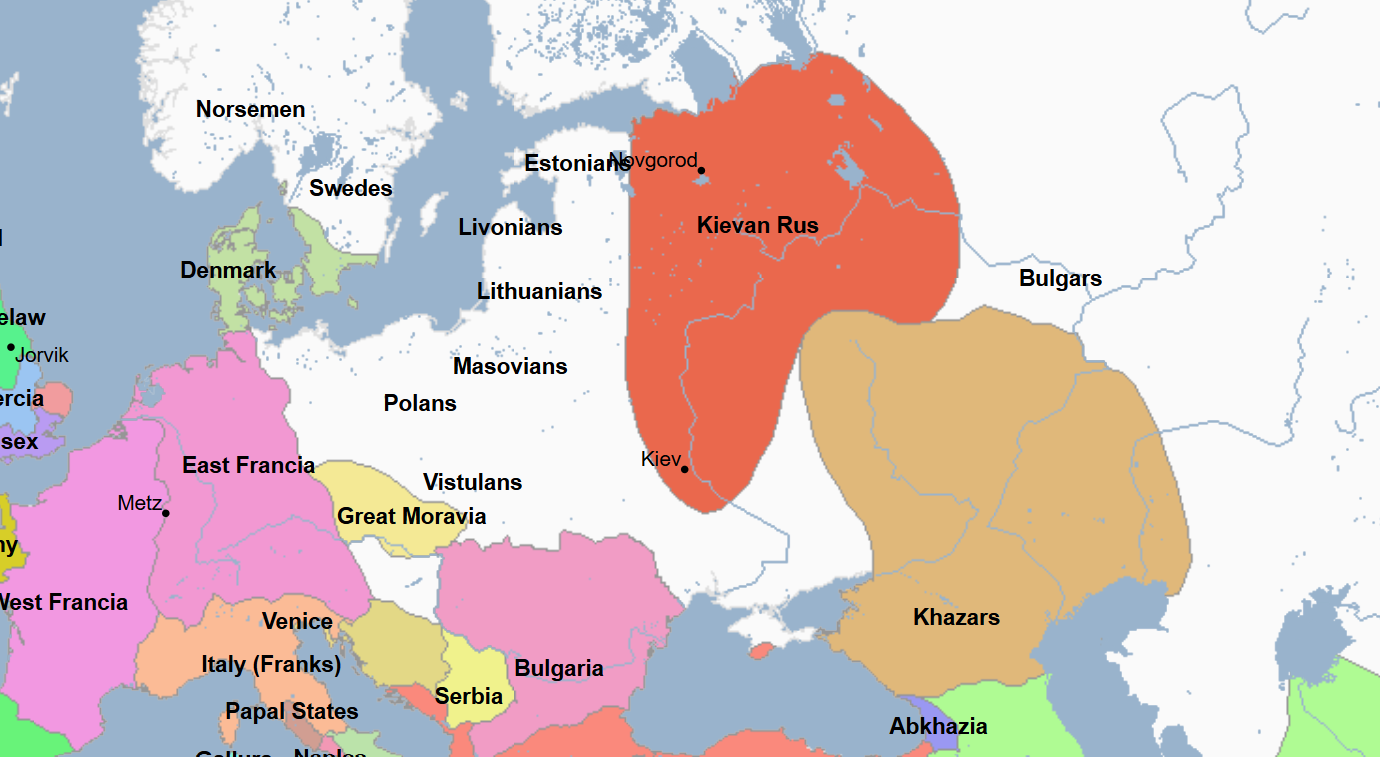
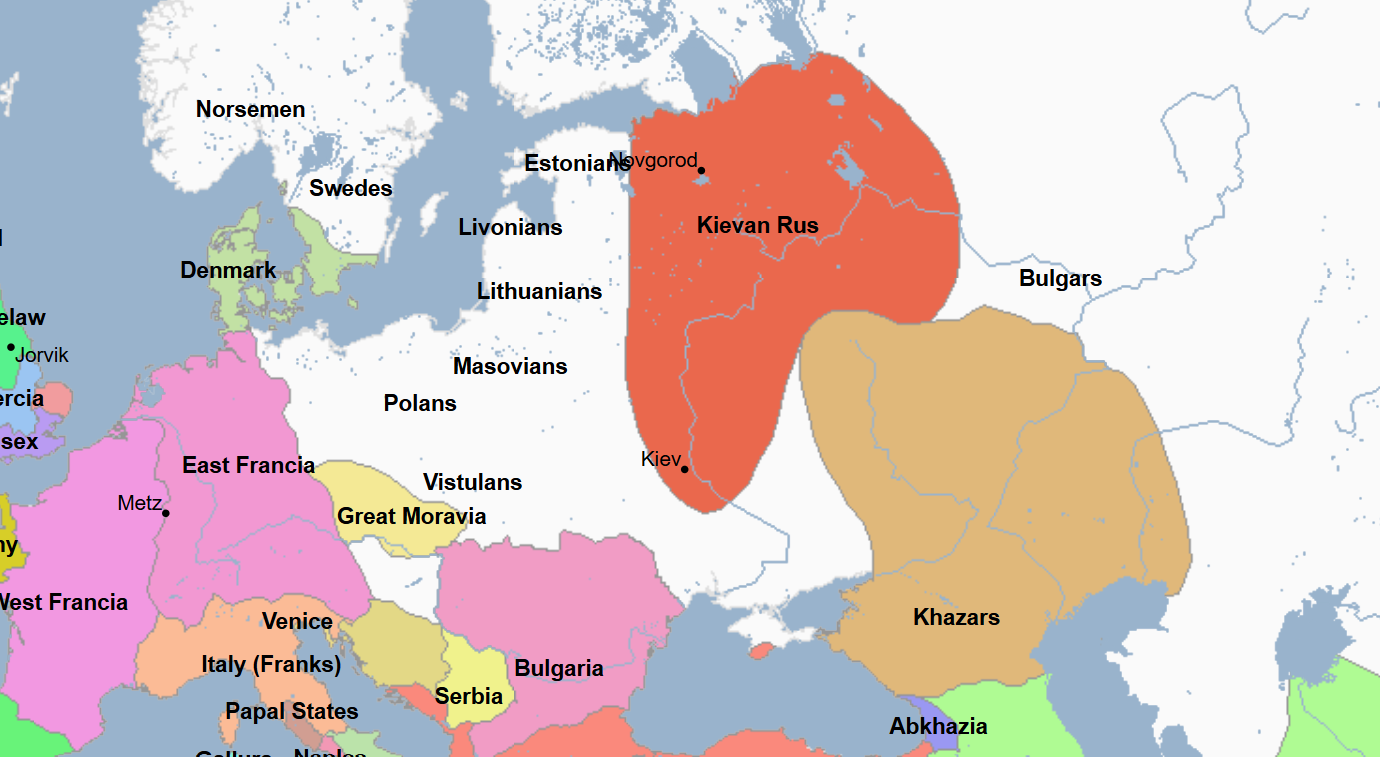
880 - 1240 - Kievan Rus (All Facts)
Based in modern-day Kiev, Ukraine
Adopted Orthodox Christianity, maintaining a closer relationship with the Byzantine Empire rather than Roman Catholic Europe
By its fall, the Mongols overtook it and shaped it further from Europe
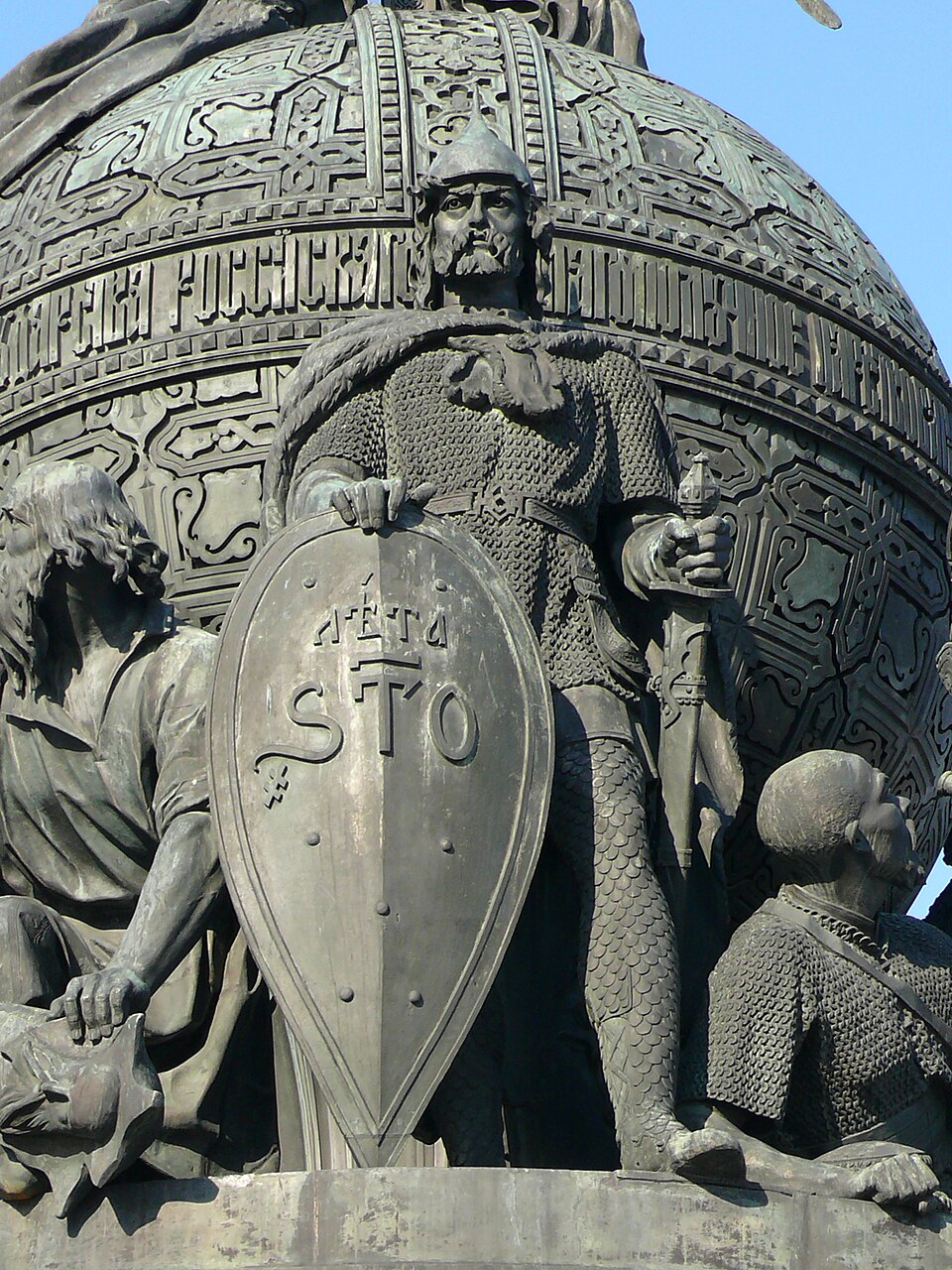
862 - 879 - Rurik (All Facts)
First Leader of the (Varangian) Rus
He was thus the first leader of the people that comprised the Kievan Rus state, even if they hadn’t yet established the state territorially
Although not yet “Grand Prince of Kiev,” since he ruled from Novgorod, his name lends itself to his namesake dynasty of rulers which established the state of Kievan Rus and the state of Russia up until 1598
In traditional historiography, he is considered the first monarch of Russia
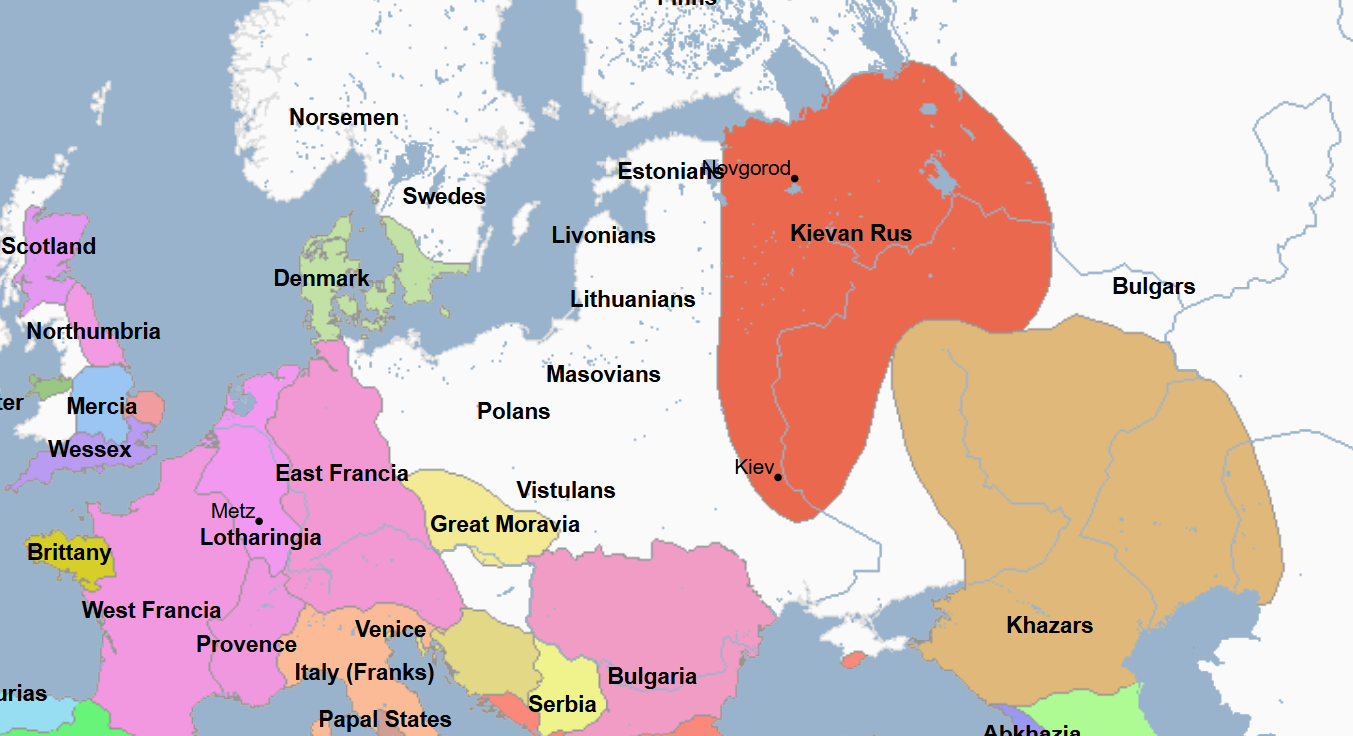
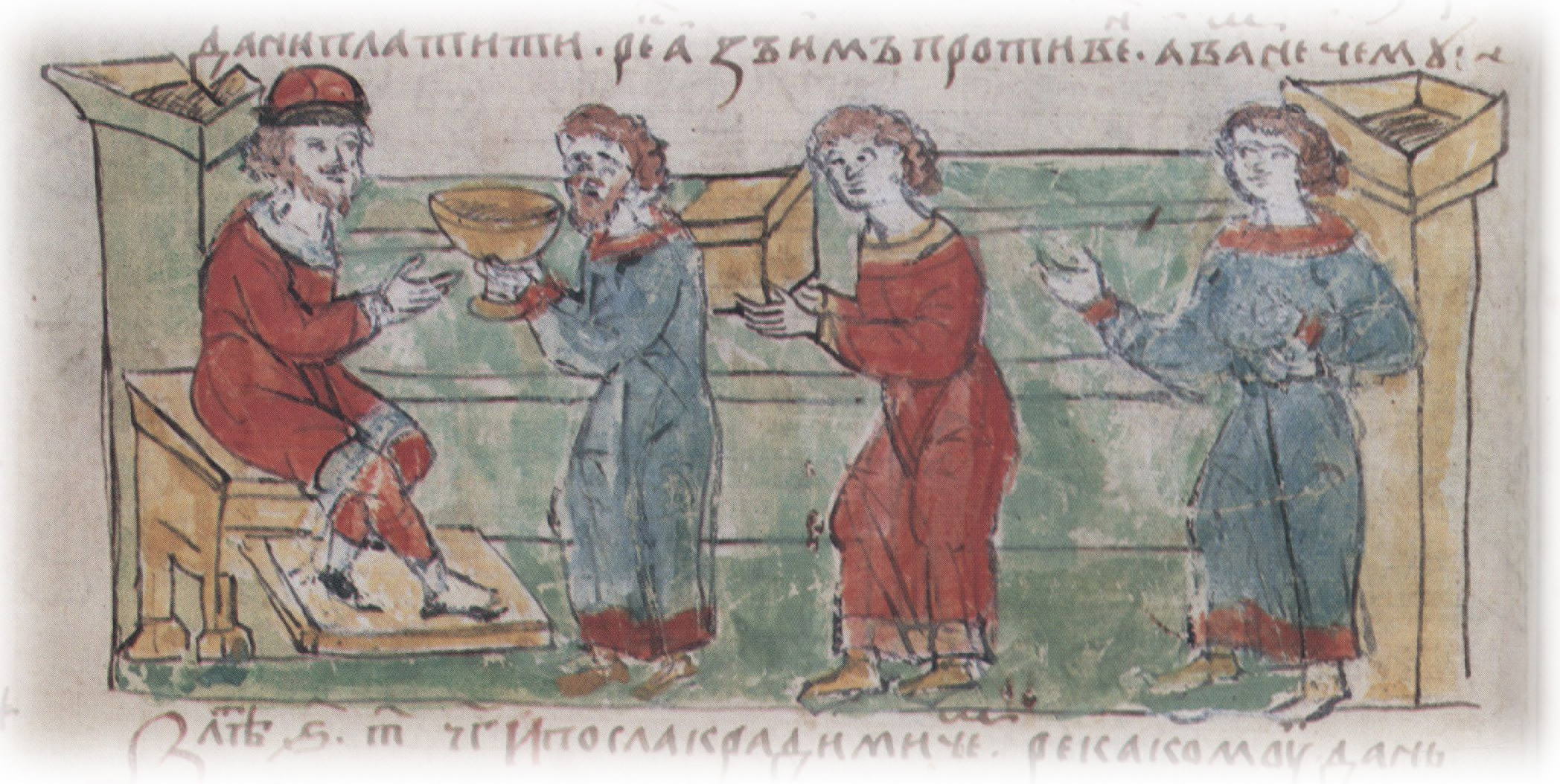
879 - 912 - Oleg (All Facts)
First “Grand Prince of Kiev” and Founder of the Kievan Rus
He was nicknamed “The Wise”
His predecessor was Rurik, the ruler of the Varangians from which the Rus (Russians) derive
He laid down the foundations for the Kievan Rus state
He moved the capital and center of the Kievan Rus from Novgorod to Kiev
He had taken Kiev from the Khazars (Khazar Khaganate)
This effectively established the Kievan Rus state
They tried and failed to incorporate Constantinople into their growing territories, but sporadically continued to attack it over time
This created a regular trade route from the Gulf of Finland via the Dnieper River to the Black Sea
He eventually besieged and plundered Constantinople until Emperor Leo VI of the Byzantine Empire had bought him off to cease his siege with the payment of tribute and the offer of a trade treaty
He used his naval power to gain favorable commercial and territorial concessions from Leo VI and the Byzantine Empire in the 911 Rus-Byzantine Treaty
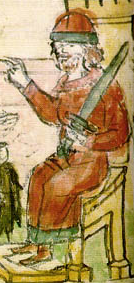
912 - 945 - Igor (All Facts)
2nd “Grand Prince of Kiev” of the Kievan Rus
He and the Kievan Rus were defeated by Theophanes and the Byzantine Empire, with the help of “Greek Fire” in the Rus-Byzantine War and Siege of Constantinople of 941
He initially plundered the empire, having crossed the Black Sea towards the Bosporus Sea and going on to butcher and burn his way through Bithynia before being stopped at the gates of Constantinople where he and his fleet were annihilated by the Byzantines due to their use of “Greek Fire”
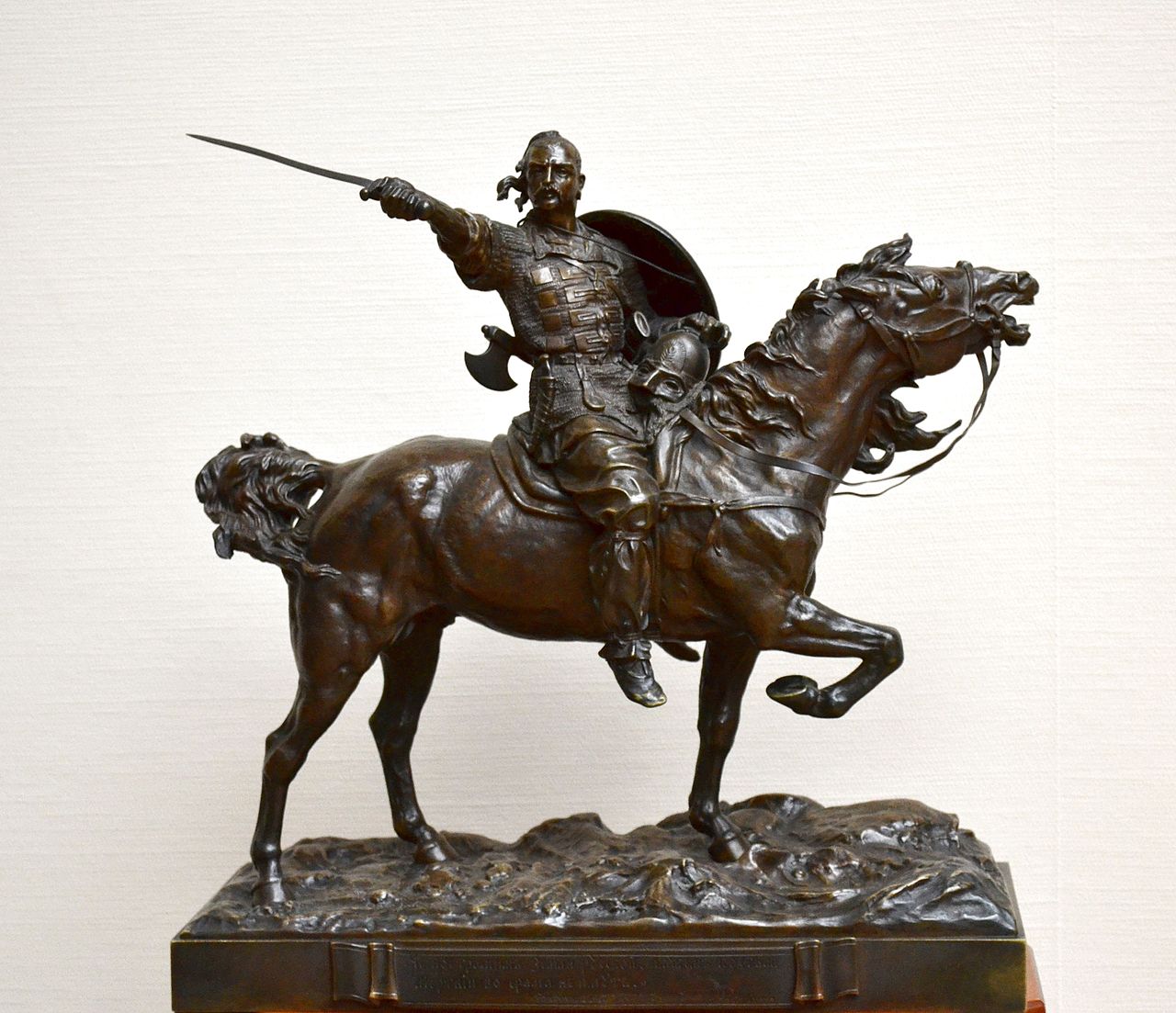
945 - 972 - Sviatoslav (All Facts)
3rd “Grand Prince of Kiev” of the Kievan Rus
He expanded the state of the Kievan Rus in which
Invaded Bulgaria and captured its Czar John
However, John and the Bulgarians drove him and his forces out eventually, reannexing much of Bulgaria, but restoring trade relations with the namesake and the Kievan Rus
Precipitated the collapse of the First Bulgarian Empire and the Khazar Khaganate
Conquered numerous East Slavic tribes, defeated the Alans and attacked the Volga Bulgars, and at times was allied with the Pechenegs and Magyars (Hungarians)
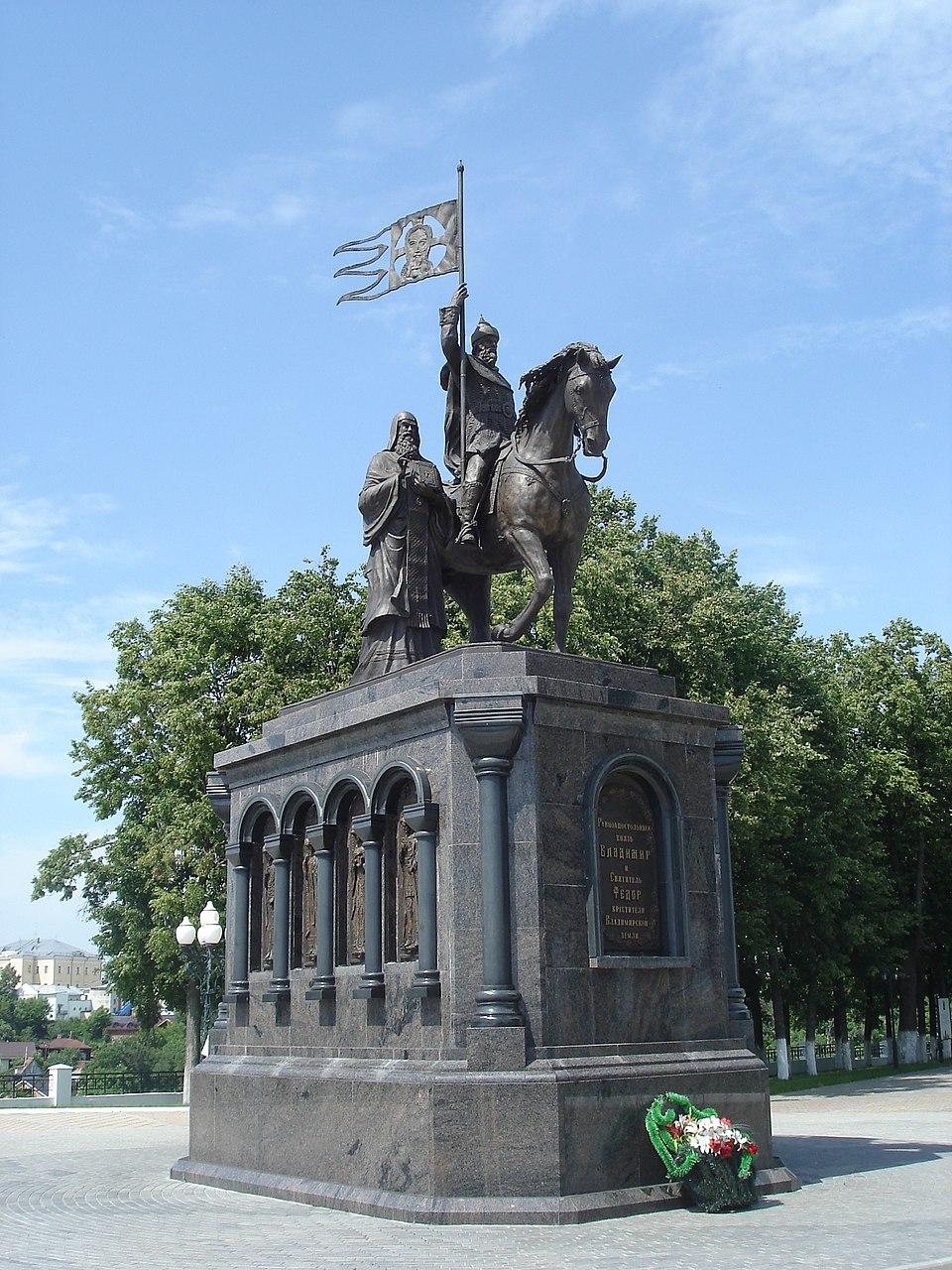
978 - 1015 - Vladimir the Great (All Facts)
5th “Grand Prince of Kiev” of the Kievan Rus
He converted to Christianity, having accepted baptism, and thus made the Kievan Rus a Christian Kingdom by the start of his reign, having forsaken the old gods of Slavic paganism and instituted Eastern Orthodox Christianity as the primary religion of the Kievan Rus (Russia)
He married Anne, the sister of Emperor Basil II of the Byzantine Empire, in Kherson, as a reward for helping Basil II, along with 6,000 of his troops, to put down the Rebellion of Bardas Phokas the Younger
However, he could only marry her on the condition that he convert to (Eastern Orthodox) Christianity and impose Christianity on his people, which he did so
He thus laid the foundations from the Byzantine Empire for the modern-day Russian Orthodox Church
His marriage to Anne, sister of Emperor Basil II of the Byzantine Empire, opened the Kievan Rus (Russia) up to Byzantine influences
When he arrived back in Kiev after his arrangements with Basil II, he ordered that the previous Slavic pagan idols should be overturned, cut to pieces, or burnt
He had the great Slavic idol of Perun tied to a horse’s trail and dragged to the river
He had twelve men appointed to beat the wooden idol with sticks to chastise the demon which had deceived its worshippers, then had it cast into the Dnieper River
He had all the citizens of Kiev assemble on the Dnieper River bank where he led them into the water in an act of mass baptism
Many had gone into the water with it having gone up to their necks, with children in their arms
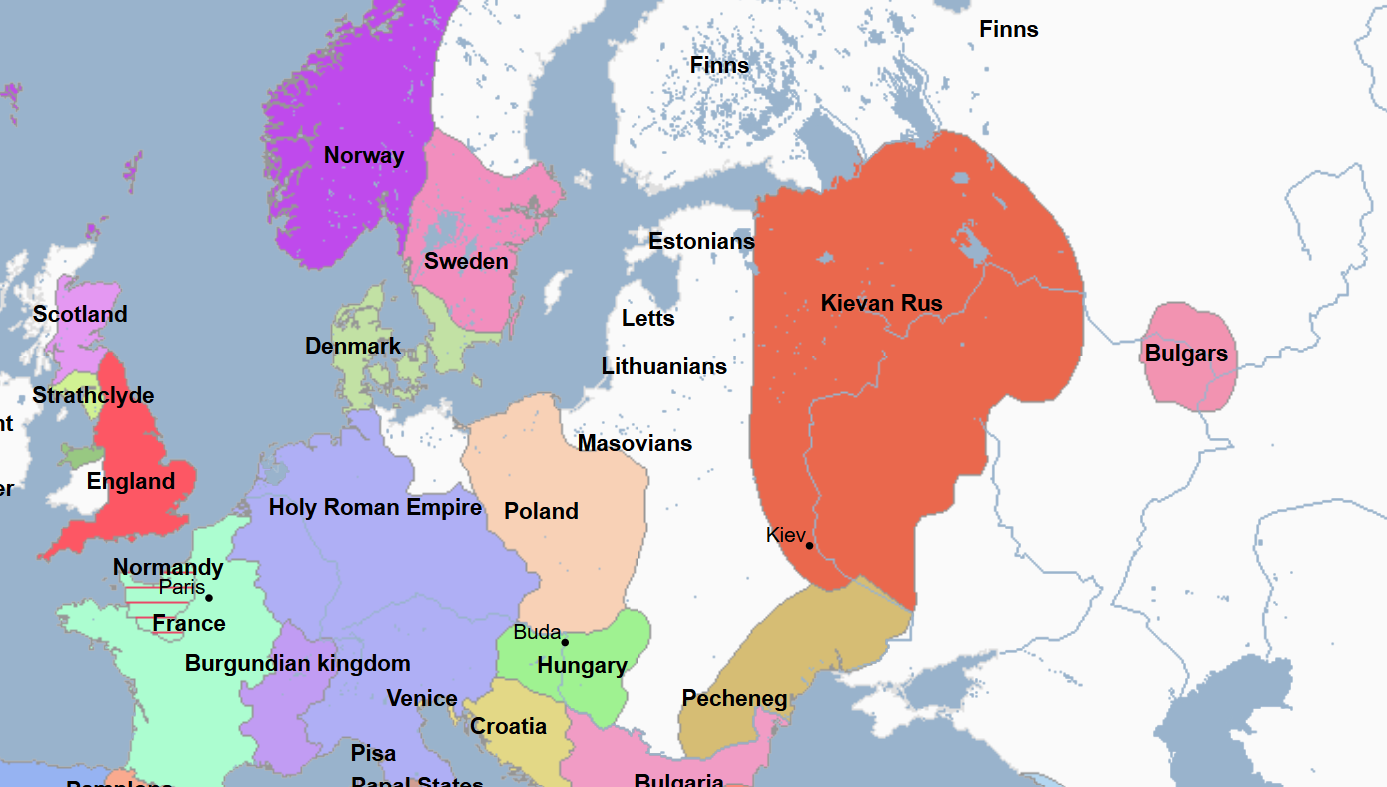
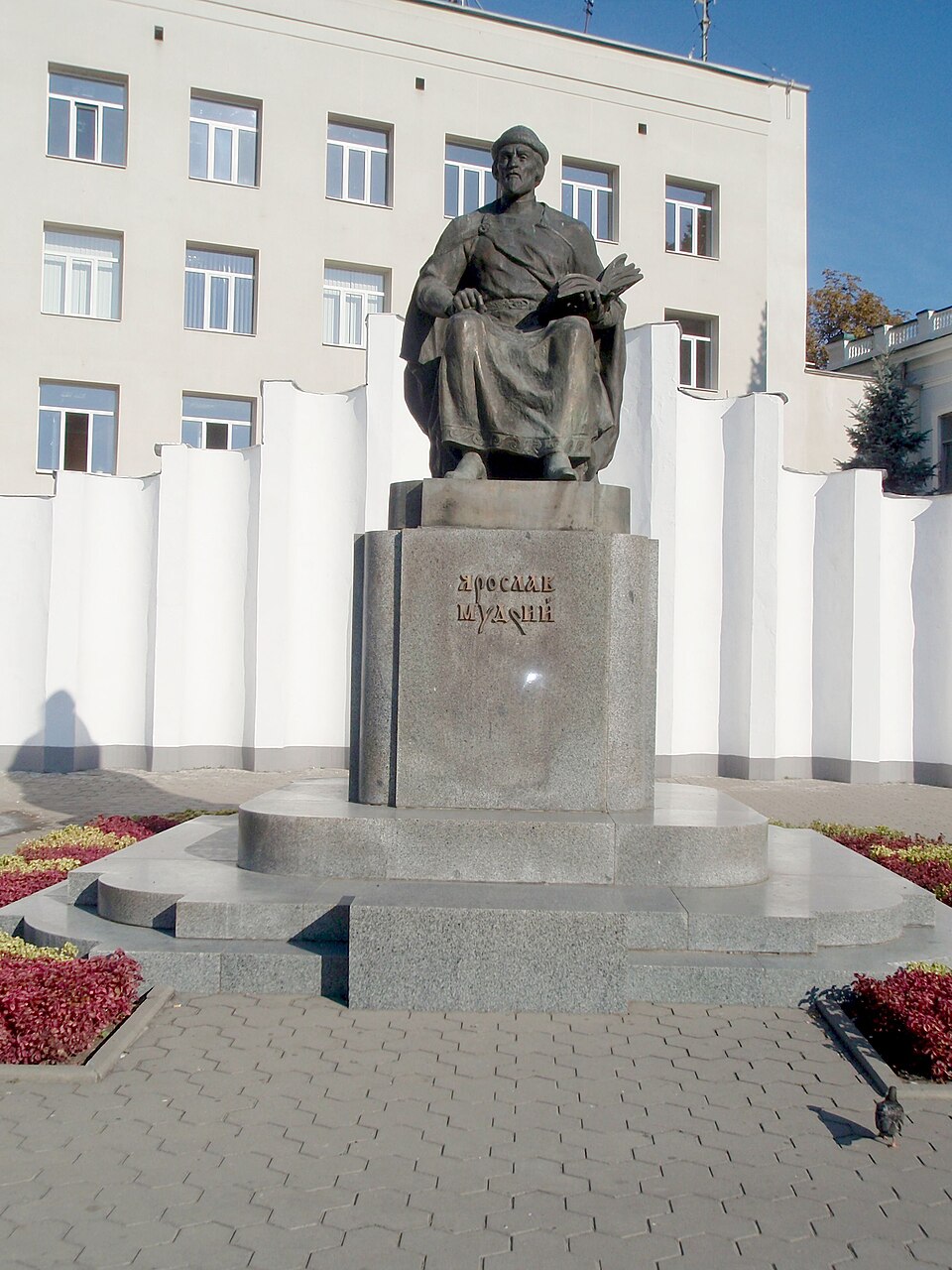
1019 - 1054 - Yaroslav (All Facts)
7th “Grand Prince of Kiev” of the Kievan Rus
He was nicknamed “The Wise”
He brought the Kievan Rus state to its peak by promoting
building
education
He
expanded the Kievan Rus territory into the Baltic
subjugated the Pechenegs
He died at Vyshgorod
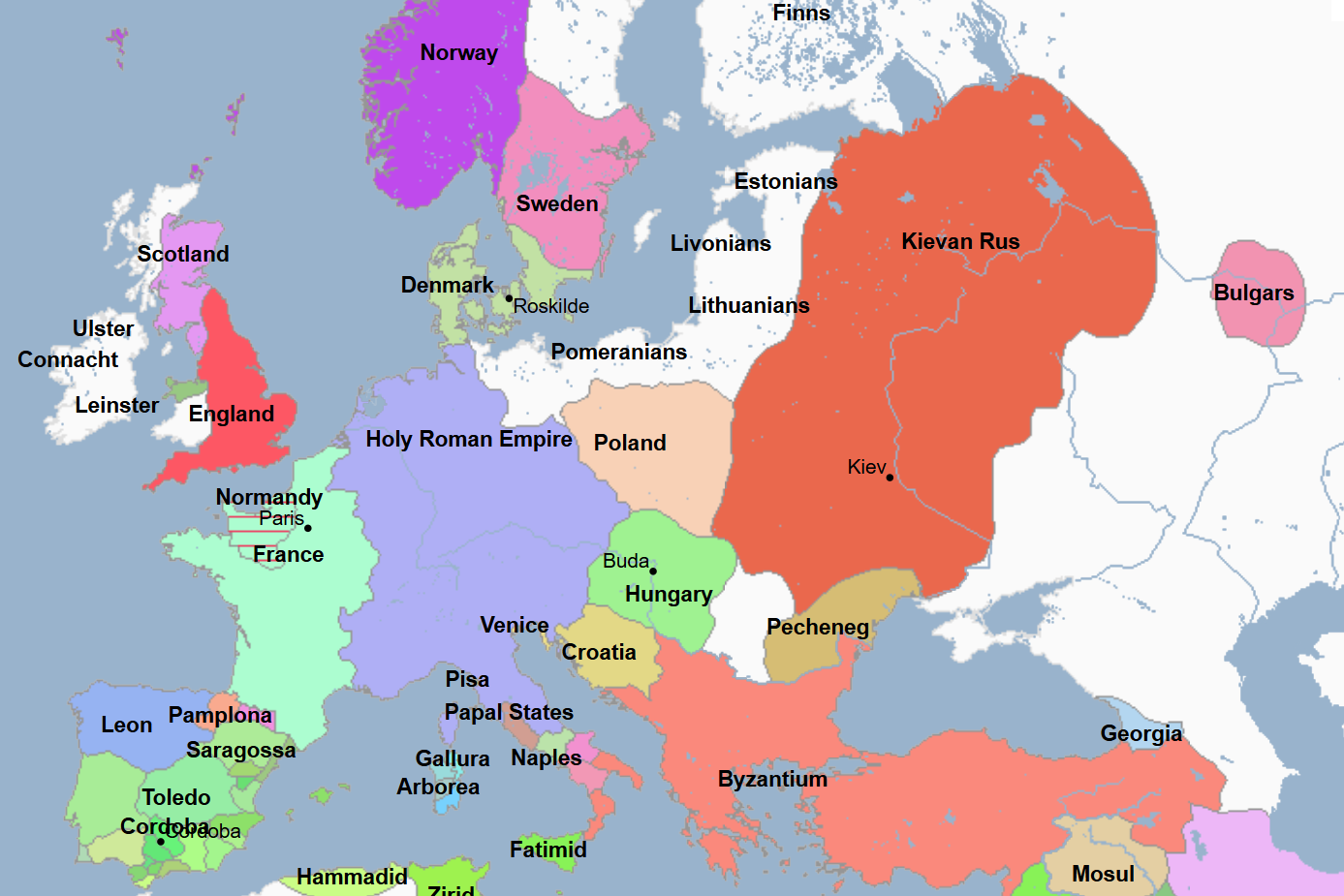
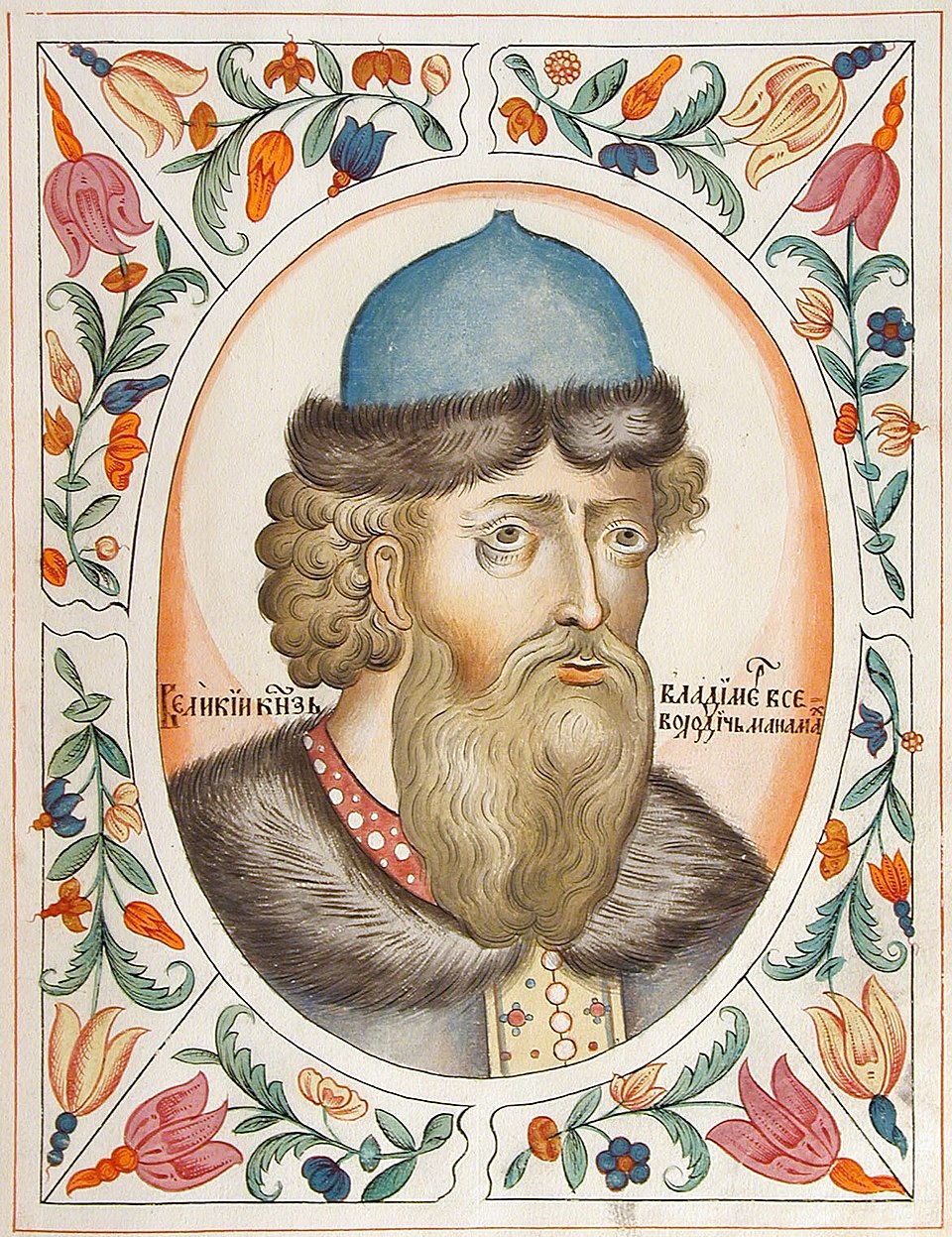
1113 - 1125 - Vladimir Monomakh (All Facts)
Grand Prince of Kiev
After his reign, the Kievan Rus declined rapidly
1236 - 1263 - Alexander Nevsky (All Facts)
Ruler of Russia
Upon his assumption to the throne, he was dismissed by Novgorod’s republican people’s council
He led his Novgorod Russian forces against and defeated the Swedes in the Battle of Neva
He led his Novgorod Russian forces against and defeated the German Teutonic Knights in the Battle of Lake Peipus / Battle on the Ice during the Northern Crusades
The turning point in the day-long battle came when he unleashed his elite “droujina” troops on the flanks of the Germans, crushing the enemy into submission
He made it so that the routed Germans will be forced to give up all Russian lands that they have seized
He thus halted their planned invasion of Russia in a dramatic ice-battle
He was then proclaimed a national hero after agreeing to come out of military retirement to lead the counter-attack against the German Teutonic Knight invaders
His victory was seen as the end of constant attacks by Catholic crusaders and thus the end of the Northern Crusades in Russia