Puder Special Senses
 Call Kai
 Learn
 Practice Test
 Spaced Repetition
 Match
 Flashcards
 Knowt Play
1/32

There's no tags or description
Looks like no tags are added yet.
33 Terms
Rinne’s test will determine if your patient has a conductive hearing loss.
True


A head turn to the left, causes nystagmus to the left.
True
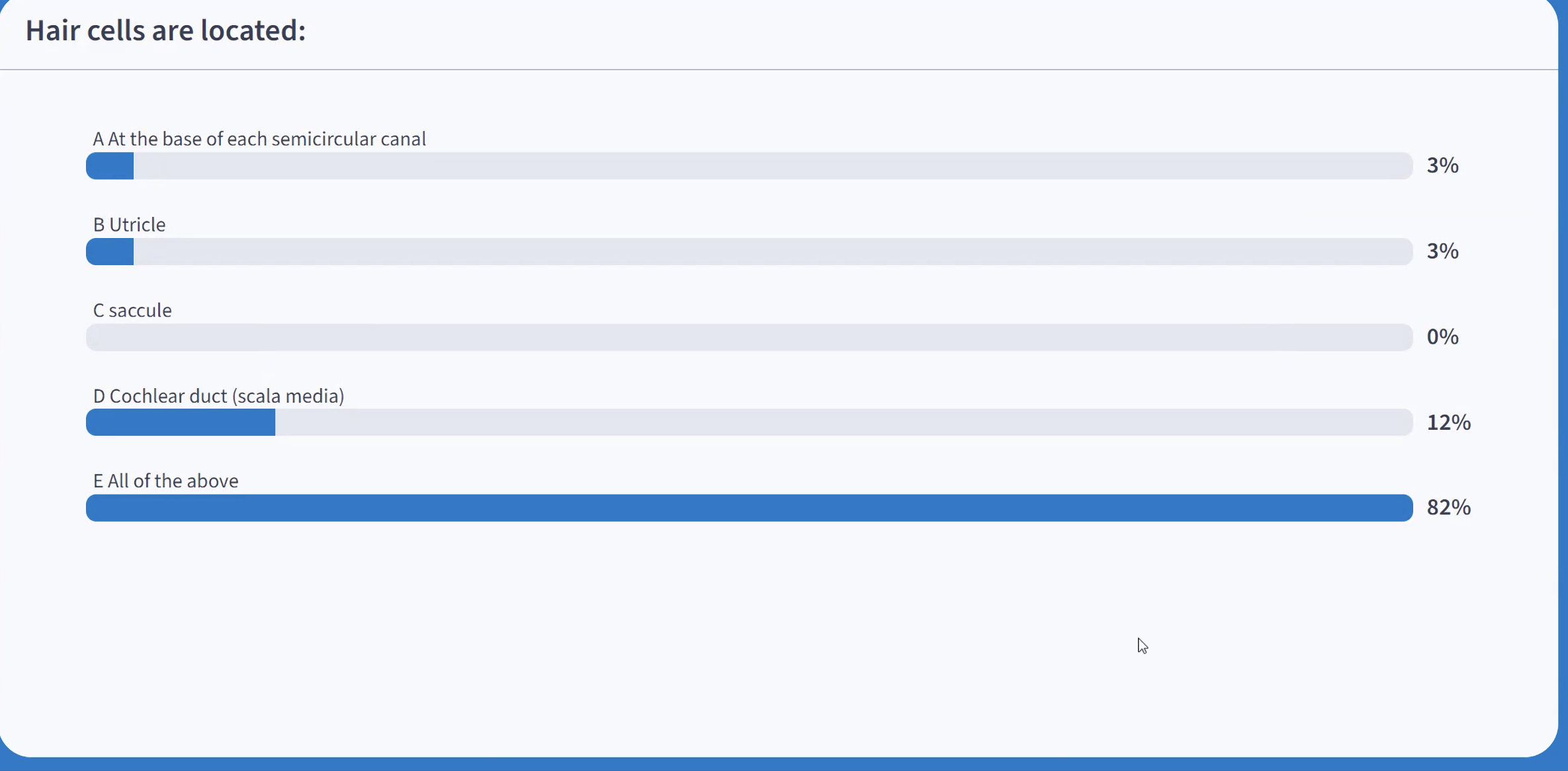
When hair cells sterocilia bend from short to the tail kinocilium, K+ enters the cell and the cell is depolarized.
True




The reduced movement of the ossicles (the 3 middle ear bones):
Otosclerosis
How are conductive lesions different from sensorineural lesions?
Conductive lesions are caused by the interference of sound waves.
How are sensorineural lesions different from conductive lesions?
Sensorineural lesions are caused by damage to the nerves in the auditory pathway
What type of lesions is Otitis Media?
Conductive lesion
Damage to vestibular, then auditory nerve fibers of CN VIII:
Acoustic neuroma (Vestibular Schawannoma)
A patient comes in with the symptoms of tinnitus, fluctuating hear loss, and episodic vertigo. What would you suspect a neuronal lesion and what type of disease would it be?
Sensorineural lesion and Meniere’s Disease
In the vestibular-ocular reflex (VOR), the fast eye movement in the direction of the head turn is called nystagmus.
True
High frequency sound waves are received at the base of the cochlea whereas low frequency sound waves are received at the apex of the cochlea.
True


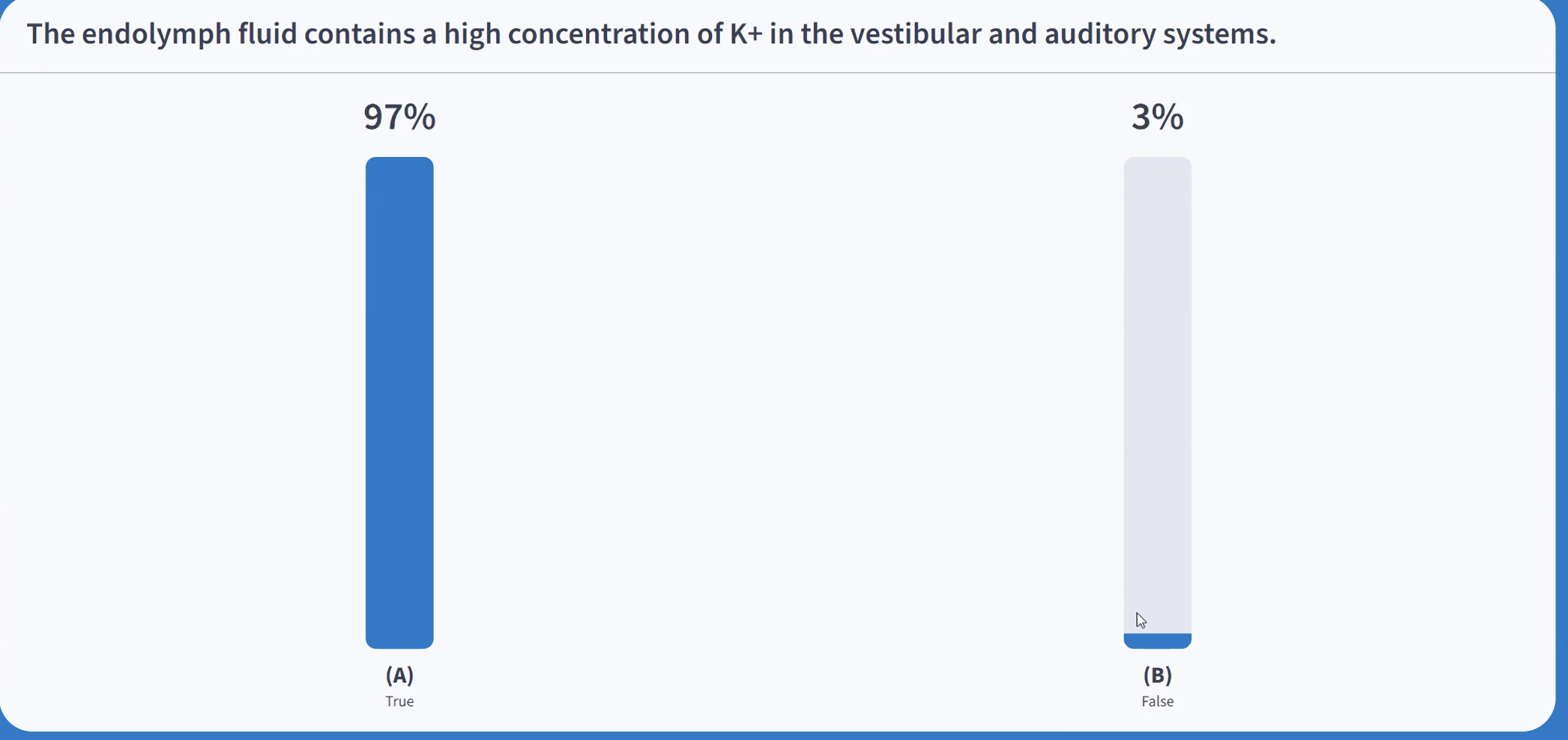


The endolymph contains:
High K+
The perilymph contains:
High Na+
How does the direction of stereocilia bending affect hair cell membrane potential (depolarization vs. hyperpolarization)?
Depolarization: Bending from short to tall (toward the kinocilium) opens K+ channels, causing K+ influx to depolarize CN VIII.
Hyperpolarization: Bending from tall to short (away from the kinocilium) closes K+ channels, preventing K+ influx and hyperpolarizing CN VIII.
A patient turns their head rapidly to the left during a vestibular examination. What physiological response occurs in the hair cells of the left horizontal semicircular canal compared to the right?
Hair cells in the left canal bend toward the kinocilium (short to tall) and depolarize, while hair cells in the right canal bend away from the kinocilium (tall to short) and hyperpolarize.
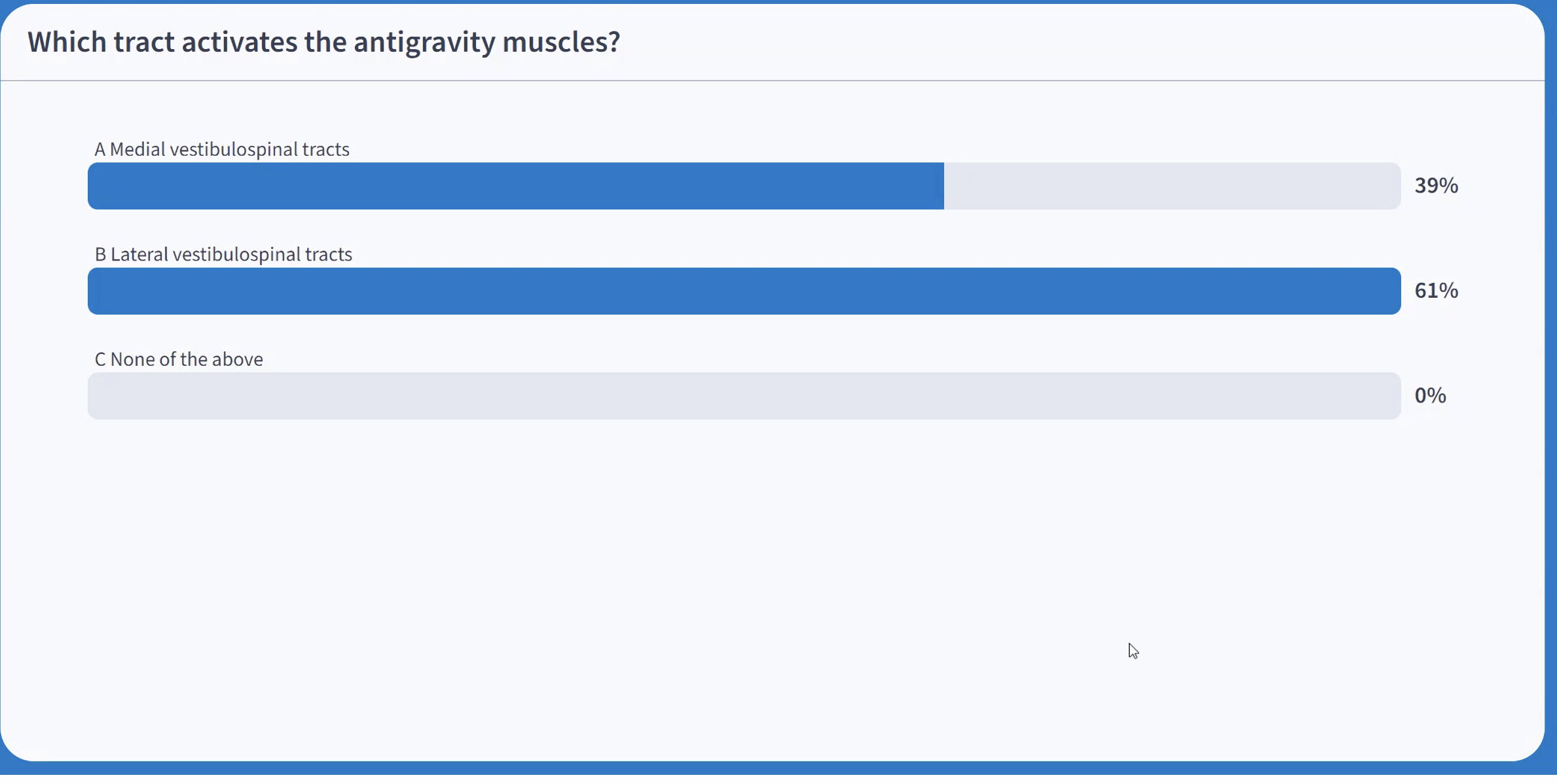
Which pathway mediates the vestibulo-colic reflex that activates neck muscles for stability?
Medial Vestibulospinal pathway
In the caloric vestibular test, warm water poured into the right ear will cause nystagmus to:
the right side
Impaired hearing in ipsilateral ear is caused by a lesion where:
All of the above
A lesions above the superior olivary nucleus
leads to inability to locate and analyze sounds from the contralateral ear
Damage to what region would cause speech and language comprehension problems to where one can’t differentiate sound?
Primary auditory cortex
Webers Test will determine if your patient has conductive hearing loss or sensorineural hearing loss.
True