Funding - types and disparities
 Call Kai
 Learn
 Practice Test
 Spaced Repetition
 Match
 Flashcards
 Knowt Play
1/13

There's no tags or description
Looks like no tags are added yet.
14 Terms
3 ways political parties are funded
Membership fees
Donations
Grants
Funding - membership fees
Parties receive money from the public who are members of their party in the form of membership fees
Has declined due to decline in party membership
Although the Greens have now surpassed the Conservatives in membership numbers (as of 19th Oct 2025, 124 000 vs 123 000)
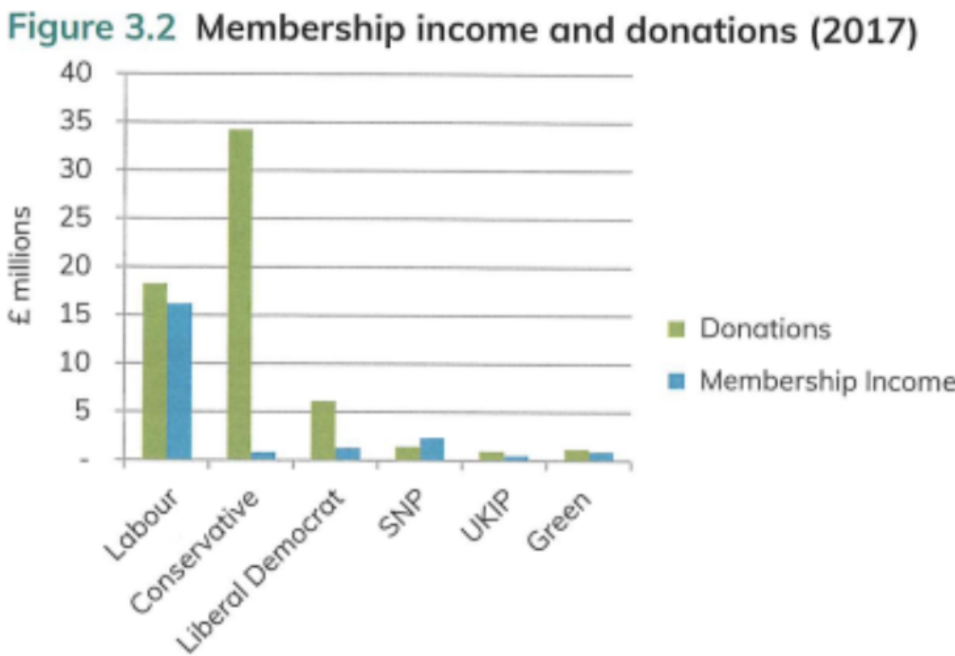
2015 - uptake in Labour, SNP and Green membership numbers meant their membership numbers almost matched their donations income
Funding - donations
Parties receive donations from individuals, businesses and pressure groups (like trade unions)
Labour: alleged to be controlled by trade unions due to the large financial contributions that influence policy development
Conservatives: alleged to be controlled by major business backers due to undue influence over policy development
Funding - grants
Public money available to parties
Short money
Cranborne money
Electoral Commission money
Grants - Short money
Given to opposition parties to support Plmtary duties (because the govt has the civil service) but NOT election/campaigning expenses
Calculated on seats and votes
Extra money for the Leader of the Opposition’s Office to help them hold the govt to account
Grants - Cranborne money
Similar to Short money but for largest and 2nd largest opposition party in the HoL
Grants - Policy Development Grants
£2m from the EC for parties w/at least 2 MPs
Used to hire policy advisors
Disparaties in funding due to size of parties
Larger parties have bettter access to funds than smaller parties as they
Have more members, so have regular income from membership fees
Have more policy gravitas and so attract more funding from businesses who want to influence policy
2014-15 % of Labour’s income from trade unions
60%
2017 % of Labour’s income from trade unions
11%
Lack of funding for smaller parties
No regular income from membership fees
Donors don’t see any point in donating to parties that have no chance of being in power
Those who do are acting out of idealism not actually wanting to gain influence
2017 - donations and membership income
2023 membership income vs donations (% of total) - Labour
Membership income - 38%
Donations - 28%
2023 membership income vs donations (% of total) - Conservatives
Membership income - 2.5%
Donations - 59%