Ch.16 Real Estate and High-risk Investment
 Call Kai
 Learn
 Practice Test
 Spaced Repetition
 Match
 Flashcards
 Knowt Play
1/34

There's no tags or description
Looks like no tags are added yet.
35 Terms
Real Estate Bubbles
Rapid and unsustainable increase in home prices followed by sharp declines in values.
Usually ever 13 years
High-risk or alternative investments
Assets that present potential for significant fluctuations in return sometimes over short time periods.
Real Estate
Is property consisting of land, all structures permanently attacked to that land, and accompanying rights and privileges, such as crops and mineral rights.

Price to rent ratio (PTR)
The ratio of median residential real estate prices to the median annual rents that can be earned from the real estate.

Cash Flow
Amount of rental income left after paying all operating expenses.
Two parts: Income and expenses
When calculating a cash flow calendar you are looking to see if your income outpaced your expenses, leaving you with a surplus or if your income could not keep up with your expenses, leaving you with a deficit.
Rental Yield
A computation of how much income the investor might pocket from rent each year (before mortgage payments) as a percentage of the purchase price; divide the annual rent by 2 and then divide by the purchase price.

Capital Gain
Earned in real estate investment comes from price appreciation. It is the amount above ownership costs for which an investment is sold.
Ownership Costs
Include the original purchase price as well as expenditures for any capital improvements made to a property prior to sale.
Capital Improvements
Costs incurred in making value-enhancing changes (beyond maintenance and repair) in real property.
Ex: Installing a pool
Repairs
Expenses (taken against an investor’s annual cash-flow income) necessary to maintain the value of the property.
Ex: Mending a leaking roof
Depreciation
Represents the decline in value of an asset over time due to normal wear and tear and obsolescence.
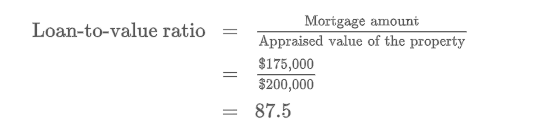
Loan to value ratio
Measures the amount of leverage in a real estate investment project. Calculated by dividing the amount of debt by the value of the total original investment.
Is used by lender to calculate how much they are lending in terms of the value of the asset.
is ideally 75-80%
Can cause you to be upside down on a loan if it is greater than 1
Tax Free Exchange or 1031 exchange
Arises when a real estate investor trades equity in one property and no other forms of property or money change hands.
Crude annual rate of return
is a rough measure of the yield on amounts invested that assumes that equal portions of the gain are earned each year.
actively participate
in the management of the property (defined as approving new tenants, deciding on rental terms, or approving repairs and capital improvements), we can deduct rental expenses up to the level of rental income we report prorated for the number of days it was rented out.
Discounted cash-flow method
An effective way to estimate the present value or appropriate price of a real estate investment. It emphasizes after-tax cash flow and the return on the invested dollars discounted over time to reflect an investors required rate of return.
Timesharing
Is the joint ownership of lease of vacation property through which owners occupy the property individually for set periods of time.
In a typical deal, a buyer pays for a “vacation ownership” or “interval travel” at a resort condominium, maybe one or two weeks a year, and agrees to pay homeowners’ association dues covering maintenance and taxes on the property. Some buyers pay upfront, while others finance their purchases often through the company selling the units.
Deeded Timesharing
The buyer obtains a legal title or deed to a limited time period of use of real estate. Purchasers become secured creditors who are guaranteed continued use of the property throughout any bankruptcy proceedings. They really own their week (or two) of the property.
Nondeeded Timesharing
Is a legal right to use purchase of a limited, preplanned timesharing period of use of a property. It is a long-term lease, license, or club membership permitting use of a hotel suite, condo, or other accommodation, and the right to use usually expires in 20-25 years.
Seller Financing or owner financing
When a seller self-finances a buyer’s loan by accepting a promissory note from a buyer, who makes monthly mortgage payments.
Benefits:
It may make the transaction faster
The buyer may not be able to qualify through the normal channels
It cuts a third party financier out of the process
Swear Equity Property
Property that needs repairs but that has good underlying value; an investor buys the property at a favorable price and fixes it up to rent or sell at a point.
Speculator
Buys in the hope that someone else will pay more for an asset in the not too distant future. Speculators often buy or sell in expectation of profiting from market fluctuations.
Hold much higher chance of significant loss.
Can be bad and drive prices up, or lead to an asset bubble. Could also be good and help move markets along by creating buying opportunities.
Collectibles
Are cultural artifacts that have value because of their beauty, age, scarcity, or popularity. They include antiques, art, baseball cards, cars, coins, etc.
Rarity, Condition, Authenticity, Age.
Gold Bullion
Is often though of as the large gold “bricks” that weigh about 28 pounds that people imagine are stored in Fort Knox. Refined and stamped weight of precious metal.
Gold Bullion Coins
Various world mints issue these coins, which contain 1 troy ounce (31.15 grams) of pure gold.
Penny Stocks
Stocks that trade for less than $5 per share.
Derivative
An instrument used by people to trade or manage more easily the asset upon which these instruments are based.
Option
Is a contract to buy or sell an asset at some point in the future at a specified price. Most common option in a stock option.
Stock Option
Gives the holder (purchaser) the right, but not the obligation, to buy or sell a specific number of shares (normally 100) of a certain stock at a specified price (the strike price) before a specified date (the expiration date, typically three, six, or nine months from the start of the options contract.
Call Option
Gives the option holder (buyer) the right right, but not the obligation, to buy the optioned asset from the option writer at the strike price.
Put Option
Gives the option holder (buyer) the right, but not the obligation, to sell the optioned asset to the option writer at the strike price.
Covered Option
Occurs when an option writer who owns the underlying security sells the call.
If a writer does not own an asset, it is a naked option.
Futures Contract
Is the obligation to make or take delivery of a certain amount of a commodity by a set date. A future derivative contract requires the holder to buy the asset on the date specified.
Hedge Funds
Are freewheeling risky investment pools for the extremely wealthy that use unconventional investment strategies.
Zero Sum Game
An investment in which the wealth of all buyers remains the same as the trading simply redistributes the wealth among those traders.