Patho - Infectious Disorders of the CNS
 Call Kai
 Learn
 Practice Test
 Spaced Repetition
 Match
 Flashcards
 Knowt Play
1/82

There's no tags or description
Looks like no tags are added yet.
83 Terms
Infection of meninges
meningitis
Infection of parenchyma
encephalitis
Infection of spinal cord
myelitis
Infection of brain & SC
encephalomyelitis
Classification - by invading organism

Significance of Infectious CNS Disorders
Relatively __ yet a major cause of __ worldwide
___ present challenge
New modes of transmission due to ___ society
__ profoundly effects treatment and outcomes

What are the natural defense of the nervous system?
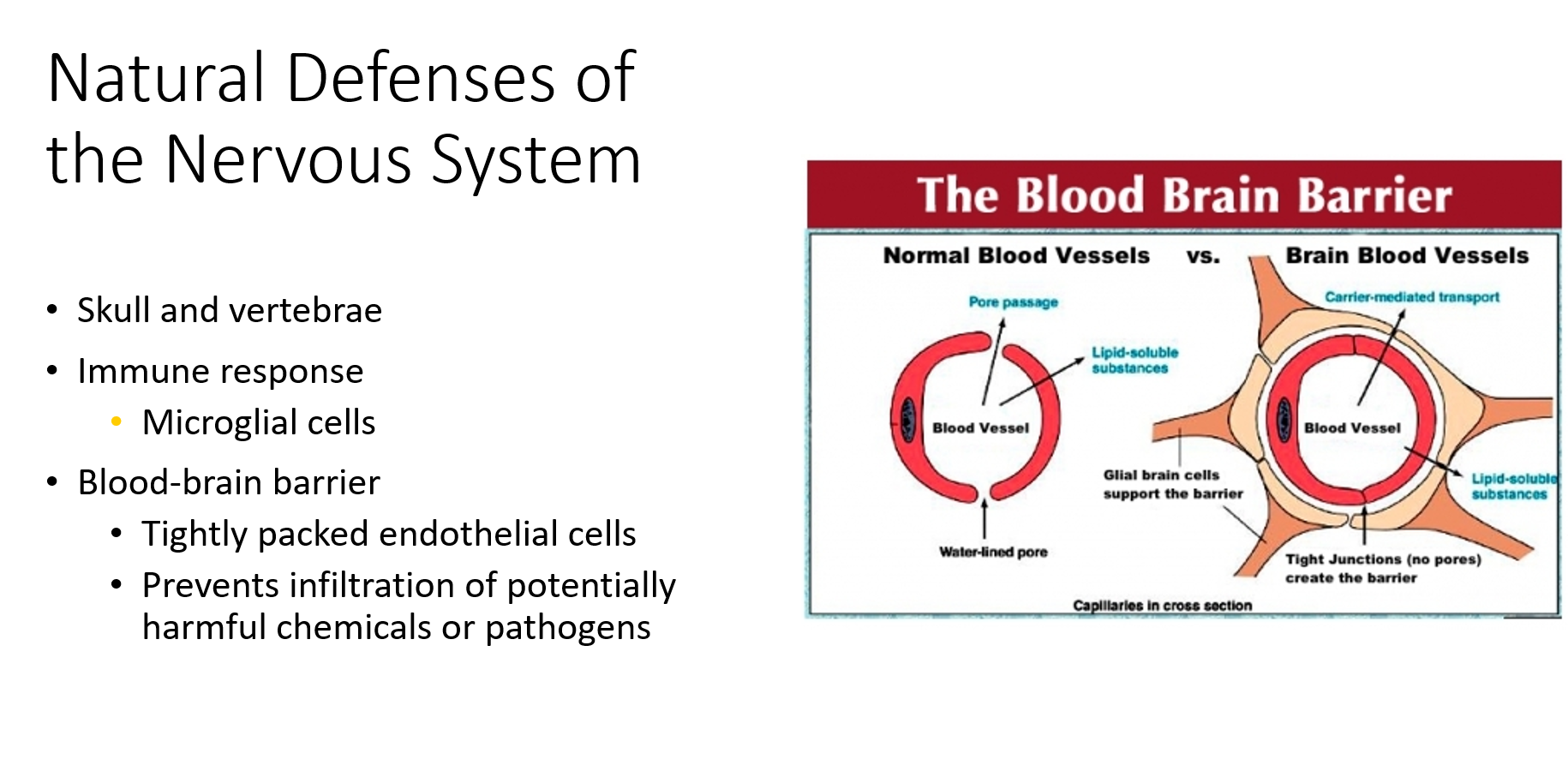
Immune system is made of what cells?

BB barriers is tightly packed with what cells? prevents infiltration of?

What destroy infectious pathogen?
Microglial cells

What system is made of macrophages that remove bacteria & viruses
Reticuloendothelial system

Infection in blood can cause changes in?
cerebral capillary endothelium

If the BBB fails
Reduce immune protection because CSF has less?
less antibodies & WBC
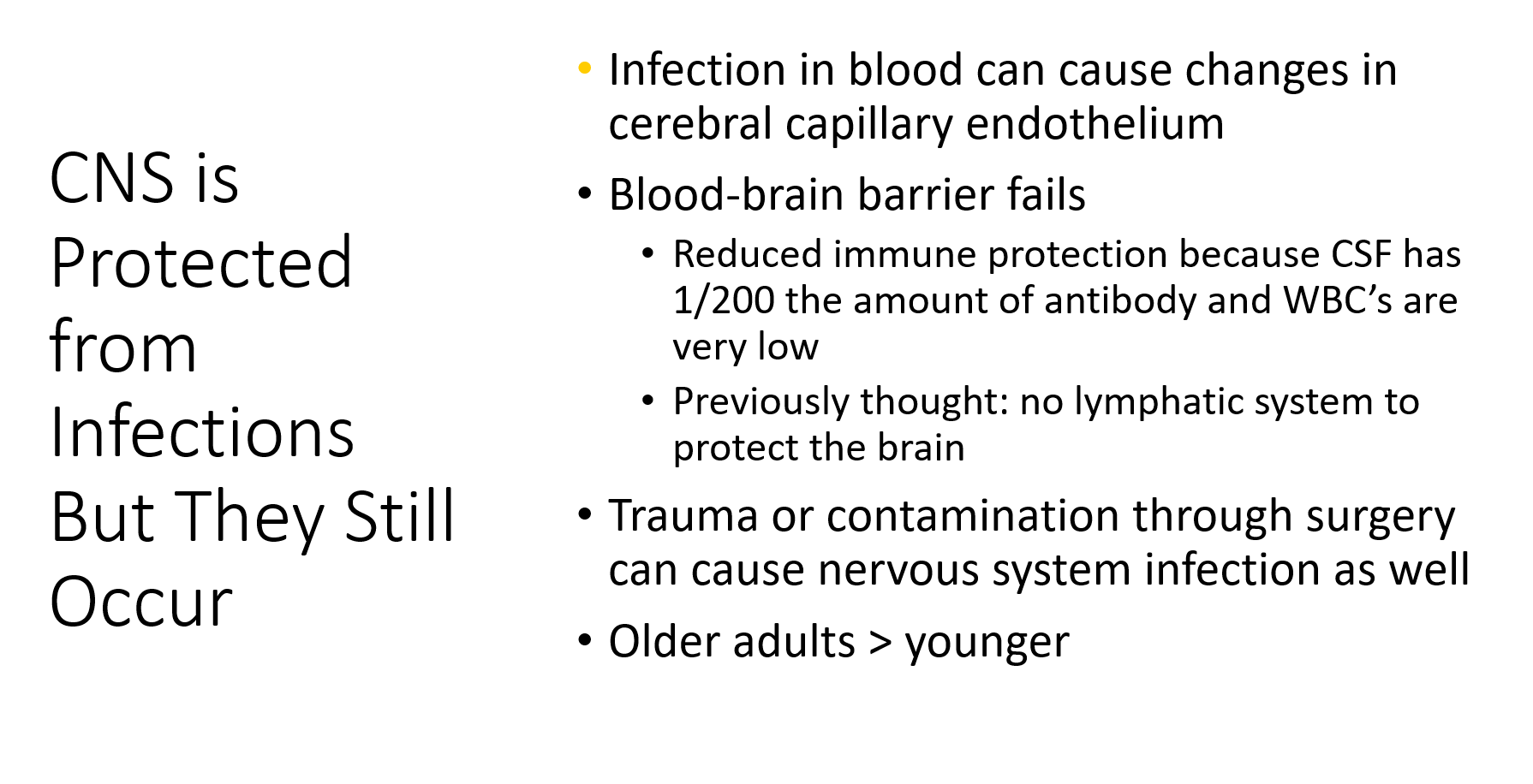
What can also cause nervous system infection?
Does it happen in older or younger adults?

what is Encephalitis
Acute inflammation of brain tissue
Encephalitis leads to?
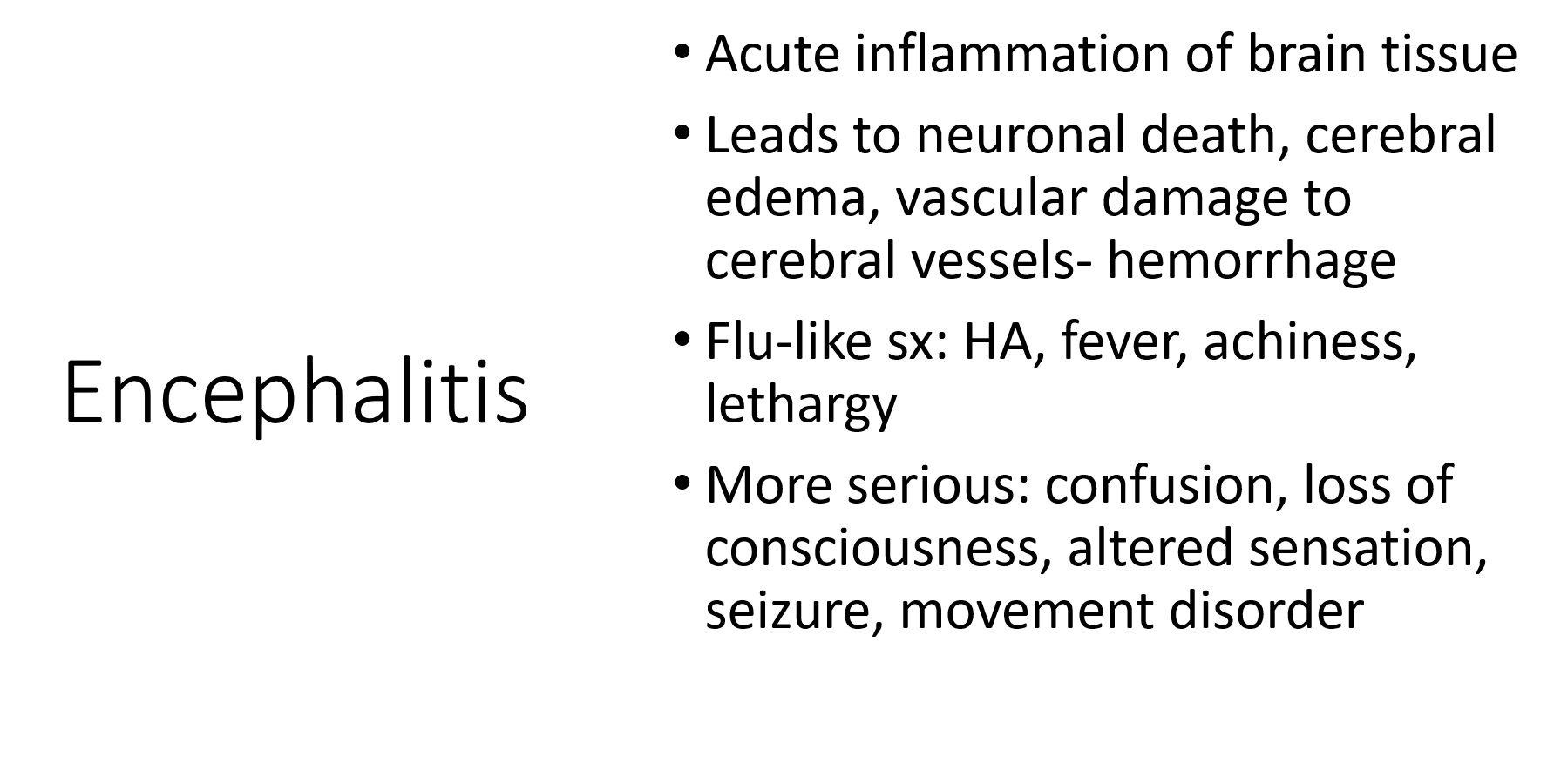
Encephalitis sx? more serious sx?
Causes of encephalitis

Encephalitis: Diagnosis
Neurologic dysfunction: altered __ status lasting over __ w/out alt. cause
Minor criteria - need __
Fever within __
__
New __ neurologic findings
CSF - 2 findings?
What response? - associated with greater BBB permeability, clinical severity, and damage on neuroimaging
Skin inspection: ___, __

Encephalitis Treatment
What for HSV?

Encephalitis Prognosis
Mild cases?
Severe cases?
Death from? - too much pressure on __, impacts __

What is meningitis?

Types of meningitis
__ - more common, generally less serious
__ - medical emergency (from strep)
__ - rare, occurs in weakened immune system
Which is contagious?
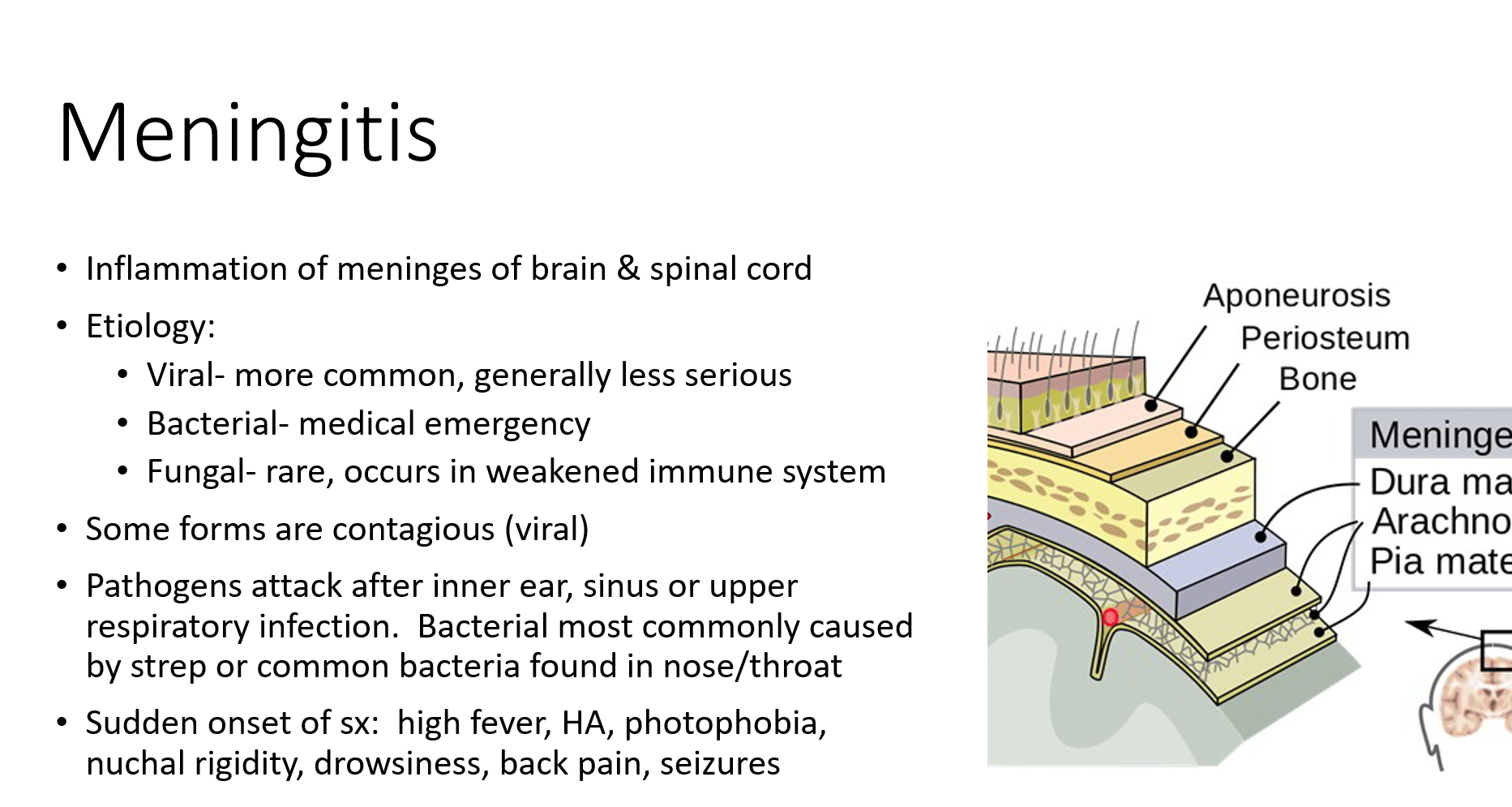
Meningitis - pathogens attack?
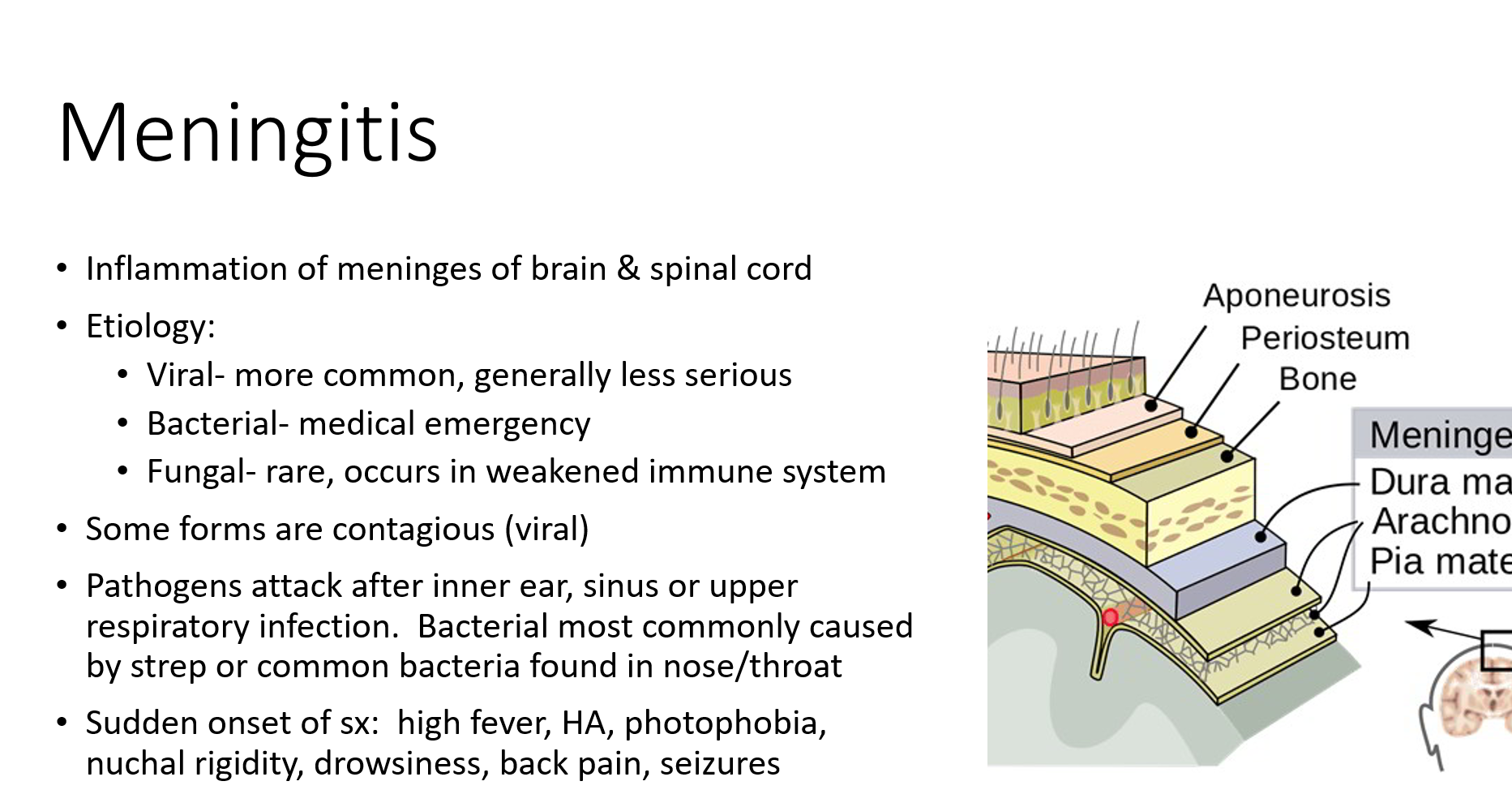
Meningitis - Bacterial is most commonly caused by?

Meningitis - symptoms?
SUDDEN onset
High fever, HA, photophobia, nuchal rigidity, drowsiness, back pain, seizures
Nuchal rigidity: stiff neck, pt will have difficulty bringing their chin to chest
Back pain: throughout entire back due to meninges

Meningitis - risk factors?
Head trauma w/ basilar skull fx
otitis media
sinusitis/mastoiditis
neurosurgery
Meningitis - why is it painful?
Stretching of inflammed meninges= painful
Meningitis diagnosis
What is definitive?
Also?
Lumbar puncture (CSF) - definitive
Also:
Cranial imaging (r/o encephalitis)
Blood work (immune sx changes)
Kernig’s sign: resistance to KE when hip is at 90
Burdzinski’s sign: neck flexion elicits hip/knee flexion

What is Kernigs sign
resistance to knee extension when hip at 90
What is Brudzinski’s sign
Neck flexion elicits hip/knee flexion
Meningitis - bacterial
tx, prognosis, complications

Meningitis Viral
Tx, prognosis, complications

Meningitis Complications:

What is Prion disease
Family of ___ including?

Prion is an abnormally folded __ that can __ in the nervous system, triggering normal brain proteins to __ , resulting in __

How do you get Prion dx

Prion disease - dx

Prion disease - treatment

Prion disease - symptoms
Abnormal mvmt
Ataxia
Cognitive changes
Speech problems
Sudden onset, progressive, usually fatal
Rapid dementia, condition, difficulty speaking & walking
Personality changes, mvmt difficult, memory changes
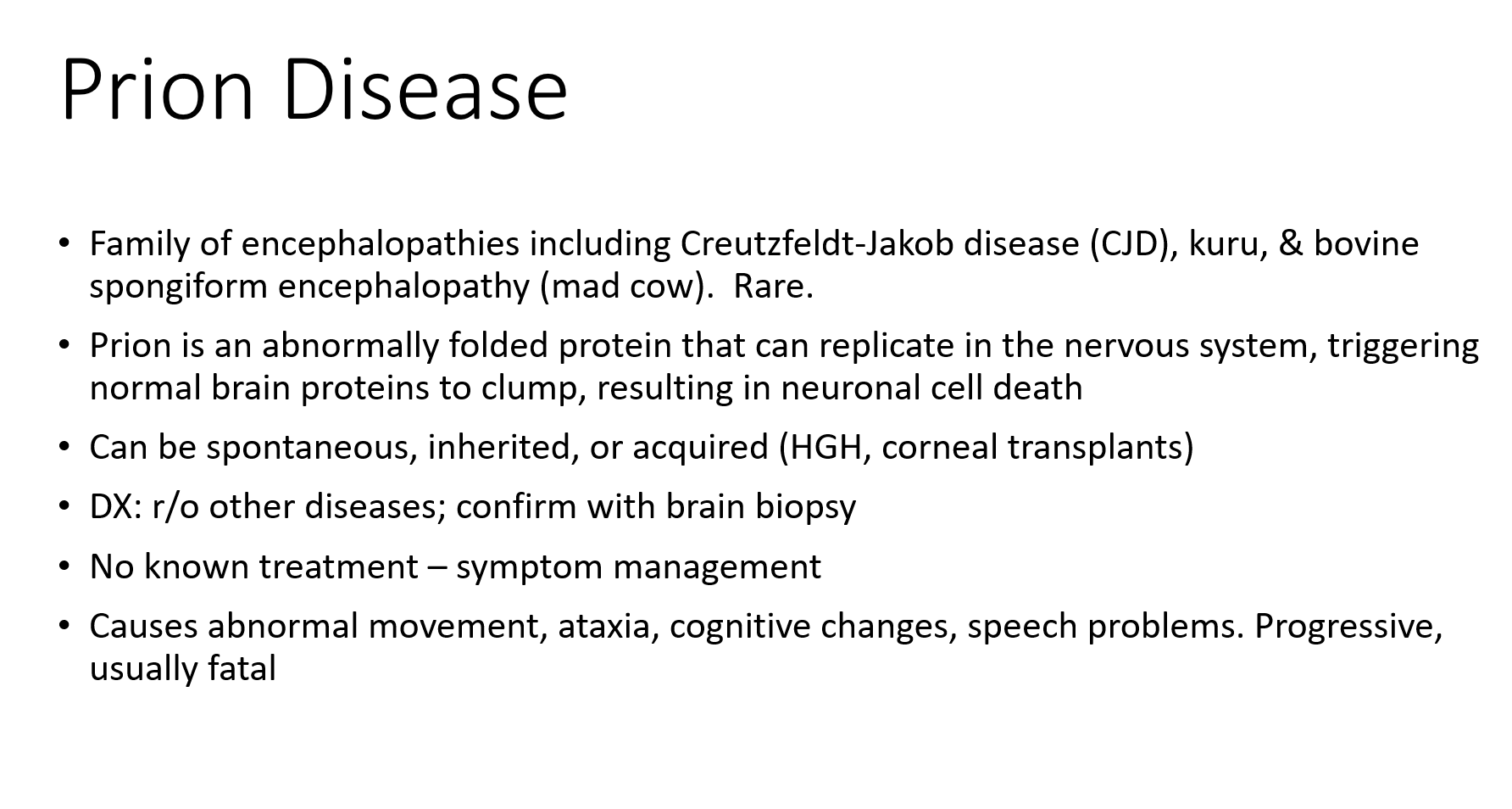
Key features of Prion disease
See personality changes, movement difficulty, memory changes
Rapid dementia, confusion, difficulty speaking and walking
Most common (generally fatal form) of Prion dx
CJDL

Which type of prion dx
may be inherited, strikes @ age 60?
CJD
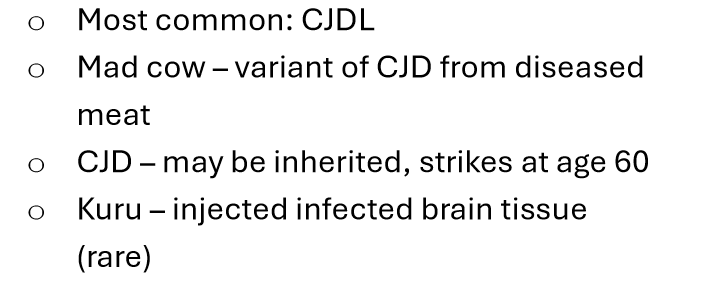
Which prion dx variant is - variant of CJD from disease meat?
Mad cow

Prion dx from ingested infected brain tissue- rare
Kuru

Brain section showing spongiform pathology is characteristic of which type of Prions dx

Zika virus - how do you get it?

Zika virus - symptoms
Mild symptoms: fever, rash, joint pain, red eyes, HA, mm pain

Zika virus - symptom duration
2-7 days
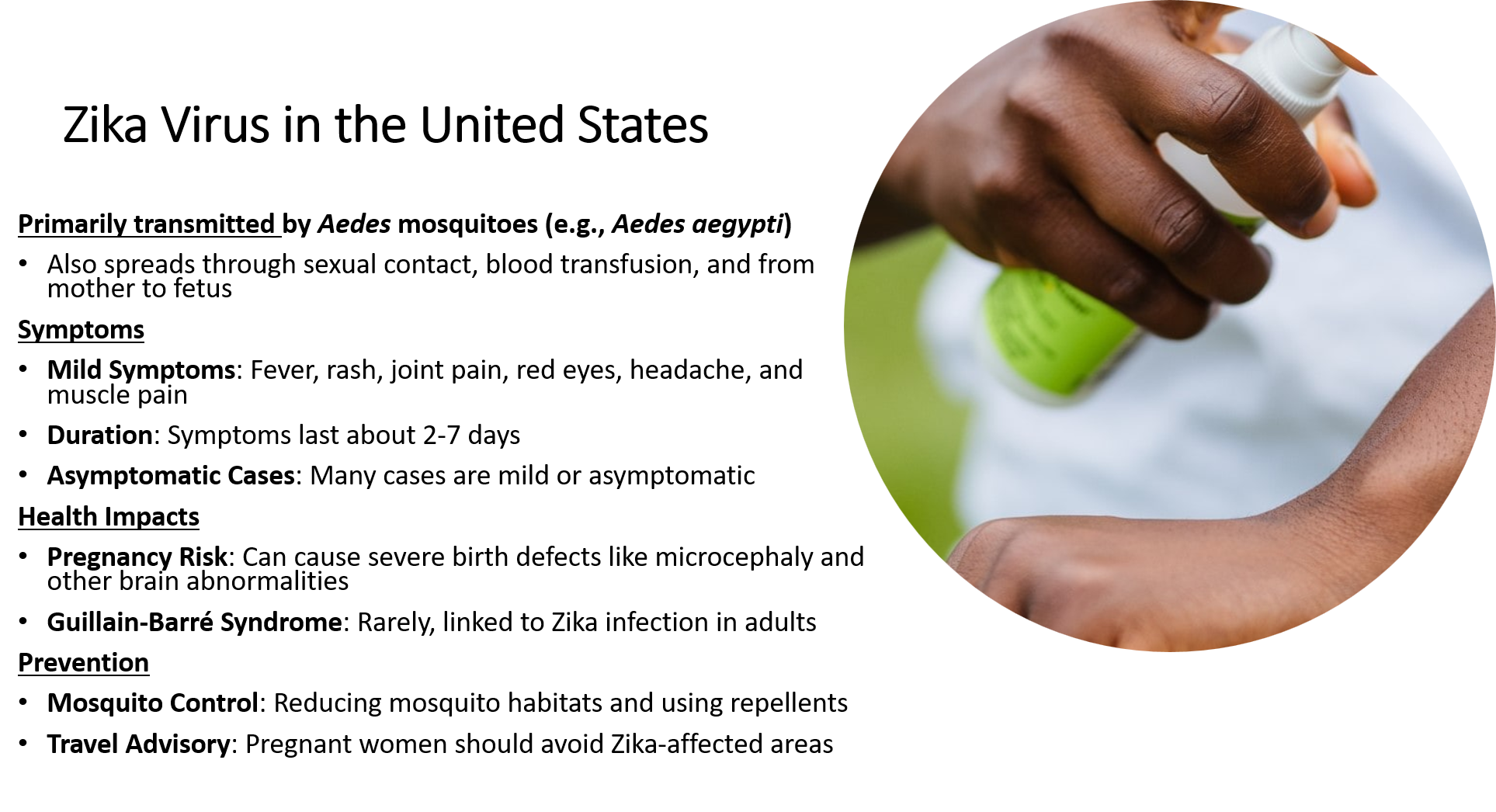
Zika virus - health impacts
Many cases are mild or asymptomatic
Pregnancy risk: can cause severe birth defects - microcephaly & other brain abnormalities
GB: rare, linked to Zika infection in adults

Zika virus - prevention
Mosquito control: reduce mosquito habits & use repellants (bug spray)
Travel advisory: pregnant women should avoid Zika-affected areas

Brain abscess
__ invasion
results in how many areas of infection?
forms __ with localized area of __
Bacterial or fungal
single or multiple areas
capsular wall - edema & tissue necrosis
Infected brain cells, WBC, bacteria/fungi collect and are encapsulated by tissue
Brain abscess - population

Brain abscess - etiologies

Brain abscess - S&S

Brain abscess - dx

Brain abscess - tx

Brain abscess - prognosis

Signs of Increased ICP
Signs of increased ICP: change in mental status, impaired mvmt and coordination
Immune response does more harm than good due to swelling
Infected brain cells, WBC, bacteria/fungi collect and are encapsulated by tissue
Lyme - caused by? Ticks aquire disease from?

Lyme
Skin lesions occurs at or near site of bite how long after bite?
“Bulls-eye” or solid red patch lasts?
May also get?

Lyme disease
Most severe sx may not appear for weeks, months, even years after tick bite - these sx include?

Lyme disease - dx

Lyme disease - tx

Rabies
Virus carried by? transmitted through?

Rabies
Causes?
CNS pathology leads to?

Rabies - S&S

Rabies - tx

Rabies - prognosis

Transverse Myelitis
___ disorder of the __
Damages the __
Disrupts the transmission of __

Transverse Myelitis
Population

Transverse Myelitis
Symptom progression

Transverse Myelitis
symptoms

Causes of TM
Cause?
Triggered by?

Diagnoses of TM

Treatment of TM
Focuses on?

TM
Prognosis for TM varies depending on?
Recovery?
What is crucial for improving outcomes

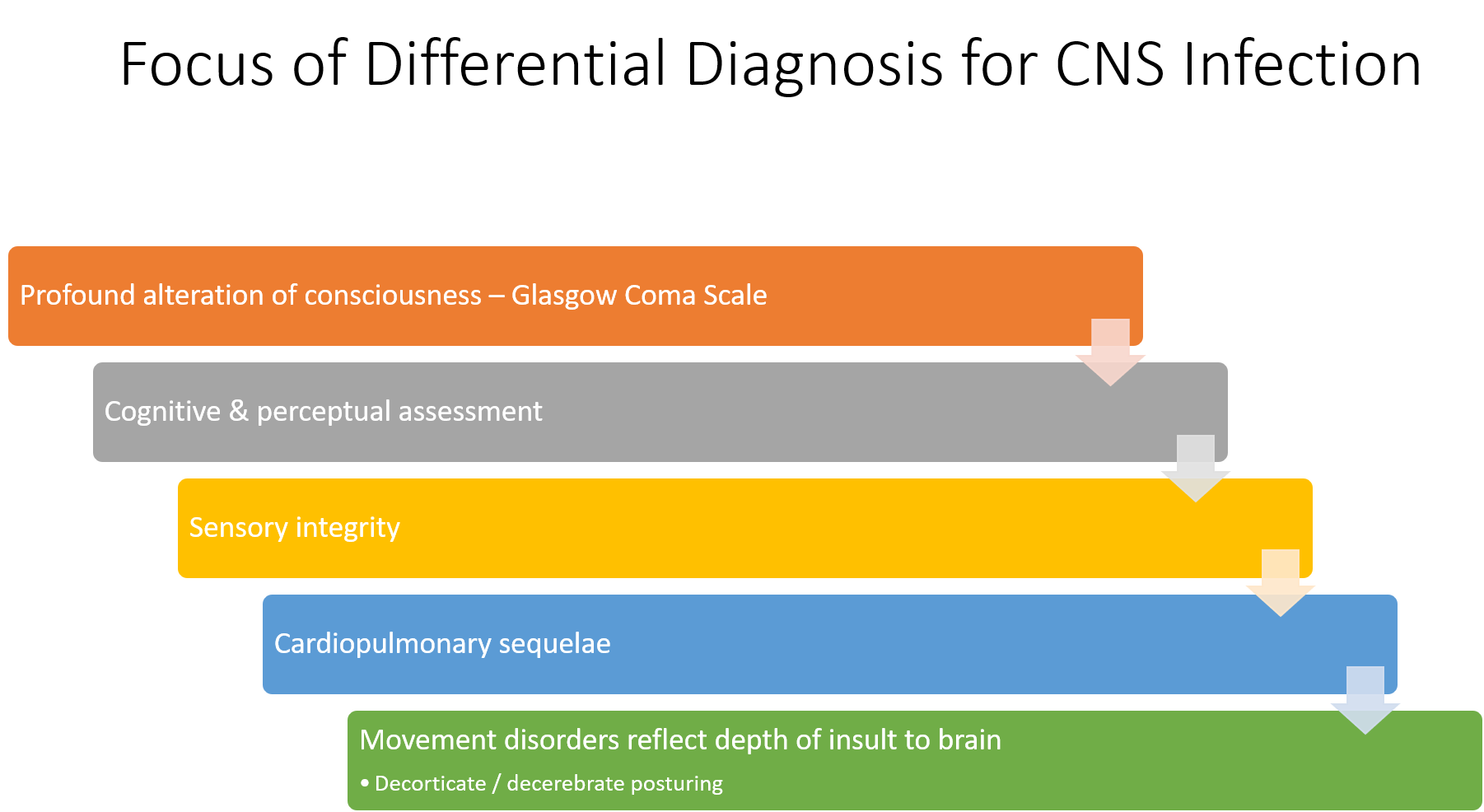
Focus of Differential Diagnosis for CNS Infection
Profound alteration of consciousness - ___ coma scale
__ & __ assessment
__ integrity
__ sequelae (ABC’s)
__ disorders reflect depth of insult to brain
Which posture has worse survival rate?
Look at what for difference?
Profound alteration of consciousness - Glascow coma scale
Cognitive & perceptual assessment
Sensory integrity
Cardiopulmonary sequelae (ABC’s)
Movement disorders reflect depth of insult to brain
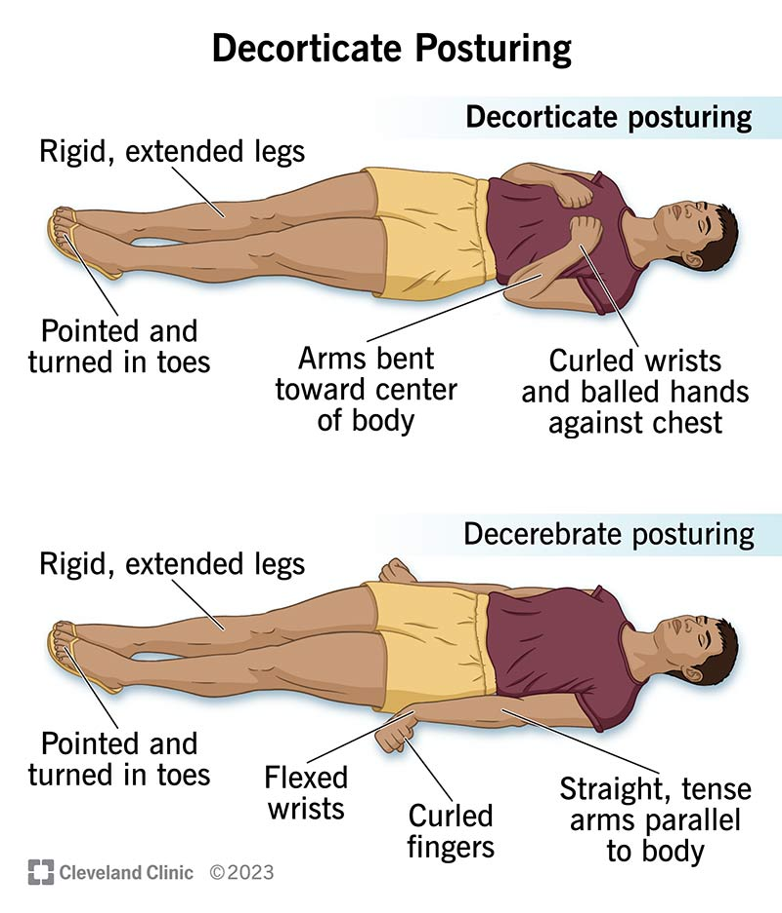
Decorticate/decerebrate posturing
Decerebrate: 10% survival rate
Decorticate: 37% survival
Look at UE for difference
Decorticate vs decerebrate posturing
Decorticate - “core” is bent in (arms flexed in toward core)
Decerebrate - E for extension
Brainstem injured = worse

TM
Babinksi, clonus, B&B, MRI of spinal cord or lumbar puncture
TM - focus on moblity; GB - focus on respiratory status
Transverse Myelitis = Spinal cord → Hyperreflexia, sensory level, bladder problems
GBS = Peripheral nerves → Areflexia, flaccid weakness, respiratory concerns

Diagnosis: Herpes simplex encephalitis
Key clue: Fever + headache → confusion + temporal lobe MRI findings
PT concerns: weakness, cognitive deficits, seizures, balance problems, and fall risk.
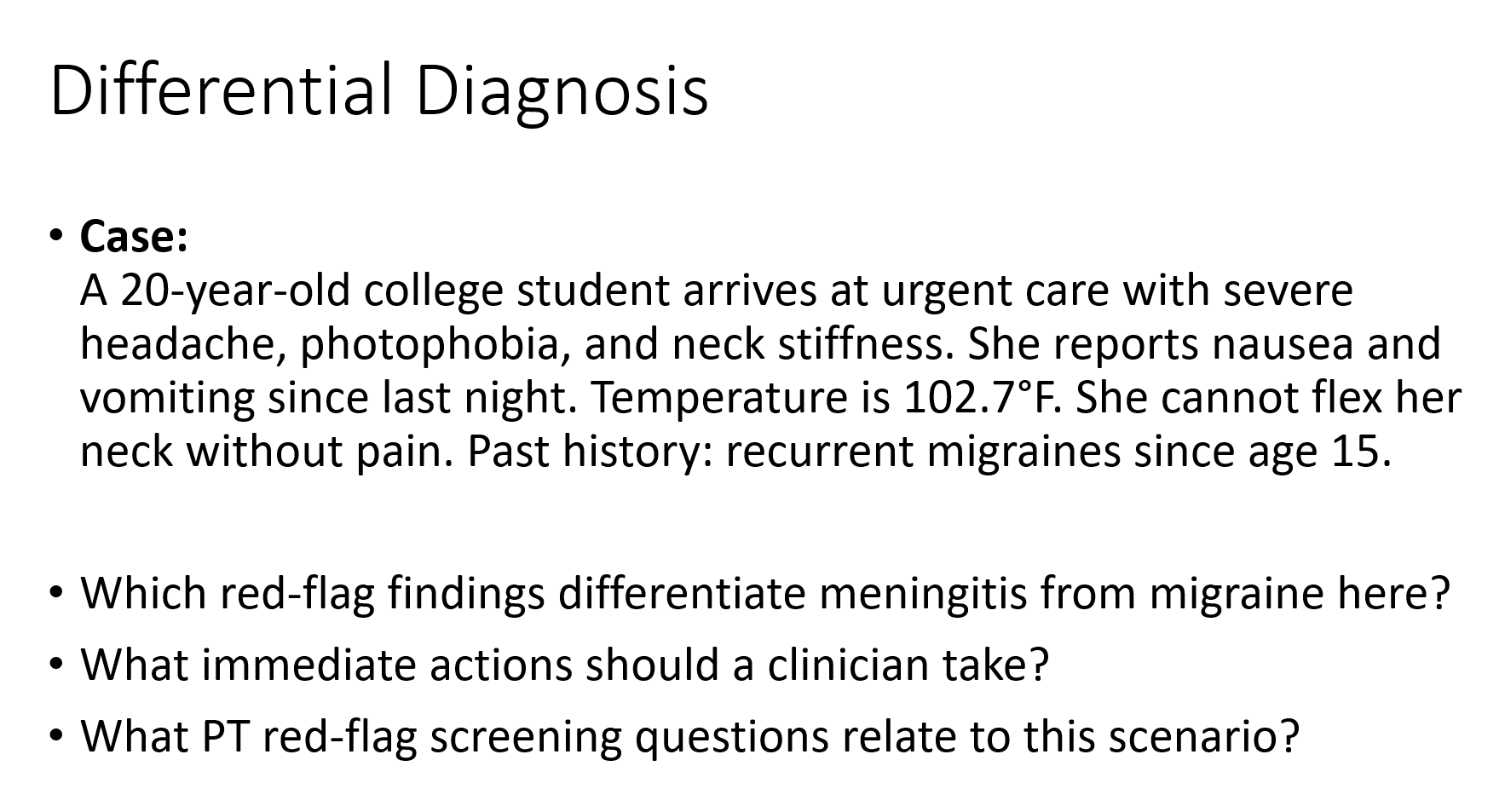
Meningitis clues = Fever + severe headache + photophobia + neck stiffness.
Action = Immediate emergency referral.
PT screening = Ask about fever, neck stiffness, neurologic symptoms, and whether the headache is different from previous headaches.

Most important historical clue: Circular rash after camping → Lyme disease.
Tests/referrals: Lyme testing, physician referral, neurologic exam.
PT: Lyme/Bell's palsy = focus on facial function and eye protection; Stroke = whole-body neurologic rehabilitation.