chapter 7 sex determination and sex chromosomes
 Call Kai
 Learn
 Practice Test
 Spaced Repetition
 Match
 Flashcards
 Knowt Play
1/95

There's no tags or description
Looks like no tags are added yet.
96 Terms
the term sex
refers to sexual phenotye
fundamental difference between male and females
gamete size
males produce small gametes while females are relatively large
meiosis and fertilization
sexually reproducing organisms use meiosis to generate haploid cells at some point in the life cycle
this produced haploid gametes (spores), and fertilization which produced diploid zygote

purpose (meiosis and fertilization)
two parents contribute genes to produce offspring genetically distinct from both parents (evolutionaryily important)
sexual reproduction alternated between haploid and diploid states
x and y chromosomes pair during meiosis even though they are not homologous (the genes located on each are different)
sex determination
the mechanism by which biological sex is established
define sex of individual in reference to its phenotype
gender is not the same as sex
sex refers to anatomical and physiological phenotype
gender is category assigned by individual or others based on behavior and cultural practices
Hermaphroditism
condition where both sexes exist in the same organism
Monoecious
organism contain both male and female reproductive structures in the same organism
dioecious
organism contains either male or female reproductive structures in one organism, thus requiring the other sex to reproduce
humans
sex may be determined chromosomally, genetically, or environmentally
phenotypic dimorphism
differentiation of sexes is evident via (eg size, reproductive organs)
heteromorphic chromosomes
visibly dissimilar in size and structure unlike autosomes
ex: sex chromosomes X and Y
sex chromosomes
Characterize one sex or the other in a wide range of species
Sex determination
By specific genes not entire chromosomes
mode of sex determination: protenor/butterfly
XX/XO mode of sex determination depends on random distribution of the X chromosome into half of the male gametes
presence of XX results in female XOin males

mode of sex determination: lygaeus
female: XX male: XY
females homogametous
males: heterogametous

homogametic sex
producing like chromosomes
zygotes with two X chromosomes
results in female
heterogametic sex
producing unlike chromosomes
zygotes with one x and one y
results in male
ZZ/ZW sex determination
females are hetero (ZW)
males are homo (ZZ)
common in birds, butterflies and moths

genic sex determination
no heteromorphic sex chromosomes (eg no ovbious difference in chromosomes of males and females)
sex is only determined by multiple genes, with some influence from the environment
found in some plants, fungi, protozoans, fish (danio rerio)
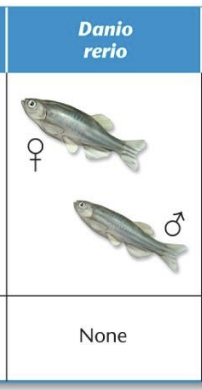
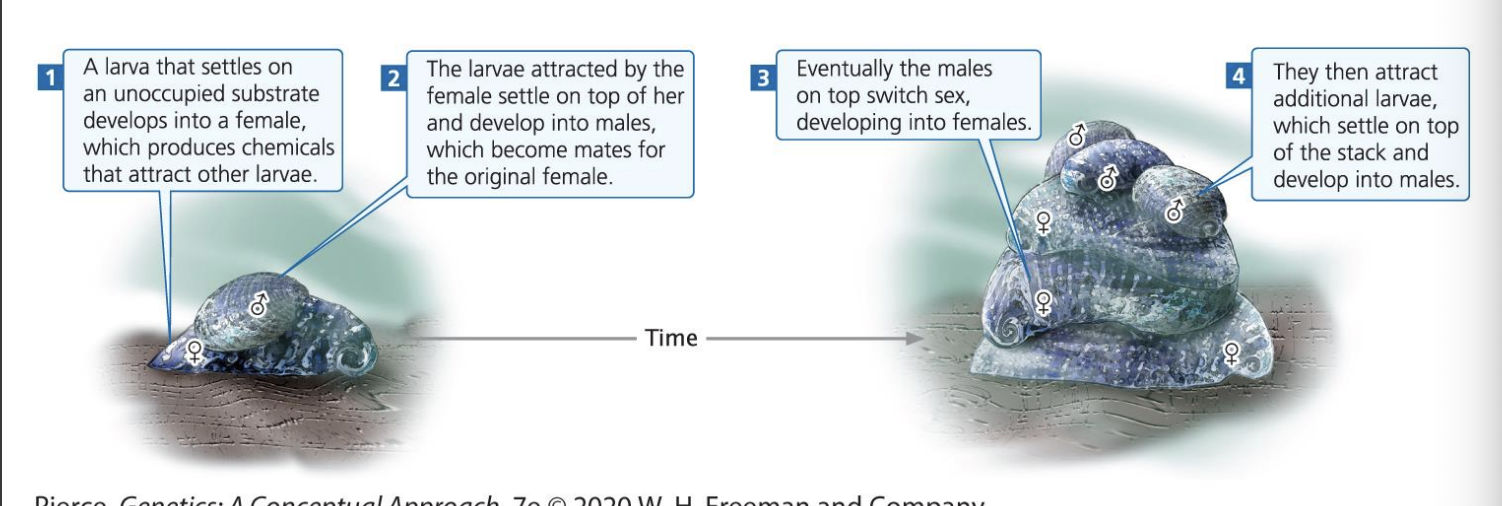
environmental sex determination
limpets position in the stack determines its sex
in other organisms, temperature determines sex (turtles, alligators, etc.)
mechanisms of sex determination some common systems chart

male characteristics are determined by Y chromosomes (importance of proper segregation)
importance of proper segregation of sex chromosomes in meiosis and mitosis is highlighted by varoius genetic syndromes that rise when there are abnormalities to their ratio
effects of human sex-chromosome variations clarified that the Y chromosome does indeed determine maleness in humans
klinefelter and turner syndrome
turner: XO
klinefelter: XXY (most common), XXXY, XXXXY, XXYY
two human abnormalities
characterized by aberrant sexual development
both syndromes result form nondisjunction, failure of x chromosomes to segregate during meiosis
no one lacks both X chromosomes
Y containing human embryos lacking and X chromsome (45, Y) do not survive
klinefelter syndrome
male genitalia
more than one x chromosome (47, XXY)
symptoms
tall, long arms, legs
large hands and feet
internal ducts are male, testes fail to produce sperm
feminine development not supressed (enlarged breasts, rounded hips)
most sterile
can also be XXXY (as number of x chromosomes increase so does the likelihood of physical abnormalities)

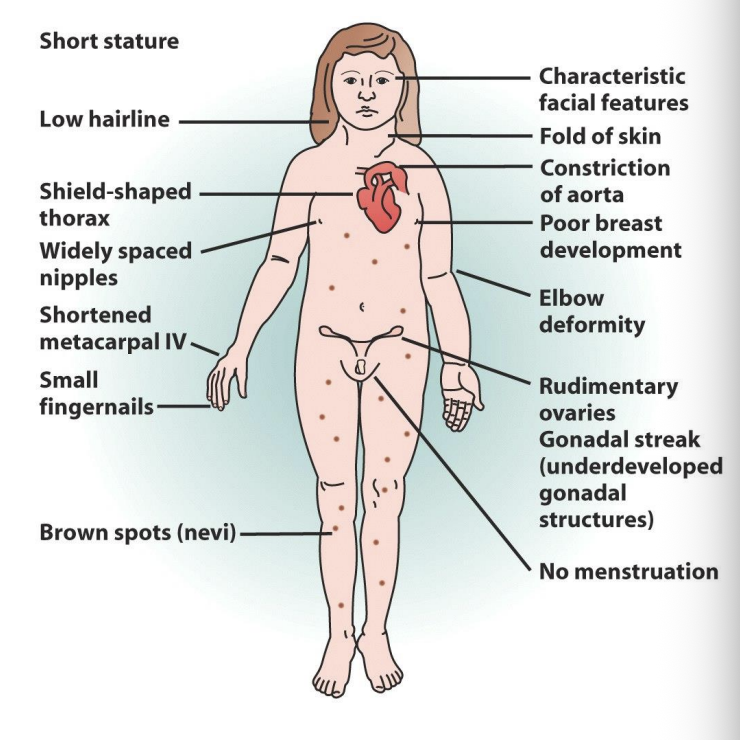
turner syndrome
a single X chromosome, no Y chromosome (45, X)
female genitalia
symptoms
phenotypicaly female
female external genitalia and internal ducts
ovaries are rudimentary
underdevloped breasts
sexual development stalls
short stature
cognitive impairment
most are sterile
47, XXX syndrome : triplo-x
presence of three x chromosomes along with a normal set of autosomes results in female differentiation
frequently, women are perfectly normal, most typical feature is being taller than average, some widely spaced eyes, weak muscle tone
other cases, underdeveloped secondary sex characteristics, sterility, cognitive impairment may occur
can be XXXX, XXXXX (As the number of X chromosomes increases beyond 3, cognitive impairment becomes more severe along with increased physical problems)
47,XYY condition (Jacob’s syndrome)
only consistently shared characteristic found so far is that such males are over 6 feet tall
increased risk for comorbidities - asmtha, seizure, autism, learning disabilities
personality disorders (highh but not absolute)
Patients with Jacob’s disease should be reassured that most patients with this disease go on to live long and fulfilling lives
What Do These Disorders Teach Us About Human Sex Determination?
X chromosome contains essential genes for both sexes (you need at least one proper embryonic development)
Y chromosome contains male-determining genetic information ( one copy in the prescence of multiple X’s is enough to be male)
absence of Y always equal female
Additional X chromosomes can affect normal physical and mental development in both males and females
fertility
Fertility genes are also linked to both sex chromosomes. Females need at least two copies of X chromosome to be fertile
The y chromosome
cotnains far fewer genes (at least 75) less than the X chromosome (900-1400)
pseudoautosomal regions (PARs)
present on both ends of the Y chromosome that share homology with regions on the X chromosome and synapse and recombine with it during meiosis
the presence of such a pairing region is critical to segregation of XY chromosomes during male gametogenesis
MSY
male specific region
largely non-recombining with the X chromosome. contains some genes that were originally derived from x chromosome(x-degenerative region)
subregion SRY
sex determining region containing genes required to develop as a male
y chromosome diagram

gonadal primordia
early, undeveloped structures in an embryo that will eventually develop into the gonads (testes or ovaries).
this forms by the 5th week of gestation, when it arises as a pair of gonadal ridges associated with each embryonic kidney
gonadal phenotype is sexually indifferent
as development progresses, primordial germ cells(cells that will produce egg or sperm) migrate to ridges (outer cortex and inner medulla form) that are capable of developing into an ovary and testis, respectively
outer cortex (Can develop into the main egg-producing region of an ovary.)
inner cortex (Contributes to the development of a testis.)
as development continues, the cortex and the medulla will, their tissues will differentiate and then one of them will develop?
bipotential gonads
gonadal ridges can form either ovaries or testes
sex differentiation diagram

male development
medulla into a testis
when testes differentiation is initiated, the embryonic testicular tissues secretes hormones that are essential for continued male sexual differentiation
activation of hormones that causes X mullerian ducts
primary spermatocytes are not produced until puberty
female development
the cortex of the ridge forms female reproductive structures and mullerian ducts persist
wolffian duct degenerated because of the absence of testosterone
by 12th week of fetal development, the oogonia within the ovaries begin meiosis and primary oocytes can be detected
by the 25th week of fetal development all oocytes become arrested in meiosis and remain dormant until puberty is reached some 10 to 15 years later
sexual dimorphism
distinct difference in size or appearance between the sexes of an aminal in addition to the difference between sexual organs themselves
primary sexual differentiation
involves only the gonads, where gametes are produced
secondary sexual differentiation
involved the overall phenotype of the organism
includes clear differences in such organs as mammary glands, external genitalia, and all traits that differ between males and females
SRY
sex determining region Y
located adjacent to PAR of the short arm of Y chromosome
controls male development
ecodes protein: testis determining factor (TDF)
TDF: Testis-determining factor
at 6-8 weeks of development, SRY genes becomes active in XY embryos
encoddes protein that triggers tested formation and tested begin to secrete two hormones: testosterone and anti-mullerian hormone
this occurs through a series of genes that are turned on or off to initiate the apprioriate developmental pathways
these pathways are complex
MSY: male specific region y
23 million base pairs
divded into three regions critical for sex determination, fertility, and genetic linkage to the X chromosome
x transposed, x degenerative, ampliconic region
x transposed region
15% of MSY
origin: originially derived from the x chromosome during human evolution
function: contains 2 genes homologous to genes on the X chromosome
x degenerative region
20% of MSY
content: contains 27 single copy genes and several pseudogenes (genes whose sequence degenerated over evolution rendering them nonfunctional)
evolution: many genes here share some homology with genes on X, evolved from genes on X chromosome but degraded over time
role in sex determination: the SRY is found in this region. other genes are expressed ubiquitously in all tissues except SRY, the SRY is expressed onlyin testes
ampliconic region
30% of MSY
crucial for fertility: encodes proteins specific to development and function of testis
genes here are unique to Y: these genes lack X homology/counterpart and are associated with development of the testes
androgen receptor (AR)
actions of androgens such as testosterone are mediated via AR, a ligan dependent nuclear transcription factor and steroid hormone nuclear receptor
Androgen receptors (ARs) allow cells to detect and respond to androgens, such as testosterone.
When an androgen binds to its receptor, the hormone–receptor complex can bind to specific areas of DNA and regulate gene activity. This helps direct the development of male sexual characteristics.
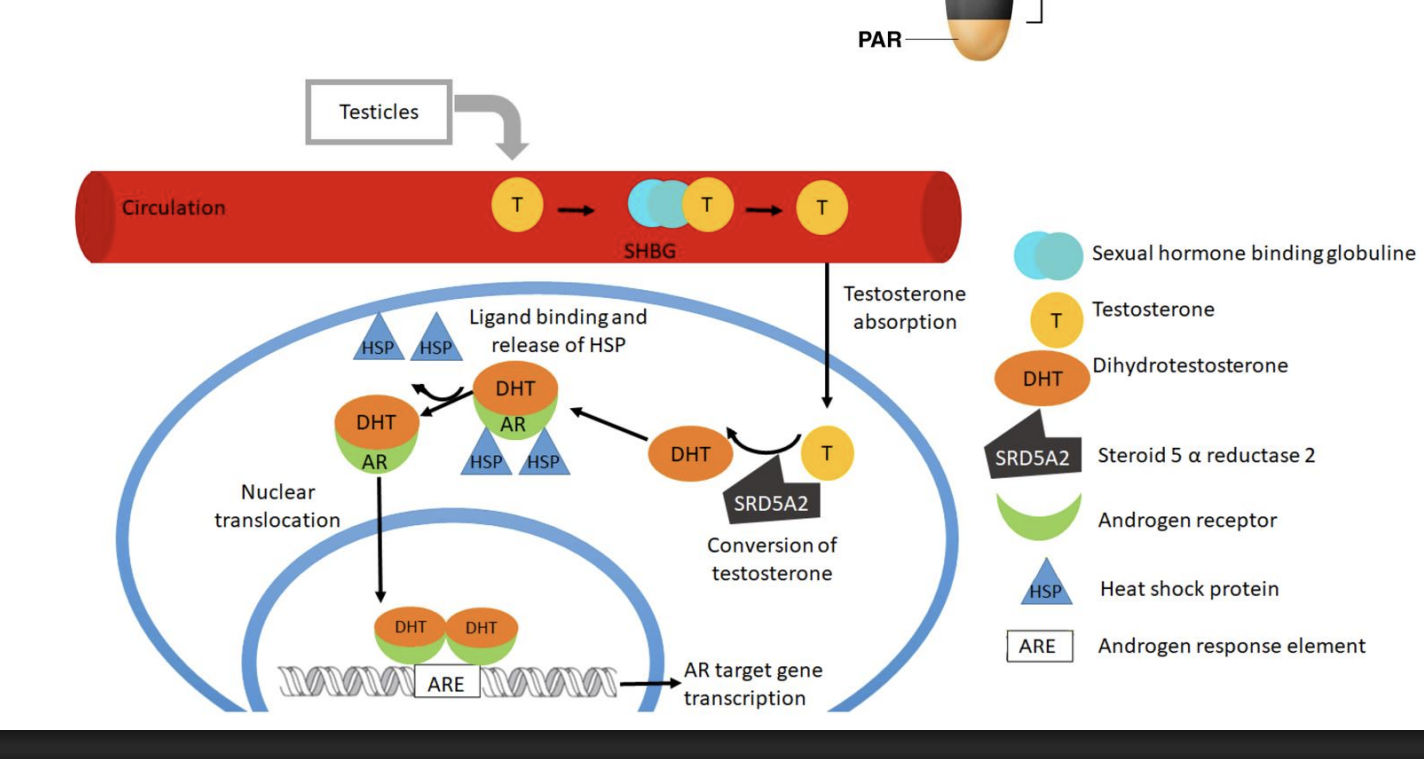
androgen Insensitivity syndrome
caused by defective androgen receptor
person that is genetically male (XY) is resistant to male hormones (androgens)
results in phenotypic traits of females, having external sexual characteristics
most are unaware until puberty and fail to menstruate
vagine ends blindly, and the uterus, oviducts and ovaries are present
in abdominal cavity a pair of tested produce levels of testosterone normally seen in males
gene for AR receptor is X linked
what we learn from androgen insensitivity syndrome
human sexual development is complex, influenced not only by SRY gene on Y chromsome but also by other genes found elsewhere
shows that most people carry genes for both male and female characteristics, as those with androgen insensitivity have capacity to develop female characteristics even though they have Y chromosome
genes for most male and female secondary sex characteristics are not on the sex chromosome but the autosomes
key to maleness and femaleness lies not in genes alone but in the control of their expression
paternal age effects (PAE)
advanced paternal age is associated with increased risk in offspring of congenital disorders, cancers, schizophrenia, known collectively as PAE
sequencing shows numerous PAE mutations on the y chromosome and suggests they are postively selected for, resulting in an enrichment of mutant sperm over time

smoking
Correlations between smoking and complete loss of the Y chromosome in blood cells, and Y chromosome loss is also correlated to elevated cancer risk among male smokers, reduced expression of tumor-suppression genes, and compromised immunity
These studies refutes the wasteland theory, that depicted the Y chromosome as almost devoid of genetic information other than a few genes that cause maleness
sex ratio assumption
1;1
assumption based on
due to degreation males produce equal numbers of x and y bearing sperm
each type of sperm has equivalent viability and motility in female productive tract
egg surface equally receptive to both X and Y bearing sperm
sex ratio actual
parimaryL reflected the proportion of males to females conceived in population
secondary: reflects the proportion of each sex that is born
not equal
1969 census data
Secondary sex ratio of Caucasian population in the United States was 106 males to 100 females (1.06 ratio)
African-American population: 1.025 ratio
Korea: 1.15 ratio
Suggests more males conceived than females
assumptions for theoretical ratio bias
studied of fetuses recovered form miscarriages and abortions showed fetal mortality was actually higher in males
study increased the PSR in white males to 1.079 suggesting more males than females are conceived in human population
orzack et al. (2015)
determined PSR is indeed 1, equal number of males and females conceived
following concetion, mortality fluctuated between the sexes until at birth, more males than females wereborn
female mortality during embryonic and fetal devlopment exceeds that of males
genetic dosage in females and males
in XX/XY systems the female can theoretically produce twice as much protein from X linked genes
relative amount of protein produced can make a huge difference in areas such as embryonic development
theoretically this disparity should create a genetic dosage difference between females and males
dosage compensation
balances the dose of X chromosome gene expression in females and males
prevent excessive exression of X linked genes in humans and other mammals
x inactivation
in humans the extra x in female cells is inactivated to compensate for X chromosome dosage disparities
the inactive X becomes highly condensed and packaged in a way that it has a transcriptionally inactive structure called sex chromatin body
barr body (sex chromatin body)
condensed chromosome structure and can be observed in the stained interphase cells
is the inactive X chromosome in a female somatic cell, rendered inactive in a process called lyonization

lyons hypothesis
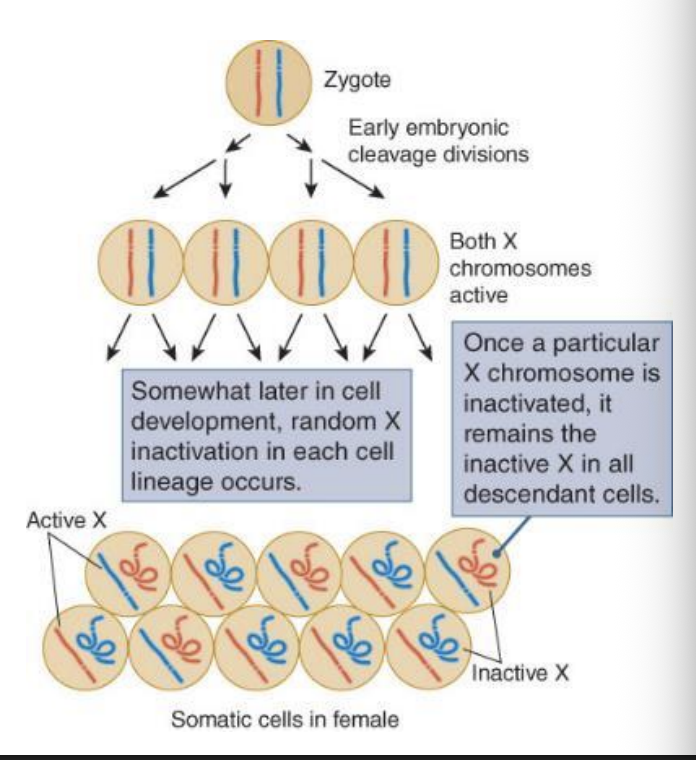
Mary Lyons (1961) proposed that the Barr body was actually an inactivated X chromosomes
She proposed that in female cells, one of the 2X chromosomes becomes randomly activated
Occurs early in embryonic development
Inactivation is a completely random process that happens separately in individual cells during embryonic development
One cell inactivates paternal X, while the cell next to it inactivates maternal X instead
All cells descended from each of these original cells will maintain the same pattern of X-inactivation
x inactivation (math)
explains dosage compensation
follows (N-1) rule N = total number of x chromosomes
indirect evidence for this hypothesis comes from sex chromosome syndromes
Why does X-inactivation not affect syndromes such as Turner or Klinefelter?
chromosome inactivation not in early staged of development for cells destined for gonadal tissue
not all x chromosomes forming barr bodies are inactivated (15% escape)
excessive expression of certain x linked genes might still occur at critical times during development despite apparent inactivation of superfluous x chromosomes
Mosaicism in Calico Cats
Calico and Tortoiseshell cats illustrate the Lyons Hypothesis
X-linked coat color patterns do not occur in male cats because they are hemizygous for only one X-linked coat color allele. Thus, Calico cats are exclusively female (unless they have Klinefelters Syndrome)
White patches are due to another gene

Anhidrotic Ectodermal Dysplasia
anhidrotic ectodermal dysplasia is caused by a mutation in an X linked gene that causes the inability to make sweat glands
The pink patches on this woman’s skin show this condition while the rest of her skin is normal
red-green color blindness
hemizygous males are fully color blind in all retinal cells
hetero females display mosaic retinas
have patches of defective color perception and surrounding areas with normal color perception
Random inactivation of one or the other Xchromosome early in the development of heterozygous females has led to these phenotypes

most direct evidence of lyon
comes from studies of gene expression in clones of human fibroblast cells
Tested the theory that X inactivation is random and occurs early in development, and thereafter all progeny cells have the same X chromosome inactivation as their progenitor
G6PD
Enzyme Glucose-6-phosphate dehydrogenase
Enzyme involved in normal processing of carbohydrates and protects red blood cells from damage and premature destruction
Synthesis of G6PD enzyme controlled by X-linked gene
Numerous mutant alleles of this gene exist, their gene products can be differentiated from wild type by electrophoresis
Fibroblast taken from heterozygous females for different allelic forms and cultured in vivo for clones •
Isolated two types of clones, each with only one electrophoretic form of G6PD in equal proportions
Thus, all the cells in that isolated clone will express either one allele or the other – but not both
Experiment with G6PD mutants isolated from heterozygous women provides strong support of Lyon hypothesis • Random perman
major control unit for x inactivation
A region (1 Mb) of the mammalian X chromosome
x inactivation center, Xic
genetic expression occurs only on the X chromosome that is inactivate, sole gene expressed on an inactivated X
Xic is located near the centromere
contains several putative regulatory units and four genes
one Xic gene, x-inactive specific transcript (XIST), encodes for structural RNA (not protein) that is a long noncoding RNA (IncRNA) critical for X inactivation
functions by essentially coating the inactivated X
Tsix anf XIte
play important roles in x chromosome inactivation, two noncoding genes
3d changes to the structure of inactivated x that. excludes RNAP 2 from binding
two results:
dosage compensation and mosiacism
imprinting
When these chromosomes are silenced, a memory is created that keeps the same homolog inactivated (paternal or maternal chromosome) following chromosome replications. This parent-of-origin-specific manner that maintains one homolog but not the other
mechanism of x inactivation: XIC and XIST

what is the counting mechanism
researchers suggest X chromosomes must first pair briefly and align at their XIC loci as a mechanism for counting the number priot to X
tested counting mechanism
(b) Deleted the Tsix gene contained in the Xic locus, blocked X-X pairing resulting in chaotic inactivation of 0, 1, or 2X chromosomes
(c) Added copies of non-X engineered chromosomes containing multiple Tsix or Xite transgenes, causing blocking of X-X pairing and prevented X inactivation
Sex Determination by Ratio of X Chromosomes to Sets of Autosomes
In some organisms, the Y chromosome does not play a role in sex determination
Drosophila melanogaster: contains a Y, but does not play a role
Caenorhabditis elegans: lacks a Y chromosome all together
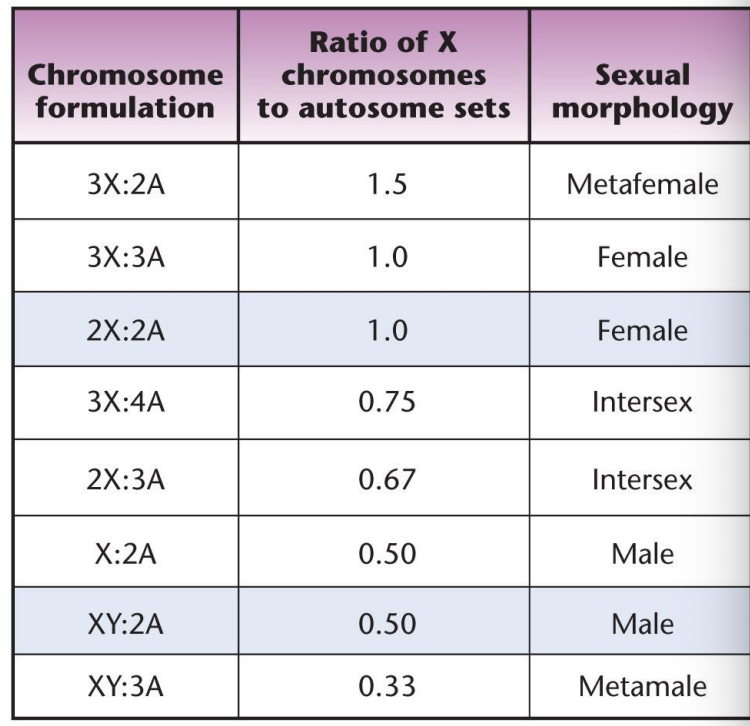
In both cases, the critical factor is the ratio of X chromosome to the number of sets of autosomes (X:A)
Studies examining nondisjunction of the X chromosome established the sex ratios of X chromosomes to autosomes in Drosophila
result is production of two types of abnormal gametes
one containing an extra chromosome (N+1)
one of which lacks a chromosome (n-1)
fertilization with a haploid gamete results in (2n+1) or (2n-1)
It was found that XXY are normal females, XO flies are sterile males • Presence of the Y in XXY flies did not not cause maleness • Absence of the Y in XO flies did not produce femaleness
conclusion
Y chromosome in Drosophila lacks male-determining factors, but since XO males are sterile, it does contain genetic information essential to male fertility
sex determination by ratio of x chromosomes to sets of autosomes
Normal females (2X:2A)
Triploid females (3X:3A)
A threshold for maleness is reached with the X:A ratio is 1:2(X:2A), but the presence of an additional X (XX:2A) alters the balance and results in female differentiation
This mode of inheritance is called the genetic balance theory
sxl
master switch gene
controls four autosomal genes
induces female differentiation during sex determination
mutations in genes reduce the increased expression of x-linked genes in males - lethality
dosage compensation in drosophila
females have two copies of x linked genes
x inactivation not observed in drosophila
male x linked genes transcribed at twice the rate of females
Dosage compensation in Other Animals
For unknown reasons, the presence of sex chromosomes does not always produce problems of gene dosage, and dosage compensation of X-linked genes is not universal
animals who do not exhibit dosage comp
Butterflies and moths • Birds • Some fish • Duck-billed platypus
c. elegans (major model org in development and neurobio)
nematode worm Caenorhabditis elegans has two sexual phenotypes
hermaphrodite-have both testes and ovaries
males only have testes
during larval developmentof hermaphrodites, testes form that produce sperm, which is stored
Ovaries are produced but oogenesis does not occur until the adult stage is reached
The eggs that are produced are fertilized by the stored sperm in a process of selffertilization
sex ratio of c elegans
Vast majority of organisms resulting from self-fertilization are hermaphrodites
Less than 1% are male
Male reproduction with herm produce 50/50 male and herm offspring
Genetic signals that determine maleness are located on both X chromosome and autosomes
C. elegans lacks a Y chromosome altogether: herm have XX and males have XO
Ratio of 1.0 (2X:2A) results in hermaphrodites
Ratio of 0.5 (X:2A) results in males

temperature dependent sex determination (TSD)
Controls sex determination in reptiles
Three different patterns of temperature sex determination in reptiles
All crocodiles, most turtles, and some lizards: incubation temperature of eggs during embryonic development determines sex
case 1
lower temp yields 100% females, high temp yields 100% males

case 2
lower temp yiel 100% male, high temp yield 100% females

case 3
low and high temp yield 100% female, intermediate temp yield various proportions of males
seen in various species of croc, turtles, lizards
pivotal temp range is fairly narrow from 5 to 1 celsuis

What are the metabolic or physiological parameters affected by temperature that lead to the differentiation of one sex or the other?
One likelihood is steroids (mainly estrogens) or enzymes involved in their synthesis
Temperature affects estrogens, androgens, and inhibitors of these enzymes and controls sexual differentiation of ovaries and testes
CIRBP
First gene linked to TSD was CIRBP (cold-inducible RNA-binding protein; 2016) identified in snapping turtles
Temperature shift (MT->FT) resulted in increased expression of CIRBP w/in 24 hours, followed by activation of several genes involved in ovary development with subsequent repression of genes involved in testis development
australian lizards
can be determined by both sex chromosomes and temperature at which eggs are incuated
female heterogametic system (ZW)/male homogametic system (ZZ)
20% of these individuals in the wild can undergo sex reversal at elevated temperatures (produce zz females)
normal males mated to sex reversed females produce offsoring whose sex is determined solely by temperature