Arousal in Sport
 Call Kai
 Learn
 Practice Test
 Spaced Repetition
 Match
 Flashcards
 Knowt Play
1/11

There's no tags or description
Looks like no tags are added yet.
12 Terms
What is the defenition of arousal?
A state of mental and physical preparedness for action
What 2 types of symptoms for arousal are there?
Physiological (somatic) → e.g. sweating/ increased HR/ butterfly’s/ increased adrenaline.
Phsycological (cognitive) → e.g. negative thoughts/ reduced concentration/ increased anxiety.
What are the differences between Introverts/ Extroverts when refering to arousal?
Introverts have high levels of intrinsic arousal so they seek low arousal situations.
Extroverts low levels of intrinsic arousal so they seek high arousal situations.
What is the Inverted U Theory?
The theory where a performer’s arousal level dictates the quality of their performance. They need to be at the optimum level of arousal because too little will decrease performance and too high will also decrease performance.

What is the difference in arousal levels for an introvert/ extrovert?
The introverts optimal arousal level is much less than the extroverts and this also means that the extroverts are less likely to become overly aroused and anxious when in high arousal situations.
(This can usually dictate sport/ position/ role of the performer)

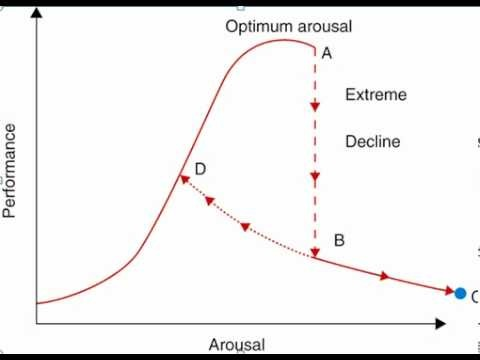
What is the Catastrophe Theory?
The sudden decline in performance as a result of over-arousal.
How does Catastrophe theory work?
A - Performer reaches optimal level of arousal. High cognitive arousal but low somatic arousal.
B - Performer has sudden reduction in performance. High cognitive and somatic arousal.
C - Possible that performance will continue to decrease.
D - Performer gradually regains control as arousal levels decrease
What is Choking?
Catastrophic drop in performance.
What is Hull’s Drive Theory?
The likelihood of the performer producing their dominant response increases as arousal increases
(Higher arousal = better performance)

What is a Dominant Response?
The behaviour most likely to happen.
What does the Drive Theory describe Performance as?
Habit Strength x Drive
(P = H x D)
What are the Limitations of Drive Theory?
Doesn’t account for any mistakes by any level of performer
Dominant response of a lower skilled performer may be the “wrong“ response