OCHEM 1 Mechanisms
 Call Kai
 Learn
 Practice Test
 Spaced Repetition
 Match
 Flashcards
 Knowt Play
1/67

There's no tags or description
Looks like no tags are added yet.
68 Terms

SN1 Reaction
A two-step mechanism that involves a carbocation intermediate. Warm and tertiary.

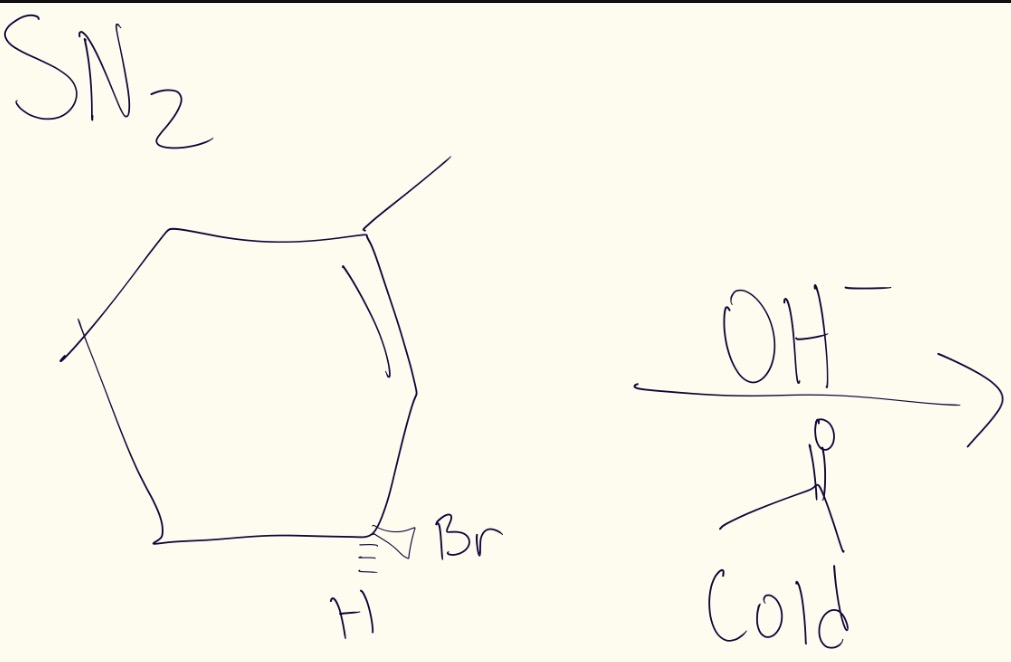
SN2 Reaction
A one-step mechanism that doesn't involve an intermediate. Switches stereochemistry. Cold and primary.

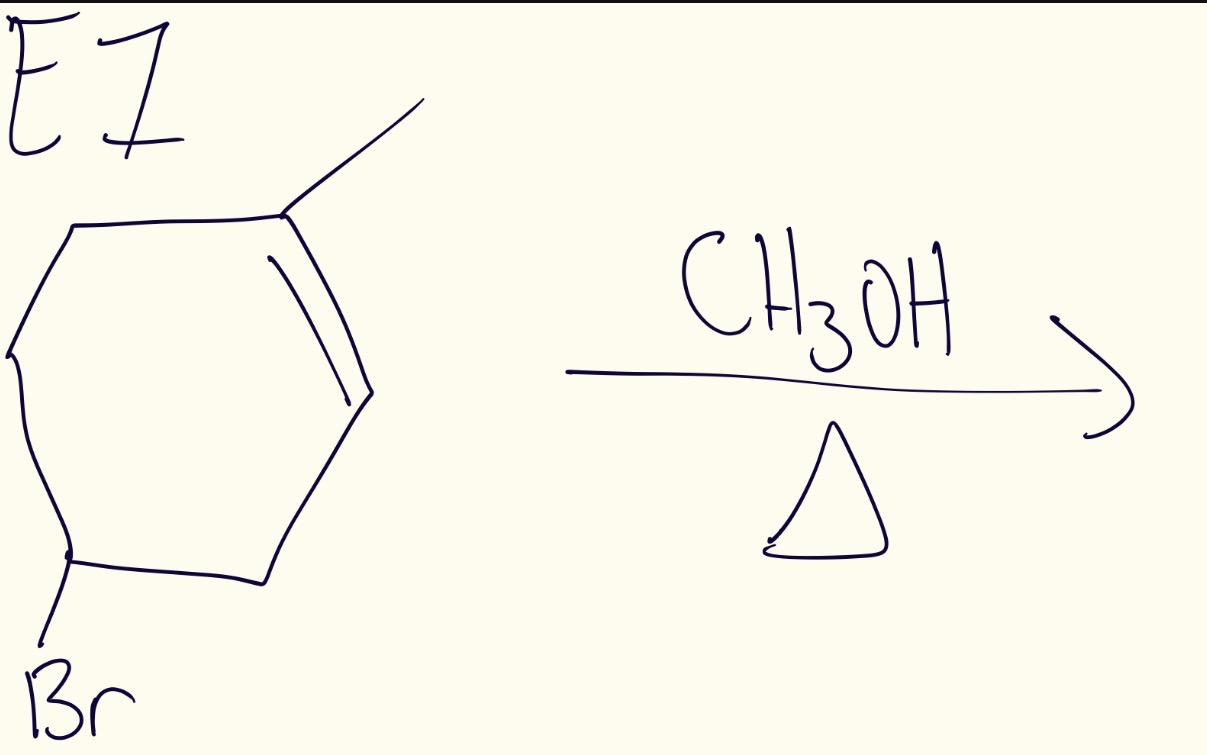
E1 Reaction
Lots of heat. Polar, protic solvents.


E2 Reaction
A one-step concerted mechanism where a base is stealing a hydrogen and the leaving group is breaking a bond. Need anti-coplanar H.


Hydrohalogenation Alkene
Regioselective (Mark).


Hydrohalogenation Alkyne
Forms an alkene, then forms an alkane.


Bromination Alkene
hv or NBS, avoid double bond.


Hydrohalogenation Alcohol
Secondary or tertiary. HBr acidic or PBr3/5.


Hydrogenation Alkene/Alkyne (Reduction)
Metal catalyst, breaks DB. Solvent usually an alcohol or alkane. Syn addition. Wilkinson catalyst.


Addition Alkene
DB attacks electrophile. Mark's rule (rich get richer).


Halogenation Followed by Water
Halohydrins. Anti addition of OH and X.


Hydrohalogenation Alkene in Peroxide
Regioselective (anti-Mark). Forms free radicals.


Hydration - Concentrated H2SO4 then Water+Heat
DB takes H from H2SO4. O bonds to carbocation. H2O removes HSO4 forming H2O+. Water steals an H, OH. Follows Mark addition.


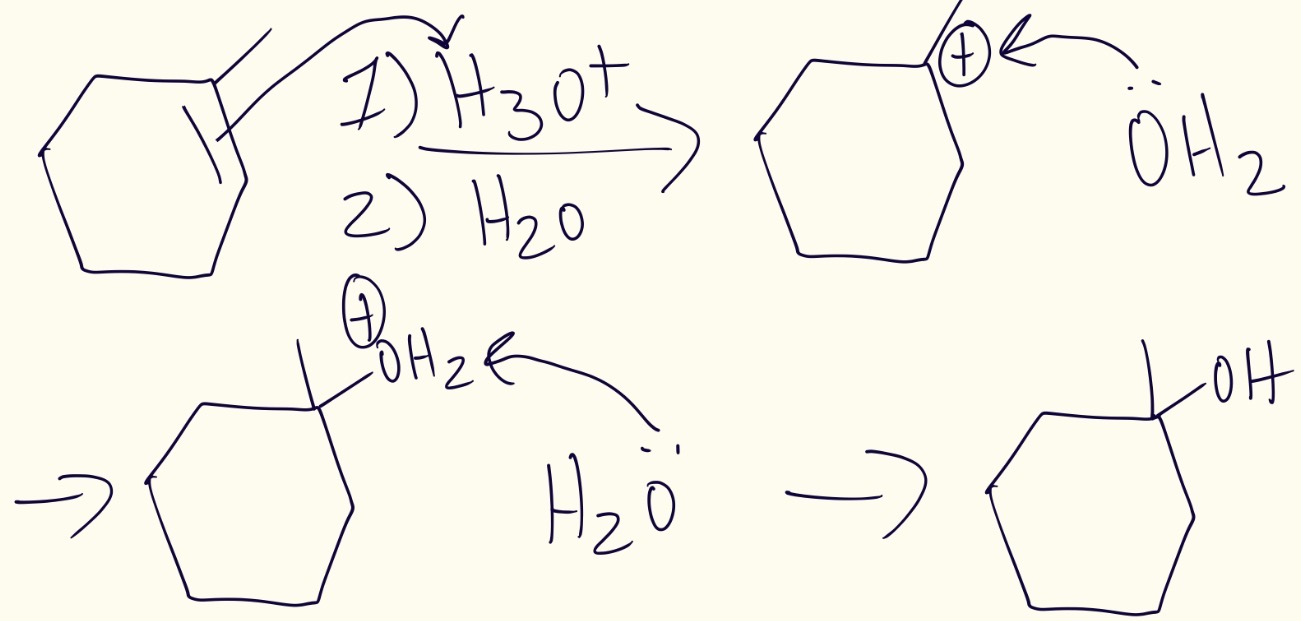
Hydration with Water in Acidic Conditions
DB takes H from H3O+, carbocation forms H2O+. Water makes it OH

Oxymercuration - Demercuration Alchohol
Hg(OAc)2, H2O follows Mark and Anti-addition. 3-membered ring with Hg. NaBH4 forms H and OH anti, no mechanism.


Oxymercuration - Demercuration Ether
Hg(OAc)2 with ROH instead of water. 3-membered ring. Hg is replaced with H; ROH becomes RO. Anti + Mark-addition.


Hydroboration
Anti-Mark and Syn addition. BH3*THF, then H2O2 under basic conditions. 4-membered rings. BH2 is replaced with OH. Oxidative cleavage to finish; we don't know the mechanism.


Carbene Additions (C..--) to Alkene
Make cyclopropanes. Very dangerous and hard to perform.


Simmons - Smith Reaction
Make cyclopropanes with a carbenoid intermediate. ICH2ZnI reagent. Not as dangerous, no extending chain always a cyclopropane.


Alpha Elimination of Alkenes
Make cyclopropane by loss of H&X from CHX3. Happens in KOH,H2O. Cis/trans of double bond is retained.


Epoxidation Reactions of Alkenes
PhCO3H in CCl4 forms PhCO2H and a C-O-C ring. Maintain cis or trans. Then under acidic conditions, it will then form dialcohols (anti).


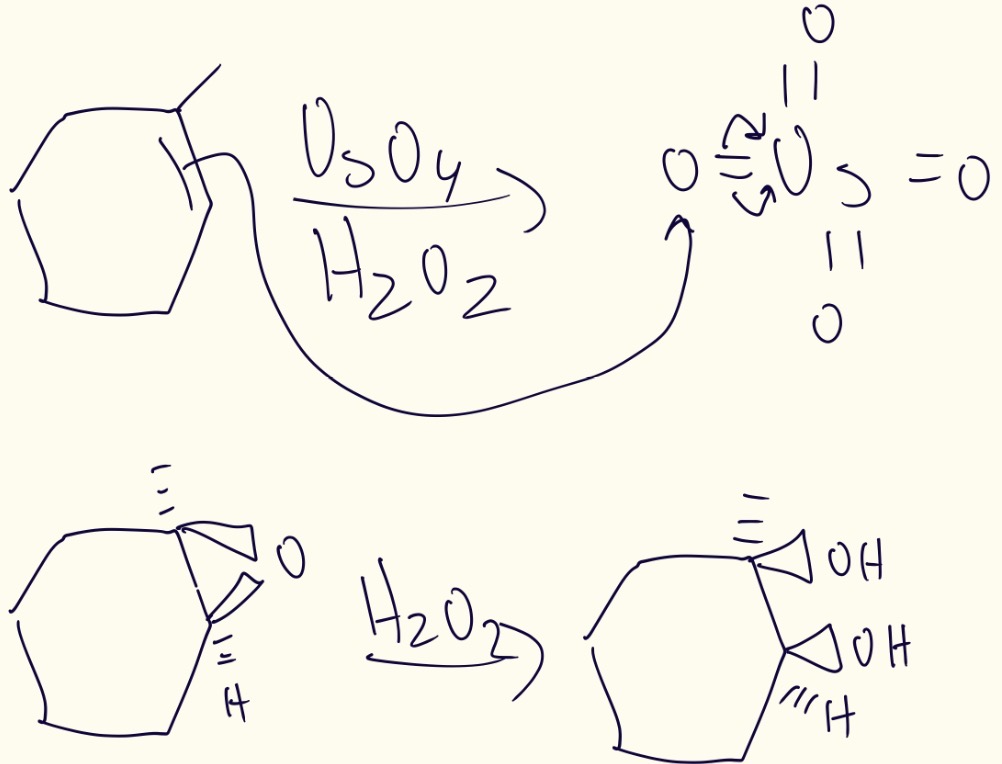
Epoxidation Using OsO4 then H2O2
Yields syn instead of anti. Very expensive and highly toxic/corrosive. Color teset.

Oxidative Cleavage
Concentrated KMnO4 in warm, acidic conditions. Ketones remain, aldehydes form carboxylic acids.

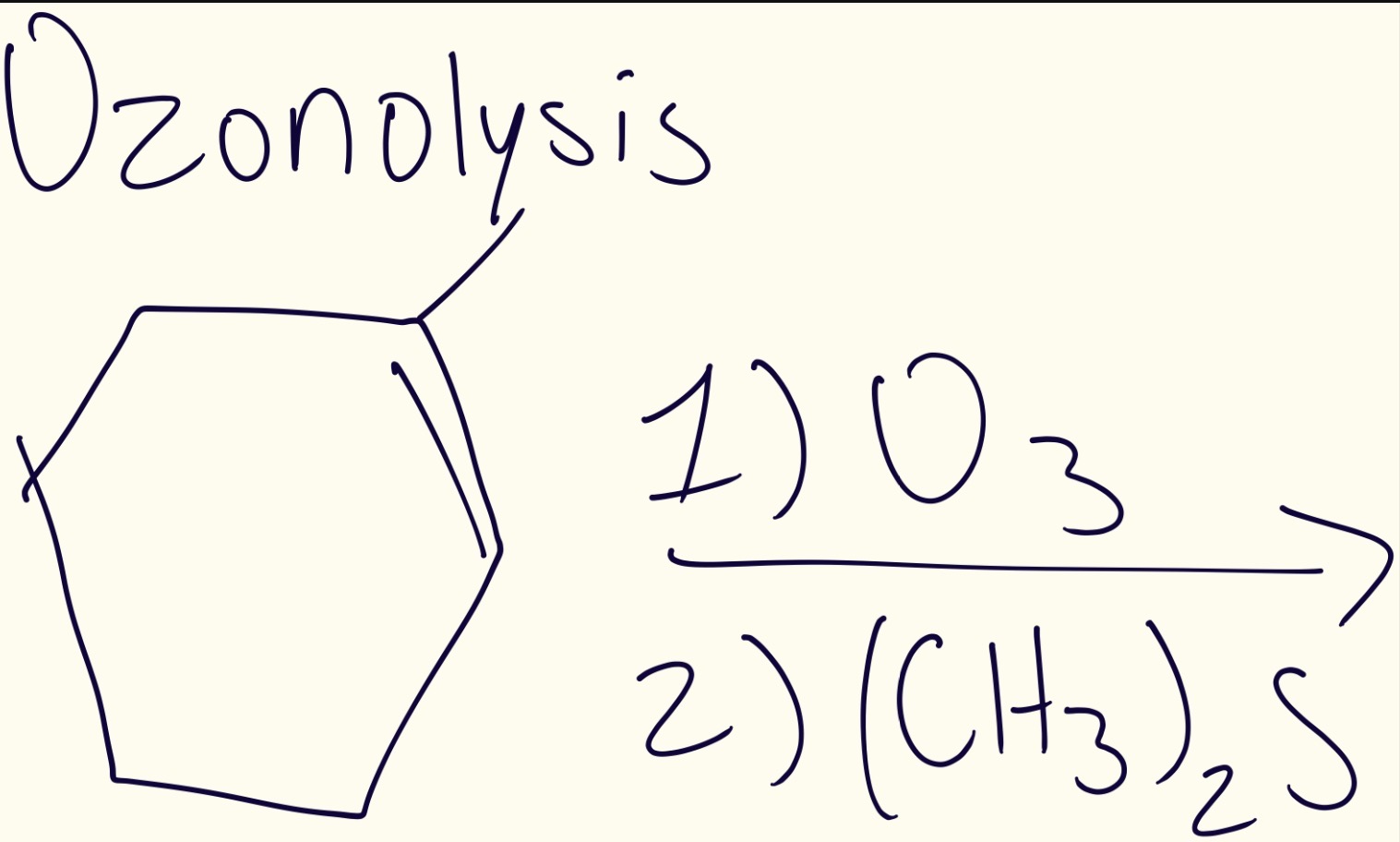
Ozonolysis.
O3 forms a 5-membered ring with 2 carbons. Forms 2 ketones, aldehydes, or a mixture of the two.


Olefin Metathesis - Schrock Catalyst
Changes end groups of a double bond =CR2. Reversible reaction; form CH2=CH2 to drive the forward reaction. Uses Molybdenum catalyst. Opens rings in a repeating manner.


Olefin Metathesis - Grubbs Catalyst - Connecting
Changes end groups of a double bond =CR2. Reversible reaction; form CH2=CH2 to drive the forward reaction. Uses Ruthenium catalyst. Connects two ends in different manners.


Olefin Metathesis - Grubbs Catalyst - Ring
Changes end groups of a double bond =CR2. Reversible reaction; form CH2=CH2 to drive the forward reaction. Uses Ruthenium catalyst. Closes a straight chain to form a cyclic compound.


Polymerization - Cationic
Repeating chain of molecules. Forms cations as an intermediate. BF3 in water is a good catalyst (BF3OH2).


Polymerization - Anionic
Repeating chain of molecules. Forms anions as an intermediate. CCN(-) helps to stabilize the process.


Polymerization - Radical
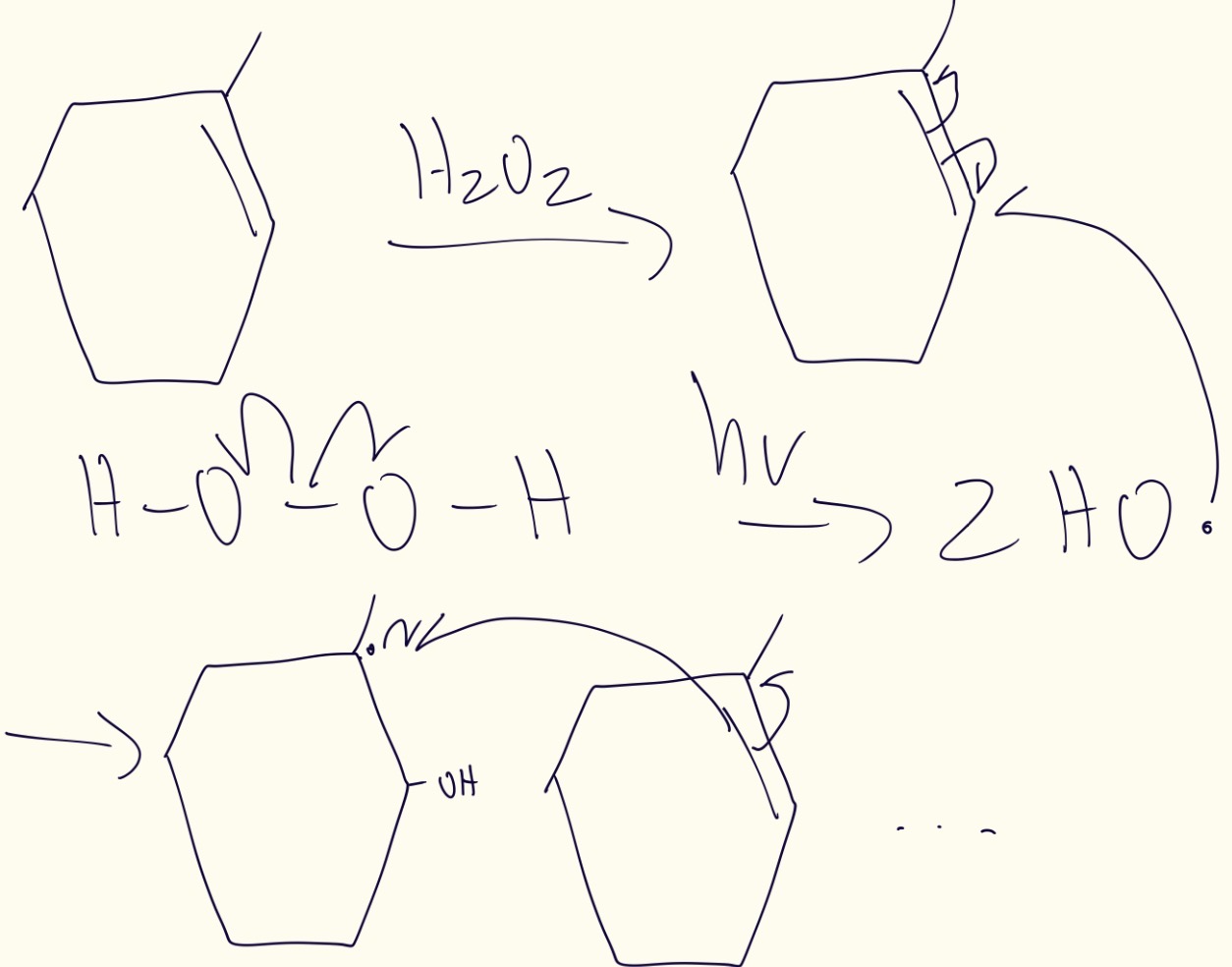
Repeating chain of molecules. Forms radicals as an intermediate. Uses H2O2 to form 2 OH*. Uses DB to continue the chain.

Alkyne + nBuLi
Replaces a terminal H with Li and forms butane. Equilibrium reaction, so check pKa.

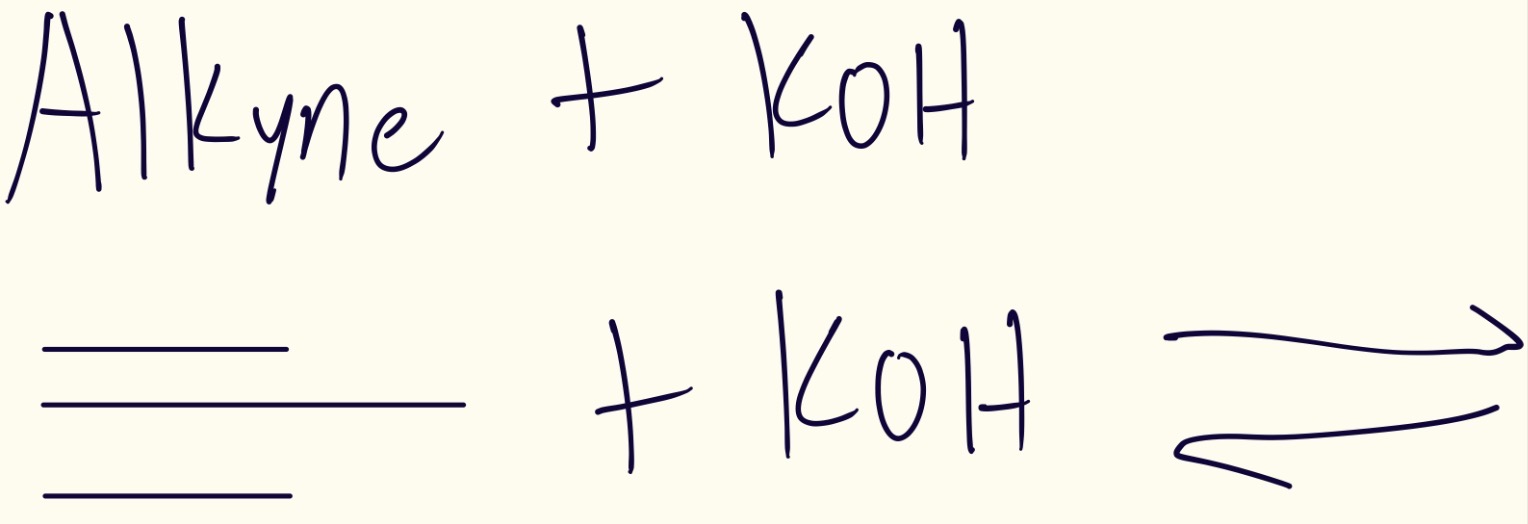
Alkyne + KOH
Replaces a terminal H with K and forms H2O. Equilibrium reaction, so check pKa.


Alkyne Reacts With NaNH2 Followed by CH3Br
Na+ NH2-. NH2- grabs the terminal H from the alkyne; then NaBr forms, and CH3- binds to the terminal carbocation, extending the chain.


Alkyne Reacts With NaNH2 Followed by Aldehyde Followed by H3O+
Na+ NH2-. NH2- grabs the terminal H from the alkyne; then the aldehyde binds to the terminal carbocation, immediately having a back-side attack, breaking the DB. Then the O- steals an H from H3O+, forming an alcohol.

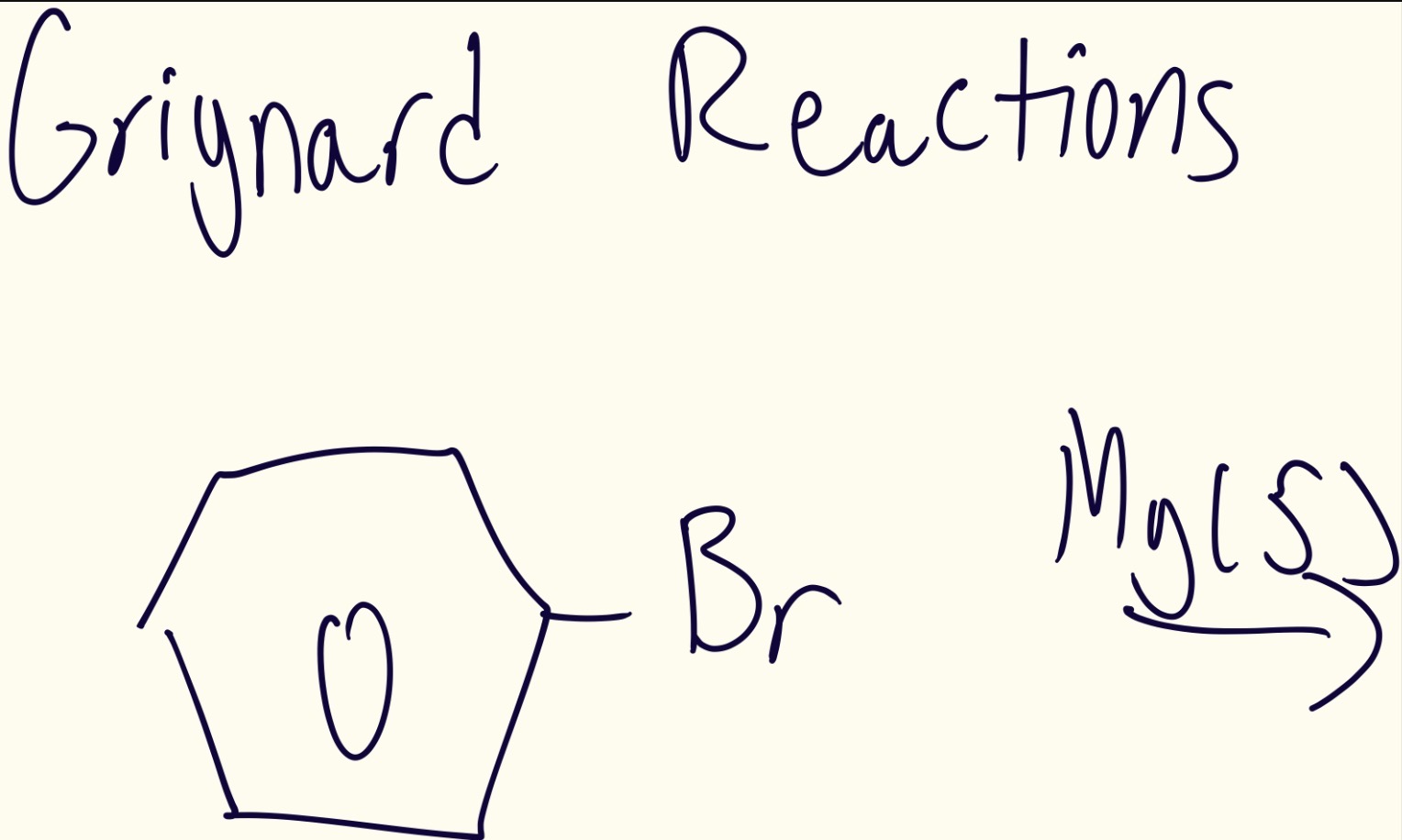
Organometallic Reactions - Grignard
RX + Mg → RMgX with diethyl ether as a solvent. Primary or secondary, small R groups. Aprotic solvent is necessary.


Organometallic Reaction - Ketone
Form tertiary alcohols. Adds to carbonyl carbon.


Organometallic Reaction - Aldehyde
Form secondary alcohols.

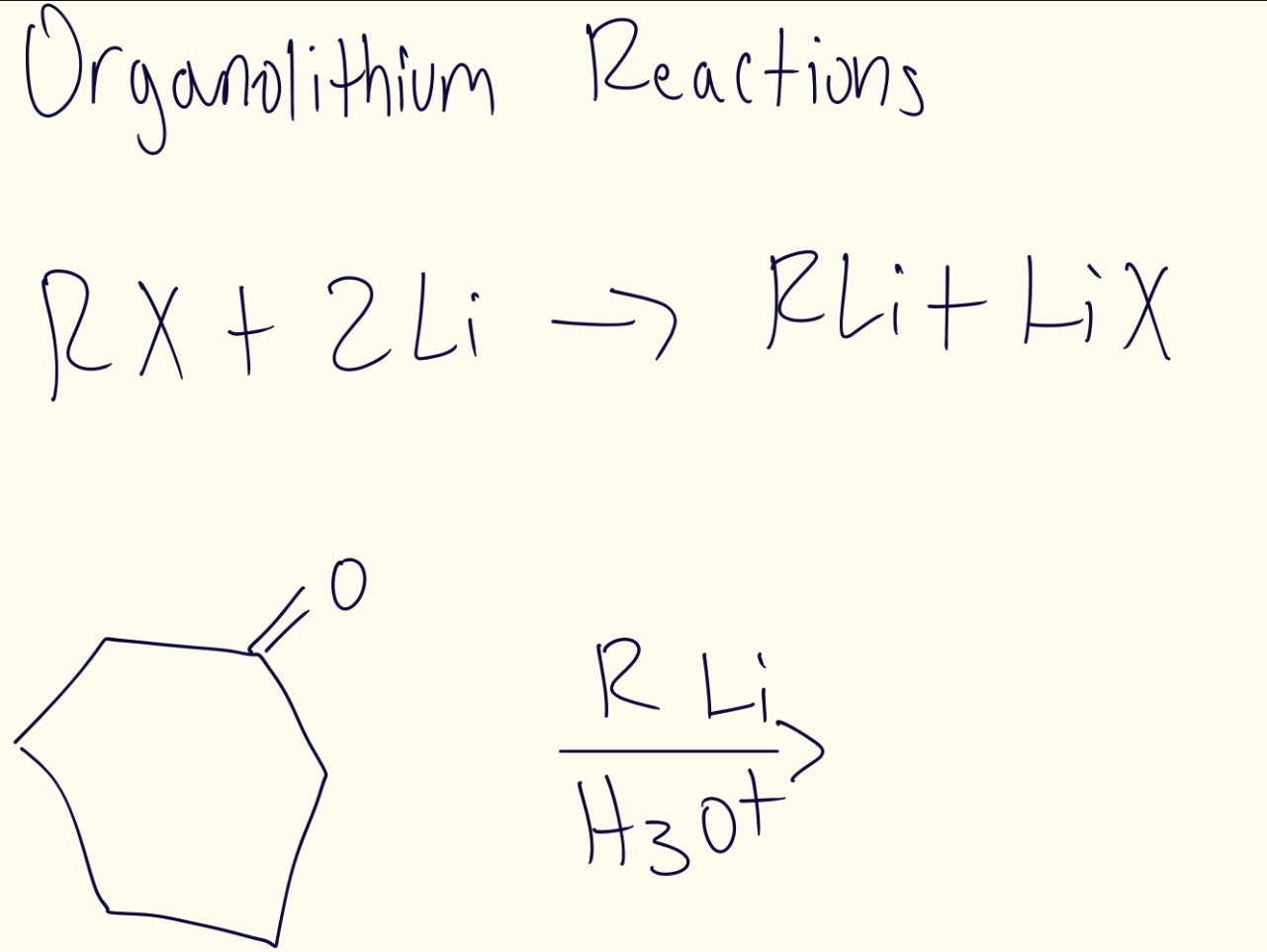
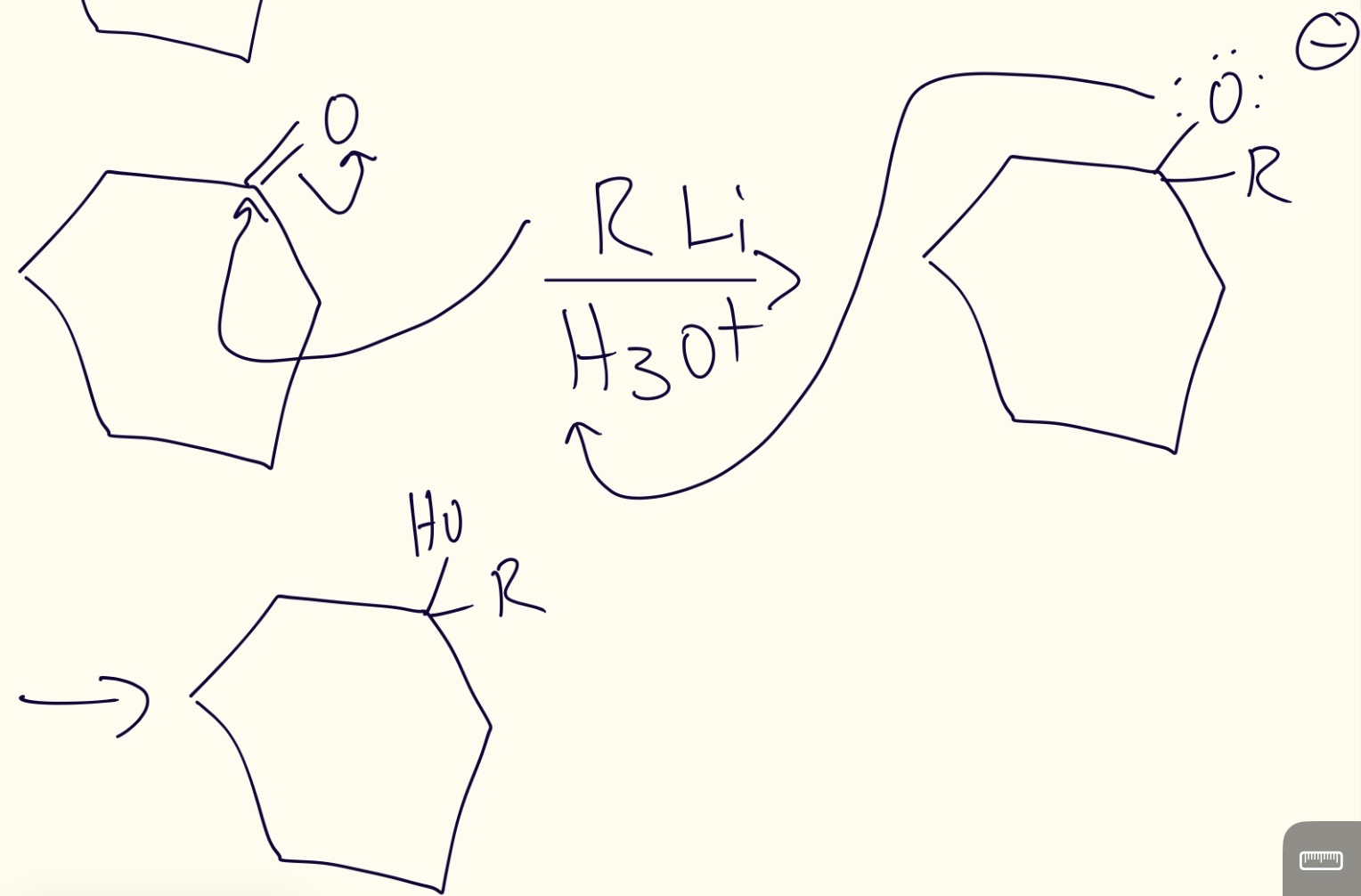
Organolithium Reactions
RX + 2Li → RLi + LiX. RedOx reaction, acts like Grignard but no ketone or aldehyde.
Gilman Reagents

Alcohol Reacts With HX
SN1 reaction ROH—> RX + H2O for secondary or tertiary. Primary alcohols need H2SO4 to react, Cl doesn’t work. OTs also works for primary.


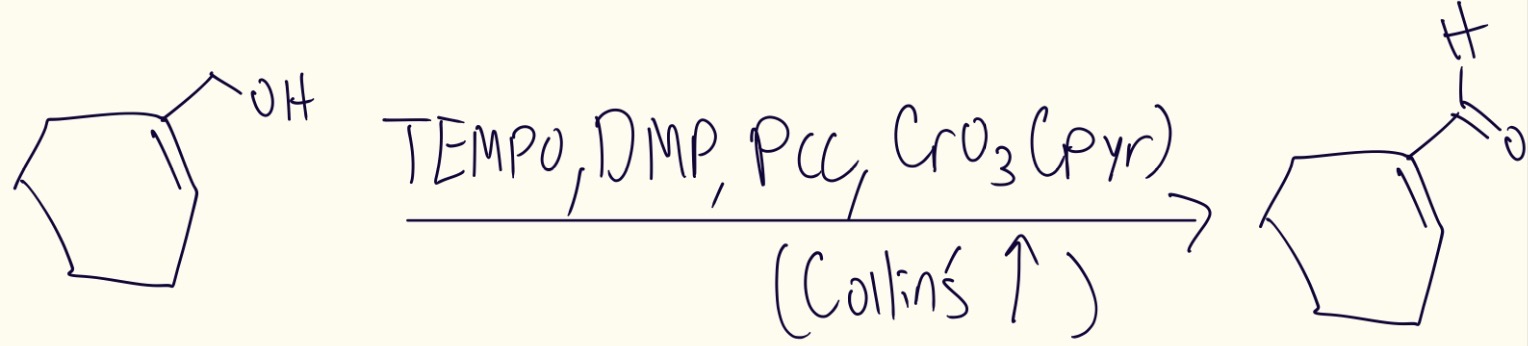
Alcohol Oxidation - Primary to Aldehyde
TEMPO, Swern ((COCL)2 in DMSO at -60 C, needs TEA), DMP, PCC, Collin’s reagent (CrO3 and pyridine)

Alcohol Oxidation - Primary to Acid
TEMPO (xs NaOCl), KMnO4, Na2Cr2O7, H2SO4, Jone’s Reagent (Chromic acid in acetone)


Alcohol Oxidation - Secondary to Ketone
NaOCl, Swern ((COCL)2 in DMSO at -60 C, needs TEA), DMP, Na2Cr2O7 (H+), PCC, Jone’s Reagent (Chromic acid in acetone), Collin’s reagent (CrO3 and pyridine)


Chromic Acid Test
Na2Cr2O7 in H2SOr, or CrO3 in dilute H2SO4. Acids and Ketones formed. Orange Cr+6 to green Cr+4 or blue Cr+3.


Alcohol Oxidation - PCC
PCC in CH2Cl2 oxidizes primary and secondary alcohols.


Alcohol Oxidation - Swern
(COCl)2 in DMSO solvent at -60 C. Normally run in CH2Cl2 solvent with TEA.


Alcohol Oxidation - DMP
Neutral conditions and room temperature. Primary to aldehyde, secondary to ketone.


Alcohol Oxidation - TEMPO
Stable free radical. 1 eq NaOCl forms an aldehyde; excess forms carboxylic acids. Secondary alcohols form ketones.


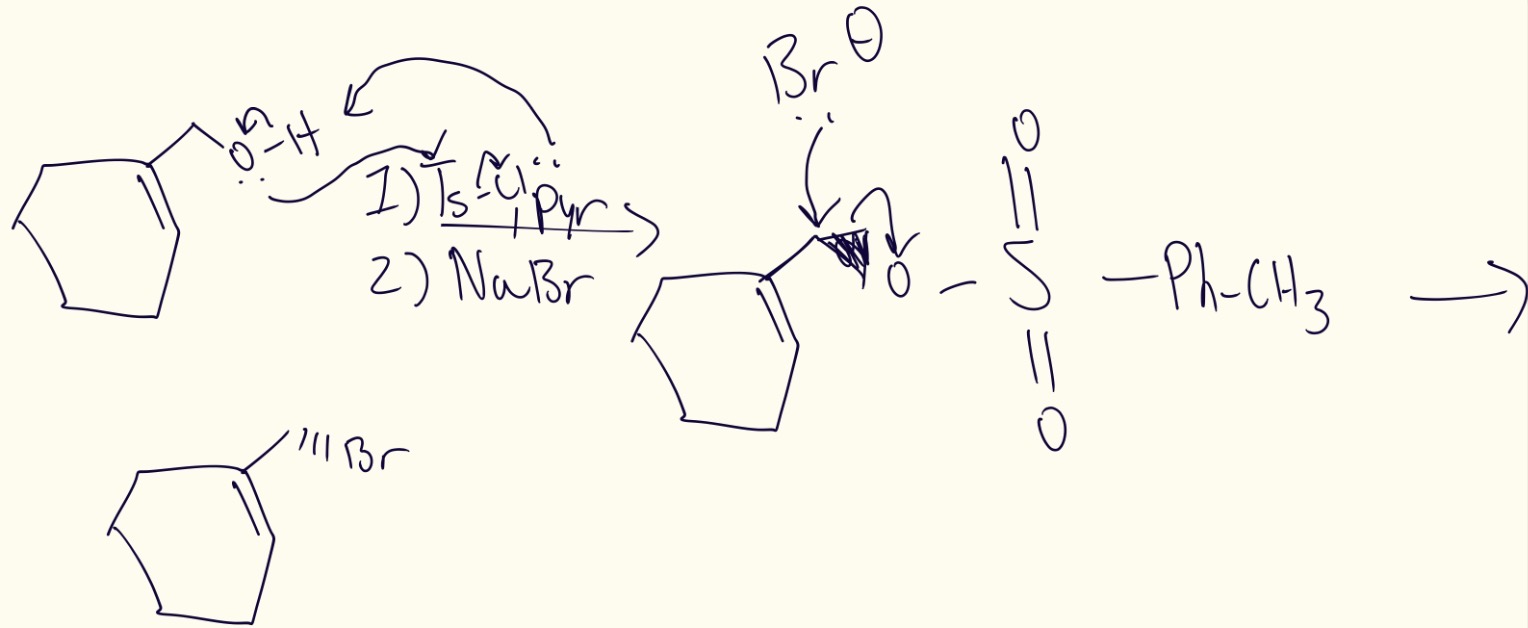
Alcohol to Alkyl Halide
ROH + OTs (NaX) —> RX. Very stable due to resonance; the last step is SN2

Lucas Test
SN1 mechanism that allows us to distinguish between types of alcohols (time-based). ROH reacts with ZnCl2 in HCl. ROH is clear; the solution turns cloudy as RX is formed.
Phosphorous Halides
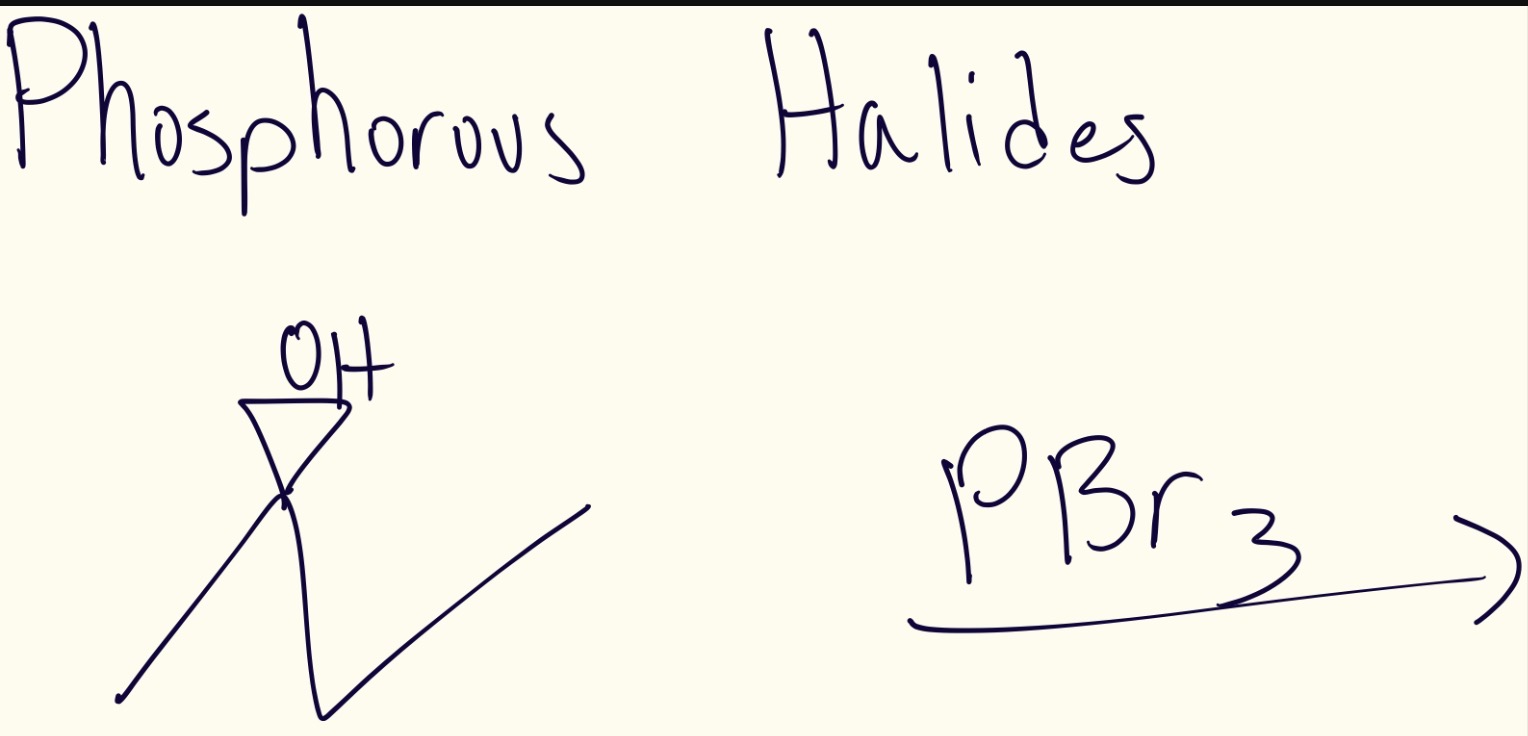
SN2 mechanism where ROH reacts with PBr3 to form RBr. PCl3 and PCl5 also work, but produce poor yields. PI3 must be made 2P + 3I2 —> 2PI3.

Thionyl Chloride
ROH reacts with SOCl2 —> RCl +SO2 (g) + HCl (g). Forms a tight ion pair; the best way to make RCl from primary or secondary alcohols.
Dehydration
An E1 mechanism where ROH reacts with H3O+ and a lot of heat. Favors Zaitsev, as water is a small base.
Bimolecular Dehydration
SN2 mechanism where 2 (CH3/CH2CH3)OH reacts with H3O+ and a lot of heat to form dimethyl or diethyl ether. An alcohol attacks another carbon. 140 °C for ether, 180 °C for elimination.
Phosphorous Oxychloride
ROH reacts with POCl3 in pyr to undergo E2 without the presence of an acid.
Fischer Esterification
RCO2H reacts in equilibrium with R’OH in H3O+ to form RCO2R’ + H2O.

Alcohol Reactions - Acid Halides
RX reacts with an alcohol to form ROR’ + HX


Alcohol Reactions - Acid Anhydrides
A ketone is broken by an alcohol, ROR’ + R”OH, leading to the formation of ROR” + R’OOH

Alcohol Reactions - Inorganic Esters
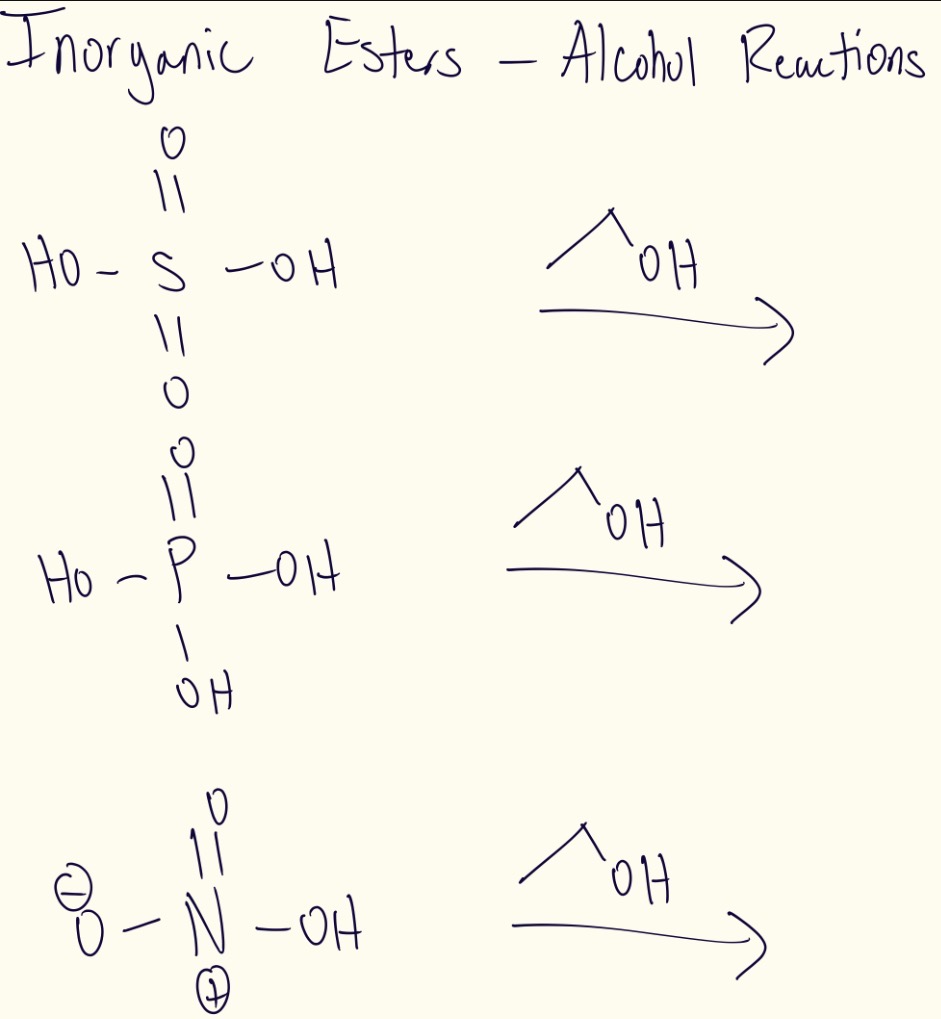
ROH reacts with: H2SO4, H3PO4, or HNO3 to form ROHSO4, ROH2PO4, or RONO3 +H2O. Sulfates are good leaving groups; phosphates are found in DNA, RNA, and ATP, and nitrates are used in explosives and pharmaceuticals.

Williamson Ether Synthesis
2 step process - make alkoxide, then SN2 makes the ether. 2 ROH + 2 Na forms 2 RONa and H2 gas (RedOx). Then RONa + R’X forms ROR’ + NaX. Primary R’X is ideal over 2’.
Pinacol Rearrangement
A vicinal diol reacts with H2SO4 and heat to form a ketone. Form H2O+ as a leaving group, then a methyl shifts to the tertiary carbocation. Make sure H3O+ is recycled as a catalyst.
Periodic Acid Cleavage of Vicinal Diols
An alternative method of Ozonolysis. It allows us to determine the location of double bonds. A two step process with OsO4 (H2O2) to make vicinal diols, the HIO4 cleaves to make ketones and aldehydes.