FINAL EXAM VCE ENVIRONMENTAL SCIENCE
 Call Kai
 Learn
Learn Practice Test
 Spaced Repetition
 Match
Match Flashcards
 Knowt Play
1/190

There's no tags or description
Looks like no tags are added yet.
Name | Mastery | Learn | Test | Matching | Spaced | Call with Kai | Chat |
|---|
No analytics yet
Send a link to your students to track their progress
191 Terms
biodiversity (biological diversity)
the variability among living organisms on Earth
genetic diversity
genetic variation between individuals in the population
**The GREATER the genetic diversity within a species, the greater the chance that the species will survive in the long term and not become extinct.**
ecosystem diversity
variation between habitats, communities and processes in a region
*ecosystems are dynamic meaning that the interactions between organisms and their environment change over time*
Ecosystem services
are renewable processes that play a vital role in human survival and quality of life
Resilience is the capacity of an ecosystem (or population) to restore its structure and function following natural or human-induced stress.

provisioning services
These provide resources such as clean water, food, fuel, fibre and medicines to humans
eg. potable water; food; fuel; fibre; and pharmaceuticals

regulating services
provides mechanisms to regulate an ecosystem and keep it in balance - eg. control of climate and disease; pollination; and water purification
supporting services
ecosystems themselves could not be sustained without the natural processes such as nutrient cycling, that support many aspects of an ecosystem
examples include: cycling of nutrients; soil formation; and photosynthesis
cultural services
Humans can also gain social and health benefits from the existence and maintenance of ecosystems and organisms -eg. aesthetic values; recreational benefits; and sense of place
mass extinction
event during which many species become extinct during a relatively short period of time
cretaceous - tertiary mass extinction
- 65 million yrs ago
- dinosaurs, birds, marine invertebrates
- impact of a huge asteroid and also a volcanic eruption at a sea level
species endemism
describes animals and plants that are native to one single geographical location
Why does endemism occur?
- movement being restricted by mountain ranges, habitat zones or other regional features.
- short-term environmental changes
- High number of endemic species is largely a result of its long period of separation from other continents (eg. Australia is isolated from other land masses)
diversity hotspots
areas with high amounts of endemic species
an area where native species and communities are well represented in an ecosystem and remain largely as a whole
short term environmental changes
*changes that occur quickly in an ecosystem and affect organisms immediately*
eg.
- volcanic eruptions
- fire
- natural disasters
CAUSES: population isolation, extinction or species vulnerability, competition for food and water, air/water pollution, habitat loss & gene loss
Medium term environmental changes
- El Niño - causes drought, competition, habitat loss, extinction
- drought
- long term flooding
Long term environmental changes
- tectonic plate movement (caused many species to become endemic, regions closer to the equator have higher biodiversity)
- evolution - causes natural selection, biological diversity, extinction
How/Why do scientists assess species?
- Scientists sample populations to assess species diversity → evaluate if they need conservation management
- The variety of sampling → depends on the species/habitat.
- Samples go into a monitoring program to assess change in biodiversity over a period of time/to evaluate the effectiveness of conservation management strategies.
Beneficence
states that researchers should have the welfare of the research participant as a goal of any research study
Quadrats
Sampling using quadrats is one of the most widely used means of obtaining quantitative information about the composition and structure of plant or animal communities

Importance of random sampling in quadrats
For results to be statistically valid - the plots should be randomly located within the study area, without bias
Disadvantages of quadrats
- *edge effects* can occur: the decision of whether a plant/species on the edge of a quadrat should be counted - can lead to overestimation
- CAN BE FIXED BY using different-shaped quadrats - using a circle shape quadrat can lead to less chance of overestimation
Mark-recapture method
technique to estimate the population size of live animals
- A sample of the population is captured, marked and released.
- The number of marked individuals within the second sample should be proportional to the number of marked individuals in the whole population.

Species diversity
The variety of species found on earth - measures species richness and the species abundance

Disadvantages of assessing species richness
- Does not include the genetic variation that may be present within the species
- Only represent a portion of ecological diversity
- Ranks all species equally (rare species are on the same level as a common or introduced species)
species richness
the number of different species present in an ecosystem
The more species present, the more diverse.
relative abundance (evenness)
measure of how similar the abundance of different species present in a particular region. The more species present, the more diverse
Endemism
Another way to evaluate biodiversity in an area is = Examining the degree of endemism of species present
- Endemism is the percentage of endemic species present in the area
Simpson's Index of Diversity
is a measure of diversity which takes into account the number of species richness, and abundance > as species richness and evenness increase, so diversity increases.

Risk
the probability of suffering harm due to an activity
hazard
potential for something to cause harm
Risk assessment
applies a logical approach to analyzing and interpreting data in order to predict and evaluate the potential adverse effect on the health of living things. Integrates toxicological data, human experience, exposure information, fate of a chemical and transportation data and statistics and probability
risk management
intelligent anticipation of events that could have harmful consequences, and the adoption of courses of action aimed at either stopping the feared event or minimizing their impact
ICUN Red List
Categorising species according to their conversation status provides a framework for setting priorities for allocating the limited resources available for conservation.

How do we determine conservation status?
- *changes in availability of suitable habitat:* the specificity of ecological conditions which a species can survive in
- *geographic distribution:* spatial distribution of a species (restricted to widespread)
- *population size:* the density or population of individuals within a local area
Habitat modification (threat)
results from a change in local environmental conditions where the native habitat is changed in some way from its original condition
- can be natural or human-made eg: volcanoes, floods, urbanisation, land clearing, logging
Habitat degradation (threat)
refers to a reduction in the quality of a habitat, means that the natural environment has been altered so dramatically that it no longer supports native animals and species
consequences of human threat - *Habitat loss and fragmentation*
causes barriers between the remaining isolated areas of suitable and possible habitats.
CONSEQUENCES:
- species reduced to several smaller populations > are more *prone to environmental changes & are at risk of possible inbreeding + outbreaks of diseases.*
- The size and shape of an area of remaining vegetation affects the site's conservation value and overall biodiversity.
consequences of human threat - over-exploitation
the result of human harvesting of food or the use of natural resources from forests, fisheries and wildlife above a sustainable level.
- higher human populations > more harvesting, hunting and catching.
*eg. harvesting of whales and the exploitation of species for precious commodities ie elephant tusks (ivory)*
CONSEQUENCES:
- ecosystems will not be able to regenerate in time, therefore decreasing biodiversity and population
- affects the ecosystem as the loss of a species will impact the food web
- vulnerable to disease and other changes
Inbreeding (threat)
breeding between individuals that are close genetic relatives
- usually caused by to small population size, which further reduces the gene pool
Consequences of inbreeding
- Inbreeding depression: inbreeding can reduce the survival rates and reproductive success of members in the population
Effects of inbreeding include:
- reduced fertility and birth rates
- reduced immune function, susceptibility to disease - - increased risk of genetic disorders and mutations.
Genetic swamping (threat)
populations that were once geographically isolated could come into contact, genes of *one species* dominate over the genes in the other species > reducing the genetic diversity in the native species
Loss of pollinators, dispersal agents, host species or symbionts (threat)
Biodiversity loss can lead to the removal of certain species that are critical for the survival of other organisms.
- Many species are in symbiotic relationships
EG: many plant species rely on other organisms to distribute their pollen and seeds in order to reproduce, loss of species will also lead to loss of plant species.
Bioaccumulation (threat)
is the progressive increase in the amount of a substance (pollutant) in an organism, which occurs because the rate of intake exceeds the rate at which the body can remove it.
Biomagnification (threat)
is the increasing concentration of a pollutant along a food chain through the different trophic levels.
- Organisms at higher trophic levels can be more greatly affected by a pollutant than those lower in the food chain.
Effects of climate change (threat)
- increasing global temperatures and frequency of extreme weather events.
- this affects biodiversity + alters ecosystem structure and function.
- severity of impacts depends on the capability of organisms to adapt to the climatic changes
- species are suited to particular temperature ranges and can both them and their habitat can be severely affected by a change
- cause sea level rises, affecting coastlines and submerging some islands - resulting in many species and populations becoming extinct
Disease (threat)
- The spread of disease can decrease biodiversity.
- Diseases tend to be species-specific, but if they mutate they can infect across the species barrier and this is an ever-present threat.
- Domesticated animal diseases can pass to native animals and have devastating effects on these populations.
- An ecosystem with lots of genetic variation is more resilient to the impacts of disease
Introduced/exotic species species (threats)
*Introduced (or exotic) species are species that have been introduced into a new region*
- They compete with indigenous species for niches and can cause extinction to native species
- Many introduced plants have become environmental weeds.
- In many places, exotic weeds are replacing native plants and eliminating native animal species that depend on the native plants for food and shelter.
fragmentation
where small patches of remnant vegetation remain in cleared areas - often small and isolated from each other → difficult and expensive to manage
Metapopulation
made up of all the local populations in each of the patches, they interact-individuals move between the populations. They can undergo large fluctuations as they are confronted with different environmental variations, but the overall metapopulation won't vary as much
advantages of wildlife corridors
- allow animals to move between places
- provide habitat for plants and animals
- provide avenues for possible recolonisation
- allow for the exchange of genes between subpopulations to reduce the impact of genetic drift and inbreeding.
disadvantages of wildlife corridors
- aid the spread of diseases, pests and weeds
- suppress genetic variation if the gene pool of the sub-population is swamped by the gene pool of the immigrants
- help the spread of fire
- costly to establish and maintain at the expense of other conservation methods that may be more effective
National parks
reserves intended to protect natural and scenic areas of national and international significance for scientific, educational and recreational use
Multi-Use management areas
provide the sustained production of water, timber, wildlife, pasture and recreation with the conservation of nature primarily towards the support of economic activities
- Reserves should be located in areas that will protect a regions biodiversity (individual species, communities, ecosystems and landscapes)
Translocation
plants/animals returned to an area from which they have been eliminated or where numbers are low
Reintroduction
plants/animals returned to an area that used to be part of their range, but where none of that species remains
Considerations for translocation/reintroduction
- They must be carefully researched to ensure they are effective and appropriate and ecological implications
- Many have failed worldwide → the threat that was responsible for the decline of the species weren't known or addressed before the reintroduction
- Translocated individuals' genetic makeup should be similar to the area's original population (may not be possible if og. population is extinct and some trial reintroductions may be needed to determine the success of the translocation)
Degraded ecosystem
*an ecosystem is lacking essential abiotic components that negatively affect the biological structure, and composition of functions*
- *caused by* effect of a natural or human-induced disturbance
- A suitable approach to revitalization of an ecosystem depends on the degree of degradation and species response to restoration
Habitat restoration
*The restoration of a habitat through human intervention*
- Habitat restoration requires an understanding of population genetics and ecological processes - disturbance, succession and fragmentation
- The goal of restoration is to restore it before it become degraded or create a new ecosystem
Erosion control
- A control measure can mean to plant trees/vegetation in areas of loose soils that are susceptible to water or wind erosion
- Species which have deep roots and are fast growing are often suitable
- Plants also ensure that water run-off creates channels that speed water flow and increase erosion
Convention on Biological Diversity (UN) (international)
Focused on: conservation of biodiversity and sustainable use of resources
- Fair and equitable sharing of benefits arising out of the utilization of genetic resources
- All countries in agreement MUST develop a plan for conservation
- Monitor the environment
- Provide assistance to developing countries
Eg. Australia's Strategy for Nature 2019-2030 aims to create mechanisms to identify, converse and manage biodiversity
IUCN Red List Of Threatened Species (international)
*International Union for Conservation of Nature*
- Provides information about species at risk of extinction (range, population size, habitat, ecology, use and/or trade, threats and conservation actions)
- Provide accurate information in order to inform, and create action for biodiversity conservation
- Categorises species to provide public, private and non-governmental organisations with information

World Heritage Convention (international)
- Protecting and conserving heritage sites for the future
- Aims to protect cultural heritage sites - eg. monuments, paintings
- Natural heritage - Protects geological, ecological, biological processes, habitats for biodiversity
- All nations are responsible for identifying, protecting and conservation of sites listed on the register
Australian protected sites - eg. Great Barrier Reef, south-west Tasmania
Convention on International Trade in Endangered Species (CITES) (international)
- Protects (endangered) species and genetic diversity - Aims to prevent exploitation in international trade
- Some forms of exploitation are illegal trading, poaching and smuggling of animal products such as ivory

Environment Protection and Biodiversity Conservation Act 1999 (domestic)
a streamlined process for biodiversity conservation and management of areas
- Each state is responsible for responsibly managing natural resources
Responsibilities include:
- Identification and monitoring of biodiversity
- Listing endangered species, habitats, marine and migratory species
- Preparation of recovery plans
- Identifying risks and threats and management plans
- Protecting commonwealth reserves (marine parks, national parks, World Heritage and RAMSAR wetlands)
VIC Flora and Fauna Guarantee Act (domestic)
- Ensures Victorian species survive, flourish and maintain the potential for evolutionary development.
- Provide management systems, controls and regulations for conservation
- Records data on Victorian species
VIC Biodiversity Strategy (domestic)
- Victorian legislation for the conservation of threatened and native species and communities and for the management of potentially threatening processes.
- Biodiversity conservation is based off several values and helps create the connection between people (community engagement) and nature
Anthropocentrism
Regards humankind as the central or most important element of existence.
Biocentrism
Based on the premise that all living things have the right to exist.
- all living things are equal
Ecocentrism
Recognises the ecosphere as being of central importance, and attempts to redress the impacts associated with anthropocentrism.
Technocentrism
Centred on technology and its ability to control and protect the environment, with environmental problems being seen as challenges to be solved using rational, scientific and technological means.
Conservation of biodiversity and ecological integrity
Maintenance of the abundance of different species living within a particular region, the genetic diversity in a population and the ability of an ecosystem to maintain its biotic and abiotic organisation and function in the face of changing environmental conditions, including a capacity for self-renewal.
Efficiency of resource use
Use of smaller amounts of physical resources to produce the same product or service while minimising environmental impact
Intergenerational equity
Preserving natural resources and the environment for the benefit of future generations.
Intragenerational equity
Equity between people of the same generation including considerations of distribution of resources and justice between nations
Precautionary principle
A guideline that is triggered when the risk of harm to the environment due to a proposed action is high but the scientific evidence is uncertain, requiring that measures be taken to prevent environmental damage and that the proof of no, or minimal, harm be provided by the proposer.
User pays principle
Calls upon the user of a service or resource to pay directly for the amount they use, rather than the cost being shared by all the users or a community equally.
Sustainable development
"development that meets the needs of the present without compromising the ability of future generations to meet their own needs"
ecologically sustainable development (ESD)
requires the effective integration of economic, environmental, social and equity considerations in decision-making processes and sustainably using resources for the current and future generations
Challenges to sustainability - population
- It is growing by around 74 million people each year
- As Earth's population grows so do the demands on the environment to support us most importantly with regard to energy, food and water
Challenges to sustainability - food
- Food is vital for a growing population and requires major use of land for crops and livestock
- Half of the world's habitable land is used for agriculture → This puts pressure on natural ecosystems and their biodiversity
- IUCN has listed agriculture as a threat for approximately 86% of the species evaluated to be threatened with extinction
- It is possible to reduce the impact of agriculture on the environment by reducing the amount of resource-intensive consumption and improving the technology and products used in agriculture
Challenges to sustainability - water
- Clean fresh water is key for healthy human population
- Unsafe water is responsible for approx. 1.2 million deaths per year
- Constant supply of water in the environment is vital to the health of environment as low sources of water result to the loss of biodiversity
Challenges to sustainability - energy
- Different forms of energy provide access to resources such as education, health services, food, housing and employment
- Increasing demand for energy is putting increasing demand on energy supplies
gene banks
used to store genetic material, which could be used later to increase the genetic diversity of populations within the ecosystem and preserve species

Targeting
refers to the use of pesticides that do not kill native, endangered or rare insects but only kill specific pest species that have a negative impact on the farming process.
→ less widespread spraying of pesticides by using it only in specific target areas (such as on specific crops or paddocks
→ using less pesticide = less likelihood of affecting important beneficial insects throughout an ecosystem and maintaining biodiversity.
Parasitism
A relationship between two organisms of different species where one benefits and the other is harmed - So, if the host species disappears from an area, then this will impact the parasites.

Commensalism
A relationship between two organisms in which one organism benefits and the other is unaffected
Mutualism
Two species live together and both benefit from the other. In both, mutualism and commensalism, the loss of one of the species may have a negative effect on the other species.
eg: the bee pollinates the flower.
Circular economy thinking
A circular economy is based on the principles of keeping products and materials in use, designing out waste and pollution, and regenerating natural systems. Circular economy thinking aspires to create a closed-loop system where the waste outputs from one activity become the inputs for a different activity, with the ultimate aim of no waste.
Cost-benefit analysis
is a technique companies use to determine if an idea or product is worth the money that is needed to be invested (cost) to make the product or idea come to life (benefit).
Qualitative risk analysis
Qualitative risk analysis addresses the probability of risks occurring & potential impacts on a project
- Risk is categorized on a scale of low, medium and high.
- Risk likelihood against the severity of consequences produces a risk matrix
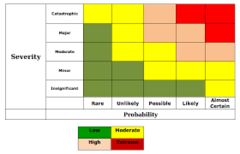
Risk management for a particular project entails:
1. identifying potential risks (risk assessment)
2. analysing these risks (risk analysis)
3. selecting appropriate risk responses (risk management)
4. on-going monitoring the project as it progresses.
Stakeholder
An individual, group or organisation involved in decision-making related to an environmental case study, project or issue. Stakeholder groups and organisations
EG: Aboriginal and Torres Strait Islander peoples; a local or regional community; media; environmental interest groups; industry representatives; and non-government and government agencies.
Stakeholder knowledge
The scientific, technical and experiential knowledge held by a stakeholder
Stakeholder values
The set of principles, standards and/or qualities that a stakeholder holds in high regard and that determines the way the stakeholder chooses actions and evaluates events
Earth systems thinking
Consideration of the connections and interactions between Earth's four systems - atmosphere, biosphere, hydrosphere and lithosphere - that support and sustain ecological integrity.
Solar variability
changes in radiation output by the sun
- goes through low activity and high activity
- Influences water and air circulation
Volcanic eruptions
eruptions emit greenhouse gases eg. carbon dioxide, hydrogen sulfide and hydrogen halides
- harmful to humans, vegetation and agriculture
Human activities affect on greenhouse gases
Burning fossils fuels - carbon dioxide
Farming livestock - expel methane
Natural greenhouse effect
The process of retaining heat in the atmosphere, a natural process that warms the Earth's surface at 15 degrees and sustains all life on Earth
CAUSED BY: volcanic eruptions, forest fires
Main greenhouse gases: water vapour, carbon dioxide (CO2), methane (CH4), nitrous oxide (N2O), chlorofluorocarbons and halons

Types of radiation in greenhouse effect
*ultraviolet radiation:* absorbed in the ozone layer by the stratosphere
*Infra-red radiation:* absorbed by the Earth's surface - eventually is reradiated
*Visible light:* reflected off the earth's surface and can be absorbed by the surface and turn into infra-red radiation