AHS3263: Recovery Ventilator & Post-Op
 Call Kai
 Learn
 Practice Test
 Spaced Repetition
 Match
 Flashcards
 Knowt Play
1/32

There's no tags or description
Looks like no tags are added yet.
33 Terms
Indications to use Ventilator:
Open thorax surgeries
Neuromuscular blocking
CNS disease
LARGE animals
Some vets ALWAYS USE IT
How can a Vet Tech be a Ventilator?
Give a BREATH w/ a RESERVOIR BAG
How to “SIGH” an Animal:
Steps:
CLOSE POP-OFF
SQUEEZE bag to 20 cm H2O
OPEN POP-OFF
MAXIMUM Manometer pressure?
20 cm H2O
Ways a Ventilator can Deliver a Breath:
Volume (Tidal volume) - Delivers a SET AMOUNT of air w/ each breath
Pressure - Delivers air until a SET pressure is REACHED
Rate - Controls HOW MANY breaths are DELIVERED per minute
Collapsible Bellows:
Bellows = BAG

During INSPIRATION, the ventilator DELIVERS a breath
Ventilator Layout:
Connected to a oxygen source
Driving gas goes around the bellows & acts like a HAND & PRESSES the BAG DOWN to give an animal a BREATH
Driving gas = HIGH pressure oxygen

Ventilator Function:
Ventilator controller lets O2 INTO the container

AIR/Driving gas surrounds bellows & SQUEEZES causing INSPIRATION
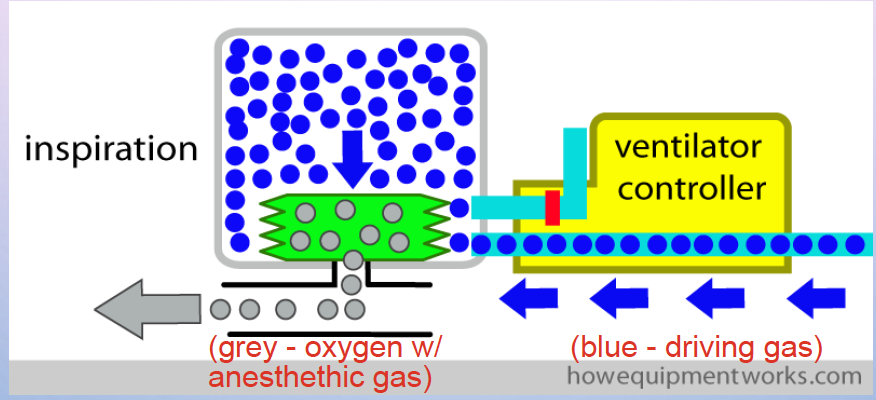
EXPIRATION occurs when controller STOPS O2 flow & gases from the LUNGS enter INTO the BELLOWS

RISING bellows PUSHES OUT the “USED UP” DRIVING GAS into the ATMOSPHERE
The TWO GASES DO NOT MIX - the DRIVING GAS & the patient’s BREATHING GAS

Driving Gas (Blue gas) DOES NOT GO INTO animal
The driving gas is THROWN AWAY AFTER each breath

Where is the Ventilator connected?
Connects where the RESERVOIR BAG should be

What do we need to do with the POP-OFF when we give the animal a breath?
CLOSE POP-OFF
Ventilator Outflow Valve:
CLOSES on INSPIRATION (POP-OFF CLOSE)
OPEN on EXPIRATION (POP-OFF OPEN)
On the anesthetic machine the POP-OFF should be CLOSED
Connections:
Ventilator connected where the RESERVOIR BAG is located
CLOSE POP-OFF
EXHAUST - HOOK to VENTILATOR
PRESSURE TRANSDUCER
WILL NOT WORK WITHOUT THIS
Connected on INSPIRATORY side
Information to know Beforehand:
Tidal Volume (TV) = AMOUNT of GAS DELIVERED during ONE INSPIRATORY PHASE
TV = 10-20 mL/kg
Respiratory rate (RR)
Minute Volume = AMOUNT of GAS the patient INHALES during ONE MINUTE
MV = TV x RR
Pressure = Typically 15-20 cm H2O (HIGHER for THORACOTOMY, etc)
I:E Ratio:
I:E = Inspiratory Expiratory Ratio
1:2
1 part of the time is spent INHALING
2 parts of the time are spent EXHALING
EXPIRATION takes TWICE as long TWICE as long as inspiration (EXPIRATION is LONGER)
PEEP:
PEEP = Positive end-expiratory pressure
Supplies continuous POSITIVE PRESSURE to AIRWAYS at the END of EXHALATION
INCREASES pressure in ALVEOLI
PREVENTS collapse at end of exhalation (atelectasis = collapsed air sacs)
Spontaneous Breathing:
When USING a ventilator the animal STOPS spontaneous breathing b/c the ventilator breathes for them
How to make the animal breathe again on their own?
Make CO2 HIGHER - INCREASING CO2 DRIVES RESPIRATION
Start by gradually DECREASING their RESPIRATION RATE
Ex: 12 breaths/min —→ 9 breaths/min —→ 6 breaths/min
“Bucking” the Ventilator:
Spontaneous breathing by the animal AGAINST the ventilator
Means animal is trying to breathe spontaneously while the ventilator is delivering breaths, causing them to work against each other
What measurement are we looking at?
ETCO2 - measures CO2 at the end of exhalation which assess whether we are providing the adequate breaths
Weaning an Animal Off the Ventilator:
Gradually REDUCE the RESPIRATION RATE (to about 5 breaths a minute) so that the CO2 levels can BUILD UP
Endotracheal Tube - Common Issues:
Endotracheal tube = Animal’s lifetime
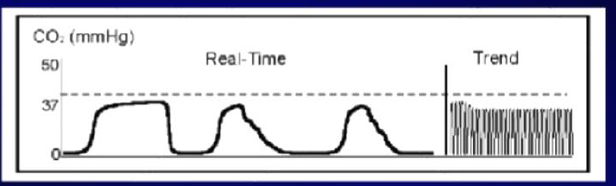
Obstruction kink
What does this look like on the ETCO2? —→ SHARK FIN

DON’T occlude the end of the tube (that is the breathing part for the animal)
Inappropriate inflation
Deflation over time/leak
What does this look like on the ETCO2? —→ DOWNHILL SLOPE
Moving the animal
Moving the Animal:
ALWAYS disconnect patient from anesthesia machine b/c things can twist easily
Deflating the Cuff:
Deflate the cuff
An inflated cuff can lead to TRACHEAL TRAUMA if unsecured
Allow QUICK REMOVAL in case of FAST RECOVERY
DO NOT deflate the cuff too early
Dog/animal can VOMIT & ASPIRATE
Wait to deflate cuff when SWALLOW REFLEX PRESENT
Recovery:
Anesthesia - Weaning
Monitoring - Temperature
Dysphoria
Extubation
Post-op monitoring & recovery
Cage prep
Extubation Steps:
Steps to extubation:
TURN OFF the anesthetic vaporizer & LEAVE the patient on OXYGEN for 5-10 minutes (Preoxygenates the animal for safe apnea time)
Have a syringe handy or attached to the cuff of the E-tube
UNTIE the E-tube attachment from the patient
DISCONNECT patient from anesthetic machine
Recheck reflexes & determine the patient’s stage of anesthesia
Once the patient REGAINS the LARYNGEAL (SWALLOW) REFLEX, DEFLATE the cuff & gently pull the ET-tube DOWN & OUT of the mouth
CAUTION w/ BRACHYCEPHALIC BREEDS
Many people will extubate these breeds ONLY if they can LIFT their HEADS by THEMSELVES
Have stenotic nares & elongated soft palate
Extubation:
Monitor for VOMITING & REGURGITATION (when animal is about to vomit point their HEAD DOWN)
Animal NEEDS to SWALLOW at least 2-3 times
Animal SHOULD NOT be chewing the tube
Check tube for BLOOD, FOOD, etc
What can you do if the animal SWALLOWS the tube?
Feed a URINARY CATHETER through the ET tube
Pass the catheter past the end of the swallowed ET-tube into the trachea
INFLATE the urinary catheter ballon
SLOWLY PULL the urinary catheter toward the mouth - this drags the ET-tube fragment out of the trachea
Have to keep the animal UNDER ANESTHESIA when trying get out the swallowed ET-tube

Emergence Delirium:
Emergence delirium - animal exhibiting signs of excitement, uncontrollable movements, & possibly vocalizing
Wide spectrum of behaviors:
Paddling
Thrashing
Head bobbing
Biting
Climbing the walls
Prolonged Recovery:
Causes range from a LONG PROCEDURE time to more serious situations such as HYPOTENSION (LOW BP)
Common Causes of Prolonged Recovery:
HYPOTHERMIA (LOW temperature)
HYPOGLYCEMIA (LOW blood sugar)
Patient issues
PRE-EXISTING CONDITION
WEIGHT
Recovery:
Gentle stimulation
Pulling tongue
Turning onto the other side
DO NOT annoy/harass the animal
Ventilation
Fluid therapy
Reversal agents
Warming devices
What role does the driving gas play?
Hand giving a breath
The pop-off valve should be open when using a ventilator:
FALSE
What is the formula for TV?
Tidal volume = 10-20 ml/kg
The driving gas needs a pressure of:
50 psi
The bellow acts as:
The reservoir bag