L9-Non-Alcoholic Fatty Liver Disease (NAFLD)
 Call Kai
 Learn
Learn Practice Test
 Spaced Repetition
 Match
Match Flashcards
 Knowt Play
1/44

There's no tags or description
Looks like no tags are added yet.
Name | Mastery | Learn | Test | Matching | Spaced | Call with Kai | Chat |
|---|
No analytics yet
Send a link to your students to track their progress
45 Terms
what is non alcoholic fatty liver disease (NAFLD) now called
metabolic dysfunction associated steatotic liver disease (MASLD)
what factors make up the disease phenotype of obesity
physiology
economic
social
cultural
political
the complex obesogenic environment tries to map all factors that contribute- very complex

how has the prevalence of obesity in adults changed
it has increased over the years
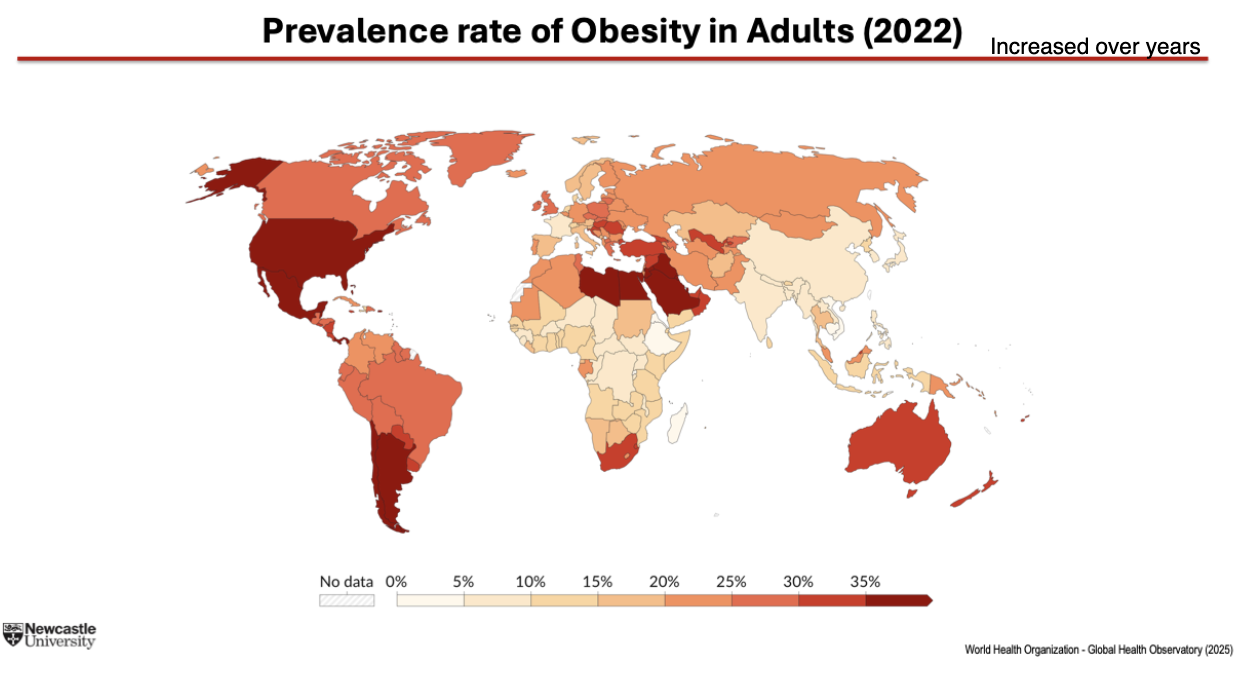
describe the ‘right-shift’ in population body weight
Normal distribution is slowly shifting to the right
At Population level- average person weighs more than generations before
Personal fat threshold- how much fat you carry until you begin to get ill- personal to each individual based on many factors
Getting larger over time

how is obesity a multi system disease
obesity causes metabolic stress
leads to systemic inflammation and fibrogenesis (scarring)
Inflammation and scarring in organs
In liver its called MASLD

what is the spectrum of steatotic liver disease (phases MASLD)
steatosis (MASL)- fat infiltration- >5% with or without mild inflammation
steatohepatitis (MASH)- steatosis & necroinflammation- ballooning hepatocyte degeneration, mallory bodies, megamitochondria
cirrhosis- increasing fibrosis, leading to cirrhosis
leads to → hepatocellular carcinoma (HCC)

what causes MASLD to lead to cirrhosis
In some people how the fat is handled leads to inflammation and cell death- if continues causes a wound healing response where the injury and healing is perpetual
Eventually leads to cirrhosis
Structure of liver changes, blood doesn’t flow properly, RBC numbers diminish
Can go on to develop cancer
what is MetALD, why do some people get it easier
MASLD and increased alcohol intake
MetALD- people who drink just a bit more than they should, not really excessive
Would have been fine, only if they weren't overweight
Fat in liver makes body more sensitive to the damage alcohol causes
what are the 5 types of steatotic liver disease (SLD)
metabolic dysfunction associated steatotic liver disease (MASLD)
MASLD and increased alcohol intake (metALD)
alcohol associated/related liver disease (ALD)
specific aetiology SLD
cryptogenic SLD

what are the forms of specific aetiology SLD
drug induced liver injury (DILI)
monogenic diseases
miscellaneous

describe the interaction between alcohol consumption & metabolic syndrome
Multiple components of the metabolic syndrome independently affected the risk for severe liver disease.
Alcohol was significant even when average alcohol consumption was within the limits currently defining MASLD.

what are the diagnostic definitions of SLD

describe the global prevalence of MASLD in adults
About 1/3 uk population have some form of MASLD

what is the data of the UK MASLD experience
hospital admissions increasing
liver transplant listings for MASLD increasing

How does MASLD progress?
MASLD progresses from steatosis (F0) to fibrosis (F1–F3), cirrhosis (F4), and potentially liver cancer or decompensation.
Progression speeds up with advanced fibrosis: ~30–35 years (F0–F1), ~19 years (F2), ~6 years (F3).

What is the natural history and progression of MASLD?
Steatosis ↔ MASH: disease activity can fluctuate or reverse.
MASH → fibrosis (F1–F4) → cirrhosis → hepatocellular carcinoma.
Progression depends on factors such as diet and genetics.
Fibrosis involves ECM formation and remodelling; advanced disease increases liver mortality risk.
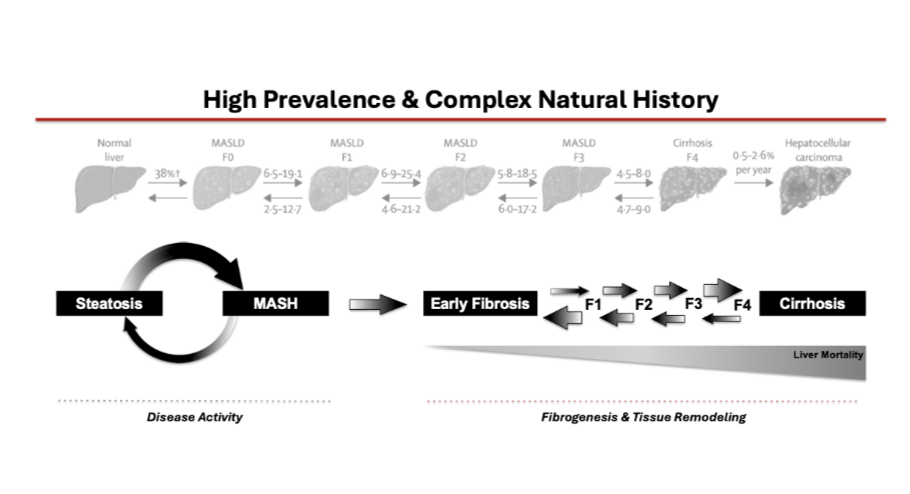
What influences MASLD progression and the balance between fibrogenesis and fibrolysis?
Diet and genetics influence disease progression.
Fibrogenesis: ECM formation → increased fibrosis.
Fibrolysis: ECM breakdown/remodelling → reduced fibrosis.
The balance between these processes determines whether fibrosis progresses or regresses.
Steatosis and MASH can fluctuate, whereas advanced fibrosis increases liver mortality risk

describe the pathophysiology of complex disease traits

what genes have been identified as being modifiers of pathophysiological processes relevent to MASH

what is the relevance of the gene PNPLA3
identified from GWAS
Single variant associated with greater fat content in liver
Also caused more inflammation and scarring of liver

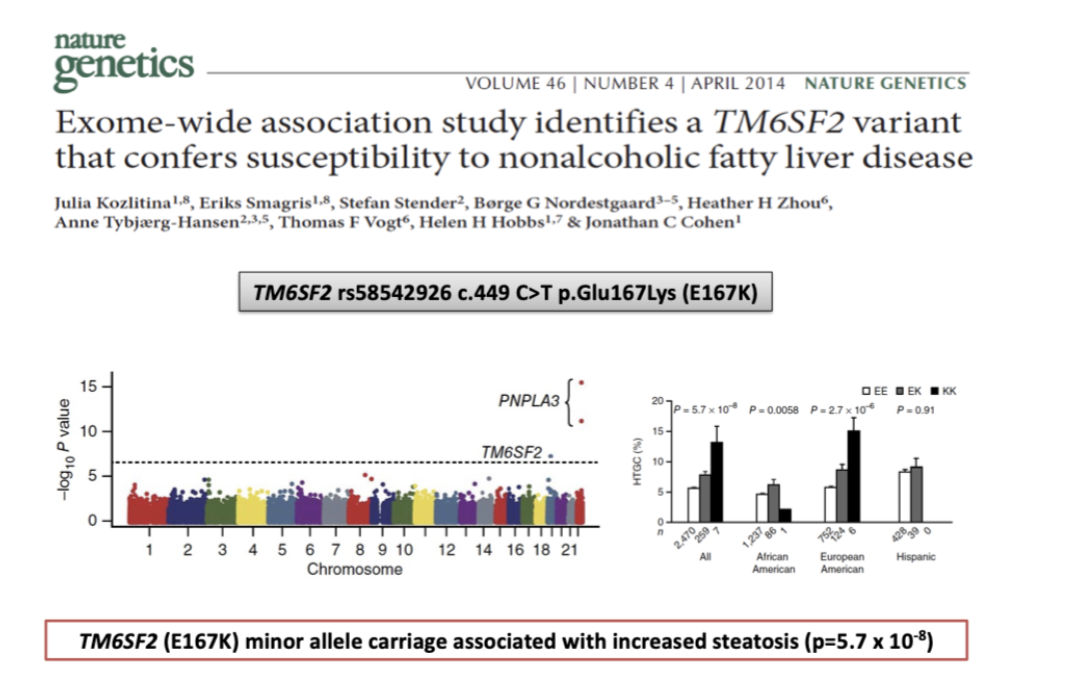
what is the TM6SF2 (E167K) minor allele carriage associated with
increased steatosis
If carry rare variant form- keep fat in liver- scaring and cirrhosis
If you have wild type you push fat put of liver and more likely to have heart attack
describe the pathogenesis of MASLD
Fat enters liver: from diet, body fat or glucose.
Insulin resistance: increases fat release from adipose tissue and fat production in the liver.
Fat accumulation: excess fatty acids are stored as triglycerides, causing steatosis.
Oxidation: the liver burns fat for energy, but excess processing can produce harmful by-products.
Liver damage: oxidative stress causes cell damage and death, leading to inflammation (MASH) and potentially fibrosis.

What are the 2 ways fat enters and leaves the liver?
Enters: import from dietary fat/adipose tissue; fat synthesis from glucose.
Leaves: esterification into triglycerides exported as VLDL; oxidation to produce energy.
How does insulin resistance increase fat accumulation in the liver?
Adipose insulin resistance reduces insulin's inhibition of HSL → increased fat breakdown and fatty acid release into blood.
The liver remains relatively insulin-sensitive, so high glucose and insulin stimulate fat synthesis.
Result: increased fatty acid supply and turnover in the liver.
How can excess fatty acids cause liver damage in MASLD?
Fatty acids are converted into relatively inert triglycerides, initially protecting liver cells.
Eventually, excess fatty acids overwhelm the liver's processing capacity.
Mitochondrial β-oxidation: main pathway for producing energy via the electron transport chain.
Other pathways (e.g. ω-oxidation): can produce harmful by-products.
These processes can contribute to oxidative stress, liver cell damage and cell death.
How does excess fat cause MASH?
Insulin resistance increases fat synthesis in the liver and fatty acid release from adipose tissue.
Fatty acid accumulation causes triglyceride storage (steatosis).
Excess fatty acids produce harmful lipid intermediates and ROS, causing oxidative stress.
This leads to liver cell damage and death, inflammation and MASH.

How does fibrogenesis occur in liver disease?
Liver injury activates hepatic stellate cells (HSCs).
Activated HSCs produce excess extracellular matrix (ECM).
This causes fibrosis (scar tissue formation).
Activated HSCs also promote inflammation and tissue remodelling.
Excessive ECM accumulation leads to progressive fibrosis and potentially cirrhosis.

what are tests for MASLD based on
Anything that predicts scaring in the liver, suggests MASLD
Amount of scaring counted on 4 point scale
F3,4 worried about, risk of liver related death
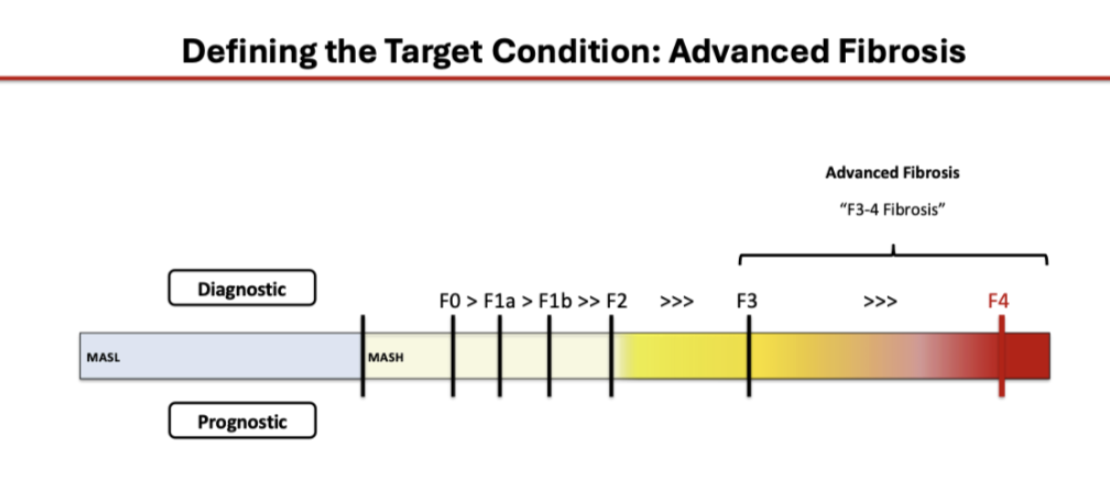
what is the basic pathway of testing for/diagnosing level of scarring
Start by looking at risk factors, calculate fib score, routine tests and age, depending on results do a blood test

what is the simple score for predicting presence of advanced F3/4 fibrosis
Fib scores , cheap tests, quick for ruling out disease, if low probs don’t have a lot of scarring right now

what does your fib score show for prognosis
If fib score is high, means scarring in liver, and prognostic marker, not a good sign, predictor of liver and heart death
Can be used to monitor disease overtime too

what is the proposed SLD patient pathway

what are the second line non invasive tests for MASLD
2 types of second line test
Biomarkers
Measure hardness of liver, hard= scarred

how can we address factors influencing behaviours that drive obesity & MASLD
support healthy lifestyle choices
personalised behaviour interventions
interventions tailored to stage of readiness for change
provide motivation and support compliance
sensitive to cultural, social and economic considerations that influence ability to change behaviour
can weight loss be an effective treatment for NAFLD / MASLD
293 patients- 12 month lifestyle modification- calorie intake and exercise

what are the 4 principles of treatment when targeting MASLD
target obesity- lifestyle (diet/exercise), bariatric surgery
target the metabolic syndrome- reduce CVD risk whilst selecting medication with additional liver directed benefits
insulin resistance/T2D
hypertension
dyslipidemia
target the liver disease- ameliorate steatohepatitis and prevent progression to fibrosis and cirrhosis
minimise down stream complications such as HCC
how can pathophysiological processes be targeted
metabolic targets
anti-inflammatory targets
anti-fibrotic targets

what are some metabolic targets for treating MASLD
targets related to insulin resistance and or lipid metabolism
targets related to lipotoxicity and oxidative stress

what are some anti inflammatory targets for treating MASLD
targets related to inflammation and immune activation
targets related to cell death (apoptosis and necrosis)

what are some anti fibrotic targets for treating MASLD
targets related ro fibrogenesis and collagen turnover

what is the rationale for thyroid hormone receptor beta agonists to treat MASH
↓ Lowers LDL-cholesterol
↓ Lowers triglycerides
↓ Lowers liver fat, potentially reducing lipotoxicity, MASH

Resmetirom (THR-β) for MASH: Phase 3 Study Results

Incretins: Effects of Mono, Dual & Triple Agonists

Multiple Effects of FGF21 in MASLD
FGF21 analogues possess a “directly” acting antifibrotic mechanism of action.
FGF21 analogues reduce liver steatosis while activating intra- cellular pathways to protect hepatocytes against stress.
FGF21 analogues also increase insulin sensitivity and reduce dyslipidemia.
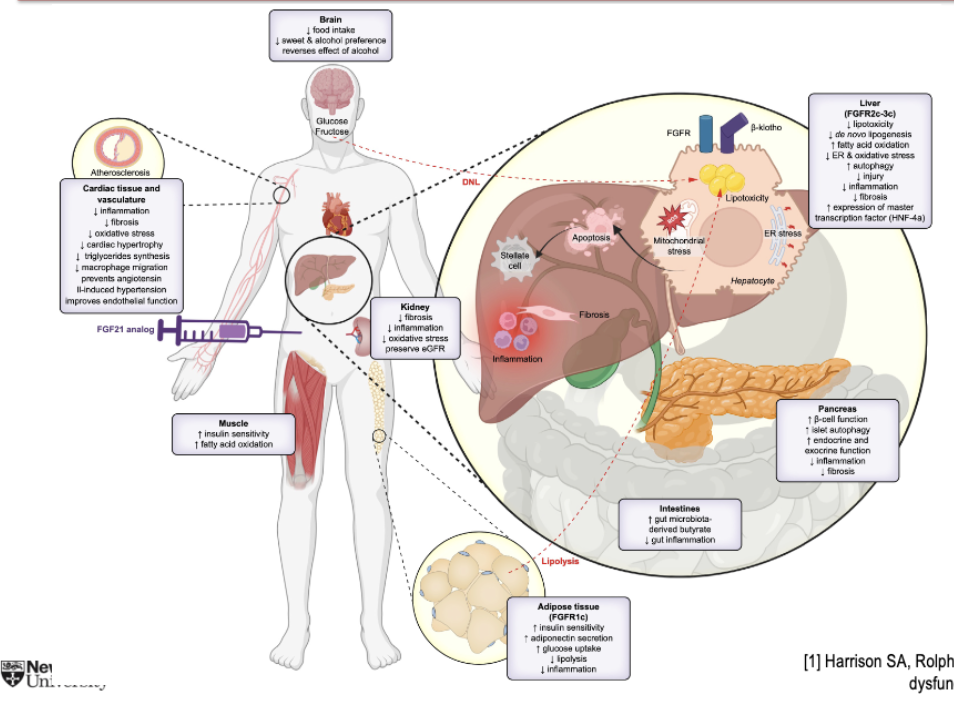
what are the FGF21 agonists in development
