Bio Honors Final Exam MegaSet for 2025-26
 Call Kai
 Learn
 Practice Test
 Spaced Repetition
 Match
 Flashcards
1/277

There's no tags or description
Looks like no tags are added yet.
278 Terms
Producers
An organism that makes organic food molecules from carbon dioxide , water and other inorganic raw materials
Photosynthesis
The process by which plants transform light energy to chemical energy stored in the bonds of sugars made from carbon dioxide and water
Autotrophs
An organism that makes its own food from inorganic ingredients, thereby sustaining itself without eating other organisms or their molecules
Consumers
An organism that obtains its food by eating plants or animals
Cellular Respiration
The aerobic harvesting of chemical energy from organic fuel molecules
Heterotrophs
An organism that cannot make it's own organic food molecules and must obtain them by consuming other organisms or their organic products
Aerobic
Requiring molecular oxygen
Glycolysis
A molecule of glucose is split into two molecules of a compound called pyruvic acid
Sequence of 3 steps of cellular respiration
1. glycolysis 2. krebs cycle 3. electron transport chain
ATP
Adenosine Triphosphate- The chemical currency of cells that is used to fuel cellular processes requiring energy
Components of ATP
adenine, ribose, 3 phosphates
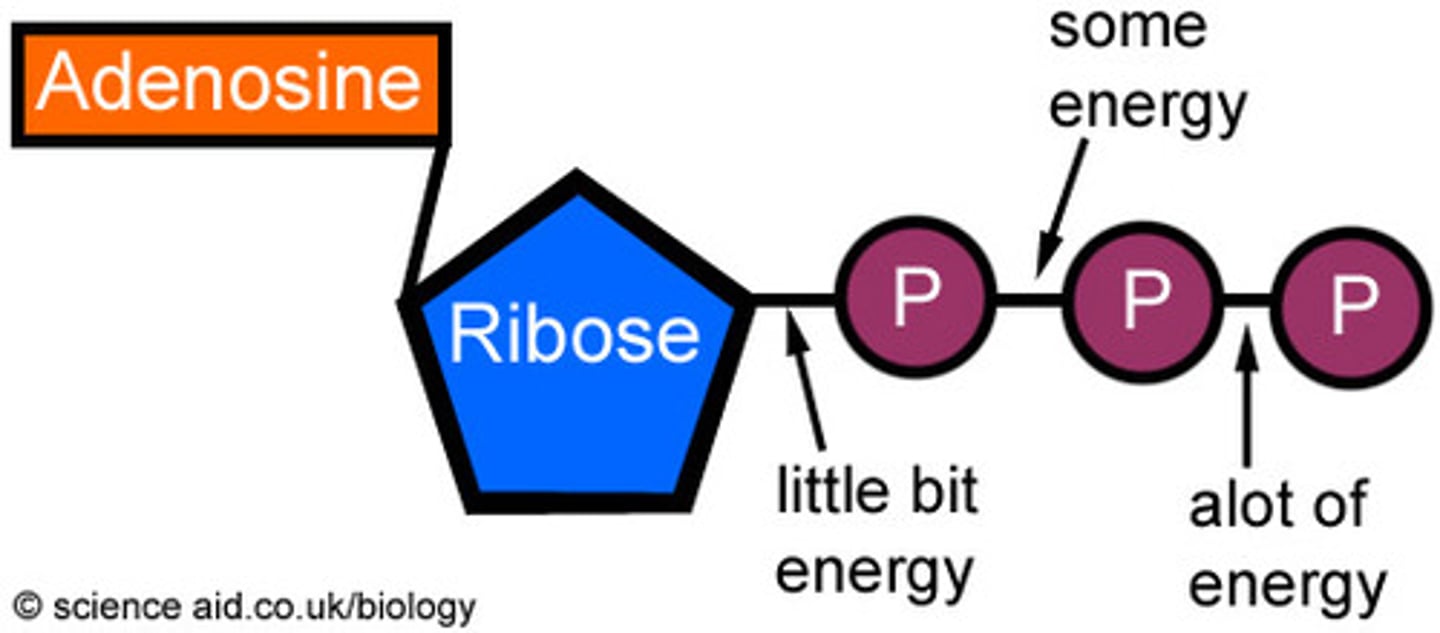
Cycling of ATP & ADP
The conversion of ATP to ADP + P releases energy to do work.
To build ADP + P into ATP, ATP synthase adds a new P to ADP, resulting in "recharged" ATP.
Chemical equation of cellular respiration
C6H12O6 + 6O2 > 6CO2 + 6H2O + ATP
Molecule that determines whether cells carry out cellular respiration or fermentation
O2
Location of aerobic respiration
Mitochondrion
Fermentation
The anaerobic harvest of food by some cells
Two types of fermentation and their products
Alcoholic fermentation makes Ethanol and CO2
Lactic acid fermentation makes Lactic Acid
Examples of lactic acid fermented products
Yogurt, pickled vegetables, olives
Examples of alcoholic fermented products
Beer, wine, risen bread
Location of glycolysis and fermentation
cytoplasm
Anaerobic
Lacking or not requiring molecular oxygen
Pyruvate
End product of glycolysis, key in respiration.
NADH
Electron carrier storing energy from glycolysis.
FADH2
Electron carrier storing energy from Krebs cycle.
Why is oxygen essential for cellular respiration?
Because it is the final electron acceptor, it binds with H, makes water and helps to maintain the proton gradient.
H+ gradient
Maintains proton concentration which powers ATP synthase enzyme, creating ATP from ADP.
Both DNA and RNA are types of...
Nucleic acids
A botanist is extracting DNA from an apple tree. Where in the cells should she look?
In the nucleus
The DNA double helix strand is anti-parallel. This means that...
Both strands go in different directions
Adenine, Guanine, Cytosine and Thymine are...
Nitrogenous bases
After examining the DNA of different organisms, what did Chargaff conclude about the four bases?
A=T and C=G
If the percentage of Adenine in a DNA sample is 40%, what is the percentage of Guanine?
10
Which of the following features of DNA is most important in determining traits of an organism?
The sequence of nitrogenous bases
DNA molecules consist of...
One old strand and one new strand
Which of the following events occurs directly after a DNA molecule is unzipped?
Free-floating nucleotides pair up with exposed bases.
What do the dotted lines represent between nitrogen bases ?
Hydrogen bonds
If the percentage of Cytosine in a DNA sample is 30%, what is the percentage of Thymine?
20
Which of the following steps in DNA replication comes FIRST?
DNA unwinds
What enzyme connects the new nucleotides together and proofreads them?
DNA Polymerase
Why is DNA replication called "semi-conservative"?
DNA consists of one old strand and one new strand
What enzyme unwinds or unzips the DNA strands?
Helicase
DNA is replicated in which phase of the Cell Cycle?
S (Synthesis)
The "sides" of a DNA ladder are made up of what?
Deoxyribose sugars and phosphate groups
DNA Polymerase is an enzyme that...
binds free-floating nucleotides to the DNA template strand
The "rungs" of a DNA ladder are made up of what?
Nitrogen-containing bases
Which of the following is the complementary strand to this DNA sequence: GATCTG
CTAGAC
Which of the following is the complementary strand to this DNA sequence: TCAGAC
AGTCTG
What type of bonds connect the bases to each other?
Hydrogen bonds
Ribose
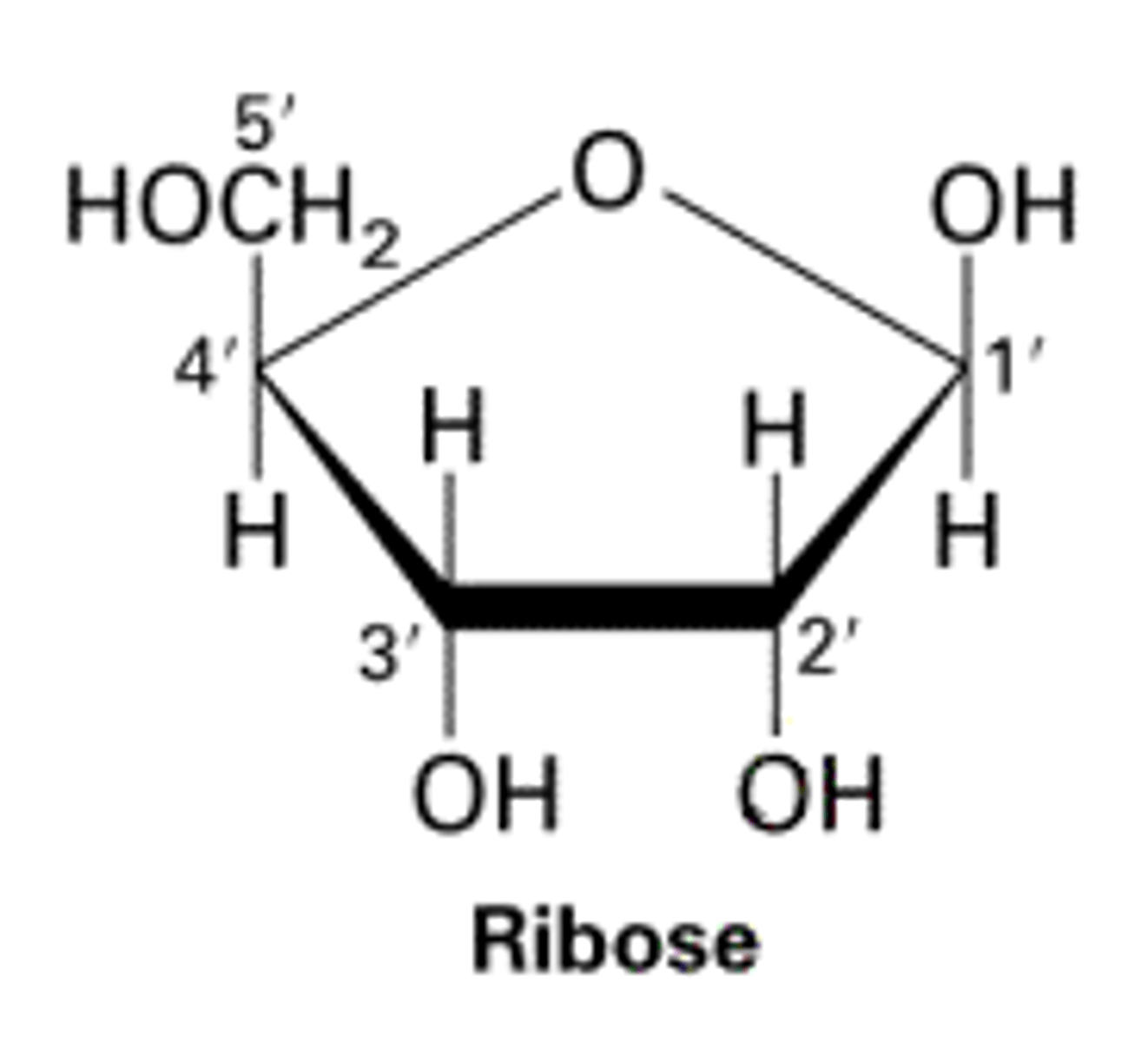
A five-carbon sugar present in RNA
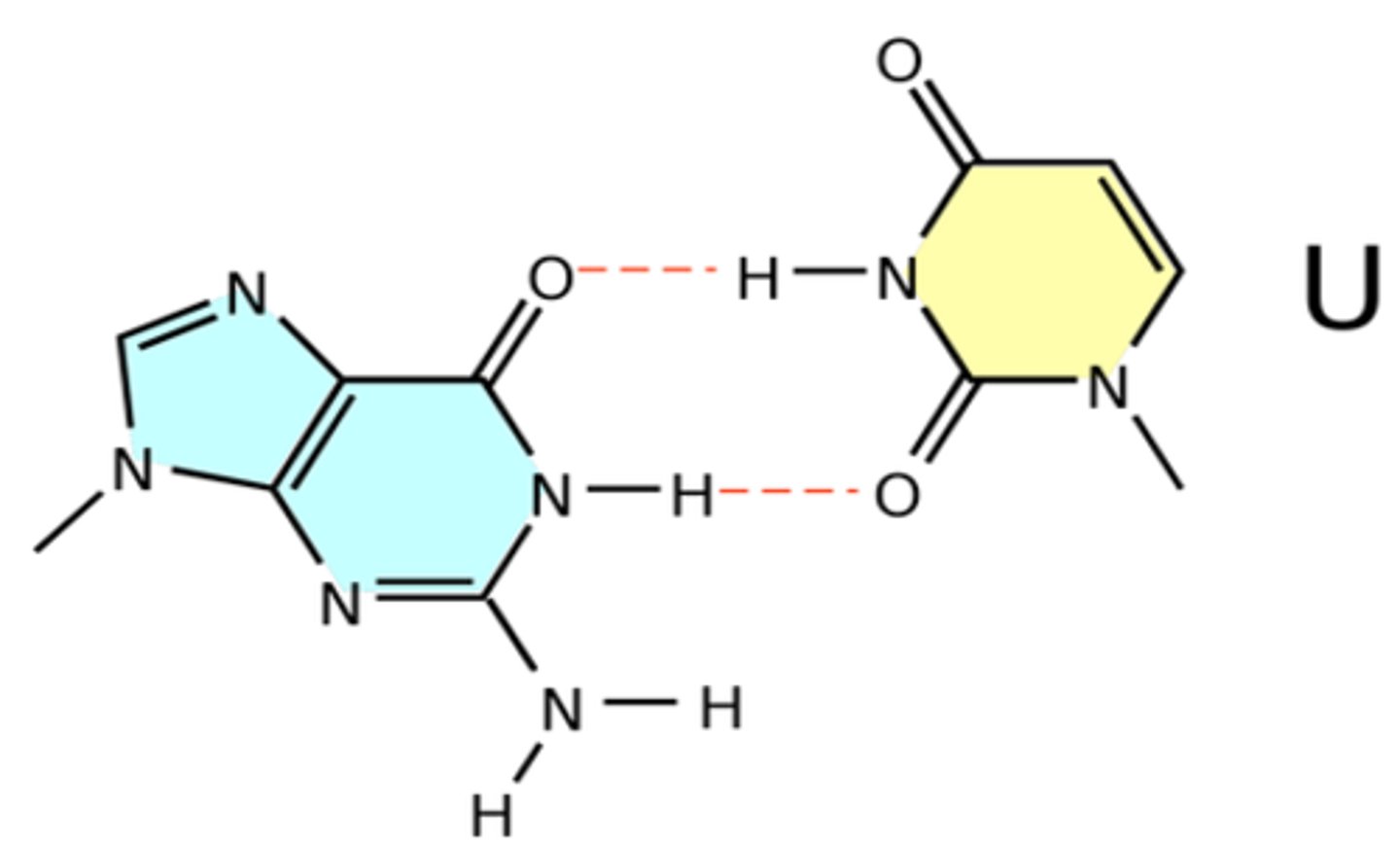
Uracil (U)
base found in RNA; pairs with Adenine; substitute for Thymine in DNA
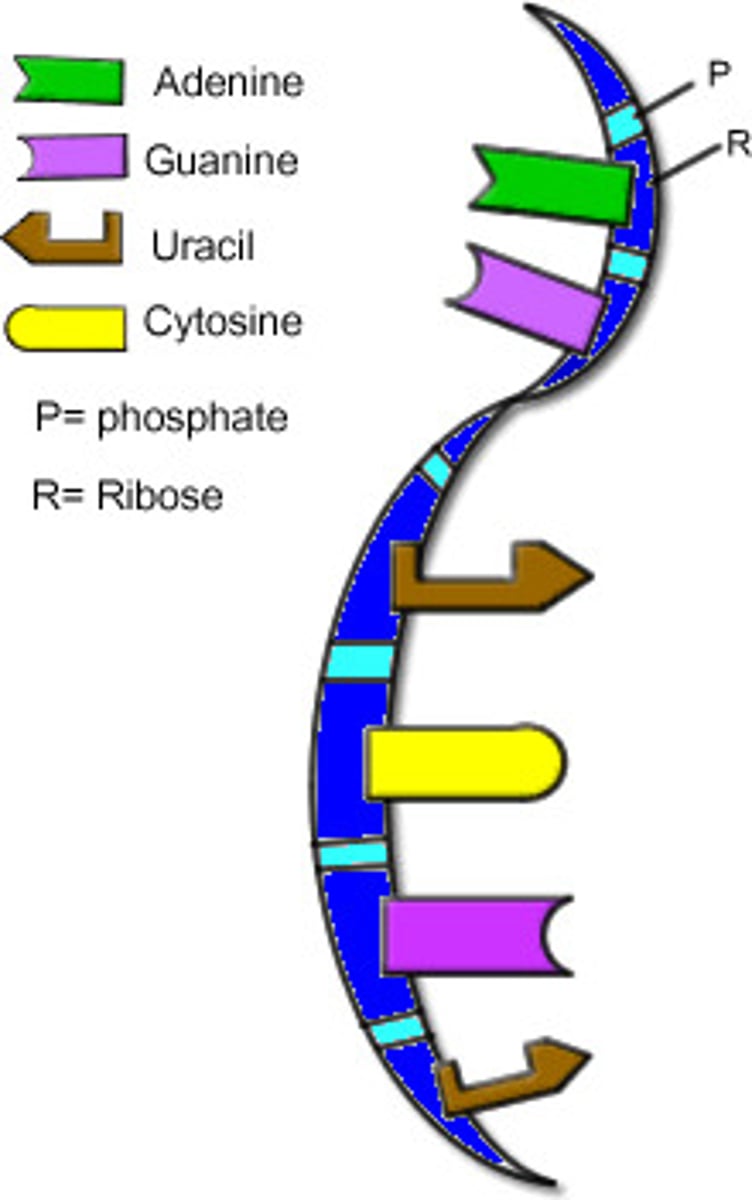
RNA
A single-stranded nucleic acid that passes along genetic messages
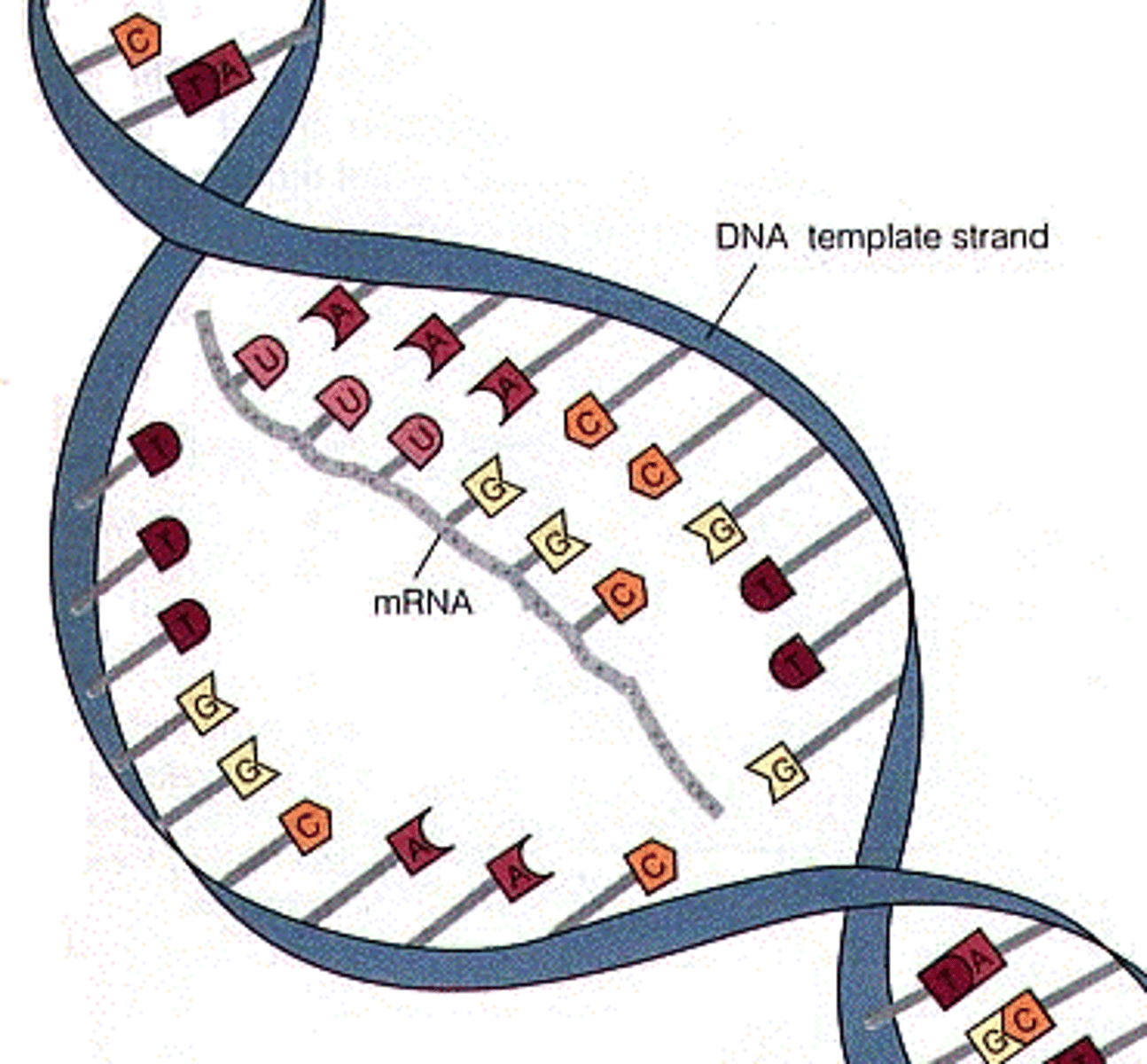
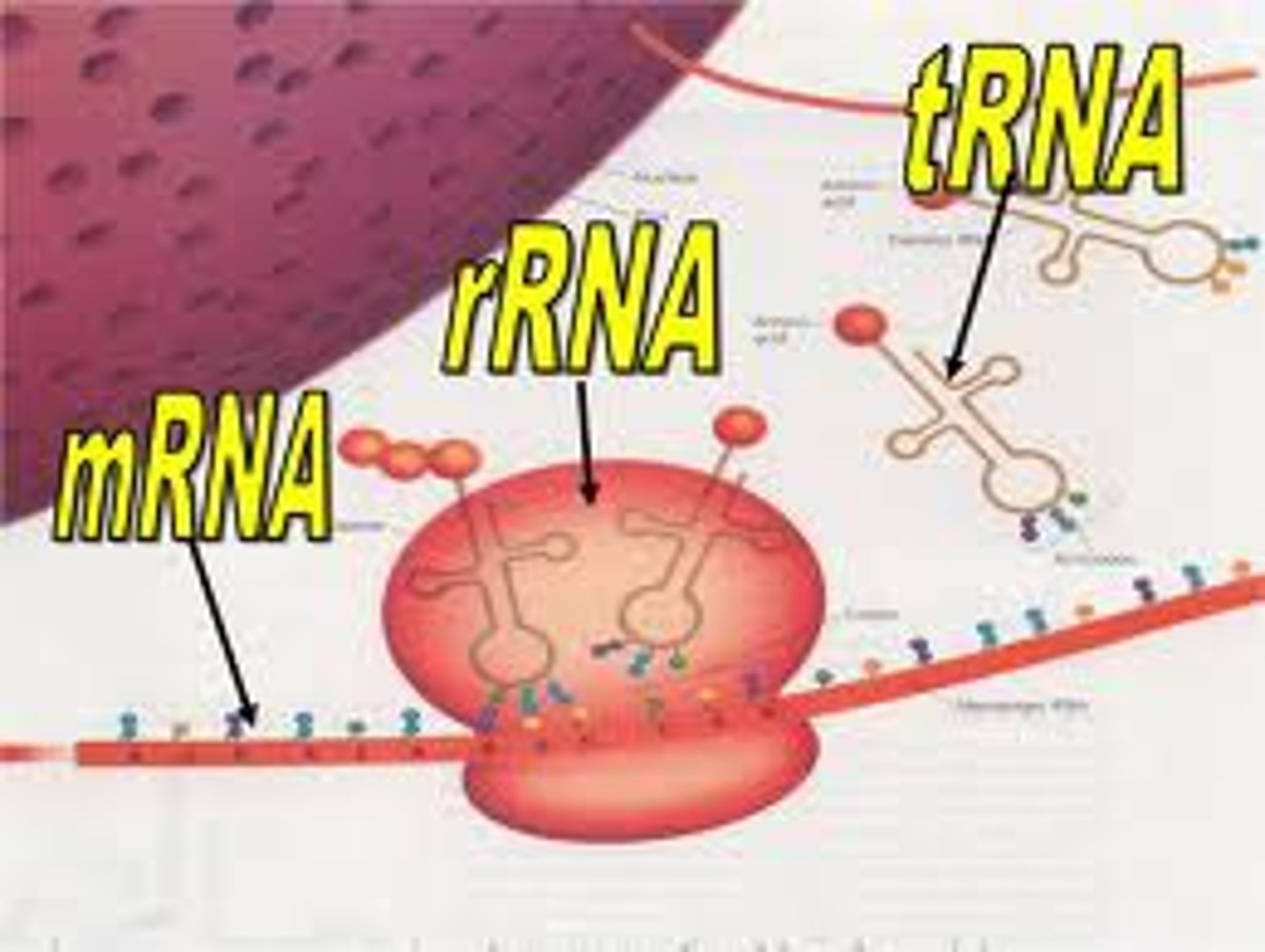
mRNA (messenger RNA)
The form of RNA which is created as a blueprint from DNA in the nucleaus; carries instructions to cytoplasm and then ribosome for making a protein
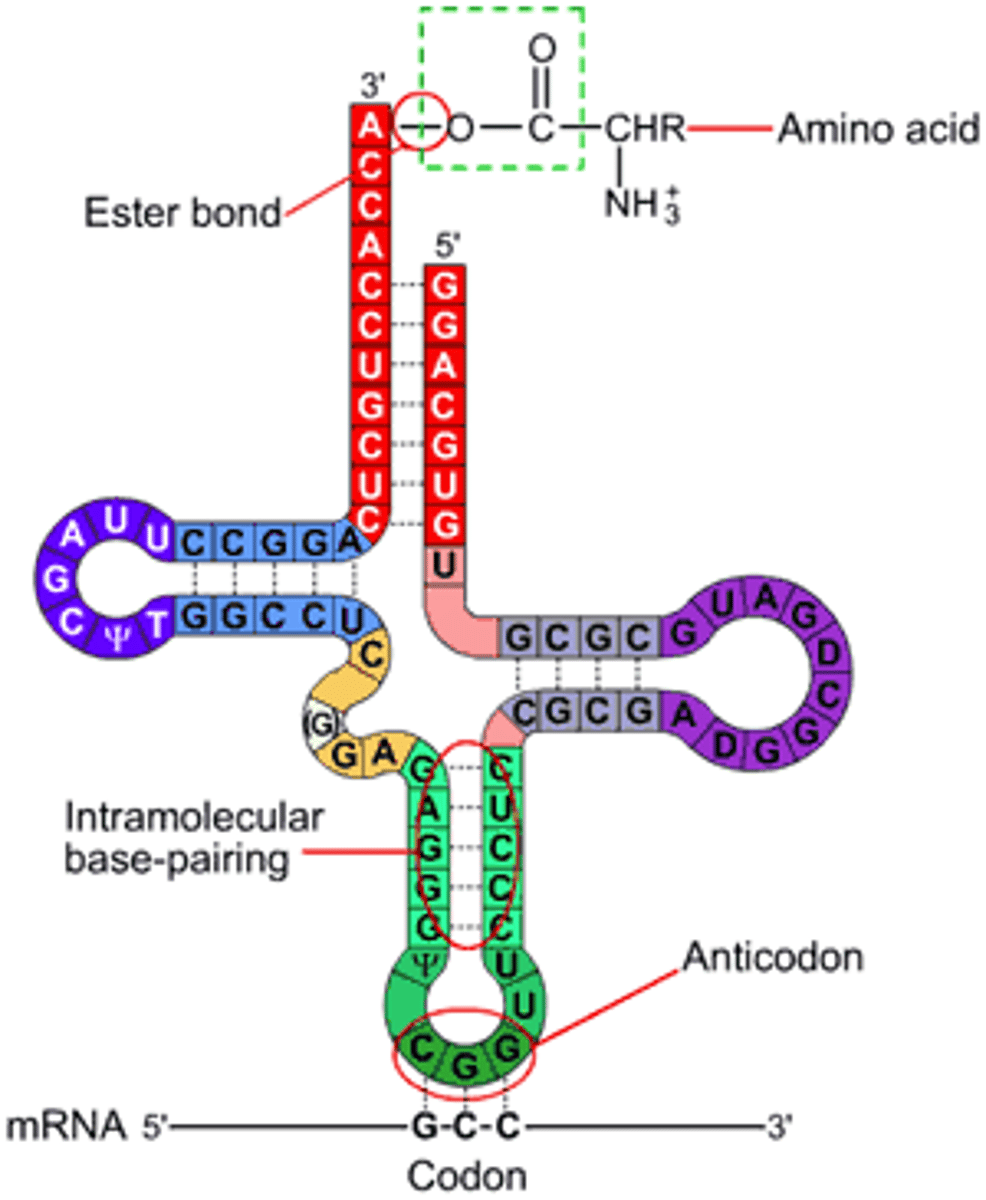
tRNA (transfer RNA)
type of RNA molecule that transfers amino acids to ribosomes during protein synthesis
rRNA (ribosomal RNA)
type of RNA that makes up the major part of ribosomes
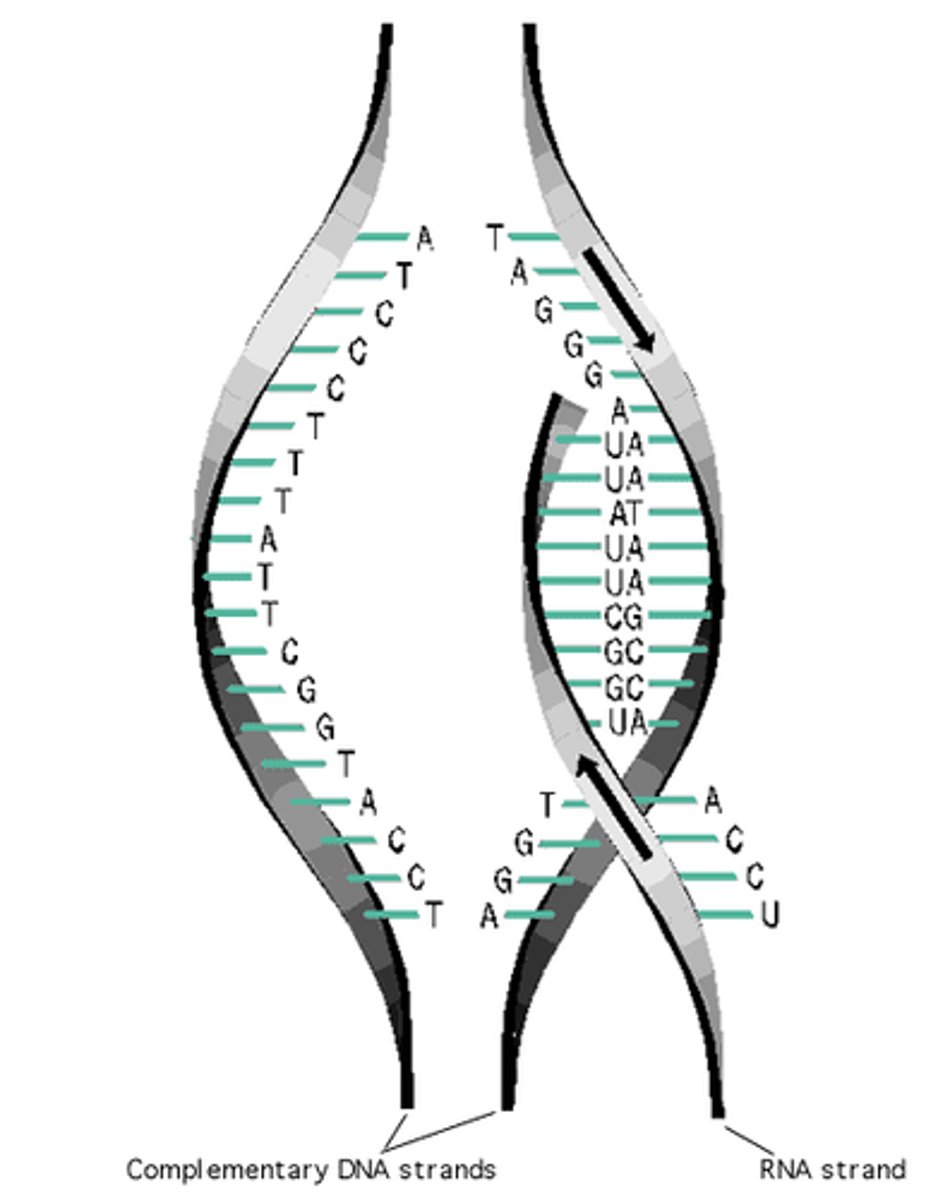
Transcription
synthesis of an RNA molecule from a DNA template
Translation
Process by which mRNA is decoded and a protein is produced
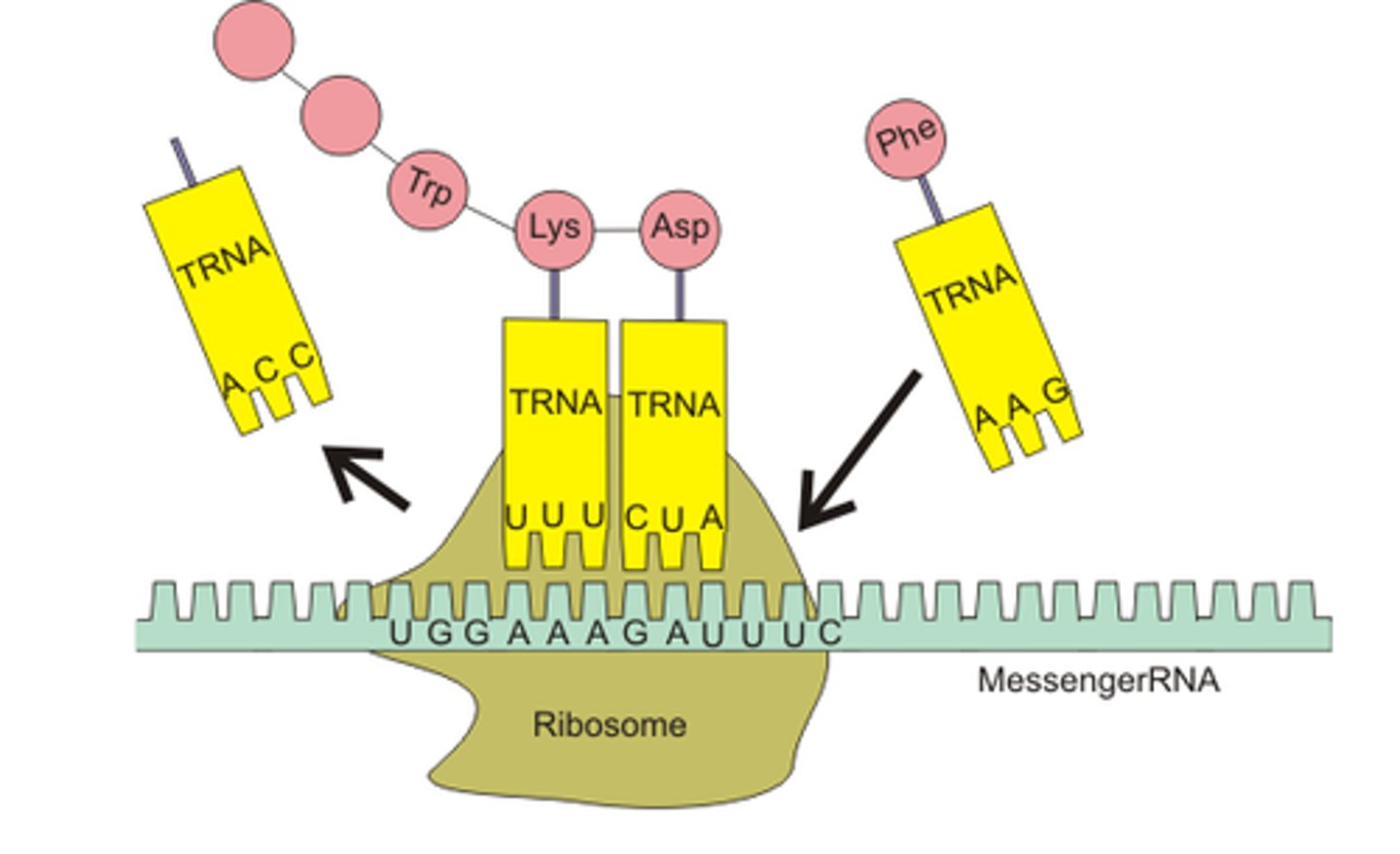
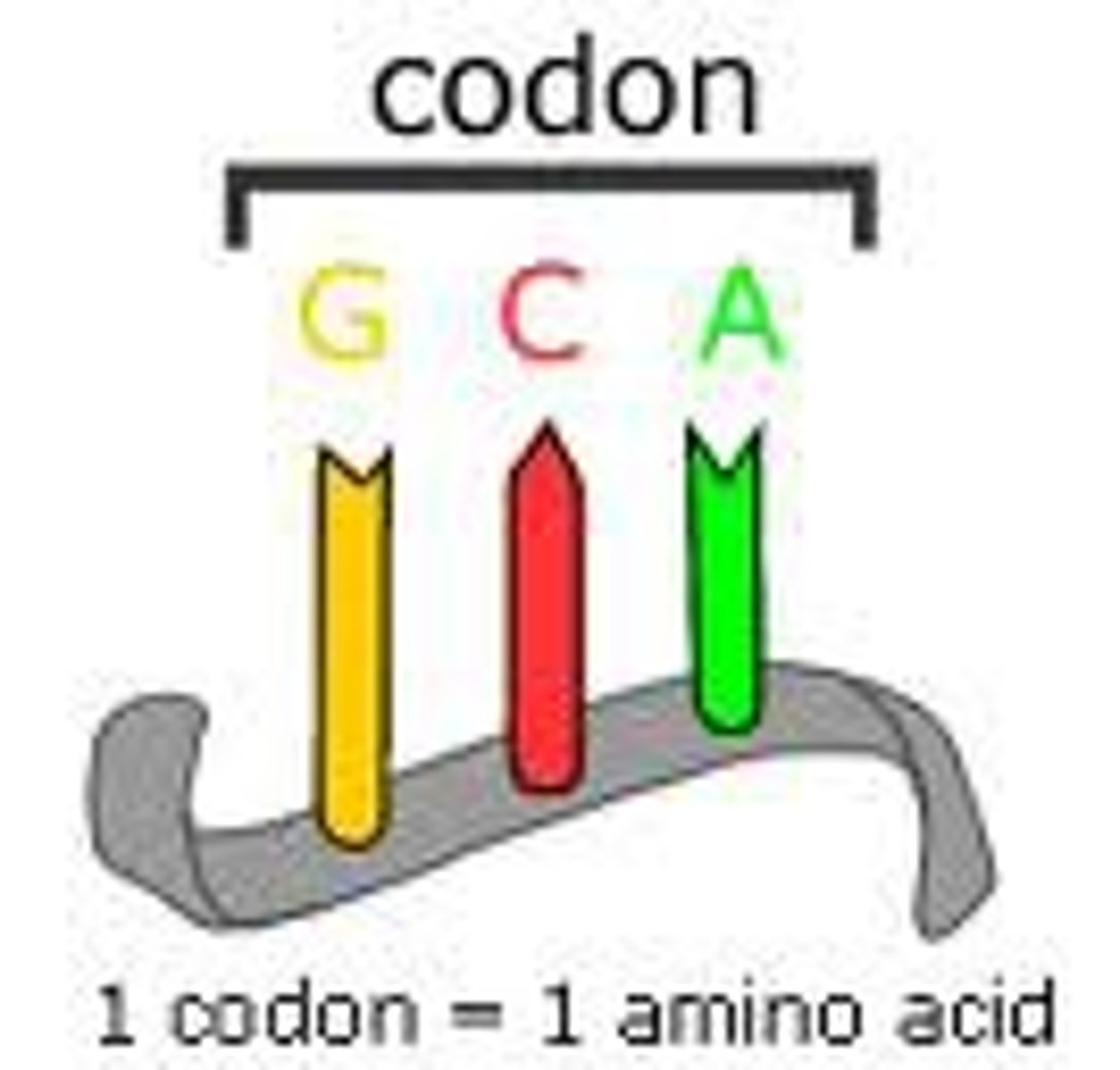
Codon
A specific sequence of three adjacent bases on a strand of DNA or RNA that provides genetic code information for a particular amino acid
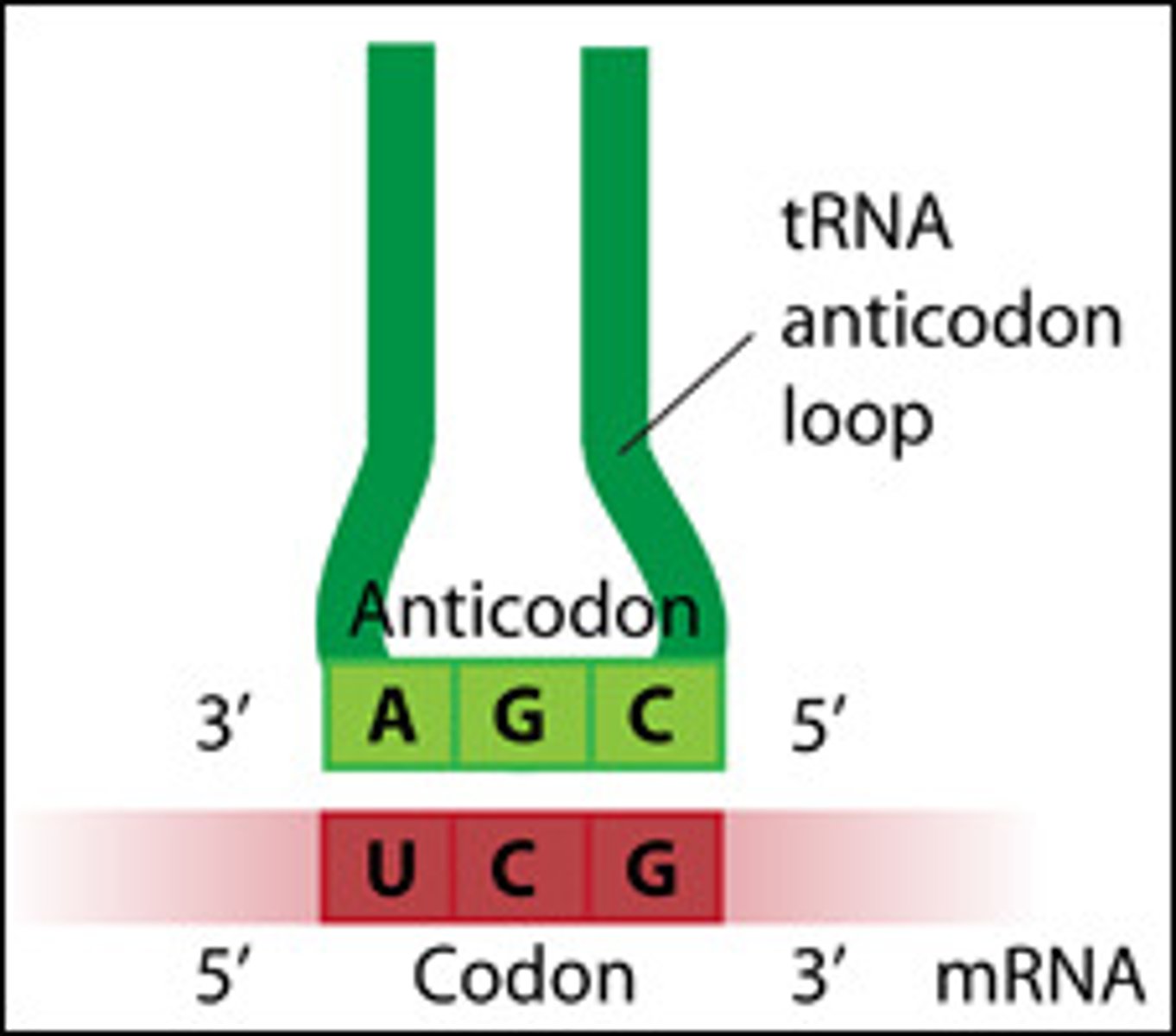
Anticodon
group of three bases on a tRNA molecule that are complementary to an mRNA codon
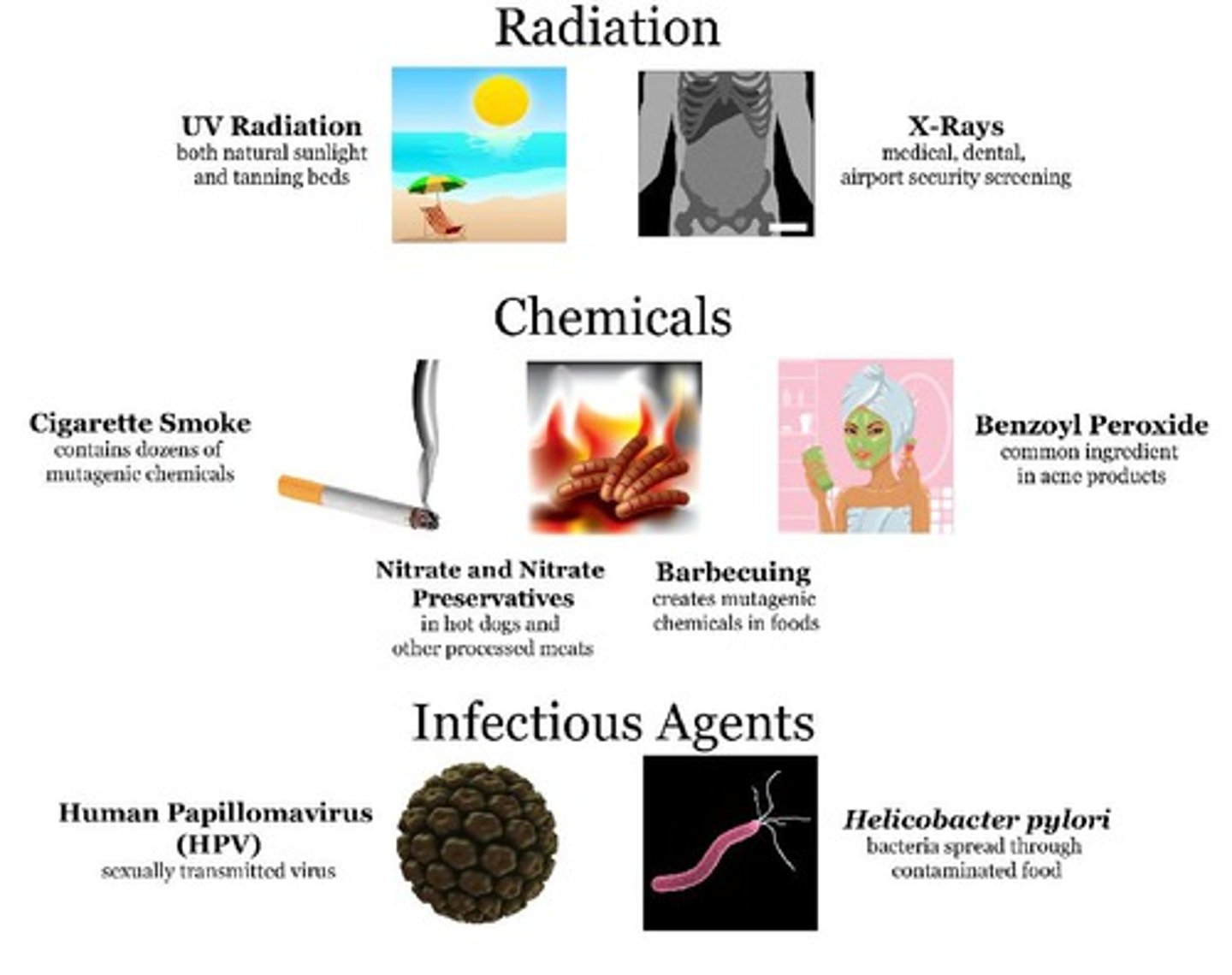
Mutagens
A chemical or physical agent that interacts with DNA and causes a mutation.
point mutation
gene mutation in which a single base pair in DNA has been changed
substitution mutation
One base is replaced by another.
deletion mutation
a mutation in which one or more pairs of nucleotides are removed from a gene
insertion mutation
a mutation in which one or more nucleotides are added to a gene
frameshift mutation
mutation that shifts the "reading" frame of the genetic message by inserting or deleting a nucleotide
silent mutation
alters a base but does not change the amino acid
RNA (full name)
ribonucleic acid
RNA polymerase
enzyme that links together the growing chain of RNA nucleotides during transcription using a DNA strand as a template
Scientists who found the shape of DNA
Watson and Crick
DNA
Deoxyribonucleic acid, "Blue print" of the cell, contains genetic info
Shape of DNA
double helix
the sugar found in DNA
deoxyribose sugar
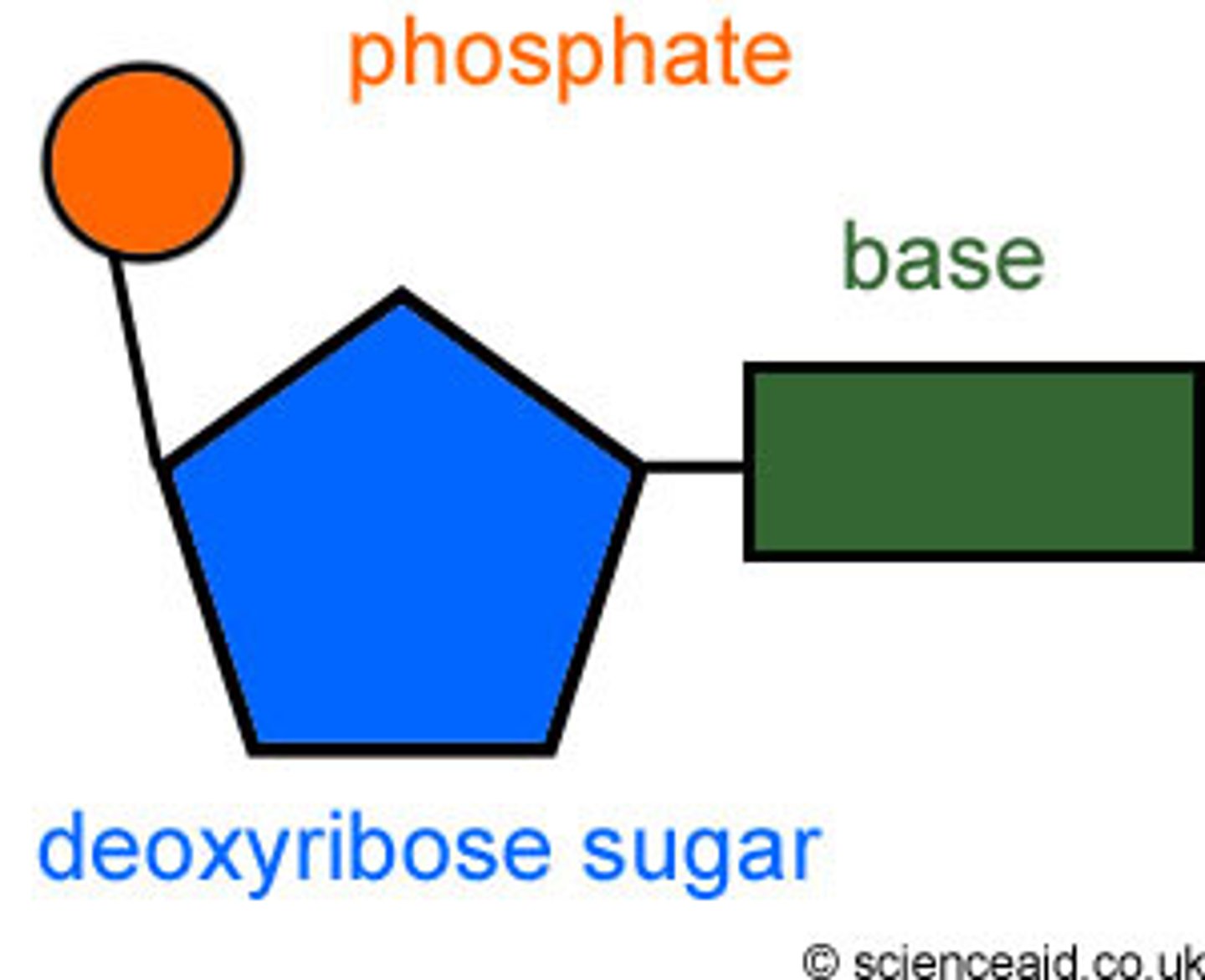
DNA nucleotide parts
5 carbon sugar, phosphate, nitrogen base
nitrogen bases in DNA
Adenine pairs with Thymine, Guanine pairs with Cytosine
Purines - Adenine and Guanine
Pyrimidines - Thymine and Cytosine
adenine pairs with...
thymine
cytosine pairs with...
guanine
DNA replication
process of making a copy of DNA, occurs before cell division
scientists who took X-ray photo of DNA
Wilkins and Franklin
DNA helicase
replication enzyme that unwinds the helix by breaking the hydrogen bonds
end product of DNA replication
2 identical DNA molecules
DNA polymerase
replication enzyme that adds nucleotides in a 5' to 3' direction
Where does DNA replication take place
Nucleus of eukaryotic cells; cytoplasm in prokaryotic cells
where is DNA found
Nucleus of eukaryotic cells; cytoplasm in prokaryotic cells
nucleotide
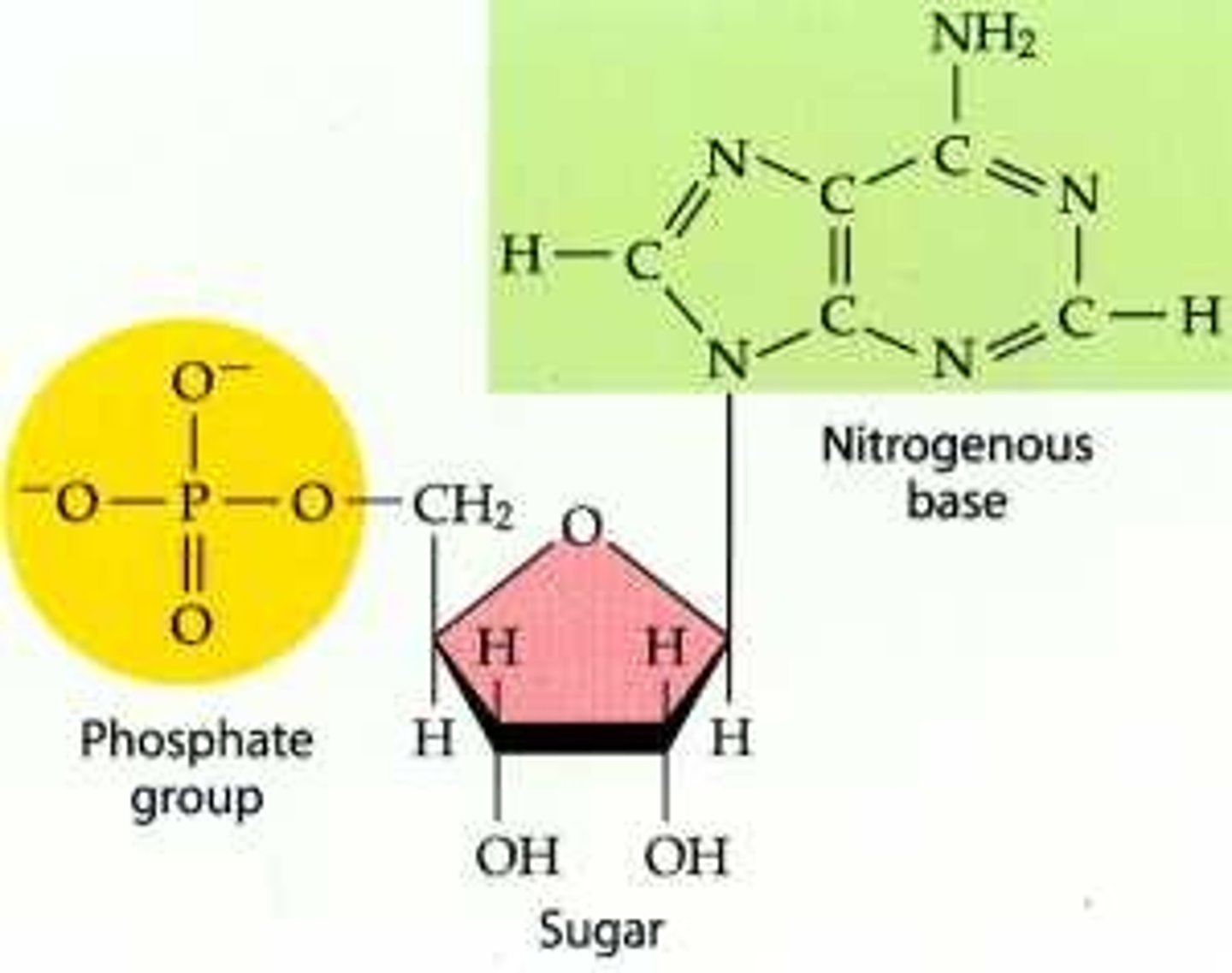
Steps of DNA replication
1. DNA unwinds and unzips
2.New nucleotides are added
3.2 identical DNA molecules result
What holds base pairs together?
Hydrogen bonds
Which of the following is the complementary strand to this DNA sequence: GAT CTG
CTA GAC
Which of the following is the complementary strand to this DNA sequence: TCA GAC
AGT CTG
Watson and Crick built models of DNA and compared it to a spiral staircase. This illustrates that DNA is...
A double helix
Chargaff's Rule states that DNA contains equal amounts of _____ and _____, as well as _____ and _____.
A, T; C, G
Prokaryotic cells differ from eukaryotic cells in that...
They don't have a nucleus to hold their DNA
Where is DNA stored in a eukaryotic cell?
nucleus
A nucleotide consists of what three parts?
A phosphate group, five carbon sugar, and nitrogenous base
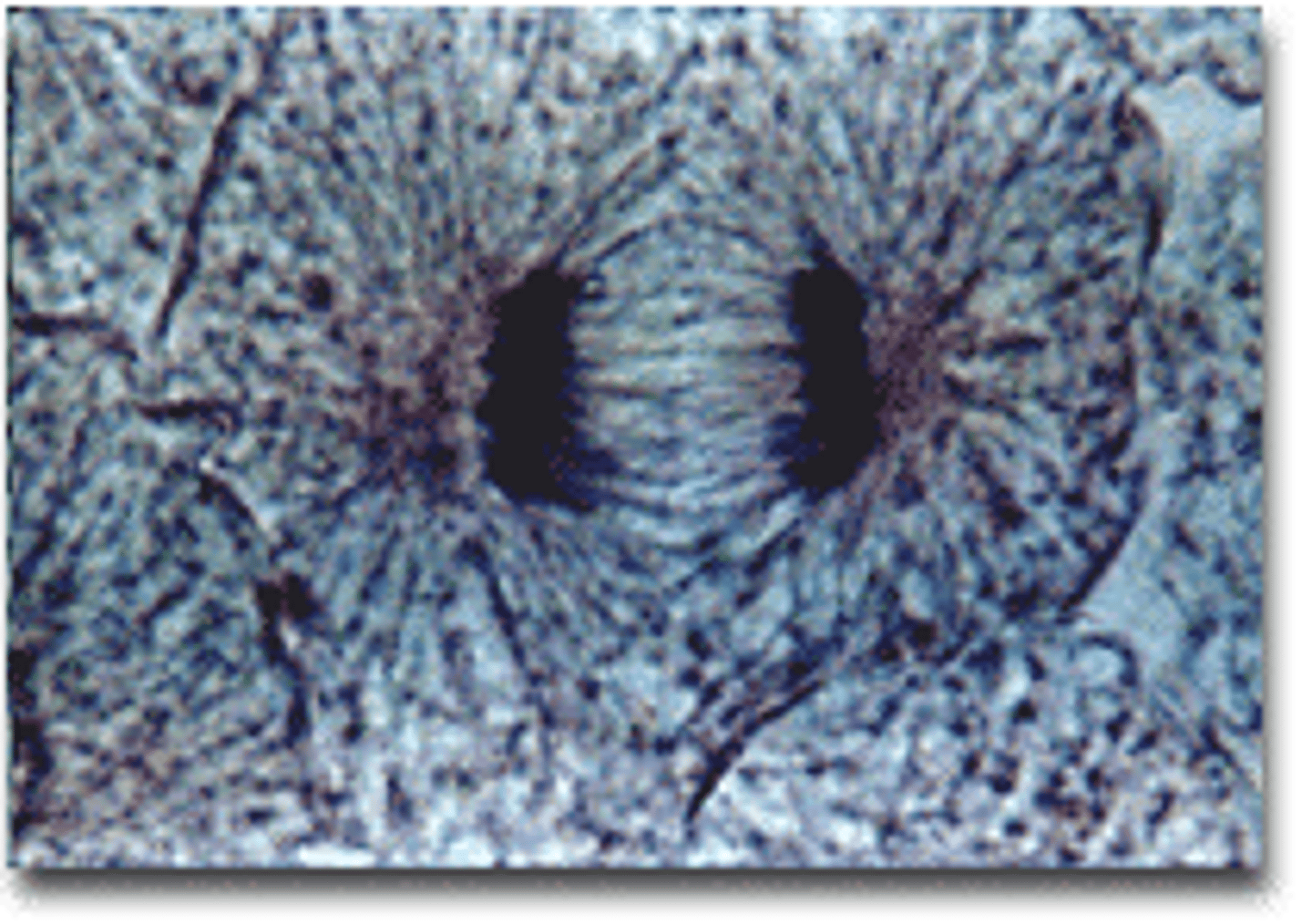
Anaphase
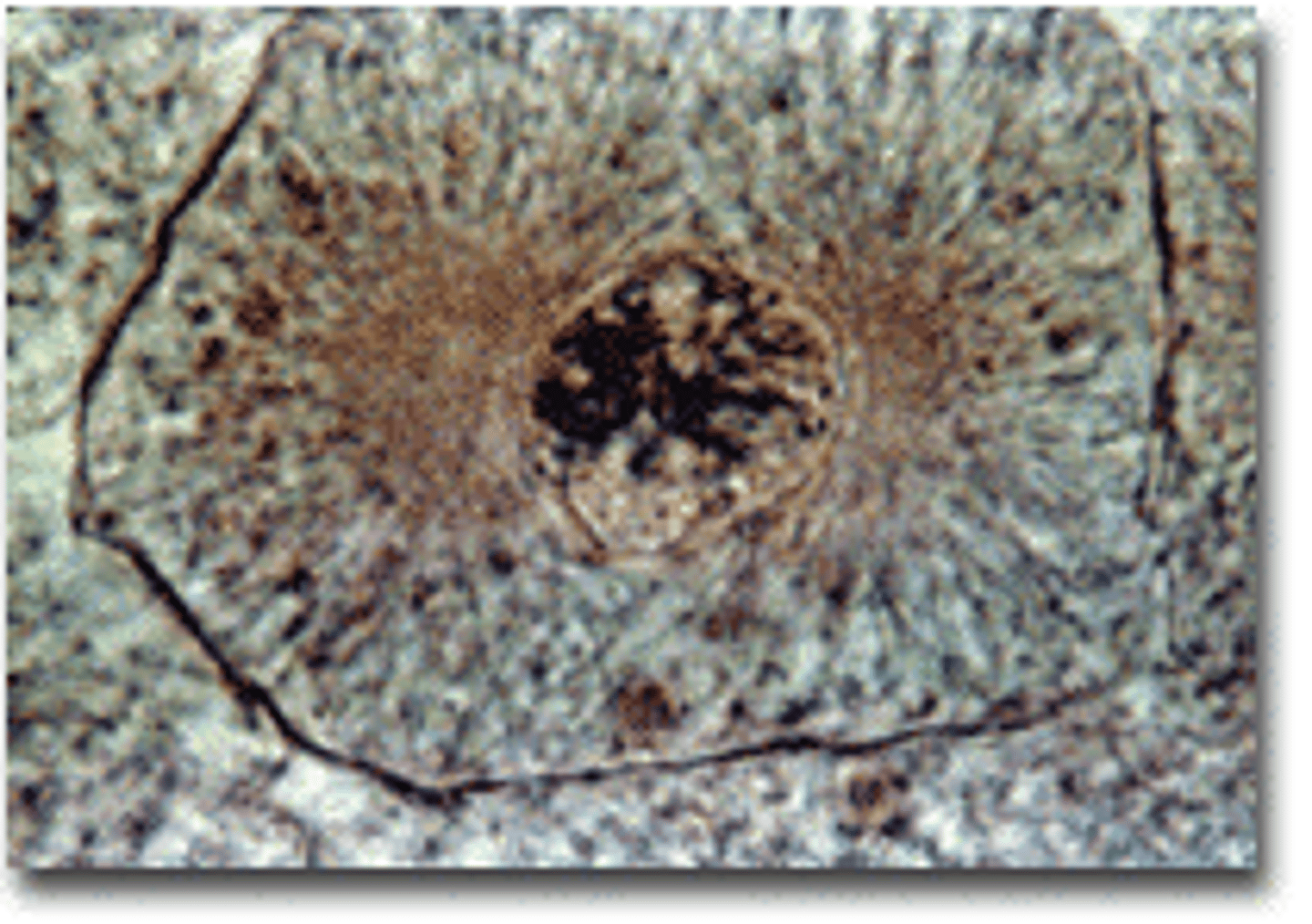
Prophase
Metaphase
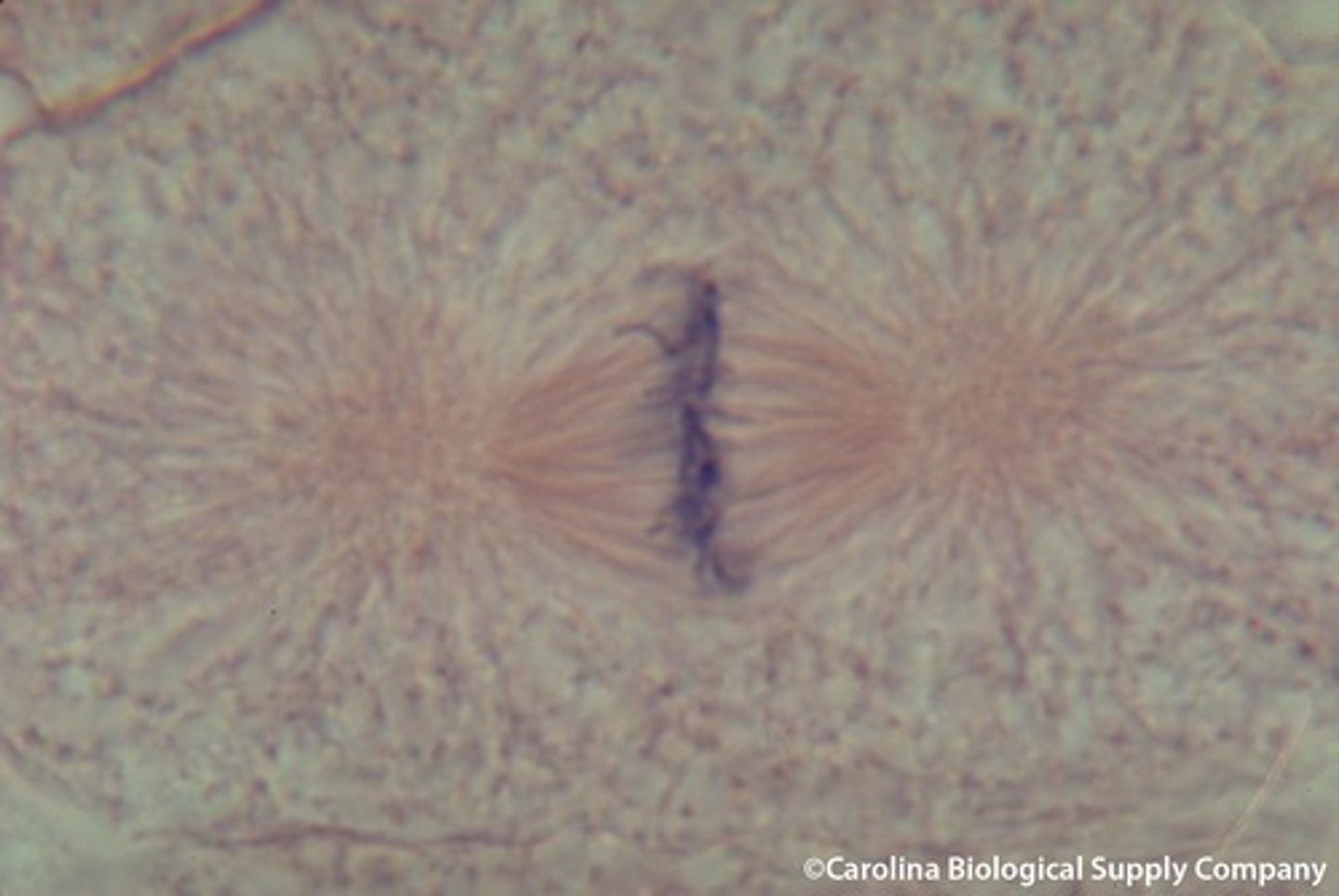
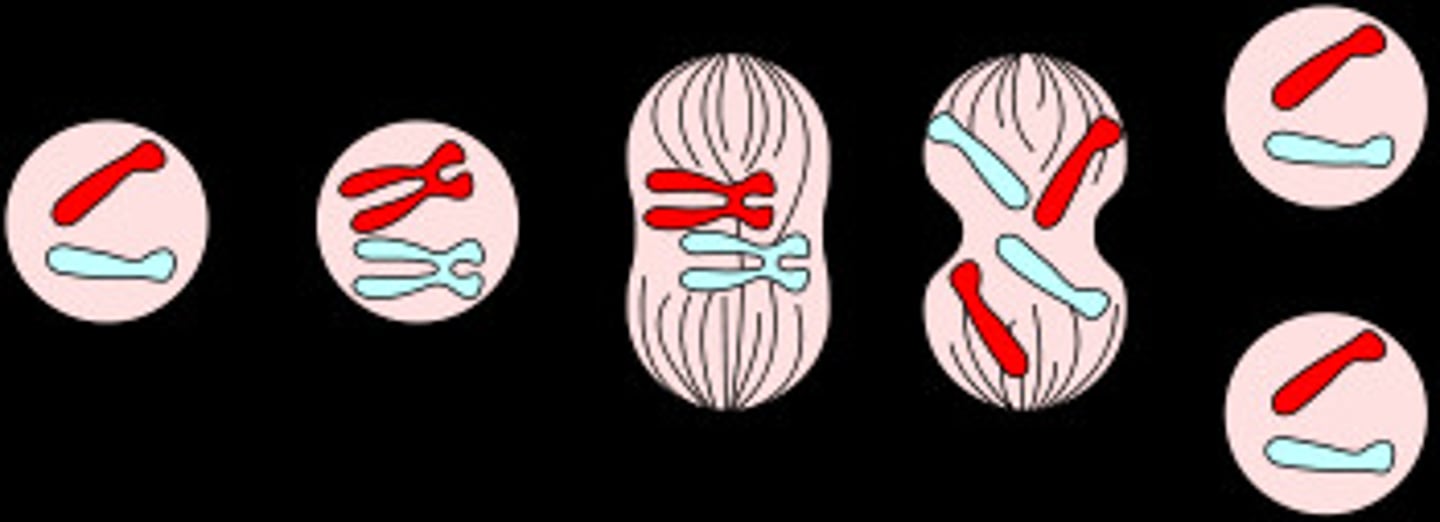
Mitosis
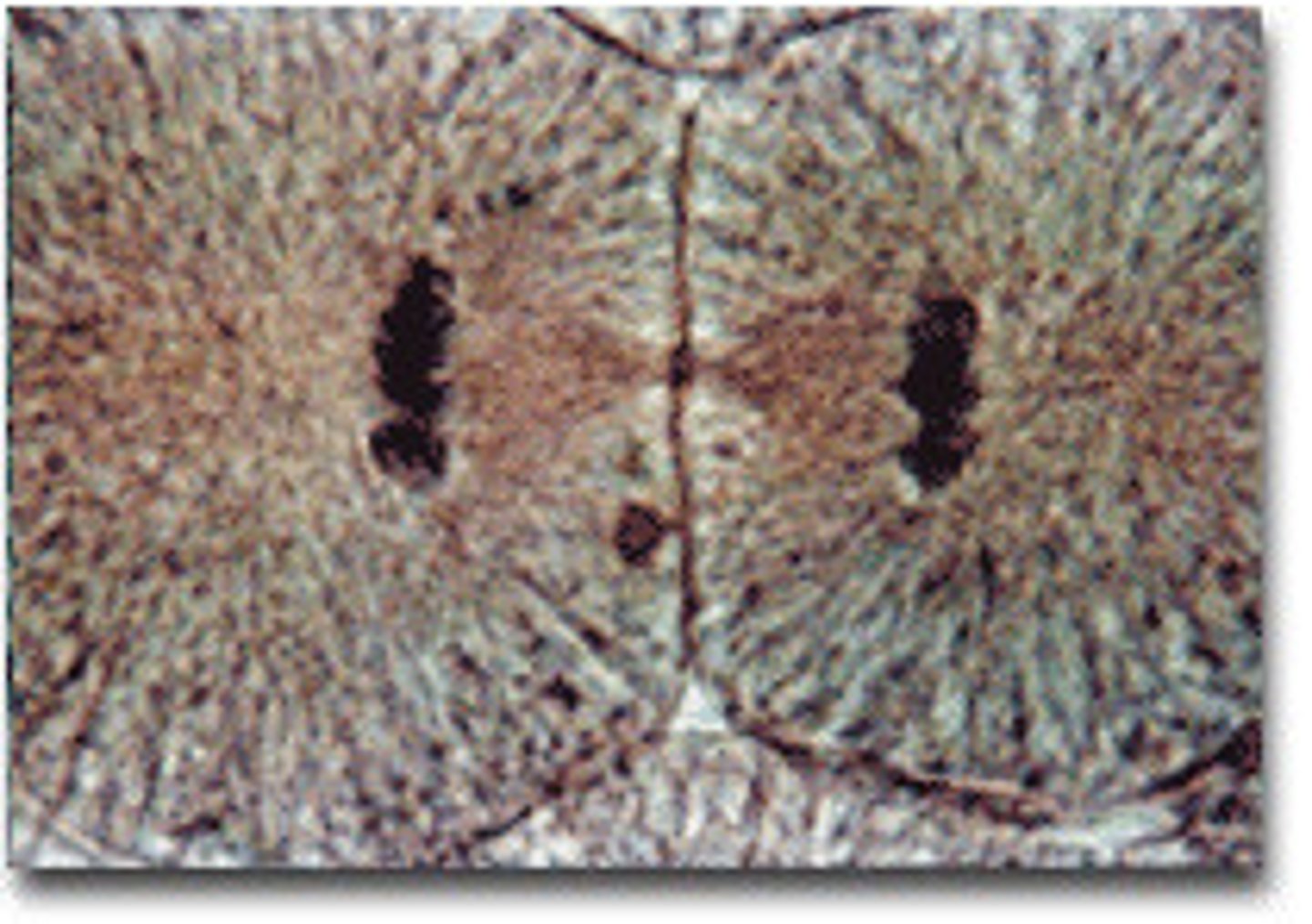
Telophase
Cell Cycle
The series of organized events that cells go through as they grow and divide, consisting of interphase and mitotic (M) phase
Interphase
The primary growth phase of the cell cycle, consisting of G₁ (growth), S (DNA synthesis), and G₂ (growth) phases
G₀ Phase
A non-dividing state that cells can enter during interphase when they exit the cell cycle