Basic Overview of the circulatory system
 Call Kai
 Learn
 Practice Test
 Spaced Repetition
 Match
 Flashcards
 Knowt Play
1/14

There's no tags or description
Looks like no tags are added yet.
15 Terms
The circulatory system
Main internal transport system of the body.
Cells have requirements – the circulatory system links the cells with the outside environment that meets these needs.
The circulatory system consists of:
§Blood vessels
§Heart
§Blood (4-5 L average adult female/5-6 L average adult male)
Functions of Circulatory system
Blue: Homeostasis (maintaining a constant internal environment despite fluctuations in the external environment)
Res: immunie cells responses
Greee: transportation

Blood – the transport medium
non cellular matrix : classify connective tissue
Plasma is a non cellular matrix

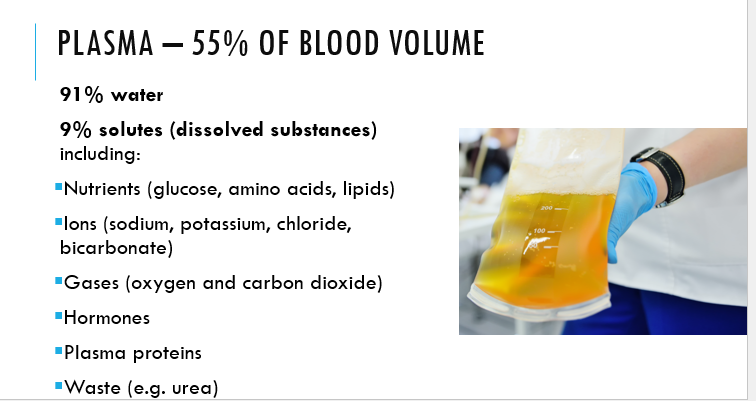
Plasma – 55% of blood volume
Formed elements – 45% of blood volume
Neutrophil, Lymphocyte, Monocyte and Baso phil are examples of white blood cells
RBC
WBS

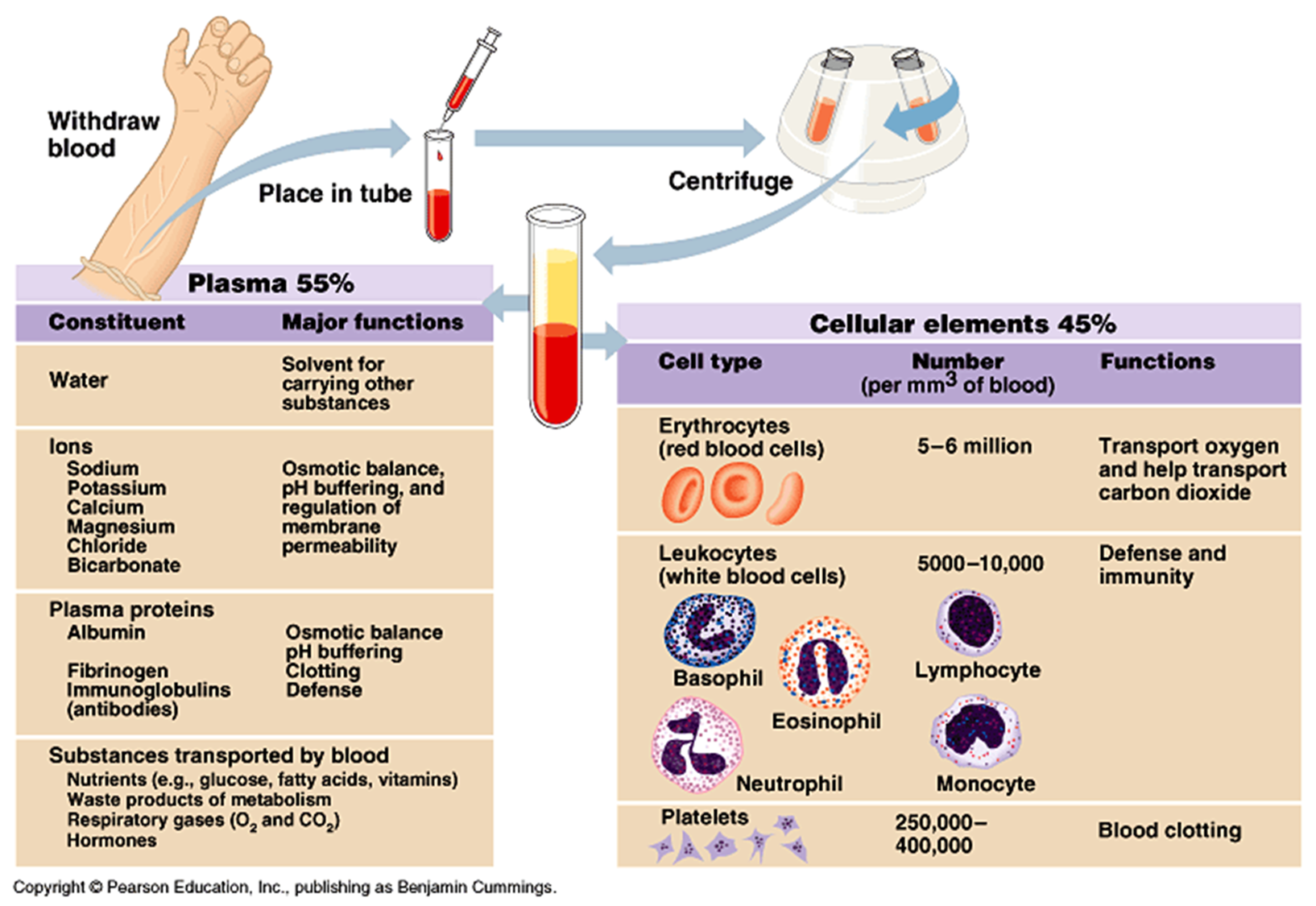
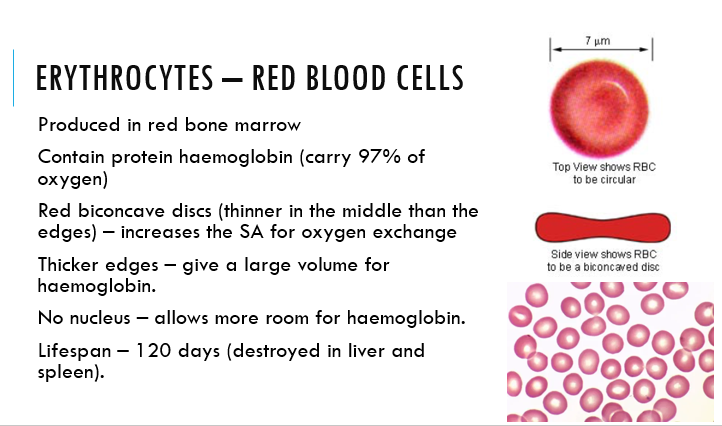
Erythrocytes – red blood cells
Leucocytes - white blood cells
Larger but much fewer in number than erythrocytes.
Remove dead or injured cells and invading pathogens
Lifespan – Live only a few days

Thrombocytes - platelets
Very small fragments, no nucleus.
Rough, irregular shapes
Formed in the red bone marrow
Important for normal blood clotting
Lifespan – 7 days
clot and stop further injury
cling onto things (like velcro) to help form clots
help them to attatch to sites of injury
Transporting gases - oxygen
97% combined with haemoglobin to form oxyhaemoglobin.
3% dissolved in plasma
Gas exchange occurs in lung capillaries
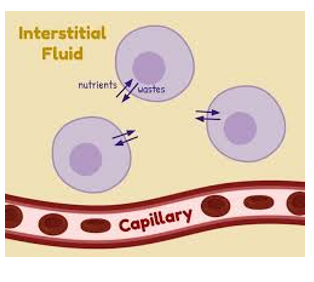
Oxygen is transported to intercellular (tissue) fluid surrounding cells (low conc O2 as cells constantly use oxygen)
Oxyhaemoglobin easily breaks down to haemoglobin and oxygen where oxygen conc is low.
oxyhaemoglobin (oxygenated blood)
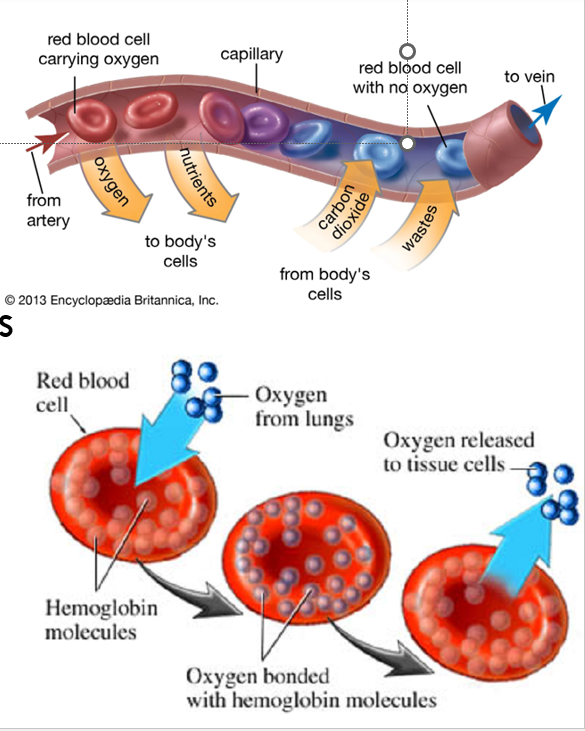

Transporting nutrients and wastes
Nutrients include inorganic mineral ions (e.g. sodium, calcium, potassium, chloride and iodide), and organic molecules (e.g. glucose, fatty acids, glycerol, vitamins and amino acids).
They are transported in the blood plasma from the small intestine via the intercellular (tissue) fluid surrounding the cells.
Metabolic wastes produced by cells include urea, creatine and uric acid - transported in the plasma to the kidneys for excretion.
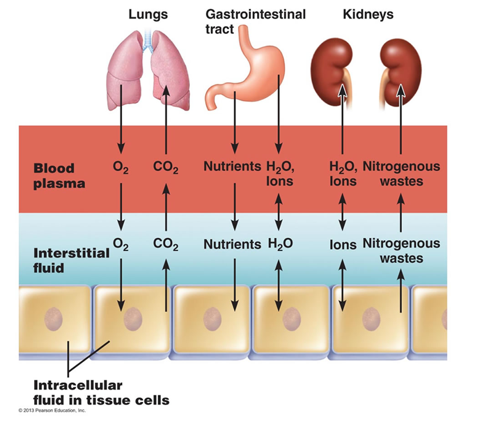
nitrogenous wastes —urea
helps maintain homeostatis
