Psychology Intelligence Theories, IQ Tests, and Assessment
 Call Kai
 Learn
 Practice Test
 Spaced Repetition
 Match
 Flashcards
 Knowt Play
1/35

There's no tags or description
Looks like no tags are added yet.
36 Terms
Intelligence definition
the ability to learn from experience, solve problems, and use knowledge to adapt to new situations
Reification
- an error of treating an abstract concept as though it has a real, material existence
- we often make this error when we think of intelligence as a trait or thing
2 contriversies over intelligence
1. Intelligence is a single overall ability or several specific abilities
2. Can we locate and measure intelligence within the brain with modern neuroscience techniques
Is intelligence neurologically measureable?
- some studies show some corrilation (.4) between the brain size and intelligence
- Gray matter is assosiated with intelligence
factor analysis
- a statistical procedure that identifies clusters of related items (called factors) on a test
- used to identify different dimensions of performance that underlie a person's total score.
Spearmans Two Factor Theory
- old theory, intelligence is single
G factor & S factor;
G = general intelligence, or abilities to reason & solve problems.
S = specific factors that account for particular abilities
Thurstone's Theory of Primary Mental Abilities
- old theory, intelligence is single
- 8 different factors make up intelligence (primary mental abilities)
Garder's Theory of Multiple Intelligences
- new theory, intelligence is multiple
- we have different types of intelligence that are independent of each other
- supported by savant syndrome
Sternergs Triarchic Theory
- new theory, intellignece is multiple
- different types of intelligence all work together
- three level model of intelligence
- Analytic intelligence (solving problems)
- Creative intelligence (deal with new situations)
- Practical intelligence (acomplish everyday tasks)
Emotional Intelligence
- Ability to percieve, understand, and use emotions
- Test measures 4 compontents:
- precieve emotion, understand emotion, manage emotion, use emotion
Fluid Intelligence
- ability to learn new things
- think abstractly + solve problems
- decrease with age (peaks in 30's)

crystallized intelligence
- prior learning + past experiences
- based on facts
- increases with age

Achievement test
a test designed to assess what a person has learned
- EX: STAAR
Aptitude test
a test designed to predict a person's future performance; aptitude is the capacity to learn
- EX: SAT
Intelligence test
- multiple forms
- used to measure intelligence
Reliability of test
the extent to which a test yields consistent results, as assessed by the consistency of scores on two halves of the test, on alternative forms of the test, or on retesting
validity of a test
the extent to which a test measures or predicts what it is supposed to
- content validity: test measures particular trait/behavior
- predictive validity: test function to predict traits
IQ distribution
- averge is 100
- bell curve
- standard deviation is 15 points
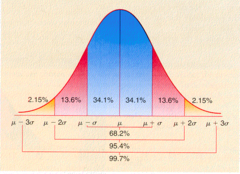
Standford Binet Scale
- created by Binet-Simon as a way to seperate SPED
- the tests yield mental age
brought to US by Louis Termin, Stanford made it yeild an IQ instead
IQ formula
IQ = mental age/chronological age x 100
Wechsler Scales
A set of widely used, individually administered intelligence tests
- WAIS-R (16+)
- WISC (7-16)
- WPPSI (4)
- Yields a verbal, non-verbal, and combined score
Probelms with intelligence test
- low income scores worse
- many children have no incentive to try
- culturally biased
Raven's Progressive Matrices
an intelligence test that emphasizes problems that are intended not to be bound to a particular language or culture
Fixed vs growth mindset
Fixed = Intelligence is a fixed trait that cannot be developed. Growth = Intelligence is a malleable quality that can be developed and cultivated through effort. Carol Dweck.
Flynn Effect
The rise in average IQ scores that has occurred over the decades in many nations (3 points a decade)
Genetic influences of intelliegence
- studies show their is a genetic influence to intelligence
Environmental influecne to intelligence
- environment also inlfuences intelligence
- show with twins, fraternal, identical
Early intervention effects
early neglect and lack of control over environment causes children to have lower intellignece,
External locus of control
having no control over environment
internal locus of control
having control over environment
schooling effect
increased school correlates with higher intelligence scores
ethnic similarities and differences
1. Racial groups differ in their average intelligence scores.
2. High-scoring people (and groups) are more likely to attain high levels of education and income.
Racial Group Differences
- wider differences within groups than between
- asiain, white, hispanic, black
- very little difference in sex
stereotype threat
a self-confirming concern that one will be evaluated based on a negative stereotype
stereotype lift
Improved performance due to positive stereotypes.
poverty discrimination
When poverty affects the ability of a person to stay in school; dropping out of school due to poverty affects intelligence test results.