Chapter 14: Mendel and the Gene Idea
 Call Kai
 Learn
 Practice Test
 Spaced Repetition
 Match
 Flashcards
 Knowt Play
1/61

There's no tags or description
Looks like no tags are added yet.
62 Terms
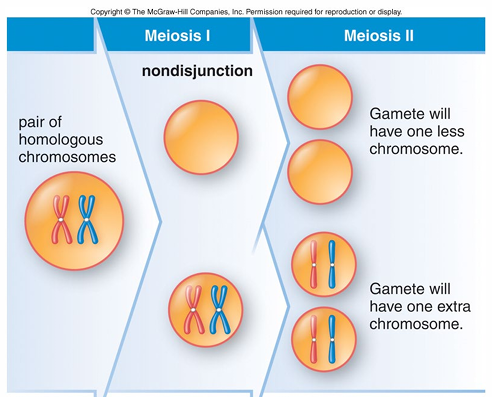
When is the Law of Segregation violated?
In cases of trisomy, non-disjunction, and monosomy.
Heredity
Discipline of biology that seeks to understand how genes or genetic traits are passed from parents to offspring.
Genes are instructions that:
Tells the cell what proteins to make and how to build them.
When to build the proteins and when to stop.
How much of the protein is to be made.
Where will the proteins be use.
Some genes direct the synthesis of proteins while others genes regulate this process.
Genes are encoded in DNA. It contains instruction on how amino acids and other macromolecules are to be joined to make the cells that make up the body.
Grego Mendel
The scientific understanding of heredity began with Gregor Mendel.
Father of Mendelian Genetics.
Mendel was a priest/scientist whose research involved crossing peas with different characteristics to determine what traits would be passed on their offspring.
Essentially Mendel wanted to find out what traits were passed on from the parents to their offspring.
Mendelian Genetics
Branch of genetics that looks at specific genes and the trait that one specific gene gives arise to.
The study of heredity in which one gene will determine whether or not person will have a particular trait.
In Mendelian Genetics, we are looking at one gene and one trait. In one gene there is more than one trait.
In Mendelian Genetics, one gene determines whether or not an individual will possess a particular trait or not.
Not all understanding of genetics will fit nicely in the understanding of Mendel Genetics.
True Breeding/True Bred
The offspring will have the same identifiable traits as their parents.
Gregor Mendel didn’t know about incomplete dominance or codominance.
Hybridization
Mating two true breeding varieties
P generation
True breeding parents
F1 Generation
The hybrid offspring of the P generation.
F2 Generation
When F1 individuals self pollinate, then F2 generation is produced.
“Heritable factor for purple flowers”
Dominant trait
“Heritable factor for white flowers”
Recessive trait
What Mendel called a “ heritable factor” is what we now call a…
Gene
• This 3:1 ration of inheritance can only be inherited if the F1 generations were PP (…) and pp (…).
homozygous dominant/homozygous recessive
Alleles
Genes that give raise to that particular trait. Can be dominant or recessive.
Genes are found in non homologous chromosomes, randomly separated into gametes.
PP
Homozygous dominant
Homozygous recessive
pp
Heterozygous
Pp or pP
Phenotype
Says what the individual i going to express.
The dominant allele determines the organism’s experience or trait.
Law of Segregation
States that two alleles separate during meiosis and end up in different gametes. During Meiosis, diploid cells undergoes meiosis. The alleles are going to be separated into gametes individually.
A gamete gets only one of the two alleles that are present in the parent cell.
→ Only one of the two alleles for a gene is put into a gamete. At fertilization, offspring receive from each parent one allele for each gene.
Punnett Square
Diagram for predicting the results of a genetic cross between individuals of known genetic makeup.
Homozygous
An organism with two identical alleles (bb or BB) for a specific trait.
heterozygous
An organism that has two different alleles for a gene.
Genotype
Alleles that an organism possess for that particular trait (bb)
Phenotype
The physical expression for the alleles
Ex: physical appearance, internal anatomy, physiology, and behavior.
An organisms phenotype is affected by both its overall genotype and the environmental it is in.
Monohybrid
A punette square involving only one trait
Dihybrid
A punette square with 2 traits
Testcross
Breeding the mystery plant with homozygous recessive individual (Pp?PP? X pp)
Law of independent assortment
Genes found on non homologous chromosomes will randomly (independently) be segregated (distributed) into gametes found in the two sister chromatids.
Its random.
This law only applies to genes on non homologous chromosomes and exclude genes located near each other on the same chromosome.
When do inheritance patterns deviate from simple Mendelian patterns in the following situations?
When alleles are co-dominant
When alleles have incomplete dominant
When a gene/trait has more than two alleles responsible for it
When one gene produces multiple phenotypes/characteristics
Codominance
Both alleles are expressed
Incomplete dominance
The phenotype of f1 hybrid is somewhere between the phenotype of the two parental varieties.
Ex: red flower x white flower = pink flower
Traits with multiple alleles
Most traits or phenotypes exist in populations in more than two allelic forms.
Pleiotropy
A single gene can have multiple phenotypic effects.
Most human traits are determined by multiple genes including traits such as height, eye color, skin color, immunity, enzymes.
Frequency of dominant alleles
Dominant alleles are not necessarily more common in populations than recessive alleles.
Epistasis
Two more genes interact to control a single phenotype.
Due to epistasis genes can: cancel each other’s presence, combine to produce an entirely new phenotypic trait.
Qualitative traits
traits that vary along a continuum or on a spectrum (skin color, hair color, height, and eye color)
It is believed group of genes interact together to produce the varying phenotype.
Polygenes
Group genes responsible for these spectrum traits that cause quantitative traits.
Polygenic inheritance
Quantitative variation indicates polygenic inheritance an additive effect of two or more genes interacting to produce a single phenotype.
Polygenic inheritance involves polygenes.
Polygenic traits vs Epistasis
Related but not the same.
Epistasis is where one allele can either cancel out or create a new phenotype. Polygenic inheritance is where many genes interact to produce a spectrum of phenotype.
Environmental impact on phenotype
Can be influenced by the environment ph, temperature, nutrient availability etc.
Pedigree
A record of the interrelationships of parents and children across generations. Presented as a chart.
Allows genetics to: observe inheritance patterns of a particular trait, make predictions about future offspring, determine whether a particular trait is recessive or dominant.
PKU
Individual cannot convert the amino acid phenylalanine to tyrosine due to lack of the enzyme phenylalanine hydroxylase. It is instead converted to toxic phenyl pyruvate = phenyl ketone which is toxic to the cell.
Symptoms: mental retardation (prevents normal brain development), ADHD
No treatment but a monitored diet low in protein can avoid problems.
Cystic Fibrosis
Most common lethal genetic disease in the U.S.A.
It results in defective or absent chloride ion channels leading to physiological effects like:
mucus build up in the lungs (repeated pneumonia),
damage to insulin producing pancreatic cells leading to type I diabetes,
inability to digest and absorb food due to pancreatic duct block by mucus,
sterility in 97% men (no vas deferens) and 20% of women.
Tay Sach
Hex A (needed to break down fatty acids called gangliosides) enzyme deficiency causes toxic ganglioside buildup in neurons, leading to cell death.
Causes rapid mental and physical deterioration, typically resulting in death by age 4.
Pre-implantation Genetic Diagnosis (PGD) allows carriers to screen embryos and have healthy children.
Sickle Cell Disease
Cause: A single amino acid substitution in hemoglobin causes red blood cells to deform into a sickle shape.
Symptoms: Physical weakness, severe pain, organ damage, impaired immunity, ulcers, paralysis, and risk of death.
Prevalence & Evolutionary Role: Affects 1 in 500 African Americans; common in malaria-endemic areas as the gene likely evolved to provide malaria resistance.
Thalassemia
• Faulty recessive gene causes malformed RBC, leading to severe anemia, hemochromatosis (high Fe), bone abnormalities and spleen enlargement.
Galactosemia
Cause: Deficiency in the enzyme needed to digest galactose leads to the accumulation of toxic galactitol.
Effects: Causes severe complications including liver damage, renal failure, seizures, hypoglycemia, brain damage, and ovarian failure.
Treatment & Prognosis: Complete dietary elimination of galactose; untreated infant mortality is approximately 75%.
Consanguineous mating
Increases the probability of the appearance of genetic disease.
Disorders caused by a dominant allele
Individuals who are homozygous dominant or heterozygous will express that allele or trait: Huntington disease, achondroplasia, neurofibromatosis, progeria
Huntingtin Disease
• Gradual deterioration of the brain leads to loss of motor control, cognitive deterioration i.e. dementia and eventually death.
• Symptoms don’t usually show up until person is usually in his/her 30-40s
• Due to having many repeats of CAG nucleotides on chromosome 4– CAG < 40 unaffected– CAG > 40 affected
Achondroplasia
• Heterozygotes display a type of dwarfism– Have short arms and legs relative to other body parts
• If homozygous dominant form (AA), the person is born stillbirth or dies after birth.
Neurofibromatosis (Reckinghausen disease)
• Tumor forms on nerve tissues causing brown, painful bumps under the skin, skeletal problems and neurological problems.
Hutchinson-Gilford Progeria
• Individuals aged rapidly, about 7X normal rate, with death occurring around early teens
• The spontaneous mutation results in a faulty progerin protein, which is needed for mitosis.
X-Linked Allele
The gene (alleles) responsible for these diseases are found only on the X chromosomes. • X-linked genetic diseases include:
– Color blindness
– Hemophilia
– Duchene muscular dystrophy
• These alleles are all recessive and only female can be carrier of these diseases,
Color blindness
• Inability to see certain colors, usually green or red colors
Hemophilia A and B
• Sufferers lack proteins called clotting factors (VIII for A and IX for B) needed for blood to clot normally.
• Potentially fatal if internal bleeding is untreated especially around knees, elbows, elbows.
Duchene Muscular Dystrophy
• Individuals lack normal dystrophin protein, a necessary component of muscle.
• Causes muscle degeneration/loss especially around the thorax and upper legs, leading to loss of motor control and eventually death.
Tests for Identifying Carriers
• For a number of chromosomal and genetic diseases, tests are available that identify carriers and help define the odds more accurately
• These tests include:
– Amniocentesis
– Chorionic villi sampling
– Fetoscopy
– Ultrasounds
Amniocentesis
• Amniotic fluid removed and fetal cells isolated, grown, fixed, stained, and karyotype
Chorionic Villus Sampling
• A sample of the chorion (part of the placenta) is removed and karyotype
Fetoscopy
An endoscope is inserted into the amniotic sac (after week 18) to directly visualize the fetus, detect birth defects (e.g., spina bifida), and obtain umbilical cord biopsies.
Ultrasound: Uses low-frequency sound waves to visualize the fetus, assessing gestational age, viability, sex, location, and number of fetuses.