MSK equine examination- practical preparation SDL (NMSK)
 Call Kai
 Learn
 Practice Test
 Spaced Repetition
 Match
 Flashcards
 Knowt Play
1/13

There's no tags or description
Looks like no tags are added yet.
14 Terms

identify these points on the forelimb:
§Shoulder
§Elbow
§Carpus
§Metacarpophalangeal joint
§Proximal interphalangeal joint
§Distal interphalangeal joint


label these §Scapula (and spine of scapula)
§Humerus
§Radius
§Ulna (and olecranon)
§Carpal bones
§Metacarpal bone 3
§Metacarpal bones 2&4
§Phalangeal bones P1, P2,P3


Identify the following joints of the hindlimb on the pony and the skeleton
§Hip
§Stifle
§Tarsus
§Metatarsophalangeal joint
§Proximal interphalangeal joint
§Distal interphalangeal joint


Identify the following bones of the forelimb on the pony and the skeleton
§Pelvis (ileum, ischium, pubis)
§Femur
§Tibia (and fibula)
§Small tarsal bones, talus and calcaneus
§Metatarsal bone 3
§Metatarsal bones 2&4
§Phalangeal bones P1, P2,P3

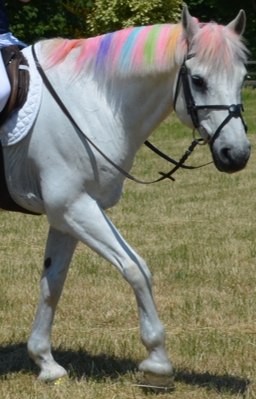
Lay terminology:
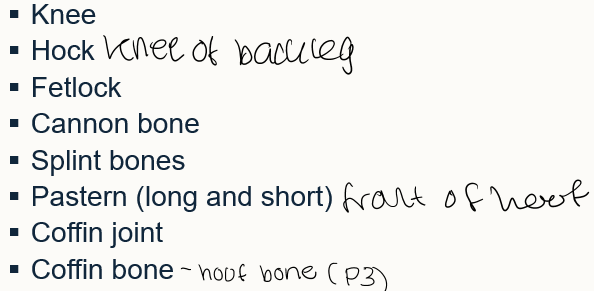
Knee
§Hock
§Fetlock
§Cannon bone
§Splint bones
§Pastern (long and short)
§Coffin joint
§Coffin bone
splint bone: behind the cannon bone
how should hoof be oriented
hoof pastern angle = 45 degrees
ground to wall angle parallel at heel and toe

what does broken back mean regarding hooves
foot pastern axis

what does broken forward mean regarding hooves
foot pastern axis - describe balance

basic horse conformation and posture front angle

basic horse conformation and posture back angle

basic horse conformation and posture what must you assess? (3)
lines of weight-bearing, symmetry, posture - look from different angles
static exam - conformation and posture, side angle
straight line down back of hock, metatarsals, back of fetlock
assess muscle development inc. back and pelvis

static exam palpation
feel underlying bones and soft tissue - detect inflammation