Plant Bio Lecture 15
 Call Kai
 Learn
 Practice Test
 Spaced Repetition
 Match
 Flashcards
 Knowt Play
1/60

There's no tags or description
Looks like no tags are added yet.
61 Terms
anther
filament
stamen
stigma
style
pistil
ovary
calyx
sepal
sepals
ovule
receptacle
peduncle
petal
petals
corolla
label

anther
where is pollen produced
pistil
what is female part of the flower
stigma
where does pollen land if there is going to be pollination
ovule
what is inside the ovary in a plant
egg
what does ovule contain
seed
what does ovule mature into
beetle and hepatica
what is this an example of

beetles
what were the first pollinating insects
beetles
flies
____ attracted to pollen
_____ attracted to what they though was a dead animal
hepatica
what purple flower has sepals that look like petals
carrion fly and african milkweed
example of what
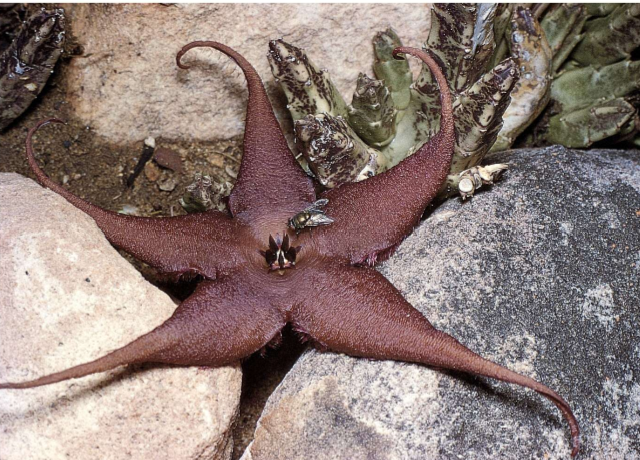
flies
smell really bad so flies lay their eggs there
what is the african milkweed pollinated by
how does it attract pollinators
inside
where are the stamens in african milkweeds
bee and rosemary
example of what

bees
who are the most important pollinators
blue/purple wavelengths + UV light
what wavelengths can bees see very well
bilateral symmetry, blues/purples, and fused parts (adnation)
what traits do you see in bee pollinated plants
honey guides on digitalis (foxglove)
example of what

head to the back of the flower to get the nectar so it gets pollen on it
how do bees pollinate this big flower

butterfly and daisy
example of what
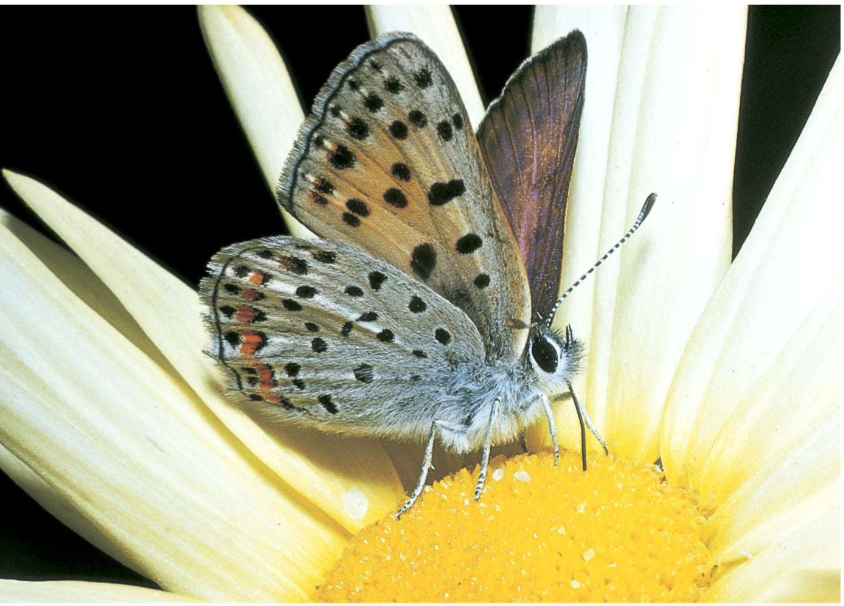
long feeding tubes
what do butterflies and moths produce so they can reach the nectar tubes on the plants they pollinate
white flowers b/c most are nocturnal
what colors flowers are moths most attracted to? why?
hummingbird and scarlet monkey flower
example of what

red
what color flower are hummingbirds most attracted to that a lot of insects can’t see
long feeding tubes
what do hummingbirds have to reach the nectar tubes
to be worth all the energy they have to use to flap their wings
what do hummingbird pollinated plants have a lot of nectar
no, birds can’t smell so strong
do bird pollinated plants need a strong scent
bat and organ pipe cactus
example of what

at night b/c bats are nocturnal
no
when do cacti usually open their flowers? why?
are their flowers showy?
wind pollination
what kind of pollination

anthocyanins
what produces red pigments
xanthophylls
what produces yellow pigments
inside the anther
Where are microspore mother cells located?
pollen grains (male gametophytes)
What do microspores eventually develop into?
Two cells: a generative cell and a tube cell.
How many cells are in a typical mature pollen grain before the generative cell divides?
Divides to produce two sperm cells.
What is the function of the generative cell?
Inside the ovules within the ovary.
Where are megaspore mother cells located?
3
How many rounds of mitosis does the surviving megaspore undergo?
8
How many nuclei are produced after three rounds of mitosis?
One egg cell, two synergids, three antipodal cells, and a central cell containing two polar nuclei.
What structures are found in a typical mature embryo sac?
Help guide the pollen tube toward the egg.
What is the function of the synergids?
Fuse with one sperm cell during double fertilization to form the primary endosperm nucleus.
What is the function of the polar nuclei?
Help support and nourish the developing embryo sac.
What is the function of the antipodal cells?
Microsporogenesis
The process in which a diploid microspore mother cell undergoes meiosis in the anther to produce four haploid microspores, which eventually develop into pollen grains.
Vegetative (tube) cell
A cell inside a pollen grain that develops into the pollen tube, allowing the two nonmotile sperm cells to travel to the egg inside the ovule for fertilization.
Generative cell
A cell inside a pollen grain that divides to produce two sperm cells, which participate in double fertilization.
Megasporogenesis
The process in which a diploid megaspore mother cell undergoes meiosis inside the ovule to produce four haploid megaspores, typically with only one surviving to develop into the female gametophyte.
Funiculus
The stalk that attaches the ovule to the ovary wall and provides a pathway for nutrients to reach the ovule.
Micropyle
A small opening in the integuments of an ovule that allows the pollen tube to enter and deliver sperm cells for fertilization.
Chalazal
Refers to the end of the ovule opposite the micropyle, where the integuments and nucellus meet near the attachment of the funiculus.
Embryo sac
The female gametophyte of flowering plants, located inside the ovule, that typically contains 7 cells and 8 nuclei, including the egg cell involved in fertilization
Egg cell
The haploid female gamete located inside the embryo sac of an ovule that fuses with a sperm cell during fertilization to form a diploid zygote.
Polar nuclei
Two haploid nuclei located in the central cell of the embryo sac that fuse with one sperm cell during double fertilization to form the triploid endosperm nucleus.
Synergids
Two cells located next to the egg cell in the embryo sac that help guide the pollen tube toward the egg for fertilization.
Antipodals
Three cells located at the chalazal end of the embryo sac, opposite the egg cell, that help provide nutrients and support to the developing embryo sac.
Pollination
The transfer of pollen grains from the anther to the stigma of a flower, allowing fertilization to occur.
Double fertilization
A process in flowering plants where one sperm cell fertilizes the egg to form a diploid zygote (2n), while the other sperm cell fuses with the two polar nuclei to form triploid endosperm (3n), which provides nutrients to the developing embryo.
Endosperm
A nutrient-rich tissue formed during double fertilization in flowering plants that is typically triploid (3n) and provides nourishment to the developing embryo.
Zygote
A diploid (2n) cell formed when a sperm cell fertilizes an egg cell, which develops into an embryo.
Triple fusion
The fusion of one sperm cell with the two polar nuclei in the embryo sac during double fertilization, forming a triploid (3n) nucleus that develops into the endosperm.