BIO221 Zoology - Phylum Arthropoda, Subphyla Crustacea & Hexapoda (class Insecta)
 Call Kai
 Learn
 Practice Test
 Spaced Repetition
 Match
 Flashcards
 Knowt Play
1/12

There's no tags or description
Looks like no tags are added yet.
13 Terms
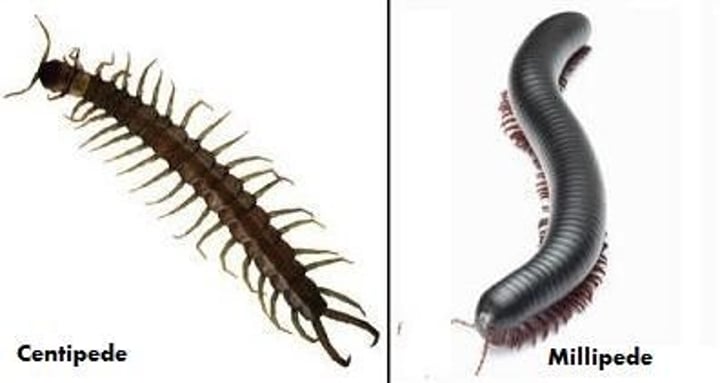
basic body plan of centipedes and millipedes
-in subphylum myriapoda
-2 body parts: head & trunk
-1 pair antennae
-mandibles for chewing
-maxillae for handling food
-uniramous appendages
distinguishing centipedes from millipedes?
-CENTIPEDES= 1 pair legs per segment, dorsally flattened
-MILLIPEDES= 2 pairs legs per segment
basic body plan of generalized Crustacean (decapod)
-2 major body parts: ABDOMEN and CEPHALOTHORAX
-cephalothorax covered by CARAPACE (dorsal extension of head)
-GILLS between carapace and chitinous membrane surrounding abdomen
-2 pairs antennae (1st=biramous)
-mandibles= grind & shred
-MAXILLAE & MAXILLIPEDS= hold and manipulate food
-CHELIPED- appendage w large chela used for crushing food
functions of legs in crustacean (decapod)
-PEREOPODS= used for walking
-SWIMMERETS= used for swimming
-UROPODS & TELSON= flat region for rapid backwards movement
classes of crustaceans
malacostraca and hexanuplia
orders within class malacostraca
-order DECAPODA (crabs, lobster, shrimp, crayfish- economically important)
-order ISOPODA (isopods- 7 pairs legs, dorsally-ventrally flattened)
orders within class hexanauplia
-order THECOSTRACA (barnacles- marine filter feeders, monecious)
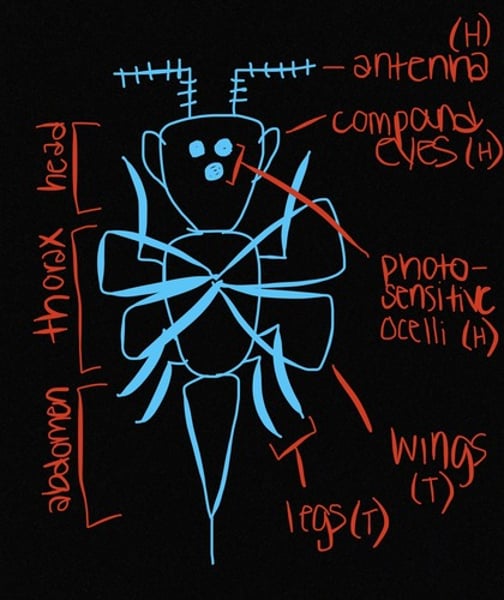
generalized insect diagram
different types of metamorphosis
ametaboly, hemimataboly, holometaboly
ametaboly
NO metamorphosis, simply grows and molts
hemimetaboly
adults with wings
holometaboly
includes 4 stages
why are native plants critical to bird populations?
-introduced invasive and ornamental plants do not support native insects
-90% insects specialize on 1-3 families of native plants
-insects haven't had the opportunity to evolve to eat them
-birds that feed on insects need native plants to provide them with insect food