Art History Exam #2 Empires in Japan and China
 Call Kai
 Learn
 Practice Test
 Spaced Repetition
 Match
 Flashcards
 Knowt Play
1/11

There's no tags or description
Looks like no tags are added yet.
12 Terms
Jade
Green mineral including nephrite and jadeite
Stoneware
Ceramic fired at a high temperature making it strong and non-porous
Lacquer
Liquid made from sap f the lacquer tree that creates a shiny, water reisttant coating on surfaces
Handscroll
Asian painting that is viewed slowly by slowly unrolling it from right to left
Negative space
Empty areas in an artwork that surround or appear between objects and figures
Provenance
The history of ownership of an artwork
Haniwa warrior
From Iizuka-cho, Ōta City, Gunma Prefecture, Han dynasty
Kofun period, Japan Earthenware (pottery made from clay at a low temperature. Hollow clay figure with stylized facial features and round eyes.Placed on or around an elite burial mound. Funerary objects have ideals about protecting and honoring the deceased in the afterlife. The warrior’s armor and clothing reflect a stratified society and the importance of military power and elite status in Japan.

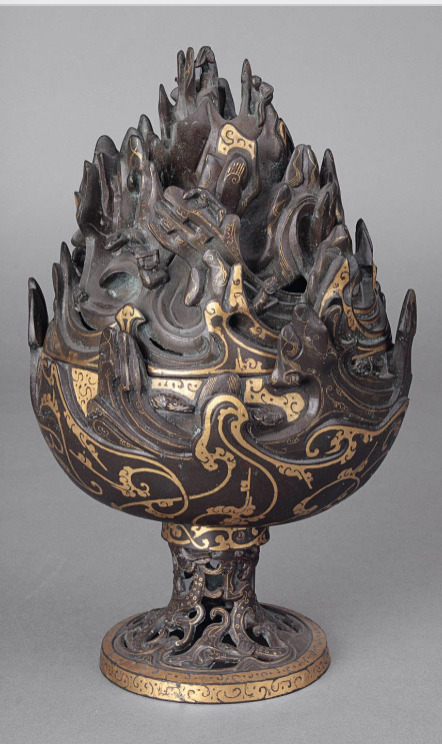
Incense burner in the form of the Island of the
Immortals
Tomb 1 of Liu Sheng, Mancheng, Hebei, Province China Han Dynasty. Bronze and metal work. Art and spirituality connected in ancient china. Funerary sacred mountains and island were the dwelling place immortals who possessed the secrets to eternal life. Boshanlu and Daoism harmony with the way. Liu sheng was a han prince objects placed within his tomb were thought to help him in the afterlife.
Orchid Pavilion Preface,
detail
Tang dynasty copy attributed to Feng Chengsu, after a lost original by Wang Xizhi. Handscroll: ink on paper. Elevated calligraphy to the highest form of artistic expression in Chinese culture. Beauty of written brushstrokes (Running script). Wang Xizhi, “Sage of Calligraphy”

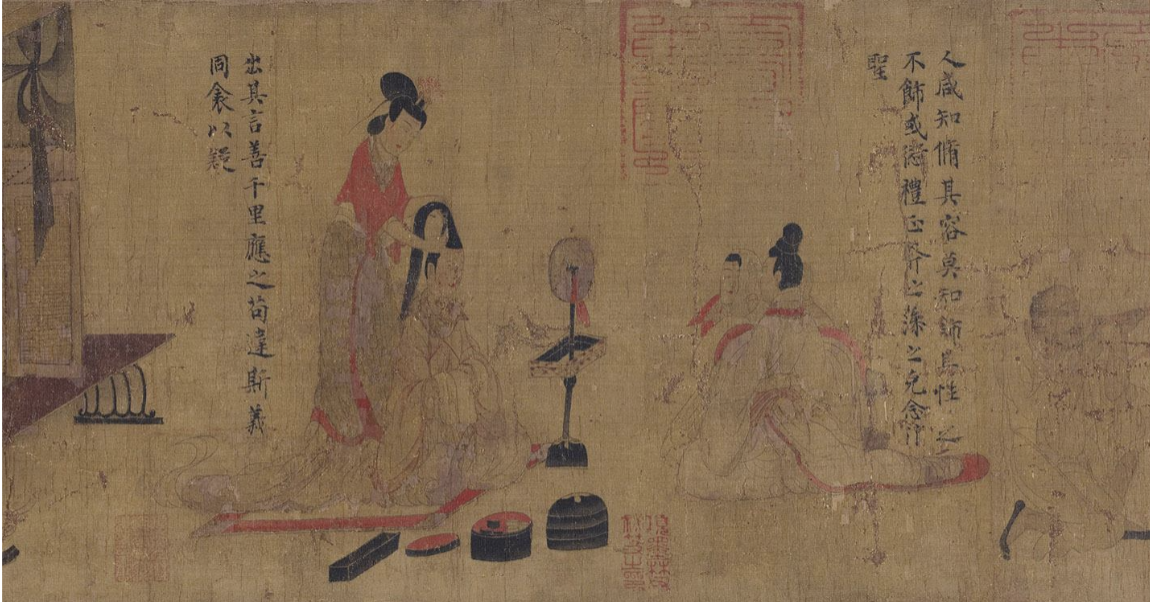
Admonitions of the Instructress to Court Ladies (detail)
Tang dynasty copy of a fourth- or fifth-century handscroll painting by Gu Kaizhi. Ink and color on silk. handscroll uses elegant line and storytelling to promote Confucian moral values. One of the earliest examples of Chinese narrative figure painting. Gu Kaizhi
Seated Buddha
Hebei province, China, later Zhao period (319–51), 338 CE, Gilt bronze. Early spread of Buddhism into China through the Silk Road. Cultural exchange between India, Central Asia, and China. Political division in China, Silk Road trading, and Buddhism in China.

Colossal seated buddha
Yungang Caves (Cave 20), Shanxi Province, China, Northern Wei dynasty, c.
460–65. Sandstone. Buddha is seated in meditation, the face of wisdom and spiritual authority. Pilgrimage and devotional site, symbolizing the growing power of Buddhism and its importance to the Northern Wei state.
