Lesson 10_Learning, Memory+Addiction
 Call Kai
 Learn
 Practice Test
 Spaced Repetition
 Match
 Flashcards
 Knowt Play
1/12

There's no tags or description
Looks like no tags are added yet.
13 Terms
long-term potentiation
synaptic responses are dramatically and lastingly enhanced for hours or days.
mediated by glutamate receptors specifically the NMDA receptor.
Prominent in the hipocampus and is involved in memory acquisition +storage.
Early LTP:AMPA receptor modification 1-3hrs no new protein synthesis needed.Late LTP:new protein synthesis, dendritic spine growth days-years

ionotropic responses in memory
Ions passing thru channels.
low lvls of activation, lil amount of glutamate released. Post synaptic response is controlled by AMPA receptors. The pore of NMDA receptors is blocked by Mg2+.
metabotropic responses in memory
secondary messenger cascade, increase in proteins and enzymes.
High lvls of glutamate release cause enough post synaptic depolarization to release Mg2+ block of NMDA channels, calcium enters +metabolic response occurs, potentiation of the synapse. Activation of metabotropic NMDA receptors
anterograde vs retrograde amnesia
you cant remember things after the injury(post traumatic
you cant remember things that happened prior to the injury
limbic system fuction
responds to external triggers. Complex network structure deep in the brain controling emotion, memory+survival drive.
Key components:thalamus,hypothalamus, amygdala, hippocampus
emotions+motivation/reward
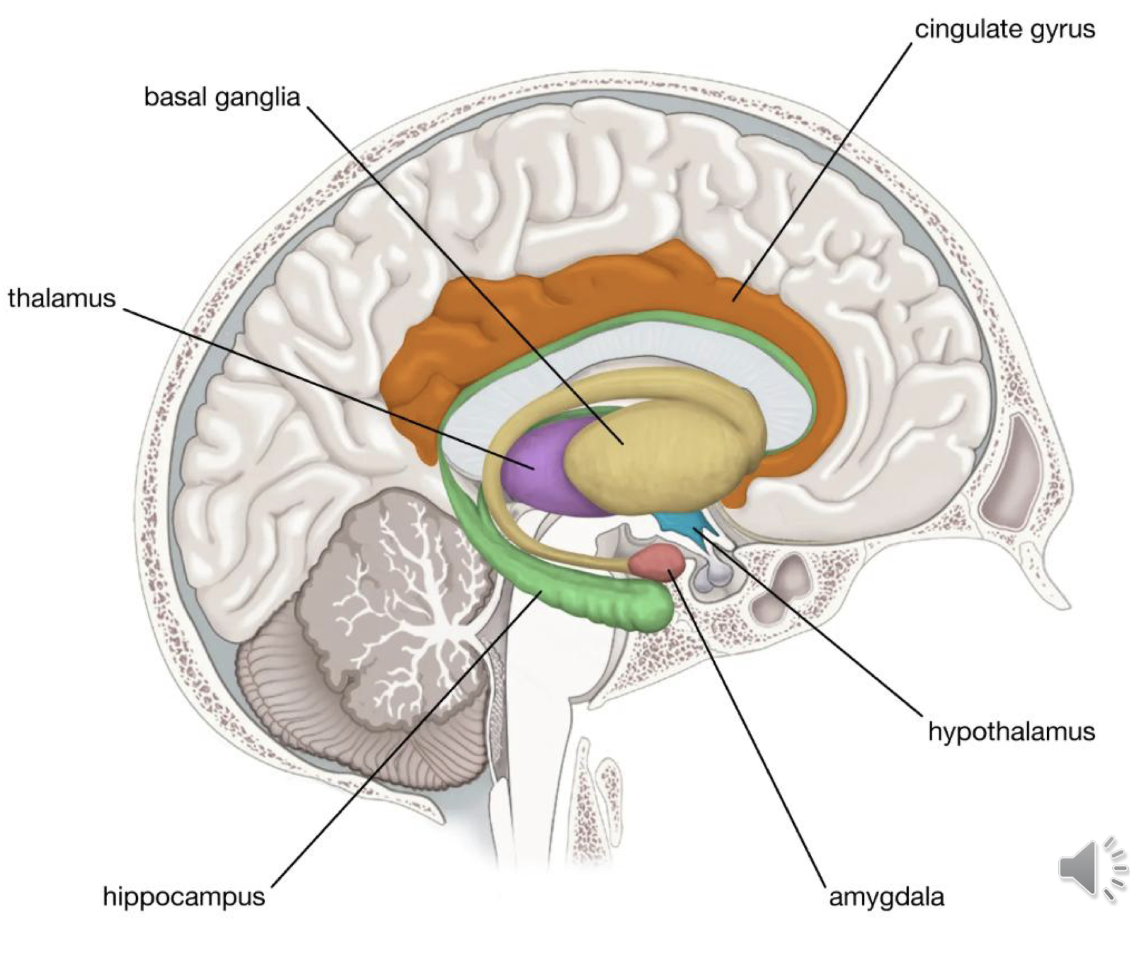
Why is dopamine important
produced in dopaminergic neurons in SN(substantia nigra) and VTA(ventral tegmental) areas of the brain. Monoamine synthesis pathways and serotonin-noradrenalin is linked to dopamine synthesis
cycle for addiction
preoccupation anticipation, binge intoxication, withdrawel/negative affect, spiral distress. the addictive chemicals take the breaks off of dopamine-producing neurons.
chemicals/drugs and their addictive potential
opiods, cannabinoids, diazepam, and other drugs.
memory
declaritive:facts+events you can consciously recall ex:names, dates
Non-declarative memory:skills,habits+responses ex:fear of hot stove+bike riding

synapse+neurotransmitter activity
Ap arrives at presynaptic terminal, vescicles fuse with membrane+release glutamate into cleft, Glutamate binds AMPA receptors depolarizing postsynaptic cell
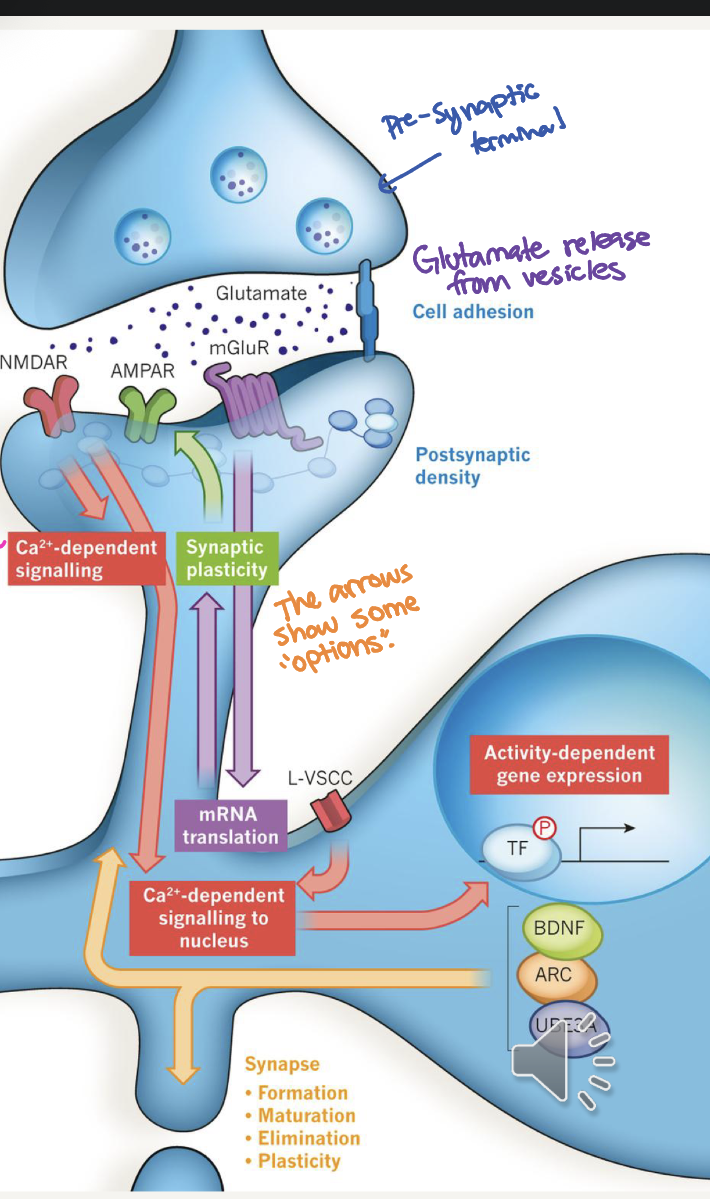
NMDA receptor
involved in memory formation
needs glutamate to bind fro presynaptic cell also needs post synaptic membrane to be sufficiently depolarized and Mg block to be dispelled.
Types of memory
immediate/short term-remember for 30sec 5-10 items
Recent memory-info undergoes consolidation occuring within a few hrs + is stored in hipocampus 3-5min
Remote/long-term: weeks-lifetime, most of our personal experience and knowledge, requires protein synthesis.
Learning+memory involve regions of cortex that process sensory info +control motor output. long memory also needs cholinergic neural system working and neuro-trophins that help preserve cholinergic neurons(acetylcholine)
Addiction stages
initial: experimentation, self-medication, peer pressure, genetic predisposition,
Early/medium: all above plus memories of pleasure, increased incentive of drug related stimuli, in neurons:synaptic plasticity in hippocampus, amygdala
Late/relapse: All above plus habit is established and unconscious. in neurons: synaptic plasticity of neocortical projections to dorsal striatum