Graphic Design Midterm- Origins
 Call Kai
 Learn
Learn Practice Test
 Spaced Repetition
 Match
Match Flashcards
 Knowt Play
1/27

There's no tags or description
Looks like no tags are added yet.
Name | Mastery | Learn | Test | Matching | Spaced | Call with Kai | Chat |
|---|
No analytics yet
Send a link to your students to track their progress
28 Terms

Hall of Bulls
Cave paintings at Lascaux, France
15,000 BC

Sumerian tokens
8000 BC

Written word tablets, Cuneiform
Uruk (Mesopotamia)
3100 BC
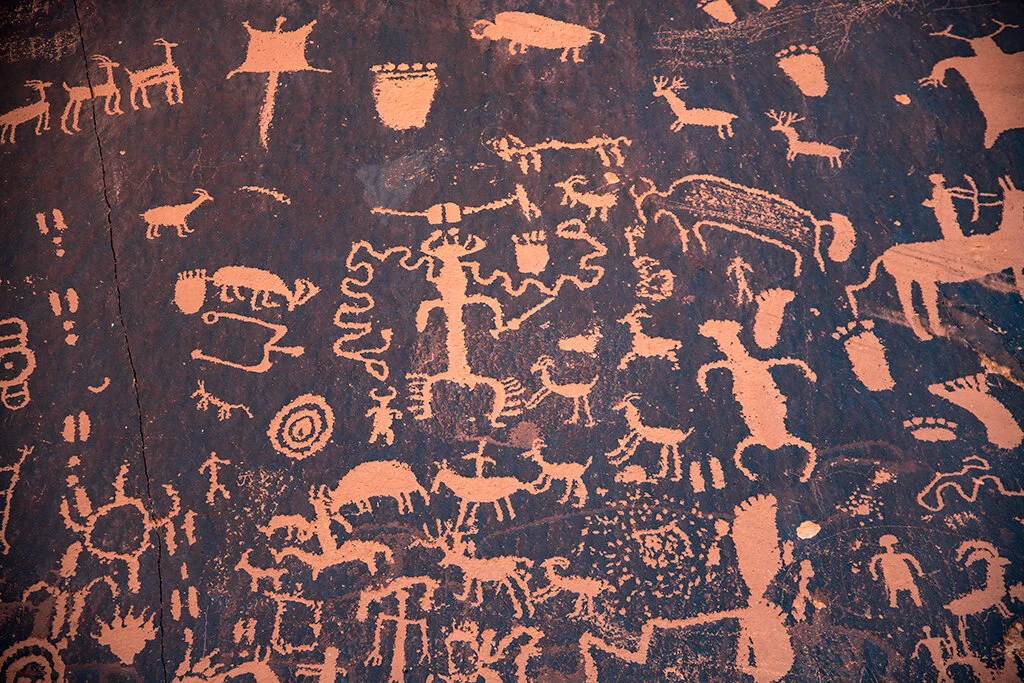
Petroglyphs, Anasazi symbol
Newspaper rock, Utah

Egyptian Hieroglyphics

Phoenician alphabet
1000 BC

Chinese Calligraphy Chen-Shu (regular style)
259 BC

Trajan’s column
114 CE

Book of Kells
800 CE

Early printing (1568)

Johannes Gutenberg
(c. 1400–1468) was a German inventor, goldsmith, and publisher who introduced the mechanical movable-type printing press to Europe.
Gutenberg Press
The Gutenberg press is a mechanical printing device invented around 1440 by the German goldsmith Johannes Gutenberg in Mainz, Germany. It combined movable metal type, an oil-based ink, and a modified wooden screw press (adapted from traditional wine or olive presses) to transfer ink onto paper.

42 Line Bible
(1450-1455)
Johannes Gutenberg
Carved Steel Punch
A hardened hand tool with a single alphanumeric character carved in relief (raised) and reversed on its end, used to strike impressions into softer metals, dies, or copper matrices.
Matrix
A softer metal plate (traditionally copper and brass) that is struck by the hardened steel punch to create a deep, right-reading impression or mould.
Smoke test
rapid quality-control check used to preview the shape of a letter carved onto a steel punch before it is permanently stamped into copper.
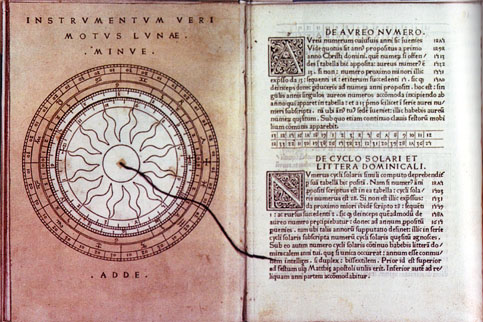
Calendarium
1476
Earhard Ratdol

Hypnerotomachia Poliphili
1499
Aldus Manutius

Printer’s Trademark
1500
Aldus Manutius
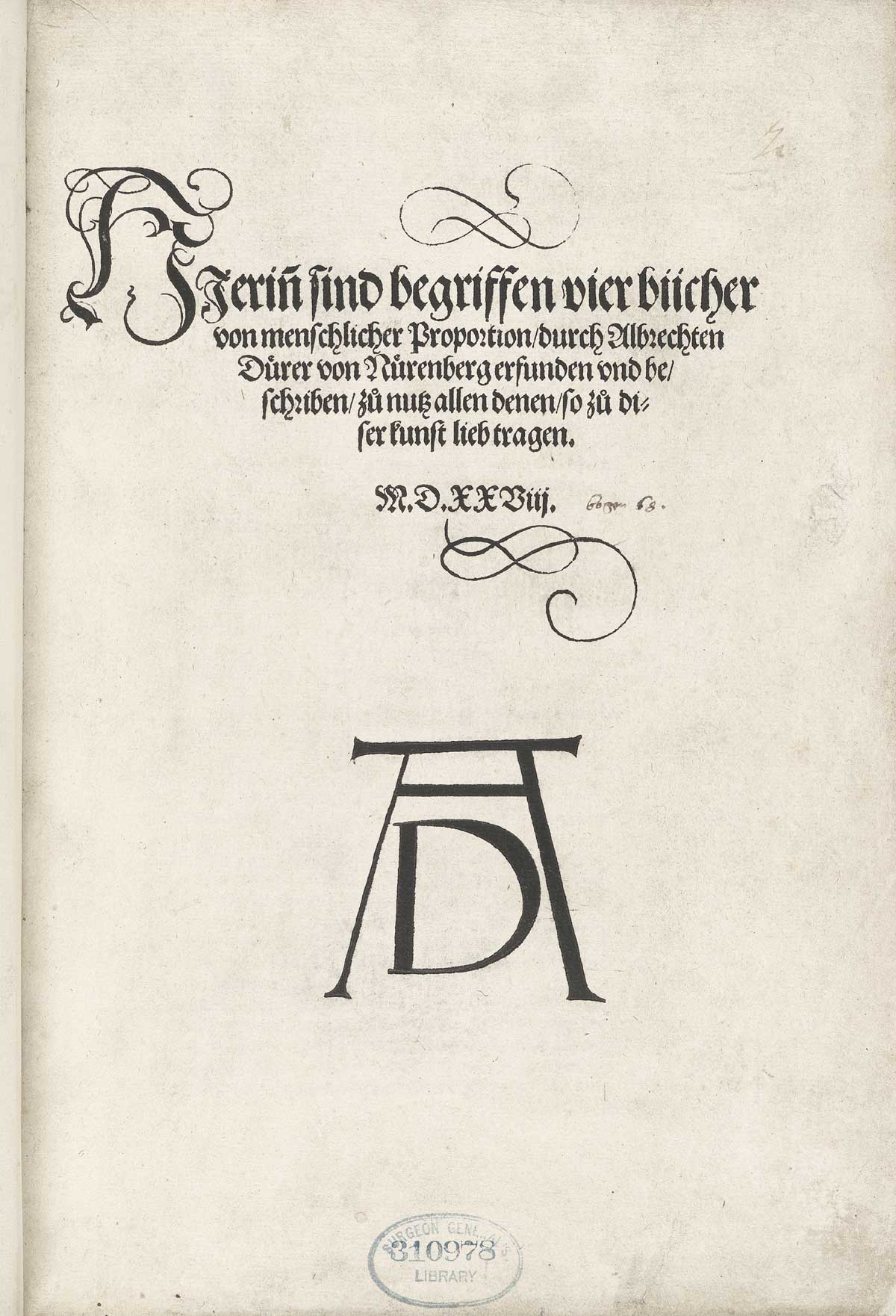
4 books on Measurement
1522
Albrecht Durer

Construction of Letter Q from Champ Fleury
1529
Geoffroy Tory

Fantastic alphabet from Champ Fleury
1529
Geoffroy Tory

specimen of Caslon Roman and Italic
1734
William Caslon

Title Page from Vergil’s Pastorials, Farming and Aeneis
1757
John Baskerville

Manuale Tipografico
1818
Giambatista Bodoni
Liberation of Jerusalem
1784
Francois Ambroise Didot

twelve-line pica, sandcast letters
1765

Wood type
1827
Darius Wells