AFOM Chapter 9
 Call Kai
 Learn
 Practice Test
 Spaced Repetition
 Match
 Flashcards
 Knowt Play
1/28

There's no tags or description
Looks like no tags are added yet.
29 Terms

sternum
breastbone
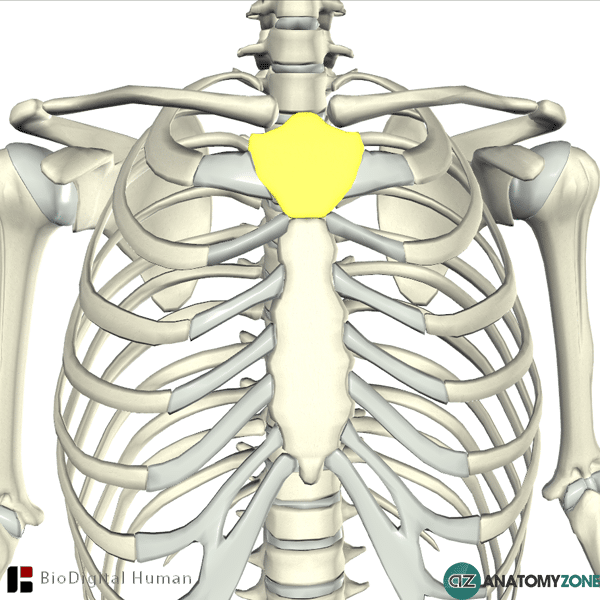
manubrium
the superior portion of the sternum

suprasternal (jugular) notch
superior surface of manubrium; u shaped notch

body of the sternum
middle portion of the sternum

xiphoid process
pointed tip at the bottom of the sternum

head of the ribs
connects to thoracic vertebrae

body of the ribs
shaft, flat, main part of rib

sternal end of the ribs
attaches to sternum, flat end

true ribs
first 7 pairs of ribs; attach directly to sternum

false ribs
last 5 pairs of ribs (8-12); attach indirectly to sternum by cartilage connecting to another rib

floating ribs
last two pairs of ribs; do not attach to sternum

thoracic vertebrae
second set of 12 vertebrae; they articulate with the 12 pairs of ribs to form the outward curve of the spine

sternocostal joint
articulation between the costal cartilage of the first 7 ribs and the sternum

costochondral joint
articulation between the ribs and the cartilage attaching the ribs to the sternum
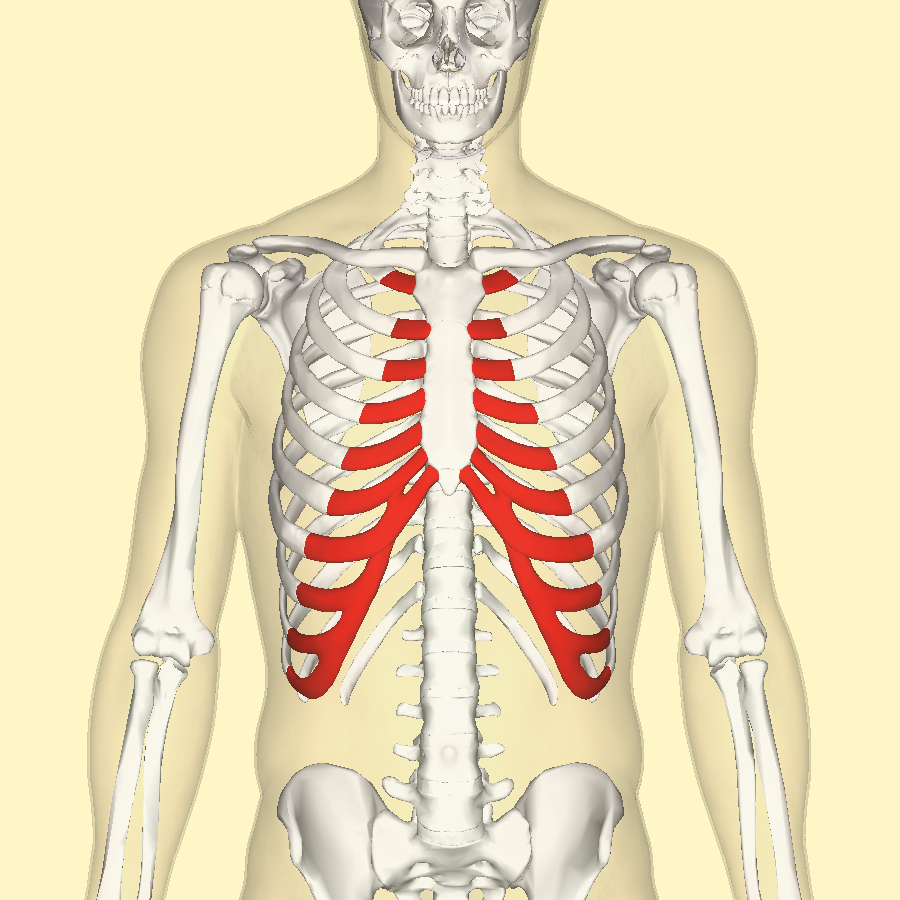
costal cartilage
the cartilages that connect the sternum and the ends of the ribs

costovertebral joints
attach the ribs to the thoracic vertebrae; articulation between the head of the rib and thoracic vertebrae

diaphragm
dome-shaped, muscular partition separating the thorax from the abdomen
what happens to the diaphragm during inhalation
it contracts and flattens downward, increasing chest volume to draw air in
what happens to the diaphragm during exhalation
it relaxes, returns back to its dome shape, and pushes air out
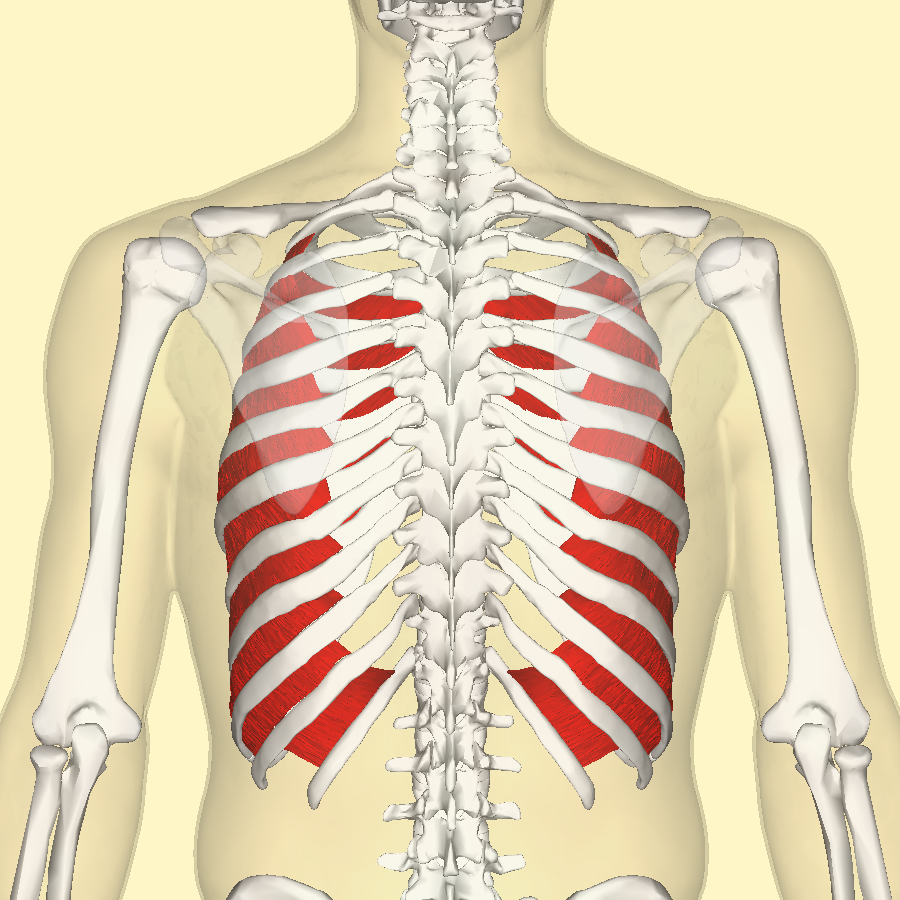
internal intercostal muscles
contract to depress the ribs and pull them closer together (squeezing)
action of internal intercostal muscles
forced expiration

external intercostal muscles
work alongside the diaphragm (forced inspiration)
action of external intercostal muscles
quiet inspiration

transversus thoracis
coughing, sneezing, heavy breathing
action of transversus thoracis
accessory muscle during forced expiration
quiet inspiration
contraction of diaphragm and external intercostals
quiet expiration
relaxation of diaphragm and external intercostals with contraction of abdominal muscles
forced inspiration
deep inspiration that involves both diaphragm and accessory muscles of inspiration
forced expiration
contraction of abdominal muscles and internal intercostals to push air out