Chapter 21 - Operations Management Tools & Technique
 Call Kai
 Learn
 Practice Test
 Spaced Repetition
 Match
 Flashcards
 Knowt Play
1/68

There's no tags or description
Looks like no tags are added yet.
69 Terms
What is a queueing system?
A system in which customers wait in a line to receive service.
What is a single-channel, single-phase queue?
A queue with one service facility and one stage of service.
What is a multiple-channel, single-phase queue?
Multiple service facilities operate simultaneously, with each customer receiving service from only one facility.
What is a multiple-parallel-server system with multiple queues?
Each server has its own separate queue, and customers are served independently.
What is a service facility in a series?
A system in which customers pass through different service centres sequentially.
What is FIFO?
First In First Out – the customer who arrives first is served first.
What is LIFO?
Last In First Out – the customer who arrives last is served first.
What is SIRO?
Service In Random Order – customers are served randomly.
What is reneging in queueing theory?
When a customer joins a queue but leaves before receiving service.
What is balking?
When a customer decides not to join a queue after observing its length.
What is service rate (μ)?
The number of customers served per unit of time.
What is arrival rate (λ)?
The number of customers arriving per unit of time.
What is the relationship between service rate and service time?
They are reciprocals of each other.

What is a deterministic queueing model?
A model in which customer arrival times and service times are known with certainty.
What happens when λ is greater than μ in a deterministic queueing model?
A waiting line forms, and the system may fail.
What happens when λ is less than or equal to μ?
No waiting line forms under the simplified deterministic model.
What is the average utilisation or traffic intensity?
The proportion of time the service facility is busy.

What happens when traffic intensity (ρ) exceeds 1?
The system becomes unstable.
What happens when traffic intensity (ρ) is less than 1?
The system operates properly under the standard steady-state model.
What is a probabilistic queueing model?
A model in which customer arrival rates and service times are probabilistic rather than certain.
Which distribution is commonly used for customer arrivals in a probabilistic queueing model?
Poisson distribution.
Which distribution is commonly used for service times?
Exponential distribution.
What is the probability that exactly n customers arrive during a given time interval?

What is the probability that no customer arrives during time T?

What is the formula for expected time in the system?

What is the expected waiting time in the queue?

What is the expected number of customers in the system?
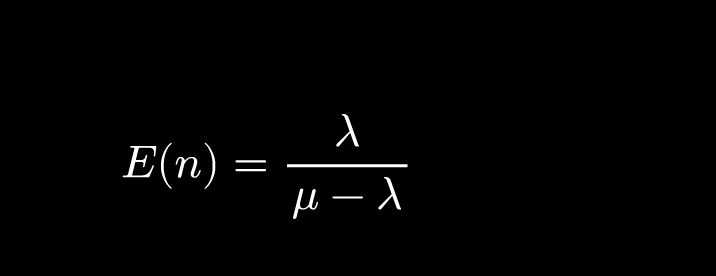
What is the expected length of the waiting line?

What is the probability of having more than K customers in the system?

What are the principles used in decision-making under uncertainty?
Maximax principle
Maximin principle
Laplace principle
Hurwicz principle
What is the Maximax principle?
An optimistic decision-making criterion that selects the alternative with the highest possible payoff.
What is the Maximin principle?
A pessimistic decision-making criterion that selects the alternative with the best worst-case payoff.
What is the Laplace principle?
Assumes all states of nature are equally likely and selects the alternative with the highest average payoff.
What is the Hurwicz principle?
A criterion that combines optimism and pessimism using a coefficient of optimism.
What are the decision criteria under risk?
Maximum likelihood principle
Expectation principle
Posterior analysis or Bayesian rule
What is the Maximum Likelihood principle?
Selects the alternative that gives the highest payoff under the most probable state of nature.
What is the Expectation principle?
Selects the alternative with the highest expected monetary value (EMV).
What is EVPI?
Expected Value of Perfect Information – the maximum amount a decision-maker should be willing to pay for perfect information.
What does PERT stand for?
Programme Evaluation and Review Technique.
What does CPM stand for?
Critical Path Method.
Who developed PERT?
PERT was developed by the US Navy's Polaris missile project team.
Who developed CPM?
James E. Kelley Jr. and Morgan R. Walker.
What is PERT?
A project management technique used for planning, scheduling and controlling projects involving uncertain activity durations.
What is CPM?
A project management technique used to identify the longest path and critical activities in a project, generally using deterministic activity times.
What is the critical path?
The longest-duration path between the starting and ending events of a project.
What is the significance of the critical path?
It determines the minimum time required to complete the entire project.
How is an activity represented in an AOA network?
By an arrow (→).
What is an event in PERT?
A point in time representing the beginning or completion of an activity. It does not consume time or resources.
What is a tail event?
The event from which an activity begins.
What is a head event?
The event at which an activity ends.
What is a merge event?
An event where two or more activities are completed.
What is a burst event?
An event from which two or more activities originate.
What is a dummy activity?
An artificial activity represented by a dashed arrow, used to show logical dependency. It consumes neither time nor resources.
What are the three time estimates used in PERT?
Optimistic time (a)
Most likely time (m)
Pessimistic time (b)
What is optimistic time?
The minimum time required to complete an activity under ideal conditions.
What is most likely time?
The time required under normal working conditions.
What is pessimistic time?
The maximum time required under unfavourable conditions.
What is the expected time formula in PERT?

What is the variance formula in PERT?

What is the standard deviation formula in PERT?
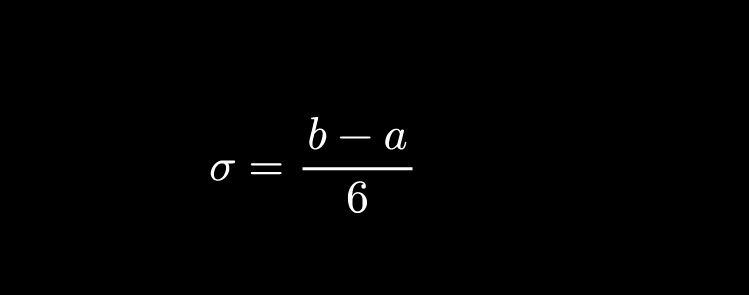
What is earliest start time (ES)?
The earliest time at which an activity can begin.
What is earliest finish time (EF)?
The earliest time at which an activity can be completed.
EF = ES + Activity Duration
What is latest finish time (LF)?
The latest time an activity can finish without delaying the project.
What is latest start time (LS)?
The latest time an activity can begin without delaying the project.
LS = LF - Activity Duration
What is total float?
The amount of time an activity can be delayed without delaying the overall project completion.
TF = LS - ES = LF - EF
What is free float?
The time an activity can be delayed without affecting the earliest start time of its succeeding activity.
FF = ES next activity - EF current activity
What is the float of a critical activity?
Zero total float.
What is a PERT network?
A graphical representation of project activities and their logical dependencies.
What is the difference between PERT and CPM?
PERT CPM
Probabilistic Deterministic
Three time estimates. One time estimate
Suitable for uncertain projects Suitable for relatively predictable projects
Event-oriented traditionally Activity-oriented traditionally