L10 - Innate immunity I
 Call Kai
 Learn
 Practice Test
 Spaced Repetition
 Match
 Flashcards
 Knowt Play
1/59

There's no tags or description
Looks like no tags are added yet.
60 Terms
What are the Four Functions of the Immune System?
Clear damaged tissue
Manage beneficial microbes
Defend against pathogens
Destroy abnormal or cancerous cells
What is the Difference between Commensals, Symbionts, and Pathogens?
Commensals are generally harmless
Symbionts provide benefits
Pathogens can cause disease
What is the Colonizing Microbiota, and Why is It Important?
Microbes inhabiting host surfaces that:
Support nutrient metabolism
Immune development
Immunological balance
How do Pathogens Manipulate Host Physiology?
They exploit host processes for:
Adhesion, invasion, replication, and spread
Some manipulate the actin cytoskeleton
What are the Common Routes of Infection and their Examples?
Respiratory: influenza A
GI: parvovirus
Reproductive: T. foetus
Skin: S. pseudintermedius
Vectors: West Nile virus
What are the Two Perspectives on Immune System Evolution?
Prevailing view: Control pathogens
Paradigm Shifting Idea: Also shape and maintain beneficial resident microbes
What are the Three Major Components of Innate Immunity?
Epithelial barriers
Innate immune cells
Soluble components
Complement
Acute-phase proteins
QUESTION: What Organisms have an Innate Immune System?
a) All Animals, but not plants
b) Invertebrates only (Jellyfish…tunicates)
c) Vertebrates only (lamprey and sharks on figure)
d) All plants and animals
ANSWER → All organisms have an innate immune system, including plants, invertebrates, and vertebrates
Plants
Fungi
Invertebrates
Vertebrates

What Organisms have Both Innate and Adaptive Immunity?
Vertebrates, including lampreys, sharks, and mammals

What are the Key Features of Innate Immunity?
Present before pathogen exposure
Germline-encoded, not acquired in lifetime of the host
No long-term memory after exposure
Rapid response (vs adaptive immunity)
Defenses in place or rapidly induced (minutes-days)
Recognizes conserved categories of microbial molecules
Broad specificity compared to high specificity of antibodies
Diversity is limited to conserved microbial molecules
How do Innate and Adaptive Immunity Differ?
Innate: Rapid, germline-encoded PRRs recognize conserved motifs
Adaptive: Delayed primary response, diverse B/T receptors, memory

QUESTION: Who has an innate AND and adaptive immune system?
a) 4
b) 3 + 4
c) 2 + 3 +4
d) 1 + 2 + 3 +4
ANSWER → b) 3 + 4
Why does Innate Immunity use Pattern Recognition?
Recognizing conserved microbial motifs allows rapid detection of multiple microbes without prior exposure

What are Pattern Recognition Receptors (PRRs)?
Germline-encoded receptors that recognize conserved microbial molecular patterns
What is the Sequence of Host Defenses during Infection?
Barrier containment
Local phagocyte response
Induced inflammation and leukocyte recruitment
Adaptive immunity

What is the Primary Function of Epithelial Barriers?
Contain resident and environmental microbes, preventing entry into underlying tissues
What are the Three Categories of Epithelial Defense?
Mechanical/physical
Tight junctions
Chemical
Antimicrobial peptides
Microbiological defenses (competition)
Microbiota
What are the Three Major Epithelial Barrier Sites?
Skin
Respiratory tract
Gastrointestinal tract

What Protective Features are Shared by Major Epithelial Surfaces?
Tight junctions
Antimicrobial peptides
Resident microbiota
What are the Major Protective Features of the Skin?
Multiple epithelial layers
Keratinization
Secreted lipids
Lamellar bodies

What are the Major Protective Features of the Respiratory Tract?
Thin epithelium
Mucus
Cilia
Antimicrobial surfactant
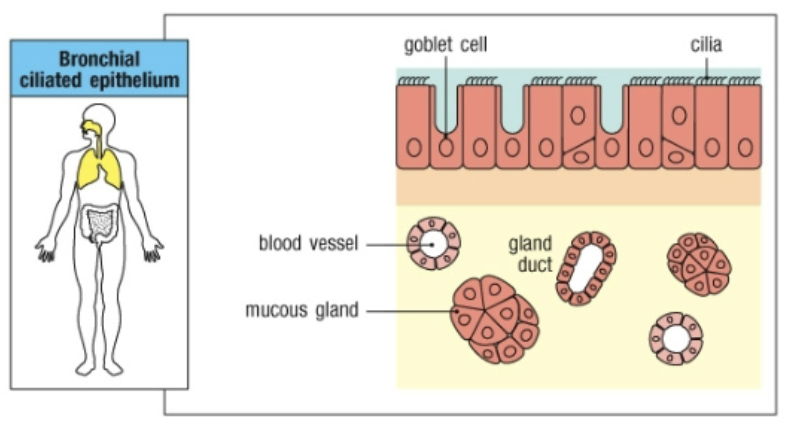
What are the Major Protective Features of the Gastrointestinal Tract?
Single-layer epithelium
Mucus
Peristalsis
Antimicrobial substances

How do Cilia and Peristalsis Protect Epithelial Surfaces?
Cilia
Move respiratory mucus and trapped microbes
Peristalsis
Moves intestinal contents and microorganisms
What are the Major Chemical Defenses of Epithelial Barriers?
Low pH
Lysozyme
Defensins, cathelicidins, fatty acids, and surfactant
What is the Antimicrobial Function of Lysozyme?
Breaks down bacterial cell walls
Found in tears, saliva, and other secretions

How do Defensins and Cathelicidins Protect against Microbes?
Cationic, amphipathic peptides that disrupt microbial membranes, including through pore formation

How does the Normal Microbiota Protect Epithelial Surfaces?
Competes with pathogens for nutrients and colonization sites
QUESTION: What Happens When Epithelial Barriers are Breached?
Resident macrophages and dendritic cells detect invading microbes and initiate local defenses
QUESTION: Which Cells are the Main Tissue-Resident Sentinels?
Macrophages and dendritic cells; neutrophils are recruited after inflammation begins

What are the Origins of Tissue-Resident Macrophages?
Fetal: Some arise from embryonic yolk sac or fetal liver progenitors and self-renew
Adult: Others derive from adult monocytes


Where are Sentinel Macrophages Located near Epithelial Barriers?
Skin & GI: Macrophages are located BEHIND epithelial barrier
Lung (lower airways): No great physical barrier present, alveolar macrophages in in FRONT of epithelium/in lumen of alveoli

What are Kupffer Cells and Microglia?
Kupffer cells: liver macrophages that intercept gut-derived microbes
Microglia: CNS macrophages involved in tissue maintenance

What are the Major Functions of Macrophages?
Phagocytose
Clear Apoptotic Cells (healthy tissues)
Many Microbicidal Mechanisms
Antigen Presentation
Cytokine Production

What are the Major Functions of Neutrophils?
Rapidly recruited phagocytes that kill microbes through antimicrobial mechanisms and contribute to pus formation
Recruited during inflammation

What are the Major Functions of Dendritic Cells?
Antigen sampling
Phagocytose
Cytokine Production
Activate Innate and Adaptive Immunity
Bridge both via Antigen Presentation

How do Macrophages and Neutrophils Differ?
Macrophages:
Found in healthy tissues → Resident
Slightly increased during inflammation
Long-lived, survive after phagocytosis
Slowly form granuloma with help from T cells
Neutrophils:
Found only in inflamed tissues → Recruited
Rapid increase in numbers during acute phase response
Short-lived, die after phagocytosis
Rapidly form pus
What are the Major Phagocytic Receptors and their Targets?
Mannose receptors/dectins → Microbial sugars
Complement receptors → Complement-coated microbes
Fc receptors → Antibody-coated microbes

What is the Sequence of Phagocytosis?
Recognition
Engulfment
Phagosome formation
Lysosome fusion
Phagolysosome-mediated microbial destruction
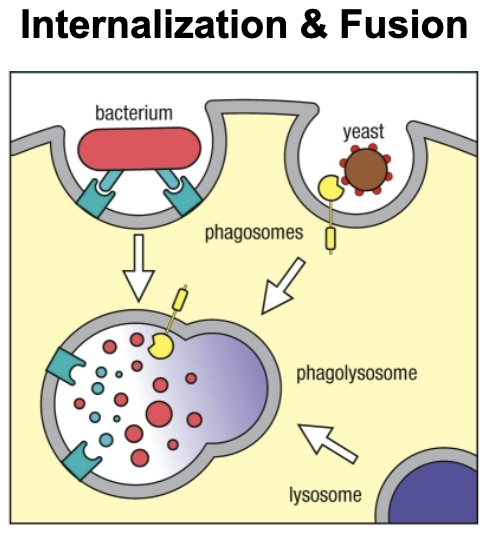
What are the Major Antimicrobial Mechanisms of Phagocytes?
Acidification
Reactive oxygen species
Nitric oxide
Antimicrobial peptides
Lysozyme
Iron sequestration

What is the Difference between Bacteriostatic and Bactericidal?
Bacteriostatic inhibits bacterial growth
Bactericidal kills bacteria
Why is Lactoferrin Important for Antimicrobial Defense?
Sequesters iron required for microbial metabolism, restricting microbial growth
What is the Respiratory Burst?
Rapid production of antimicrobial reactive oxygen species by phagocytes, initiated by NADPH oxidase
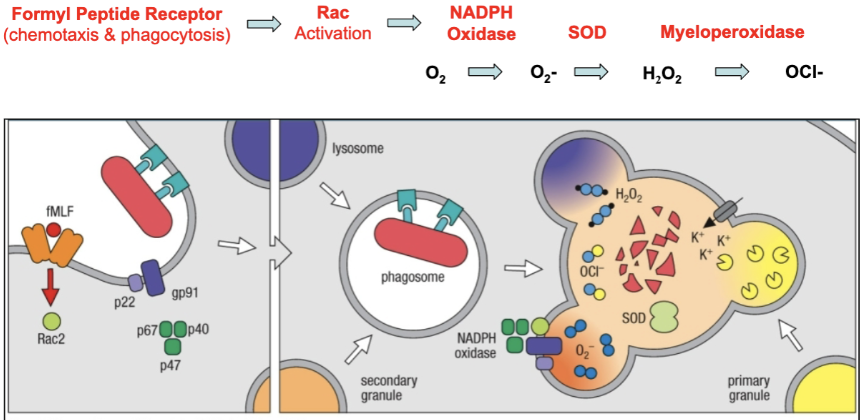
What is the Sequence of Reactive Oxygen Species Production?
NADPH oxidase generates superoxide from oxygen
Superoxide dismutase produces hydrogen peroxide
Myeloperoxidase uses peroxide and chloride to produce hypochlorite
NADPH oxidase: superoxide → superoxide dismutase: hydrogen peroxide → myeloperoxidase: hypochlorous acid

What are Neutrophil Extracellular Traps (NETs)?
Extracellular DNA coated with histones and antimicrobial proteins that traps microbes and aids their clearance
When is NETosis particularly useful?
When microbes are too large or clustered for efficient phagocytosis
ROS may trigger NET formation
How is Inflammation Initiated after Pathogen Recognition?
Resident immune cells recognize microbes and release pro-inflammatory cytokines and lipid mediators
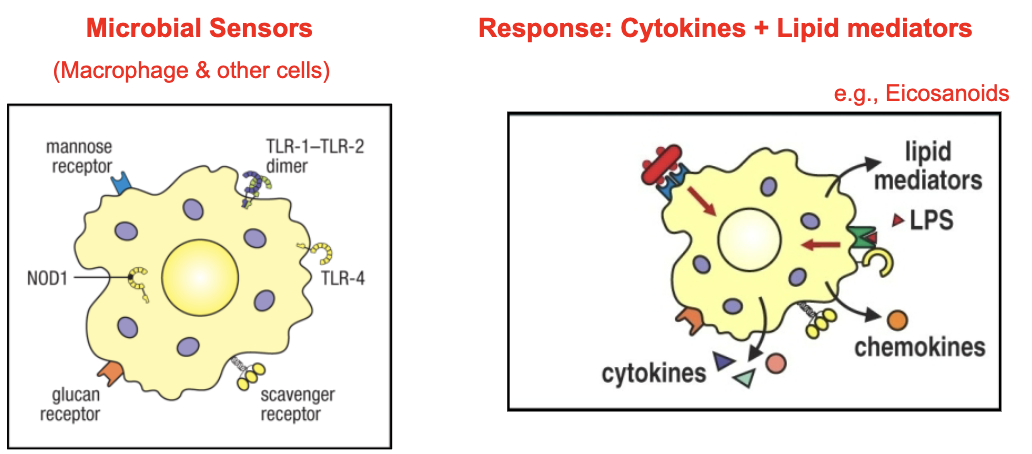
What are the Major Effects of Inflammatory Mediators?
Vasodilation
Increased vascular permeability
Endothelial activation
Leukocyte recruitment

What are the Major Steps of Neutrophil Extravasation?
Rolling
Chemokine activation
Firm adhesion
Transmigration
Migration toward infection

Which Molecules Mediate Neutrophil Rolling and Firm Adhesion?
Rolling: selectins and sialyl Lewis X
Firm adhesion: leukocyte integrins (LFA-1/Mac-1) bind endothelial ICAMs.

What is the Role of Chemokines in Leukocyte Recruitment?
They attract immune cells and activate adhesion mechanisms that support migration into inflamed tissues

Which Chemokines Recruit Neutrophils and Monocytes?
CXCL8 recruits neutrophils
CCL2 recruits inflammatory monocytes
How do Dendritic Cells Bridge Innate and Adaptive Immunity?
They sample antigens, detect pathogens, migrate to lymph nodes, and present antigens to T cells

What are the Major Antigen-Sampling Mechanisms of Dendritic Cells?
Phagocytosis and macropinocytosis, including sampling across epithelial barriers
What are the Main Stages of the Innate Response to Infection?
Epithelial containment
Resident phagocyte defense
Cytokine-driven inflammation
Neutrophil/monocyte recruitment and DC activation

Innate vs. Adaptive Immunity SUMMARY
Feature | Innate Immunity | Adaptive Immunity |
Response time | Immediate (minutes–days) | Delayed during initial exposure |
Receptors | Pattern recognition receptors (PRRs) | B-cell and T-cell receptors |
Specificity | Conserved microbial patterns | Highly specific epitopes |
Receptor diversity | Limited | Extensive |
Receptor origin | Germline-encoded | Somatic gene recombination |
Memory | No classical long-term memory | Long-term immunological memory |
Main cells | Macrophages, neutrophils, dendritic cells, NK cells | B cells and T cells |
Distribution | Plants, fungi, and animals | Vertebrates |
Key takeaway: Innate immunity recognizes conserved microbial patterns rapidly, whereas adaptive immunity provides highly specific responses and immunological memory.
Epithelial Barriers: Skin vs. Respiratory vs. GI SUMMARY
Feature | Skin | Respiratory Tract | Gastrointestinal Tract |
Epithelium | Multiple layers | Thin epithelial barrier | Single epithelial layer |
Primary function | Physical protection | Gas exchange | Nutrient absorption |
Mechanical defenses | Keratinization, tight junctions | Cilia, mucus, tight junctions | Peristalsis, mucus, tight junctions |
Chemical defenses | Fatty acids, defensins, cathelicidins | Surfactant, antimicrobial peptides | Low stomach pH, lysozyme, antimicrobial peptides |
Microbiological defenses | Normal microbiota | Normal microbiota | Normal microbiota |
Unique feature | Lamellar bodies secrete lipids and antimicrobial proteins | Mucociliary clearance | Peristalsis |
Key takeaway: All three epithelial surfaces use mechanical, chemical, and microbiological defenses, but their protective mechanisms differ according to their physiological functions.
Macrophages vs. Neutrophils vs. Dendritic Cells SUMMARY
Feature | Macrophages | Neutrophils | Dendritic Cells |
Location | Healthy tissues | Primarily inflamed tissues | Healthy and inflamed tissues |
Lifespan | Long-lived | Short-lived | Not emphasized |
Phagocytosis | Yes | Yes | Yes |
Microbial killing | Strong | Strong | Not primary function |
Cytokine production | Yes | Not emphasized | Yes |
Antigen presentation | Yes | Not emphasized | Major function |
Primary role | Microbial killing and tissue maintenance | Rapid microbial killing | Connect innate and adaptive immunity |
Special feature | Granuloma formation | Pus formation and NETs | Migration to lymph nodes |
Key takeaway:
Macrophages: Resident defenders and tissue maintenance.
Neutrophils: Rapidly recruited microbial killers.
Dendritic cells: Antigen presentation and adaptive immune activation.
Phagocyte Antimicrobial Mechanisms SUMMARY
Mechanism | Important Molecule/Process | Function |
Acidification | Low phagolysosomal pH | Inhibits microbial growth |
Reactive oxygen species | Superoxide, H₂O₂, hypochlorous acid | Damages and kills microbes |
Reactive nitrogen species | Nitric oxide (NO) | Toxic to microorganisms |
Antimicrobial peptides | Defensins, cathelicidins | Disrupt microbial membranes |
Enzymatic degradation | Lysozyme | Degrades bacterial cell walls |
Nutrient restriction | Lactoferrin | Sequesters iron needed for microbial metabolism |
Extracellular trapping | NETs | Trap microorganisms and facilitate clearance |
Key takeaway: Phagocytes use multiple antimicrobial mechanisms, including chemical toxicity, enzymatic degradation, and nutrient restriction.
Respiratory Burst Pathway SUMMARY
Step | Enzyme | Reaction/Product | Function |
1 | NADPH oxidase | O₂ → Superoxide (O₂⁻) | Generates reactive oxygen species |
2 | Superoxide dismutase | Superoxide → H₂O₂ | Produces hydrogen peroxide |
3 | Myeloperoxidase | H₂O₂ + Cl⁻ → HOCl | Produces a highly antimicrobial compound |
Respiratory Burst Sequence
NADPH oxidase → Superoxide → Superoxide dismutase → Hydrogen peroxide → Myeloperoxidase → Hypochlorous acid
Key takeaway: The respiratory burst produces reactive oxygen species that help neutrophils and macrophages destroy microorganisms
Neutrophil Recruitment and Extravasation SUMMARY
Step | Process | Important Molecules | Function |
1 | Vascular changes | Cytokines, lipid mediators | Vasodilation and increased permeability |
2 | Rolling | Selectins, sialyl Lewis X | Slow neutrophils along endothelium |
3 | Activation | CXCL8 | Activates neutrophil integrins |
4 | Firm adhesion | Integrins (LFA-1, Mac-1), ICAMs | Firmly attaches neutrophils to endothelium |
5 | Transmigration | Endothelial adhesion machinery | Allows neutrophils to cross into tissues |
6 | Chemotaxis | CXCL8 | Directs neutrophils toward infection |
Key takeaway:
Rolling → Activation → Firm Adhesion → Transmigration → Chemotaxis