Module 1 - Intro to Forensics
 Call Kai
 Learn
 Practice Test
 Spaced Repetition
 Match
 Flashcards
 Knowt Play
1/13

There's no tags or description
Looks like no tags are added yet.
14 Terms
What is crime - Laws vs crime vs reality
Definitions of a crime tend to be more legalistic rather than normative - A crime is a crime because the law says so
Laws: Rules created by societies to regulate the actions of its members and under which that society my enforce these rules
Crime: Deviating from these rules – sociological definition (deviant behavior decided by society and culture so deviancy is not the same everywhere)
Reality: Most laws created to curb natural tendencies for the benefit of the collective group without the consideration or understanding of the behavior they seek to modify
Difference between Psychology and Law
Psychology: Human mind and its functions, cognition and behaviour interacting
Law: System of rules used by society - acceptable behaviour, rights, obligations
Legal Psychology vs Forensic Psychology
Legal Psychology: Empirical psych regarding aspects of the criminal justice system
Research of: the law, legal institute, people in contact w the law
Basic social and cognitive principals of behavior
Forensic Psychology: Very defined – for the court but more focused on individuals that are drawn into criminal proceedings (could be jail could not be) - beyond the court
Understanding psychological problems associated with criminal behavior (who do people become and commit offences)
More involved with how and why people become offeners, how can we reduce it
What used to be the basis of insanity
NCR - lack of mens reas - “disease of the mind”
William Stern - Eye whitness revolver study
Revolver study – Set up an argument between students and one takes out a gun (the point is can we rely on witnesses)
Eyewitness to the incident were inconsistent
The boom years
1960s - applied psychology emerges
Group dynamics and jury decision-making
Memory for real events and eye-witness testimony
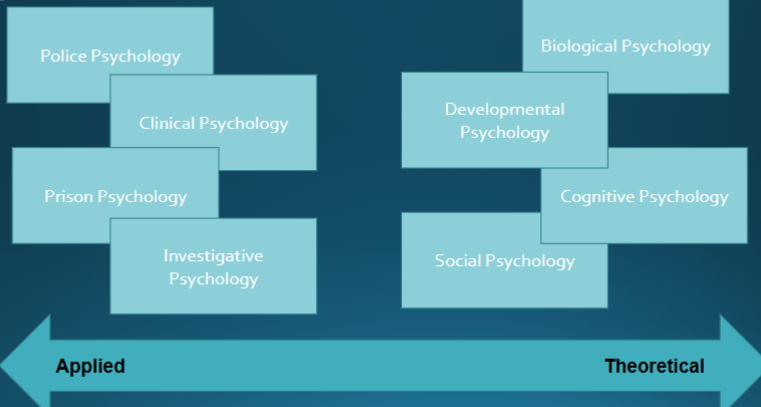
Therapeutic Jurisprudence
Multi-disciplinary approach – legal system, the mind, behaviour, emotions,
Accounts for behaviour of legal players
Examines the beneficial (therapeutic) or detrimental (anti-therapeutic) consequences of the law and legal processes.
If the death penalty was successful…
We would have no more crime
Theories of crime (macro, meso, meso, micro)
Macro: Societal – school, prison systems, social justice – disproportion of arrests in minorities stemming from racism - societal – Crime is a consequence of social structure
Meso: Locality –Geographic explaination: crime is clustered in specific areas (the reason for this could be found at the macro, societal factors) people of these areas often aren't there because they are from crime
Meso: Group influence/socialization Socialization - Influence of family and peers on criminality
(eg family telling them to carry a knife when they know better – following rules)
Micro: Individual – Differences like genetics, personality and illnesses

Psychodynamic Theory - criminal behavior is the result of…, violence is a product of…
Early childhood experiences & conflict occurring during stages of psychosexual development (Freud)
Criminal behavior is a reflection of psychological immaturity and low self-control (some truth to this)
Violence is a product of unconscious forces (Id based) and is repressed in well adjusted individuals and leaks out in others
Latent Delinquency - childhood abuse =…
Inadequate childhood socialization dysrupted the development of the ID
Creates a high need for immediate gratification (impulsivity)
Lack of empathy, Inability to feel guilt
childhood abuse = damage to ego = reduced resilience (can lead to psychosis)
Behavioral Theory
All human behaviour is learned through interaction with the social environment (Bandura)
America incarserates the highest number of people per capita around the world but they also reward violence in the media
If you want non-violent children you must sheild them from violent behavior and teach them skills for positively dealing with conflict (stop the normalization of violents and how it's rewarded)
Factors that produce violence
Stressful event that heightens arousal
Aggression learned through observing others
Belief that aggression/ violence will be socially rewarded
Value system that condones violent acts within a social context
Cognitive Development Theory
People learn to solve problems by observing their social environment at various stages during childhood (Piaget)