Psych exam #4
 Call Kai
 Learn
 Practice Test
 Spaced Repetition
 Match
 Flashcards
 Knowt Play
1/70

There's no tags or description
Looks like no tags are added yet.
71 Terms
Hippocampus consolidates…
memories (moves from short-term to long-term storage)
Subregions of the hippocampus relate to specific kinds of memory, like
verbal information, designs, and locations
Infantile amnesia…
No conscious (explicit/episodic) memories
of the first 2 years of life due to an immature
hippocampus, but you can still learn things
and remember how to walk.
Cerebellum
Forms and stores implicit conditioning
Basal ganglia and Forms procedural memories for skills
Long-term potentiation (LTP)
increase in nerve cell’s firing
potential after brief rapid stimulation. Connections between
neurons become stronger after repeated coactivation.
Flashbulb memories
mental snapshots of exciting or shocking events (you can even remember irrelevant details)
Ex: 9/11 and catastrophic events
Retrieval Cues
A clue, prompt, or hint that helps trigger recall of a given piece of
information stored in long-term memory.
Can be helpful for retrospective (past) or prospective (future) actions.
Forgetting
The ability to forget is helpful in some contexts
• Forgetting can happen at any memory stage
Encoding failure
can be due to age, attention, and other factors (when it never forms into a memory in the first place)
Storage decay
happens rapidly at first and then levels off (memories constantly decade but once its retrieved it is refreshed) Retrieval failur
Retrieval failure
stems from interference and motivated forgetting
Anterograde amnesia
remember the past, cannot form new
Memories
Retrograde amnesia
forget the past, can form new memories
Memory trick = (can’t remember the retro/past)
Source amnesia
The most likely part of a memory to be mistaken is the source of
the memory. Most common form of forgetting.
Loftus’ research and eyewitness testimony
Misinformation and imagination effects
Asking leading questions will impact the report of an accident (changes the dramaticness of a person’s response because of a few word changes). It affects literal memory
Eyewitness testimony is less reliable after time has passed and they have talked to others
Intrinsic motivation
the desire to perform a behavior effectively
for its own sake.
Extrinsic motivation
the desire to perform a behavior to receive
rewards or avoid punishment
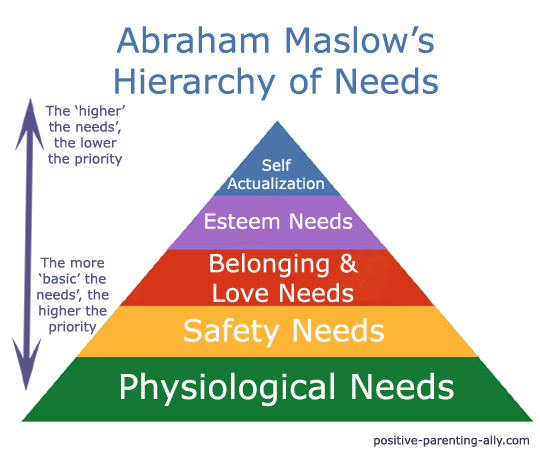
Maslow’s Hierarchy of Needs Exceptions
“Hunger, real hunger, provokes desperation and leads to choices that might otherwise be unfathomable,” -Mikki Kendall
• The scientists at the seed bank during the siege of Leningrad starved surrounded by food, guarding seeds for a future they would never see
Motivation – Self-Determination Theory
Strive to satisfy competence, autonomy, and relatedness
• How can you encourage this in others?
• Think, pair, share
Emotion
Combination of bodily arousal, expressive behaviors, conscious
experience, and feelings.
James-Lange Theory
arousal comes before emotion
Cannon-Bard Theory
arousal and emotion occur simultaneously
Schachter-Singer Two-Factor Theory
arousal + label = emotion
Stress
the process by which we perceive and respond to events that
we appraise as threatening or challenging. Can be acute or chronic.
Appraisal
determine if something is a threat or challenge
Eustress
moderate or normal psychological stress, interpreted as
being beneficial/motivational.
Distress
extreme mental or physical stress, interpreted as harmful
Stress response
the sympathetic nervous
system prepares for:
• Fight
• Flight
• Freeze
• Tend
• Befriend
General adaptation syndrome
body’s physiological reaction to
perceived stress
Alarm reaction
2. Resistance
3. Exhaustion
Heart rate increases
Temperature, blood pressure, and respiration remain high
More vulnerable to illness
Psychoneuroimmunology
study of how psychological, neural,
and endocrine systems work together.
Cortisol
hormone related to
acute stress (part of the
endocrine system)
• Helps control blood pressure
• Helps control the sleep-wake
cycle
• Increases metabolism of
glucose
Evidence-based suicide prevention
Recognize signs
Feeling hopeless or trapped
• Giving away possessions
• Withdrawing or displaying significant change in mood or behavior
• Ask directly
• Act quickly
• Call 988
• Don’t promise to keep intentions a secret
Get support for yourself
• Call 988
• CSU mental health walk in hours
Resilience
the ability to recover, adapt, and bounce back from
stress, misfortune, change, or difficult life experiences
Optogenetic mice
are genetically modified mouse models that
express light-sensitive microbial proteins in specific populations
of neurons or cells. By delivering targeted pulses of light,
researchers can cause action potentials in these cells
Internal locus of control
Perception that we control our own
Fate
External locus of control
Perception that outside forces beyond our control determine our fate
Problem-focused coping
alleviate stress directly
Emotion-focused coping
avoid or ignore stressor and attend to
emotional needs
Feel-good, do-good
phenomenon
the tendency to be helpful when in a good mood
Social psychology
the science of how we think about,
influence, and relate to one another.
• Why would the same person act differently in different situations?
Sociology
the study of the development, structure, and
functioning of human society
• Why would a particular society develop into the current structure?
Social work
Work carried out by trained professionals with the
aim of helping people who have social disadvantages or personal
problems
Attribution theory
we explain someone’s behavior by crediting
either the situation or the person’s disposition.
Fundamental attribution error
Assume that a person’s behavior
is due to their disposition/personality when it is truly due to the
Situation
Attitude
feelings, influenced by beliefs, that predispose us to
respond in a particular way
Cognitive dissonance
discomfort felt when a person acts
contrary to their attitudes
Foot-in-the-door phenomenon
People who agree to a small request
find it easier to comply later with a larger one.
Example of Korean prisoners in China
Example of picking up litter leading to other climate-related behaviors
Door-in-the-face phenomenon
approach with an unreasonable
request and a follow-up moderate request becomes more acceptable.
Peripheral route persuasion
occurs when people are influenced
by incidental cues such as a
speaker’s attractiveness
Central route persuasion
occurs when interested people’s thinking is
influenced by considering evidence
and arguments
Social contagion
the spread of behaviors, emotions, or
information from one person to another in a group or network.
Conformity
Adjusting our behavior or thinking to coincide with a
group standard
Antisocial
Hostile toward people and no regard for the safety of others.
Prejudice
unjustifiable and negative attitude toward a group and
its members.
Explicit Prejudice
aware of the attitude
Implicit Prejudice
unaware of the attitude
Aggression
physical or verbal behavior intended to harm
someone
Prosocial behavior
Voluntary actions that are intended to help or benefit another individual. (the good things we want.)
Proximity
geographic nearness
• Strongest predictor of relationships
Mere exposure effect
we like things we see repeatedly
Attractiveness
• Influences first impressions
• Unrelated to self-esteem
• Matters less when you know someone well
• Influenced by culture and feelings
Similarity
Do opposites attract?
Typically, physical characteristics, attitudes, and beliefs are more similar
between partners
Passionate love
something new + something positive
Two factor theory of emotion = physical arousal + cognitive appraisal
leads to emotions
Compassionate love
deep affectionate attachment
Equity
both partners receive in proportion to what they give
Self-disclosure
revealing intimate details about ourselves
Altruism
Unselfish regard for the welfare of others
• Associated with internal locus of control (the belief that a person can change the world and the directory of their life)
• Impacted by group membership
• Impacted by stress (especially catastrophes like drought and displacement)
Bystander effect
tendency for any given bystander to be less likely to give aid if other bystanders are also present
Social exchange theory
the theory that our social behavior is an exchange process, the aim
is to maximize benefits and minimize costs
Reciprocity norm
expectation that people will help those who helped them
Social-responsibility norm
expectation that people will help those needing their help