Week 4: The Eyes Have It/Iris
 Call Kai
 Learn
Learn Practice Test
 Spaced Repetition
 Match
Match Flashcards
 Knowt Play
1/55

There's no tags or description
Looks like no tags are added yet.
Name | Mastery | Learn | Test | Matching | Spaced | Call with Kai | Chat |
|---|
No analytics yet
Send a link to your students to track their progress
56 Terms
cornea
a.

iris
b.

ciliary body
c.

palpebral conjunctiva
d.

lens
e.

lens nucleus
a.

lens capsule
b.

iris
c.

posterior chamber
d.

anterior chamber
e.

substantia propria
f.

anterior epithelial layer
g.

posterior epithelium of cornea
a.

posterior epithelium of iris (neuroepithelial layer)
b.

posterior chamber
c.

lens capsule
d.

pupillary dilator
a.

sympathetic
part of the nervous system controlling (a)

sphincter
b.

parasympathetic
part of the nervous system controlling (b)

skeletal muscle
a.

CT
b.

brown adipose tissue
c.

skeletal muscle
d.

fibrous tunic of sclera
e.

choroid
f.

rods and cones (photoreceptor layer)
g.
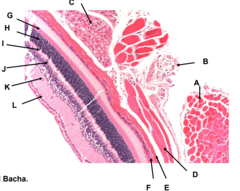
outer nuclear layer
h.

outer plexiform layer
i.
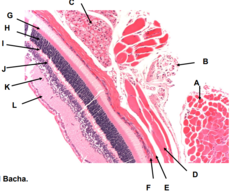
inner nuclear layer
j.

inner plexiform layer
k.

ganglionic cell layer
l.
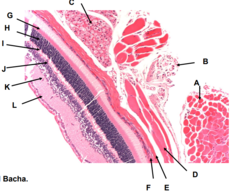
sclera
a.

choroid
b.

pigment epithelium
c.

rods and cones, photoreceptor layer
d.

outer limiting membrane
e.

outer nuclear layer
f.

optic nerve fiber layer
a.

ganglion cell layer
b.

inner plexiform layer
c.

inner nuclear layer
d.

inner limiting membrane
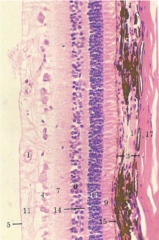
retinal tissue layers, 5
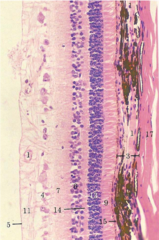
optic nerve fiber layer
retinal tissue layers, 11
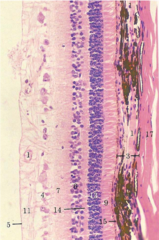
ganglion cell layer
retinal tissue layers, 4
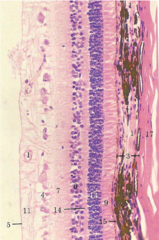
inner plexiform layer
retinal tissue layers, 7
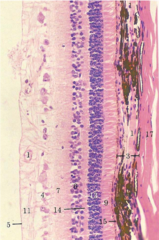
inner nuclear layer
retinal tissue layers, 6

outer plexiform layer
retinal tissue layers, 14
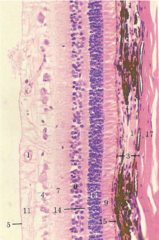
outer nuclear layer
retinal tissue layers, 13
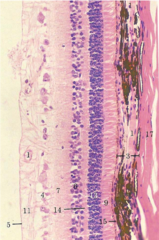
rods and cones, photoreceptor layer
retinal tissue layers, 9
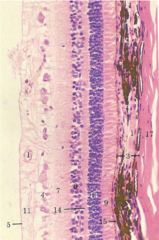
pigment epithelium
retinal tissue layers, 15
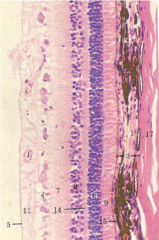
choroid
retinal tissue layers, 3
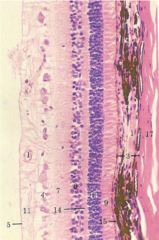
sclera
retinal tissue layers, 17
black arrow
where is the blindspot?

undeveloped retinal layers (no photoreceptors to sense light)
why is it called the blind spot?

red arrow
direction of sensory nerve impulse
