Lecture 23: Lophotrochozoans I (Platyhelminthes/Bryozoans)
 Call Kai
 Learn
 Practice Test
 Spaced Repetition
 Match
 Flashcards
 Knowt Play
1/18

Earn XP
Description and Tags
Know the trematode life cycle,
19 Terms
Protosome subgroups
lophotrochozoans
members share similar morphological features
lophophore and trachophote
platyhelminthes are in this group even though they lock lack both of these features
Lophophore
feeding tentacles (found in bryozoans, brachiopods and rotifers)
permanent feeding organ in adults

Trochophore
ciliated larvae (found in molluscs and annelids)
temporary developmental stage

Phylum Platyhelminthes
flatworms
first appearance of bilateral symmetry
evolution of cephalization: having a head focused nervous system
3 defined germ layers
acoelomate body cavity, gut cavity
space between gut and ectoderm filled with mesodermal cells
advances in nervous coordination and appearance of excretory system
Embryonic development
triploblastic
bilateral symmetry
blind gut (incomplete)
Phylum Platyhelminthes
large range in size
body flattened dorsoventrally
keeps every cell close to surface so gases and nutrients can move by diffusion
both free-living and parasitic forms
free-living; some freshwater and terrestrial, most marine
parasitic; both endo- and ectoparasites; often multiple hosts
Form and function
have mouth, pharynx, and intestine (more complexity)
incomplete digestive tract, blind gut
nervous system of connecting nerves in ladder pattern
important for diffusion
excretory/osmoregulatory system using flame cells
well developed reproductive system
muscle fibers for locomotion
Excretory System
organs called protonephridia (flame cells)
flame cells have tuft of flagella
functions also in osmoregulation (salt and water balance)
fluid passes out through ducts and excretory pores
Reproduction
both asexual and sexual
asexual by bud formation or fission
sexual reproduction nearly all monoecious (hermaphrodites), complex reproductive organs, penis fencing
some require host for hatching (parasitic forms)
Class Turbellaria
mostly free-living
muscles and cilia for movement
some gliding over mucous from adhesive glands
Class Monogenea
ectoparasites (outside), mainly of fish
single host (direct life cycle)
attach to gills and feed on body fluids (blood)
only damaging in crowded conditions
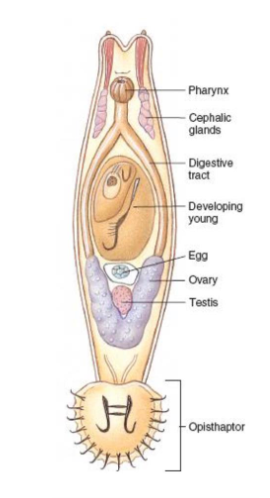
Class Trematoda
all parasitic flukes; endoparasitic (inside) in vertebrates
suckers and hooks for adhesion, sense organs minimal
subclass digenea
indirect life cycle - require 2 hosts
intermediate host (mollusc) and definitive host (vertebrate)
one hatched egg can generate many progeny - high reproductive output
important parasites of humans and domestic animals
liver flukes, blood flukes, and lung flukes. transferred by eating undercooked meat or protein
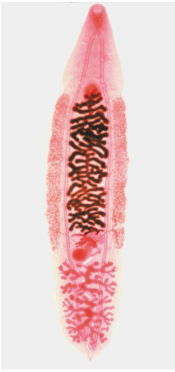
Class Cestoda (tapeworms)
all endoparasites, adults usually in the vertebrate gut
no mouth or digestive tract
absorb nutrients across tegument
scolex
strobila
each proglottid has a full set of male and female organs
gravid proglottids break off and pass out in feces
usually two hosts: beef tapeworm
Taenia saginata: cattle → humans
Scolex
hooks and suckers for attachment
Strobila
chain of proglottid - has a full set of male and female organs
Phylum Bryozoa (Ectoprocta)
moss animals
mostly aquatic sessile organisms
both freshwater and marine habits, shallow
hermaphroditic
can reproduce sexually and asexually
bilateral symmetry, triploblastic, radial cleavage, mosaic cleavage
Bryozoa form and function
mainly colonial organisms
zooids
exoskeleton (zoecium)
lophotrochozoans
lophophore- horseshoe shaped
U-shaped complete gut; anus opens outside the lophophore
no excretory or circulatory organs
Bryozoa reproduction
asexual: budding builds the colony; all zooids are clones of the first zooid
sexual: hermaphroditic/monoecious
many brood embryos, some in special chambers
short-lived ciliated larva settles and becomes the first zooid
freshwater species: statoblasts
hard-shelled asexual capsules that survive freezing and drying
important graph
