EXAM 4!!!
 Call Kai
 Learn
 Practice Test
 Spaced Repetition
 Match
 Flashcards
 Knowt Play
1/70

There's no tags or description
Looks like no tags are added yet.
71 Terms
Upper Respiratory- Diphenhydramine, class, action, uses, admin, SE, NI
-Antihistamine (1st gen)
-blocks histamine response in small vessels and nerves- like benadryl
-Allergic reactions, motion sickness, insomnia, nasal congestion
-PO or IV
-SEDATION, dry mouth (decreased sludge), constipation
do not mix with alcohol (increases CNS depression), drink fluids/hydrate, not advised in older populations because of sedating effects, INCREASED RISK OF FALLS!!
Loratadine & Cetirizine- class, action, uses, admin, SE, NI
antihistamine (2nd gen)
blocks histamine response in small vessels and nerves
allergic reaction, motion sickness, nasal congestion
PO ONLY!!!!
less sedative effects than diphenhydramine
drink plenty of fluids, stay hydrated
Pseudoephedrine- class, action, SE, NI
decongestant- MAKE METH- sudafed
reduces inflammation of the nasal membranes
increased bp (HTN), nervousness, agitation, increased glucose, tachycardia
avoid caffeine as it can increase SE, use with caution in elderly patients and cardiac patients
Nasal Decongestants- MOA, examples, SE, NI
shrink engorged nasal mucous membranes and relieve nasal stuffiness
Ex: oxymetazoline (Afrin spray), phenylephrine, ephedrine
Available over the counter
Can cause rebound congestion with repeated use because of the very rapid absorption of drug through mucous membranes followed by more rapid decline in therapeutic activity. Can lead to dependance.
teach patients to use for no more than 3 days
Nursing considerations:
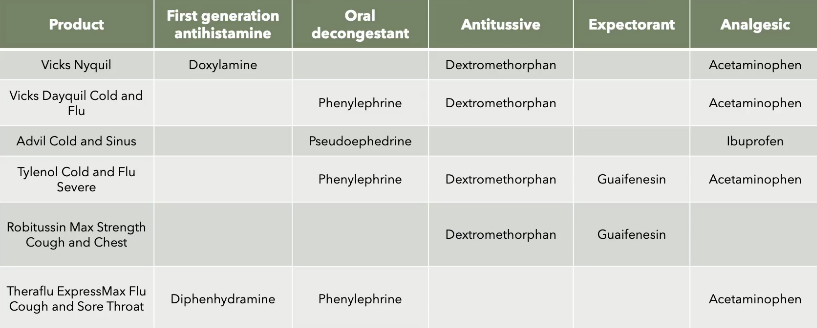
Daily limit of acetaminophen of <3000 mg/day, and look for codeine because it can cause respiratory depression and addiction!!! Phenylephrine can raise BP!!
Lower Respiratory- Dextromethorphan- class, action, uses, admin, SE, NI
Non-opioid Antitussives
works on the CNS to suppress cough
OTC liquid
some sedation, potential for abuse, few side effects overall
assess for productive cough vs non-productive cough, ensure patient’s report use of medication to MD/PharmD
Benzonate- class, MOA, admin, SE
Non-opioid antitussive- need to be prescribed!!!
thought to work by anesthetizing or numbing the cough receptors
Oral pearls
Not many SE and is a great prescription option
Guaifenesin- class, MOA, admin, SE, NI
Expectorants (break up mucus- mucimex)
increases hydration of the respiratory tract, which is needed for ciliary clearance and reducing the viscosity of mucus, thins; facilitates mucus removal- pulls fluid to break up mucus
Orally- OTC product
very few SE
take with a glass full of water, HYDRATE, report use to MD/PharmD, for short term use!!! GLUG GLUG GLUG
Acetylcysteine- class, action, uses, admin, SE, NI
mucolytics
thin secretions
acute/chronic pulmonary disorders (COPD) with large amount of secretions, cystic fibrosis.
oral, IV, inhalation
bronchospasm, dizziness, drowsiness, hypotension, tachycardia
oral and IV form are for acetaminophen toxicity, oral medication smells like ROTTEN EGGS, encourage fluid intake, antidote for acetaminophen overdose!!

Albuterol- class, action, admin, SE, NI
Beta-2 Agonists (short acting beta agonist- SABA)
causes RAPID bronchodilation
inhalation, rapid acting “rescue inhaler”, nebulizer & inhaler form
tachycardia, tremors, palpitations
check pulse & report increase of 20/30 beats per minute, used as needed for wheezing
Salmeterol- action, admin, SE
causes bronchodilation, used for maintenance treatment of COPD and asthma and used in conjunction with oral corticosteroids
inhaled, long acting (LABA); not to be used for acute treatment, for chronic!! often prescribed BID or daily- LONG TERM
headache, sore throat, tachycardia, and tremors (with bronchodilation)
Terbutaline- class, action, admin, SE, NI
selective beta 2 agonist
causes bronchodilation for long term control of asthma
PO
can cause uterine relaxation (injection used to delay premature labor), uncontrollable shaking/tremors, dizziness, drowsiness, headache, nausea, sweating
instruct patients on proper inhaler usage, report continued symptoms of SOB or wheezing, only use when other therapies aren’t working- old medication not used as much anymore
Nursing interventions for bronchodilators:
assess for wheezing, cough, sputum production, decreased breath sounds. Watch breathing pattern (short, shallow, fatigued, etc.)
assess frequency of symptoms, timing, and number of times per week a rescue inhaler (albuterol) is needed
assess for altered mental status that could result from hypercapnia or hypoxia
ask pt to show their inhaler (make sure not empty) and demonstrate use
ensure patients understand what each inhaler is intended to do and understands the importance of compliance with maintenance inhalers
QUIT SMOKING and provide resources for quitting when pt is ready
educate on spacer use, advise asthma patients to wear a medical bracelet, show pt how to measure their pulse to monitor for SE, educate patients to avoid environmental exposures that could cause symptoms
patients should have written asthma plans for how manage symptoms as they worsen
Inhaled anticholinergics- uses, SE, NI
for COPD
Ipratropium (short acting muscarinic SAMA)
Tiotropium (long acting muscarinic- LAMA)
Inhaled (nebulizer or metered dose inhaler) often ipratropium combined with albuterol “duo neb” for best effect
same as anticholinergic (DECREASED SLUDGE) dry mouth, blurred vision, headache, change in taste
encourage hydration, avoid patients with narrow angle glaucoma
Theophylline- class, action, admin, SE, NI
methylxanthines (Xanthine derivative)
bronchodilation
ORALLY- requires therapeutic drug monitoring (5-15 mcg/mL), can also be given rectally or IV (aminophylline)
tachypnea, restlessness, nausea, diarrhea, toxicity includes dysrhythmias and seizures
monitor levels periodically or with side of toxicity, increase risk for toxicity with certain antibiotics and caffeine
Montelukast- class, action, uses, admin, SE, black box warning, NI
Leukotriene Receptor Antagonist (LTRA)
decreases secretions, airway edema and promotes bronchodilation
prevent bronchospasm in mild asthma. Used for long-term treatment of asthma; NOT for ACUTE ATTACKS
Oral (once daily dosing)
headache, dizziness, fatigue
BLACK BOX: FOR SUICIDAL IDEATION/MOOD CHANGES
educate about possible mood changes, should not be given in patient with lactose allergy
Drugs for hematological system- anemia drugs and other blood disorders-Epoetin Alfa- action, admin, SE, NI, black box
erythropoietin stimulating agent (increases hemoglobin and hematocrit when transfusion is not optimal), used for pt with renal failure and cancer most commonly
IV and SUBQ, DO NOT shake vial, HGB must be <11
HTN, fever, headache, pruritus, rash, nausea, vomiting, arthralgia, injection site reaction, potential thrombosis especially when given to patient with HGB >11
monitor iron stores to ensure adequate response is possible, monitor BP, monitor H&H, monitor for signs of blood clots
BLACK BOX: warning for increase risk of death when given to target a hemoglobin >11 g/dL
Iron- foods that impair and enhance iron absorption
Enhance: orange juice, veal, fish, ascorbic acid
Impair: eggs, corn, beans, cereal products containing phytates (avoid dairy group)
Dietary sources: meats, certain vegetables, and grains
Stored in the liver, spleen, and bone marrow
Oxygen carrier in hemoglobin and myoglobin, essential mineral
Dietary iron must be converted by gastric juices before it can be absorbed
Supplemental Iron- enteral and parenteral
may be given as a single drug or as part of a multivitamin preparation
Enteral- ferrous sulfate (contraindicated in patients with ulcerative colitis, peptic ulcer disease, liver disease, and other GI disorders)
Parenteral- Iron dextran (INFeD)-high risk of adverse reaction
-Iron sucrose (Venofer)
Adverse effects of Iron
most common cause of pediatric poisoning deaths
causes nausea, vomiting, diarrhea, cramps, constipation, pain, GI problems, black tarry stools!!
Liquid oral preparations may stain teeth
Injectable forms cause pain upon injection
likelihood of adverse reaction
Can be toxic- causes dehydration for n/v, fluid in lungs??, change in LOC
Nursing Considerations for Iron Administration
Teach about foods that decrease and enhance absorption
Give small test dose with 1st IV dose with Iron Dextran
IV dose can cause orthostatic hypotension (IV infusion over 2.5-3.5 hours)
Test storage safety to avoid children taking iron
Take liquid form through a straw to avoid staining tooth enamel
Take between meals and not with antacids to maximize absorptions
Folic Acid- passage, uses, NI
water-soluble, B-complex vitamin, essential for erythropoiesis
Folic acid deficiency, give during pregnancy to prevent neural tube defects
Look for natural sources in nutrition and give with food
Cyanocobalamin (Vitamin B12)- uses, admin, NI
treats pernicious anemia and other megaloblastic anemias
IM, orally, intranasally to treat B12 deficiency
Usually administered by deep IM injection monthly
Filgrastim- action, uses, admin, SE, NI
stimulates the increased production of WBC’s
patients with neutropenia or decreased WBC’s especially patients receiving chemo
SQ or IV
bone pain and injection site pain (bc it stimulates bone marrow to produce blood cells) (Give NSAIDs)
Monitor WBC (should increase) and bone pain and treat as needed
Coagulation Modifier Drugs (drugs that effect clotting)- HIGH RISK MEDS
Drugs that affect coagulation are some of the most dangerous drugs used today
Anticoagulants- for?
Antiplatelet- for?
Thrombolytic- for?
Antifibrinolytic/hemostatic- for?
inhibits the action/formation of clotting factors, prevent clot formation
inhibit platelet aggregation (cluster/clumping of platelets) and prevent platelet plugs
Lyse (break down) existing clots
promote blood coagulation
Anticoagulants (focus on lab, antidote, high risk)
antithrombotic drugs
no direct effect on blood clot that is already formed
PREVENTS intravascular thrombosis by decreasing blood coagulability
Used prophylactically to prevent- clot formation (thrombus) and an embolus (dislodged clot)
Enoxaparin (Lovenox)- action, admin, SE- Low Molecular Weight Heparins (LMWH)
given to prevent clot formation in immobile patients
generally give SUBQ in the abdomen (weight based), rotate sites
bruising at injection site, generalized bleeding (less likely than most others)
Antidote: Protamine Sulfate!!!
Heparin- action, admin, SE, antagonist, NI (help be a pro)
prevents clots, high risk of clot formation
IV drip (highest risk), SUBQ injection, IV flush (goal is to keep a clot from forming in the IV line), weight based medication in IV form- for DVT
Hemorrhage, Leukopenia, HIT: heparin-induced thrombocytopenia
Antagonist/antidote: Protamine Sulfate
Nursing Considerations:
Frequent monitoring of PTT for IV drip, check stools for occult blood/dark tarry stools, high risks associated with invasive procedures
obtain a thorough history- peptic ulcer disease, CVA, TBI, hemophilia increase risk of bleeding.
No allergy or history of HIT
Monitor aPTT levels at the appropriate interval and adjust heparin as prescribed or per protocol (monitor platelets, hemoglobin, and hematocrit)
examine mouth, nose, urine, and skin for new bleeding or bruising
examine risk of bleeding and need for frequent lab draws to the pt and check stools for occult blood (blood you can’t see)
normal PTT values is 1.5-2.5 seconds

Warfarin Sodium- action, admin, antagonist, SE, NI
blocks clot formation, used in high-risk clot situations (for pts on post-op orthopedic and A-fib)- use acetaminophen with this instead of aspirin for pain
Oral form only so lots of pt ed
Antagonist/ antidote: Vitamin K
Hemorrhage, Hepatitis, Leukopenia
Nursing Implications:
monitor INR (lab that says how quickly you dissolve blood clots) frequently (want range of 2-3→ lower is increased risk for clotting, higher is increased risk of bleeding)
take dose at same time daily and DO NOT double up for missed dose
monitor for signs of bleeding (occult blood, new bruising, bleeding when brushing teeth) coffee ground emesis
check CBC periodically and take 5-7 days to reach effect
avoid large amounts of food with Vitamin K (green leafy vegetables steady intake)- steady diet!!
high risk in pregnancy
Clopidogrel- action, admin, SE, NI
antiplatelet agent and often used in short term after cardiac procedure- for DVT
Oral/give loading dose (one higher dose for the first administration)
GI irritation, bleeding, thrombocytopenia
stop 5-7 days prior to invasive procedure (since it increases bleeding time), monitor for bleeding, monitor CBC, can give with food if needed to prevent GI irritation
Alteplase or t-PA- action, admin, SE, NI
thrombolytic, give to breakdown an existing clot (for ischemic stroke/for thrombolytic stroke)
IV only with CLOSE monitoring (in ICU) one time IV or dose
HEMORRHAGE, hypotension, rash- HIGHEST RISK
Nursing Implications:
evaluate medical history and meds for CI to alteplase (if someone had surgery/fall recently, they probably have a clot somewhere, you don’t want to break up clots that are doing what we want them to) ex: active bleeding, aneurysm, CVA recently, recent surgery, recent trauma, brain trauma or tumor, severe uncontrolled HTN (SBP > 185), active anticoagulant given (warfarin at home, now they took both and had a stroke!!)- warfarin takes 3 days to have a therapeutic effect, so you can take heparin until warfarin is therapeutic. can take with recent use of acetaminophen, not if you have HTN, had spinal surgery, or recent warfarin use
ensure vital signs monitoring for HTN or hypotension/tachycardia that might indicate bleeding, nosebleed
no foley/NG tube for 24 hours if possible→ can cause tissue damage
check EKG for reperfusion dysrhythmia if MI was indication

Drugs for GI issues- for the colon, lower GI: Orlistat- action, uses, admin, AE, admin, Education
inhibits fat absorption in small & large intestine, non-stimulant anorexiant
for weight loss
OTC ORAL medication
flatulence, rectal incontinence, oily stools (bc fat is passing through and out), cholelithiasis, abdominal/rectal pain, hepatitis, pancreatitis, nausea
take with meals, report use to provider, report adverse reactions to provider, decrease fat intake, fatty/oily stools very common
Antidiarrheals- NI (donnatal, diphenoxylate, lactobacillus)
many over the counter, we want to stop the stool
rule out infections or obstruction before giving, instruct patients to report long term use (OTC meds), monitor hydration status (take plenty of fluids), watch for nutritional/electrolyte imbalance
Donnatal- class, action, SE
anticholinergic (decreased SLUDGE)
slow peristalsis by reducing contractions/smooth muscle tone of GI tract, drying effect
Potential for systemic anticholinergic effects
Diphenoxylate- class, action, SE
Opioid
reduce bowel motility (peristalsis), reduce pain associated with diarrhea, longer absorption of water/electrolytes/nutrients
pancreatitis
Lactobacillus- class, action, pt ed
Probiotic (OTC, herbal)
suppress growth of diarrhea-causing bacteria and reestablish flora that normally resides in intestines
found in foods like yogurt, good for diarrhea associated with antibiotics, lots of forms available
Laxatives- AE, NI
bloating, cramping, malnutrition, can cause decrease absorption of some medications (when you force things to the colon, it can inhibit nutrients)
rule out infections or obstruction before giving (acute abdomen, appendants, impaction- is there abdomen firm or is there any pain)
instruct patients to report long term use (OTC meds)
monitor fluid and electrolyte balance (take plenty of fluids) watch for imbalance
Gentle Laxatives: Methylcellulose and Docusate (Colace)- SE and NI for both
Methylcellulose: bulk forming, action is to act like fiber does naturally, absorb water into intestine, distend bowel to initiate reflex bowel activity
Docusate (Colace): Emollients (softens things), MOA: stool softeners, lower, surface tension of GI fluid to absorb more water into stool, common for people on opioids
SE minimal for both
NI: report chronic use to provider, drink plenty of water, assess consistency and amount of stool, can be used for prevention of constipation and treatment of constipation, takes a few days to work→ for prevention!!!
Stimulant Laxatives: Bisacodyl (Dulcolax)- action, admin, SE and Senna- action, use, SE
Bisacodyl:
stimulated peristalsis and increase water in intestines
PO, rectal suppository
-low dose: constipation often caused by opioid use
-high dose: whole bowel evacuation prior to endoscopic exam
cramping with high dose
Senna:
stimulates peristalsis and increase water in intestines
acute constipation
can cause abdominal pain, can cause dependency
Hyperosmotic Laxatives- action, Glycerin, Lactulose
increases fecal water content, increases peristalsis and evacuation in large intestine
Glycerin- increases water content and peristalsis
Lactulose- used to reduce ammonia levels (hepatic encephalopathy), liquid form, watch since its an aggressive laxative!!! monitor fluid balance and ammonia levels (decreases ammonia by excreting it). will have a large lipidy poop!!!
Hyperosmotic Laxatives- Polyethylene Glycol 3350 (GoLYTELY)- uses, NI
before diagnostic/surgical bowel procedures (colonoscopy) to cleanse bowels
instruct pt to take as directed, drink plenty of electrolyte rich fluids while taking this, typically comes in a large volume, often cause nausea in patients, powder mixed into fluid (Gatorade, sometimes tastes bad)
IBS- Alosetron- action, SE, NI
increases firmness in stool and decrease urgency and frequency of bowel movements; used for IBS with diarrhea
constipation, bowel obstruction/perforation
do not use if already constipated, high risk for GI issues so clients must sign a treatment agreement, assess bowel sounds (note absent bowel sounds), assess for consistency and frequency of bowel movements, only take for 4 weeks but need close follow up with provider
Lubiprostone- action, SE, NI
increases fluid secretion in the intestine to promote motility; used for IBS and constipation #LUBEthatbowel
diarrhea
take medication with food and monitor fluid and electrolyte status
Acyclovir- class, uses, admin, SE, NI
antivirals
treats herpes simplex virus infections (1 or 2)
IV, PO, or Topical Routes, can be very irritating to the vessels
headaches, nausea, diarrhea, fatigue, burning when applied topically
Encourage fluids, monitor for improving lesions→ make sure lesions are going away
Tenofovir/emtricitabine combo taken together (PREP)- class, route, NI
Preexposure prophylaxis (PrEP)
antiviral
given prophylactically to those at high risk for HIV and up to 90% effective for preventing a person from getting HIV when used correctly.
PT ED: adherence to med is key. PrEP is much less effective when it is not taken consistently
Oseltamivir- class, uses, admin, SE, NI
antivirals
Flu A & B
Oral- best to be started within 24-48 hours of symptoms!!!! can be used for prophylaxis treatment
nausea, vomiting, headache
start within 2 days of symptoms and it should reduce the course of illness
Isoniazid- class, uses, admin, SE, black box!!!, NI
Selective Antituberculosis
Treatment of TB both latent and active. This is the most common and widely used anti-TB drug
Neurotoxicity: especially peripheral neuropathy, hepatotoxicity
BLACK BOX: possible hepatitis!!!
can have many drug interactions, decrease alcohol intake, take 2 hours apart from antacids
Rifampin- class, use, admin, SE, NI
Antituberculosis
TB
PO on empty stomach
Elevated LFT, rash and GI distress, flu-like symptoms, causes red & orange discoloration of body fluids
monitor liver function, instruct patients about body fluid color change, rifampin can cause urine, saliva, tears, and sweat to be a red-orange-brown color.
Pyrazinamide- use, SE, NI
used in combo with other TB drugs
GI distress, malaise, arthralgias, hepatotoxicity, photosensitivity
uric acid may be elevated, so monitor in patients with gout and monitor liver function
Ethambutol- NI/Pt ed
Do not give with antacids (alters absorption), monitor renal function, notify provider of changes in vision or the inability to see green
TB treatment
monotherapy ONLY for latent disease- isoniazid for 6-9 months (may contribute with rifampin)
3-4 drugs for active disease, needed for subpopulations of M. tuberculosis within the body and to prevent resistance, all TB drugs of focus today are given PO
shortest duration possible is 6 months (up to 18-24 months), patients feel better before then, so close monitoring to ensure completion, 5 days per week, twice weekly, and weekly regimens are alternatives to improve compliance
“DOT” direct observation therapy needed at times
Nystatin- class, uses, admin, NI
antifungal
candidiasis
suspension, swish and swallow, given 4 times daily for oral candidiasis (thrush), powder best for candidiasis of moist areas (skin folds, diaper rash), nystatin cream for topical candidiasis when powder not used
warn patients of bitter taste and potential nausea with oral suspension
Amphotericin B- class, admin, SE, NI
broadest antifungal agent available- treats many type of fungi
IV, multiple formulations to reduce toxicities
INFUSION REACTIONS- fever, chills, rigors, arthralgias, hypotension (almost all patients get these!). Pre-medicate 30-60 min before with acetaminophen, diphenhydramine, and meperidine (if rigors only)
May cause acute kidney injury, hypokalemia, hypomagnesemia, sodium loading with normal saline before and after dose, monitor renal function, urine output, and electrolytes daily while inpatient
Fluconazole- class, admin, other info?
antifungal
oral and injectable
very broad antifungal with a better side effect profile than amphotericin B
Even a single dose can be effective for vaginal candidiasis
Has excellent bioavailability; almost all of the dose administered is absorbed into circulation
Metronidazole- class, uses, SE, NI
antiprotozoals (has broad antibacterial activity)
#1 drug to treat C-diff, STIs
severe GI upset with alcohol; new rash (Steven Johnson’s syndrome- MED EMERGENCY). normal: dark urine and metallic taste. Disulfiram- like reaction due to concurrent alcohol use
Avoid ETOH (alcohol) during and 3 days post and take with a full glass of water
Hydroxychloroquine- class, uses, SE, Pt ed
antimalarial
malaria treatment and prevention- from med missions
EPS, rashes
avoid sun exposure, contraindicated in pregnancy, visual field changes, optic neuritis, and psoriasis
Glucocorticoids (raise blood sugar so watch diabetes!!)- Prednisone- action, admin, SE
reduces inflammation by reducing inflammatory and immune response
Oral: intermediate acting
Weight gain & increased appetite, increased blood sugar, mood changes, bone loss, decreased immune response, trouble sleeping
Methylprednisolone- action, admin, SE
reduces inflammation by reducing inflammatory and immune response
IV: intermediate acting
Weight gain & increased appetite, increased blood sugar, mood changes, bone loss, decreased immune response, trouble sleeping
Fluticasone- action, admin, SE
reduces inflammation by reducing inflammatory & immune response
Inhaled
fewer systemic side effects, can cause yeast growth in mouth (thrush) so RINSE AND SPIT after use!!!
Renal Medications- Nitrofurantoin- class, MOA/uses, SEs, NI/teaching
nitrofuran antibiotic
disrupts bacterial cell wall formation (breaks down the bacteria); treats lower urinary tract infections
Myelosuppression, blood dyscrasias, nausea, possible irreversible peripheral neuropathy and FATAL hepatotoxicity (RARE)- available PO
check baseline CBC, take at bedtime to decrease nausea, report signs of infection/bleeding, doses may need to be reduced in the older population
Phenazopyridine- action, SE, NI
provides a local anesthetic to the urinary tract (NOT an antibiotic)
GI discomfort, urine will turn orange/red color, PO
urine can stain clothes, take after meals to minimize GI discomfort, patients can use cranberry juice to prevent UTIs but is not effective if UTI is present
Oxybutynin- class, action, SEs, NI
Anticholinergic (antimuscarinic)
prevents bladder spasms, decreasing incontinence, primarily used for over-active bladder (OAB), available PO and in transdermal patch (patch used for OAB)
can have several anticholinergic side effects (dizziness, drowsiness, dry mouth, constipation, tachycardia), weight gain, orthostatic hypotension'
inform patients to report urinary retention, notify provider of palpations, do not take if pt has a urinary obstruction or glaucoma
Tamsulosin and Doxazosin- action, uses, SE, NI
relaxes smooth muscles of the bladder and prostate (helpful in BPH), can also cause vasodilation and lower BP
BPH, Urinary retention, PO
HYPOTENSION (given in older males so watch for erectile dysfunction), nasal congestion, sleepiness, problems with ejaculation
Contraindicated in patients with known use of erectile dysfunction in drugs
caution in patients with renal impairment, monitor BP/ caution with patients taking antihypertensives
Antibiotics (oral contraceptive effectiveness may be reduced by penicillins, take with food to decrease GI upset, obtain cultures before starting antibiotics)-
Penicillin antibiotics- class, admin, SE
B-lactam antibiotic, examples: amoxicillin; piperacillin/tazobactam
mostly oral, teach patients to take with food to decrease GI upset, IM loading dose may be given, PIPERACILLIN/TAZOBACTAM (IV FORM)
cross sensitivity to all penicillins, monitor kidney function, GI upset, thrombocytopenia
Cephalosporins- drugs in this class, action, SE, NI
Cefazolin (IM or IV), Cefaclor (PO), Cefepime (IM or IV)
broad spectrum coverage
can have cross sensitivity/allergy with severe PCN (penicillin) allergy, GI upset & risk for C.diff, kidney stones or gallstones
take with food, add food with probiotics (yogurt), monitor kidney function, tell patient to report diarrhea (C. diff)
Sulfonamides- drugs in this class/admin, SE, NI
Sulfamethoxazole/trimethoprim (IV or PO), Sulfadiazine (IV or PO)
Hyperkalemia, hyponatremia, hypoglycemia, Steven Johnson Syndrome (MED EMERGENCY), rash, anaphylaxis (sulfa allergy), stomatitis, photosensitivity, diarrhea, nausea
Monitor potassium levels and kidney function
Carbapenems- drugs in this class, action/uses, SE, NI
Meropenem, Imipenem/cilostatin
broad spectrum antibiotic (actually has the broadest antibacterial action of any antibiotic to date), pneumonia, sepsis, severe infections, IV only
GI upset, seizures, rash
Caution with patients with PCN allergy, renal impairment and those on valproic acid, monitor I&O if GI symptoms present
Monobactams- admin, SE
Great for gram-negative coverage (ex: e.coli, klebsiella, pseudomonas)
Aztreonam is the only monobactam antibiotic to be developed thus far, only available PO
Commonly given to patients with known PCN allergy because of less cross-reactivity
Rash, nausea, vomiting, diarrhea
Macrolides “Mycins”- drugs in this class, admin, SE, NI
Azithromycin: IV or PO (tapered dosing) Erythromycin: PO
GI upset, rash, QT prolongation, several drug interactions, azithromycin has fewer side effects than erythromycin
Be sure they provide a thorough drug history, EKG prior to administration if cardiac history, take on empty stomach, monitor liver function