ANP Ch 2
 Call Kai
 Learn
Learn Practice Test
 Spaced Repetition
 Match
Match Flashcards
 Knowt Play
1/217

There's no tags or description
Looks like no tags are added yet.
Name | Mastery | Learn | Test | Matching | Spaced | Call with Kai | Chat |
|---|
No analytics yet
Send a link to your students to track their progress
218 Terms
[Foundations] What is matter?
Anything that has mass and occupies space.

[Energy] What is energy?
The capacity to do work.

[Energy] What are the two basic forms of energy?
Kinetic energy and potential energy.

[Energy] What is kinetic energy?
Energy in action.

[Energy] What is potential energy?
Stored energy.

[Energy] Can energy be created or destroyed?
No. It can only be transferred or converted.

[Energy] What is chemical energy?
Energy stored in the bonds of chemical substances.

[Energy] What is electrical energy?
Energy resulting from movement of charged particles.
[Energy] What is mechanical energy?
Energy directly involved in moving matter.
[Energy] What is radiant energy?
Energy that travels in waves, such as heat, visible light, and X rays.
[Elements] What is an element?
A substance that cannot be broken down into simpler substances by ordinary chemical methods.
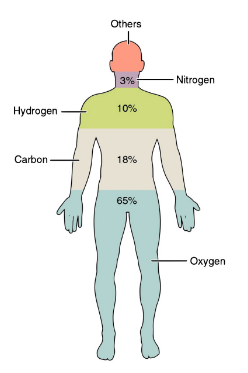
[Elements] What four elements make up about 96% of the human body?
Carbon (C), oxygen (O), hydrogen (H), and nitrogen (N).

[Elements] What is a trace element?
An element required in tiny amounts, less than 0.01%, but still vital for life.

[Elements] What is the symbol for sodium?
Na.

[Elements] What is the symbol for potassium?
K.

[Elements] What is the symbol for chlorine?
Cl.

[Elements] What is the symbol for calcium?
Ca.

[Elements] What is the symbol for magnesium?
Mg.

[Elements] What is the symbol for iodine?
I.
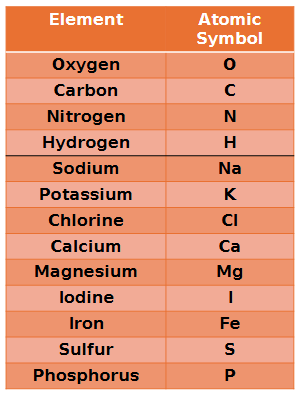
[Elements] What is the symbol for iron?
Fe.

[Elements] What is the symbol for sulfur?
S.

[Elements] What is the symbol for phosphorus?
P.
[Atoms] What are elements made of?
Atoms.

[Subatomic Particles] What are the three subatomic particles?
Protons, neutrons, and electrons.

[Subatomic Particles] What charge does a proton have?
Positive (+).
[Subatomic Particles] What charge does a neutron have?
No charge (0).
[Subatomic Particles] What charge does an electron have?
Negative (−).
[Subatomic Particles] About how much does a proton weigh?
1 amu.
[Subatomic Particles] About how much does a neutron weigh?
1 amu.
[Subatomic Particles] About how much does an electron weigh?
Virtually 0 amu.
[Atom Structure] Where are protons and neutrons located?
In the nucleus.
[Atom Structure] Where are electrons located?
In electron shells around the nucleus.
[Atom Structure] Why is a normal atom electrically neutral?
The number of protons equals the number of electrons.
[Atomic Number] What is atomic number?
The number of protons in the nucleus.
[Mass Number] What is mass number?
The total number of protons and neutrons.
[Isotopes] What are isotopes?
Atoms of the same element with the same number of protons but different numbers of neutrons.
[Atomic Weight] What is atomic weight?
The average of the mass numbers of all isotope forms of an atom.
[Radioisotopes] What are radioisotopes?
Unstable isotopes that decay into more stable forms and release energy.

[Radioisotopes] What is radioactivity?
Energy released as a radioisotope decays.

[Radioisotopes] How can radioisotopes be useful in medicine?
They can be used for disease diagnosis and some cancer treatments.

[Radioisotopes] What is a danger of radioactivity?
It can damage living tissue and some forms can cause cancer.

[Mixtures] What is a mixture?
Two or more components that are physically intermixed.
[Mixtures] What are the three basic types of mixtures?
Solutions, colloids, and suspensions.
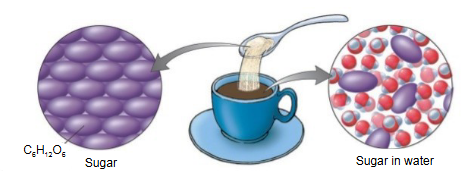
[Solutions] What is a solution?
A homogeneous mixture with particles evenly distributed.
[Solutions] What is a solvent?
The substance that dissolves another substance and is present in the greatest amount.
[Solutions] What is a solute?
The substance dissolved in the solvent and present in a smaller amount.
[Solutions] What are examples of true solutions?
Air, salt solution, and sugar solution.
[Colloids] What is a colloid or emulsion?
A heterogeneous mixture with large particles that do not settle out.

[Colloids] What appearance do colloids usually have?
Cloudy or milky.

[Colloids] What body example of a sol-gel colloid is given?
The cytosol of a cell.

[Suspensions] What is a suspension?
A heterogeneous mixture with large visible particles that settle out.
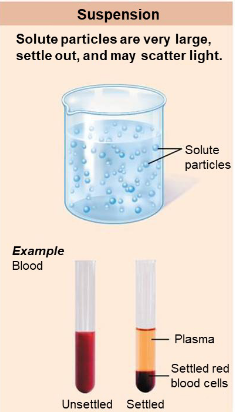
[Suspensions] What body example of a suspension is given?
Blood.

[Mixtures Review] Solutions vs colloids vs suspensions?
Solutions are homogeneous; colloids are heterogeneous and do not settle; suspensions are heterogeneous and do settle.
[Molecules] What is a molecule?
Two or more atoms bonded together.

[Compounds] What is a compound?
A molecule containing two or more different kinds of atoms.

[Mixtures vs Molecules] How can mixtures be separated?
By physical means such as filtering.
[Mixtures vs Molecules] How can molecules be separated?
Only by breaking chemical bonds.
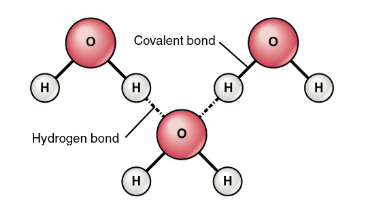
[Chemical Bonds] What are chemical bonds described as in the slides?
Energy relationships between electrons of reacting atoms.

[Electron Shells] What are electron shells?
Energy levels occupied by electrons around the nucleus.

[Valence Shell] What is the valence shell?
The outermost electron shell.
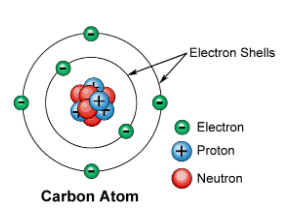
[Valence Shell] What makes an atom stable?
A full valence shell.

[Valence Shell] Why do atoms form bonds?
To gain, lose, or share electrons and achieve a stable valence shell.
[Bond Types] What are the three major types of chemical bonds?
Ionic, covalent, and hydrogen bonds.

[Ionic Bonds] What happens in an ionic bond?
Valence electrons are completely transferred, creating oppositely charged ions that attract.
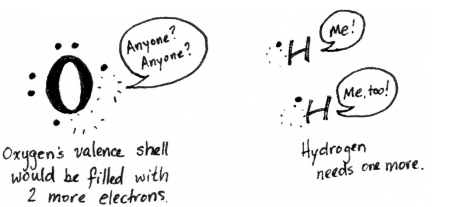
[Ions] What is an ion?
An atom that has gained or lost electrons and become charged.

[Anion] What is an anion?
A negatively charged ion that gained electrons.
[Cation] What is a cation?
A positively charged ion that lost electrons.
[Ionic Compounds] What are most ionic compounds called?
Salts.

[Ionic Compounds] What example of an ionic compound is given?
NaCl.

[Covalent Bonds] What is a covalent bond?
A bond formed by sharing valence electrons.
[Nonpolar Covalent] What is a nonpolar covalent bond?
Equal sharing of electrons.
[Polar Covalent] What is a polar covalent bond?
Unequal sharing of electrons that produces partial charges.
[Electronegativity] What is electronegativity?
An atom's ability to attract electrons.
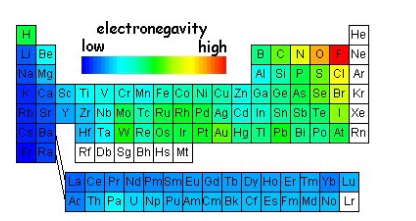
[Electronegativity] What order is shown?
O > N > C, H.

[Water Polarity] Why is water polar?
Oxygen is more electronegative than hydrogen and pulls shared electrons closer.
[Water Polarity] What partial charge does oxygen have in water?
Partial negative.
[Water Polarity] What partial charge do hydrogens have in water?
Partial positive.
[Hydrogen Bonds] What is a hydrogen bond?
An electrostatic attraction between a partially positive hydrogen and a partially negative atom.
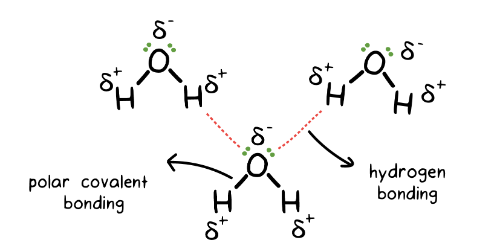
[Hydrogen Bonds] Between what kinds of molecules are hydrogen bonds common?
Polar or dipole molecules such as water.

[Chemical Reactions] What happens during a chemical reaction?
Chemical bonds are formed, rearranged, or broken.

[Chemical Equations] What are reactants?
Substances entering the reaction.
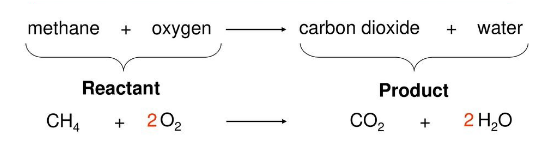
[Chemical Equations] What are products?
Substances produced by the reaction.

[Reaction Types] What are the three main types of chemical reactions?
Synthesis, decomposition, and exchange.
[Synthesis Reactions] What happens in a synthesis reaction?
Smaller atoms or molecules combine to form a larger molecule.

[Synthesis Reactions] What kind of metabolism uses synthesis reactions?
Anabolic metabolism.

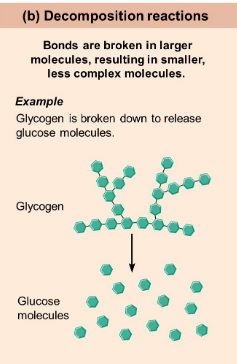
[Decomposition Reactions] What happens in a decomposition reaction?
A molecule breaks into smaller molecules or atoms.

[Decomposition Reactions] What kind of metabolism uses decomposition reactions?
Catabolic metabolism.
[Exchange Reactions] What happens in an exchange reaction?
Bonds are both made and broken.

[Redox] What happens when an atom is reduced?
It gains electrons.

[Redox] What happens when an atom is oxidized?
It loses electrons.

[Redox] What example of a redox reaction is given?
Cellular respiration.

[Redox] In cellular respiration, what happens to carbon?
Carbon is oxidized.

[Redox] In cellular respiration, what happens to oxygen?
Oxygen is reduced.

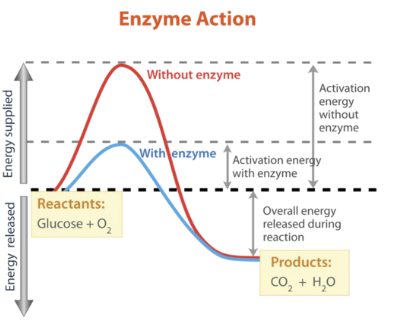
[Catalysts] What is a catalyst?
A substance that increases reaction rate without becoming part of the product.

[Catalysts] How does a catalyst increase reaction rate?
It lowers activation energy.
[Biochemistry] What is biochemistry?
The study of the chemical composition and reactions of living matter.
[Inorganic Compounds] What generally characterizes inorganic compounds?
They do not contain a carbon backbone.
[Inorganic Compounds] What examples are given?
Water, salts, and many acids and bases.
[Organic Compounds] What generally characterizes organic compounds?
They contain a covalently bonded carbon backbone.
[Organic Compounds] What major examples are listed?
Carbohydrates, lipids, proteins, and nucleic acids.