Art History Exam 2
 Call Kai
 Learn
 Practice Test
 Spaced Repetition
 Match
 Flashcards
 Knowt Play
1/28

There's no tags or description
Looks like no tags are added yet.
29 Terms

Geometric period Greek vessel from Attica (around Athens), slipped ceramic, 760–735 BCE (42 5/8 in.)

The Metropolitan Kouros (“youth,” pl. kouroi), Archaic period Greece, 590–580 BCE, marble, (76 5/8 in.)

The Classical Greek theater at Delphi, built during 4th century BCE, (restored in 160/159 BCE), (diameter of orchestra(23 ft.)
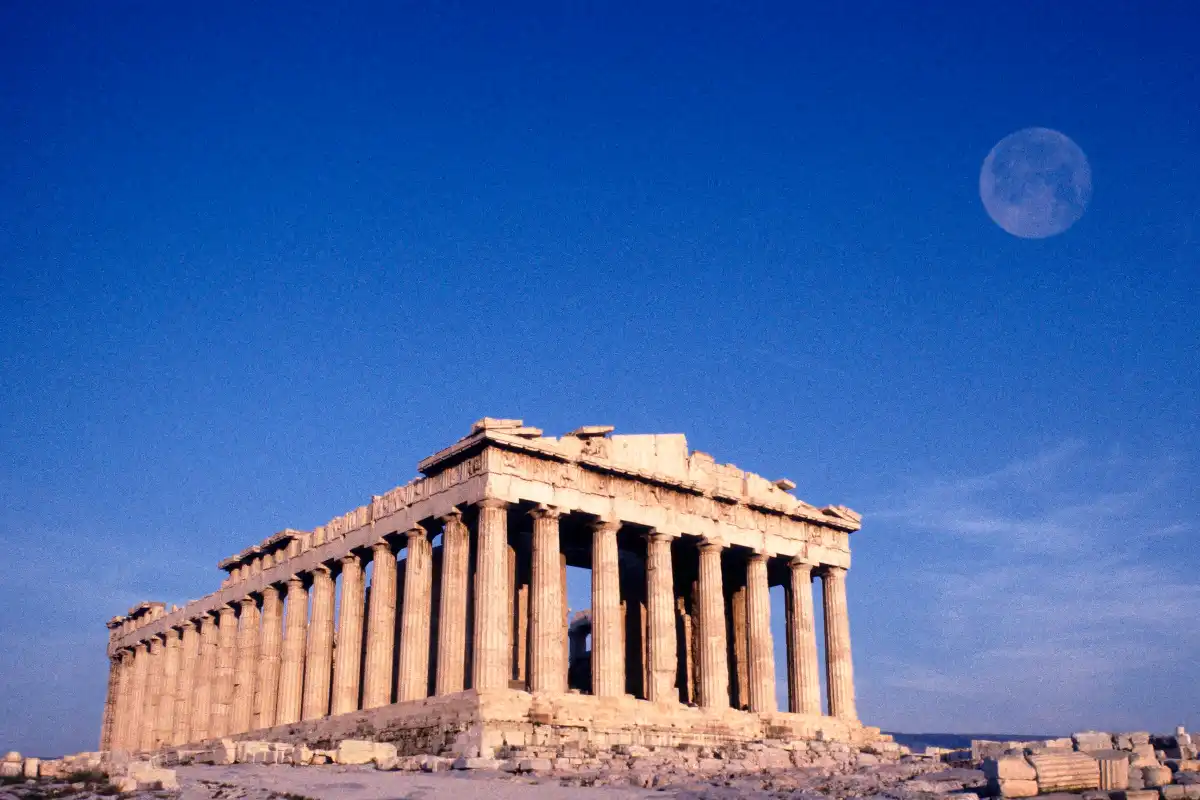
The Parthenon, Athens, designed by Iktinos and Kallikrates, with sculptural program by Phidias, 447–438 BCE (Classical Greece), marble, stylobate (228 x 101 1/3 ft.)

One of the Riace Warriors, Classical Greek bronze sculptures recovered from a shipwreck off the coast of Italy, 5th century BCE, (77.5 in.)
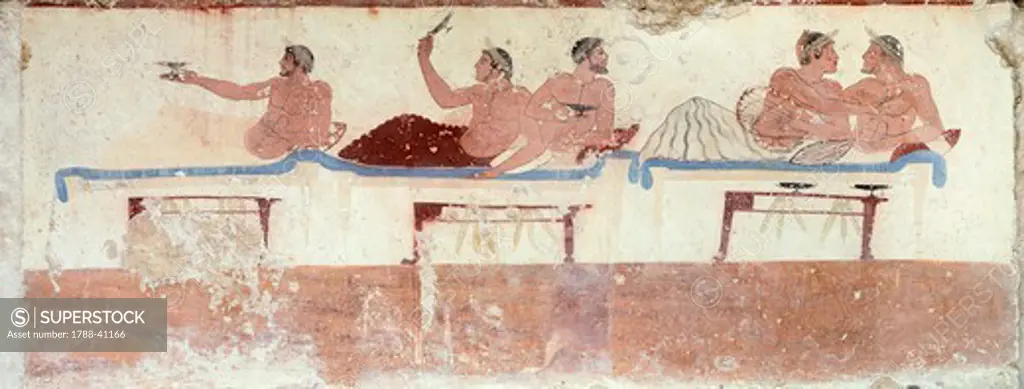
Classical Greek painting: Symposium scene from the Tomb of the Diver, Paestum (Italy), 470 BCE, fresco on travertine, (30.7 in.)

“The Farnese Hercules,”a Roman marble copy (signed by Glykon, c. 216 CE) after a Classical Greek bronze original by Lysippos from the 4th century BCE, (10.5 ft.)

A first-century-CE Roman mosaic floor from Pompeii (Italy) depicting Alexander the Great defeating the Persian ruler Darius III at the Battle of Issus, length (16 ft. 10 in.).

Laocoön and His Sons, a first-century-CE marble copy, possibly made by Agesander, Polydorus, and Athenodorus of Rhodes, of a bronze Hellenistic original from Pergamon, 160–140 BCE, (81 7/8 in.)

Roman Temple of Portunus (god of keys, doors, livestock, and granaries) in the Forum Boarium (cattle market), Rome, 120–80 BCE, marble, approx (34 ½ x 62 1/3 ft.)

Detail of a late Etruscan tomb painting from the Tomb of the Shields, Monterozzi Necropolis, Tarquinia (Italy), mid-4th century BCE

Roman portrait bust of a patrician, mid-1st century CE, marble, (14 3/8 in.)

The Augustus Primaporta, early 1st century CE, Roman, marble, (81 7/8 in.)

The Ara Pacis Augustae (“Altar of Augustan Peace”), Roman, 13–9 BCE, marble, (20 2/3 ft.)

The Flavian Amphitheater (“The Colosseum”), Rome, 70–80 CE, concrete faced with travertine limestone, tuff, and brick, (615 x 510 ft.), central arena (287 x 180 ft.)

The Pantheon, Rome (Italy), 114–128 CE, diameter & height of dome(142 ft.)

The Severan Tondo, 200 CE, Roman (but likely made in Egypt), tempera (egg-based paint) on wood, diameter (12 in.)
Depicts the emperor Septimius Severus with his wife, Julia Domna, and his two sons, Caracalla and Geta

Two views of the Portrait of the Four Tetrarchs, late 3rd or early 4th century CE, Roman, porphyry, (51 in.)

The Arch of Constantine (Rome), 315 CE, marble-clad concrete, (68.9 ft.)

View of the frescoes from the west wall of the sanctuary in the synagogue at Dura Europos (Syria), before 256 CE
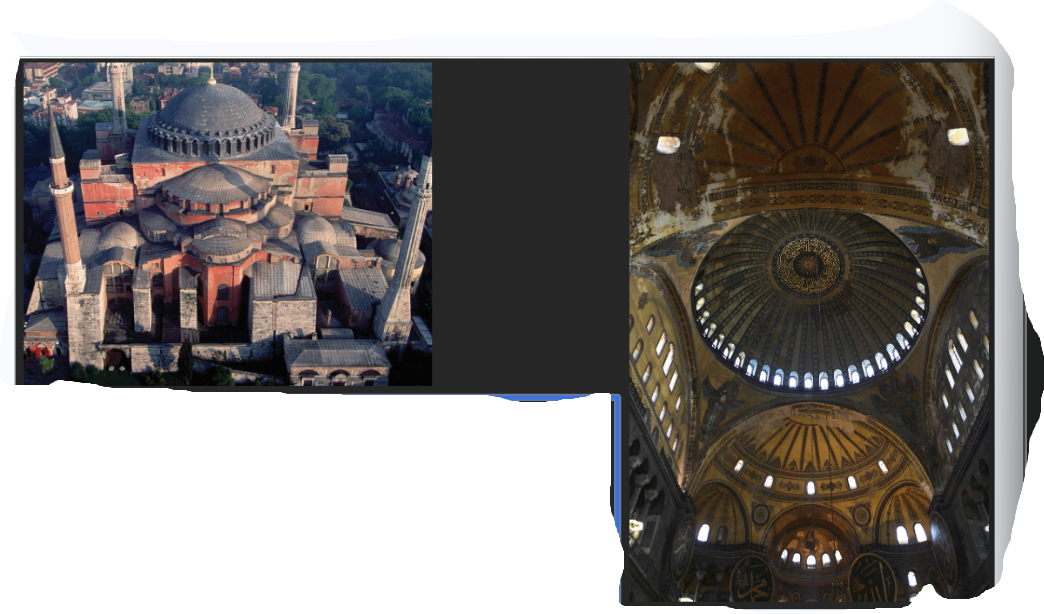
Hagia Sophia (“Holy Wisdom”), Constantinople (modern-day Istanbul, Turkey), 537 CE, commissioned by the Byzantine emperor Justinian I, designed by the architects Isidore of Miletus and Anthemius of Tralles
Left: Exterior view of domes
Right: View of vaulting with central dome between two half-domes (conches) that together form the nave, and a smaller half-dome over the apse (at the bottom of the image). Clerestory windows are found over the aisles at either side of the nave.
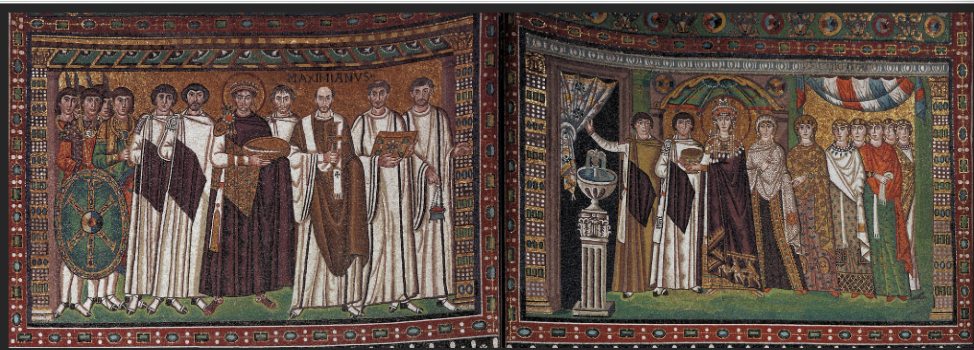
Byzantine apse mosaics from San Vitale, Ravenna (Italy), 547 CE, (8 ft. 8 in. x 12 ft.)
Left: Emperor Justinian and his attendants, from the north wall of the apse
Right: Empress Theodora and her attendants, from the south wall of the apse
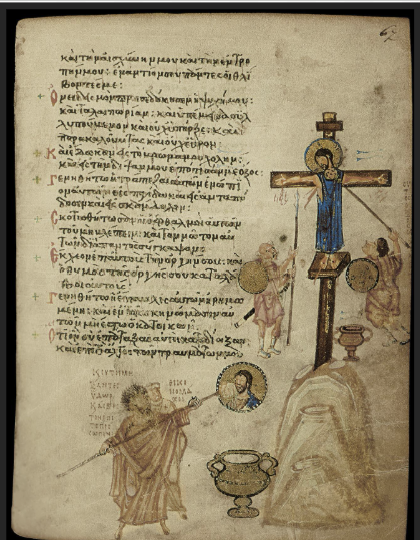
Byzantine image comparing iconoclasm to the torturing of Christ on the Cross, fol 67v from the Chludov Psalter, mid-9th century CE, tempera on vellum

Anglo-Saxon belt buckle from Sutton Hoo burial, early 7th century CE, gold and niello, length = 13.2 cm (5.2 in.)

The Lindisfarne Gospels, an Anglo-Saxon manuscript produced by Bishop Eadfrith, late 7th to early 8th century CE, (13.4 in.)
At right, the book is seen open to pages 26v, a carpet page (detail at left), and 27r, the incipit (“beginning”) of the Book of Matthew

Depiction of Christ in majesty surrounded by the four prophets and the four evangelists on folio 6v of the Codex Aureus (“Golden Book”) of St. Emmeram, c. 870 CE, produced by the court school of Charles the Bald, likely the Abbey Church of Saint-Denis (France), ink and gold leaf on parchment, (16.5 in.)

Exterior and interior views of the Islamic shrine known as the Dome of the Rock, Jerusalem, 687–692 CE, diameter of dome(64 ft.)

Folio from the “Blue Qur’an,” mid-9th–mid-10th century CE, Tunisia, gold and silver on indigo-dyed parchment, width (11 15/16 in.)

Mihrab (prayer niche), Isfahan (Iran),1354–55 BCE, glazed ceramic tiles set into mortar, (135 1/16 in.)