Anatomy - Unit 1, Region 2, Lecture 2
 Call Kai
 Learn
Learn Practice Test
 Spaced Repetition
 Match
Match Flashcards
 Knowt Play
1/18

Earn XP
Description and Tags
Back Osteology and Terms
Name | Mastery | Learn | Test | Matching | Spaced | Call with Kai | Chat |
|---|
No analytics yet
Send a link to your students to track their progress
19 Terms
normal spine curvatures and degrees
cervical curvature, thoracic curvature, lumbar curvature, sacral curvature

typical vertebrae

cervical vertebrae
C1-C7, large foramen in middle, two small holes outside

thoracic vertebrae
T1-T12, curve in spine to make room for lungs/heart,

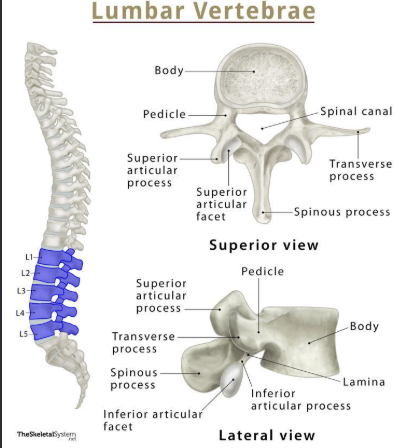
lumbar vertebrae
L1-L5, large and strong
sacral vertebrae
S1-S5, base of spine that fused together, posterior to pevlis

intervertebral discs
provides cushion between discs, connective tissue (annulus fibrosus) on outside, nucleus poposus on side (loose connective tissue)

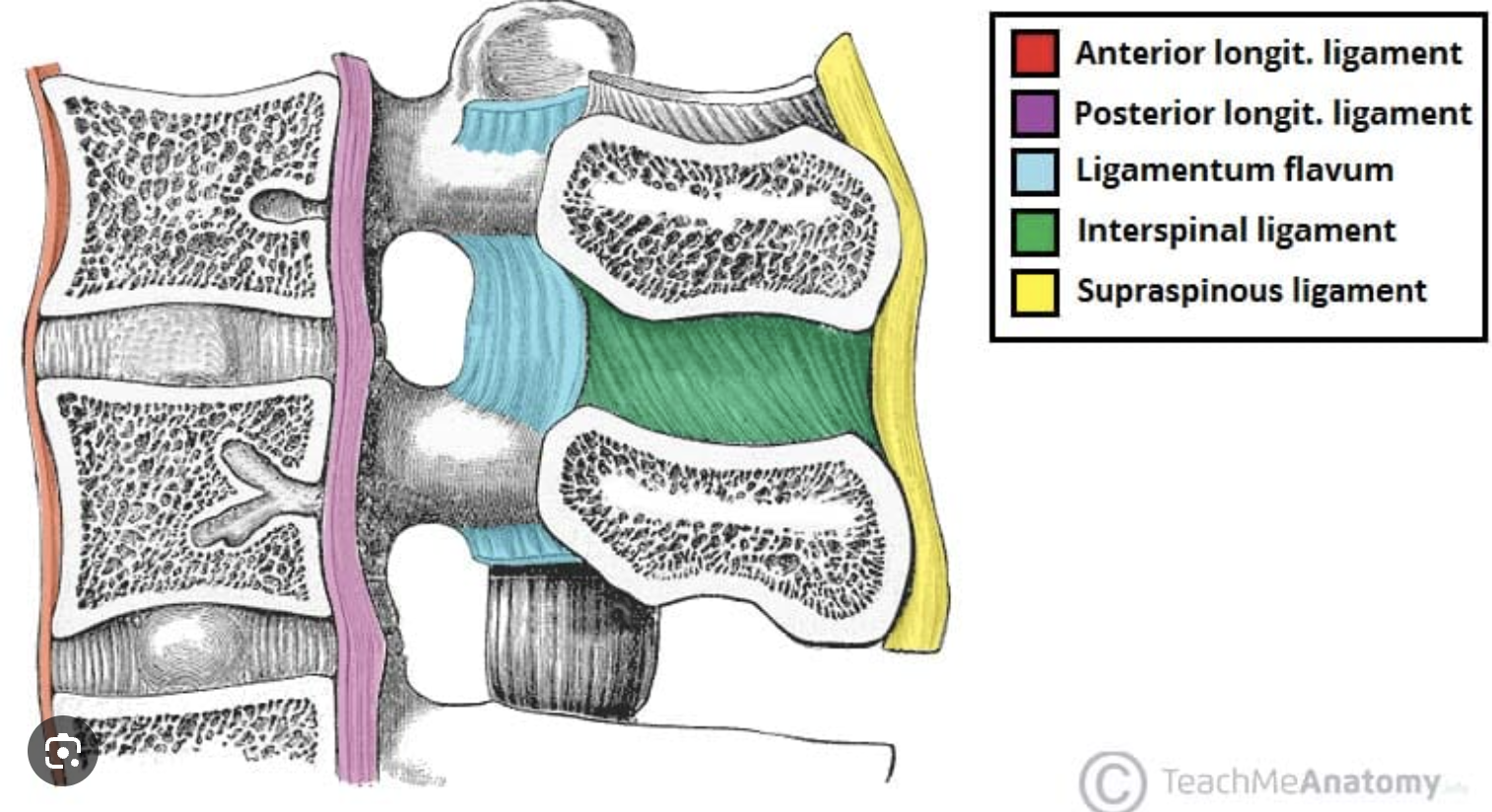
ligaments that support vetebral column
ligamentum nuchae, ligamenta flava, anterior and posterior longitudinal ligaments, tectorial membrane, transverse ligament of atlas
kyphosis
spinal disorder causing abnormally rounded upper back, humpback
lordosis
inward curve of spine at neck or lower back, swayback
scoliosis
sideways curve/twist of spine (10 degrees on x-ray)
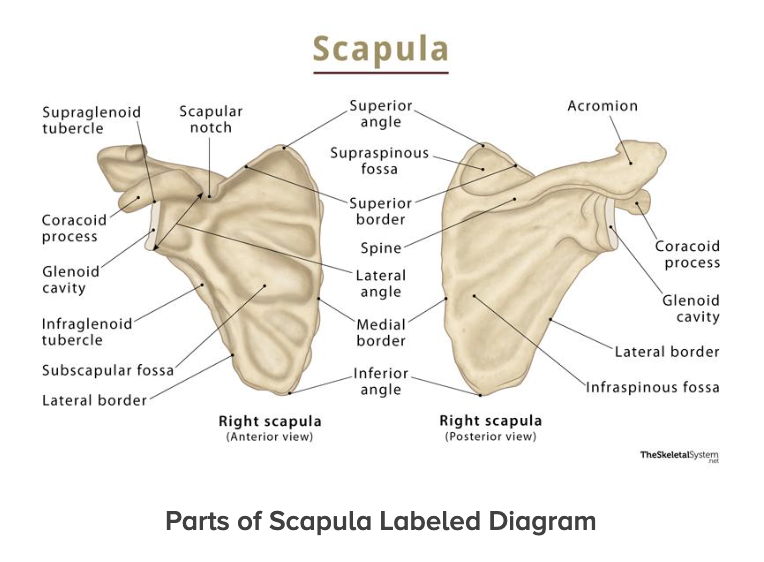
parts of scapula
flat, triangular bone
acromion, coracoid process, supraspinatus fossa, infraspinatus fossa, glenoid fossa
ligaments between vertebral bodies
anterior and posterior longitudinal ligament

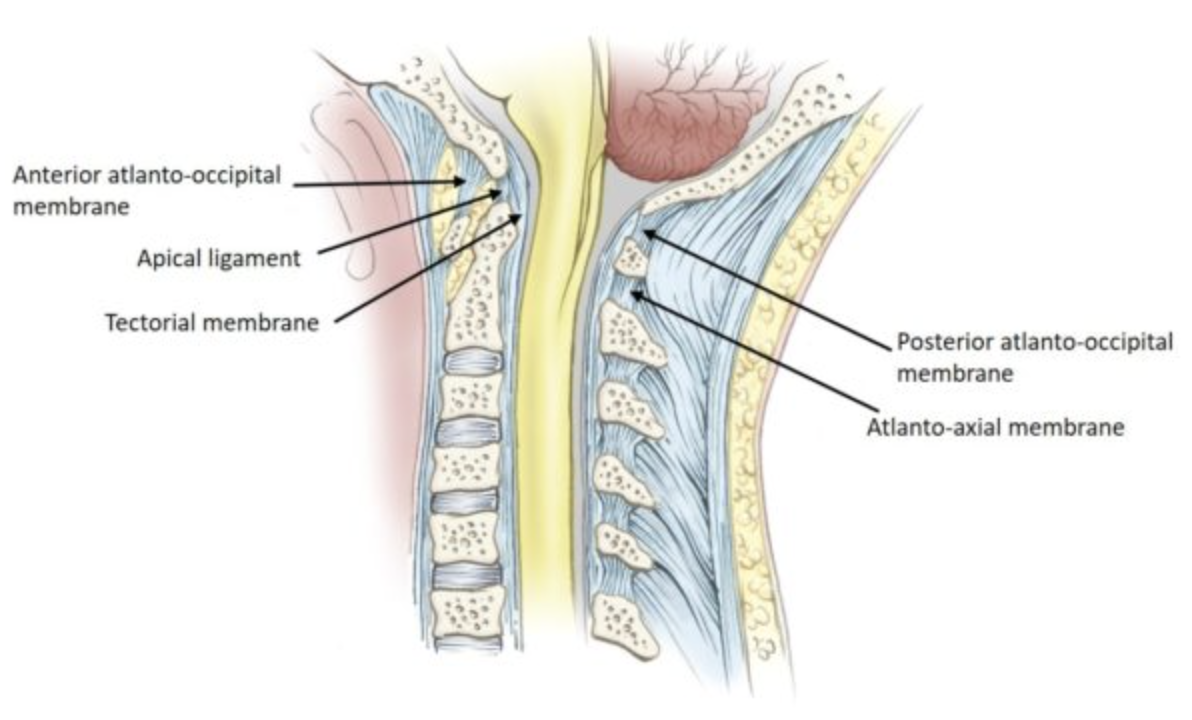
ligaments that attach the vertebral column to the skull
atlanto-occipital membrane and ligaments
ligaments attaching to vertebral processes
radiate ligament (bosy to transverse process, ribs), costotransverse ligament (ribs to transverse process), interspinous ligament (between adjacent spinous processes), supraspinous ligament (connecting end of all spinous processes), ligamentum flavum (internal surface of vertebral arches)

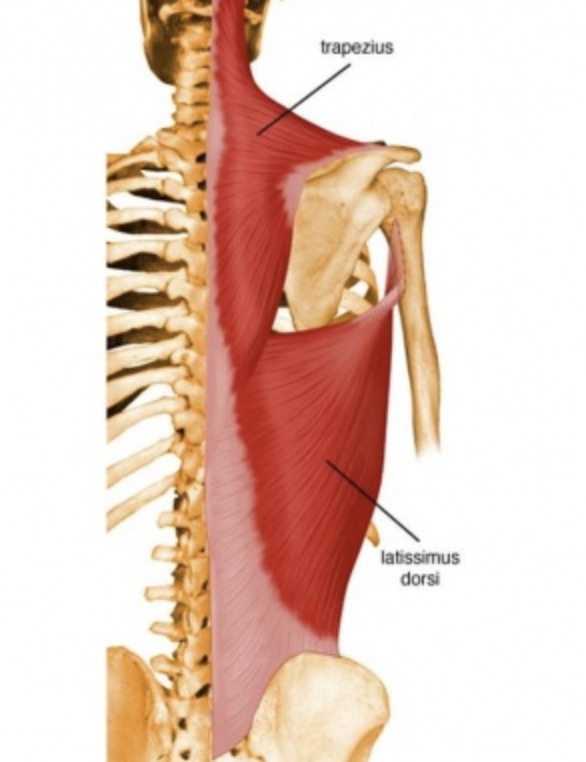
superficial extrinsic muscles
trapezius (3 parts), latissimus dorsi
central extrinsic muscles
levator scapulae, rhomboids major, rhomboids minor

intermediate extrinsic muscles (superficial breathing mucles)
serratus posterior superior, serratus posterior inferior, serratus anterior

posterior lateral back muscles
connect upper limbs to trunk and control limb movement.
supraspinatus, infraspinatus, subscapularis (front), teres major, teres minor, serratus anterior (side), deltoid (posterior head)
